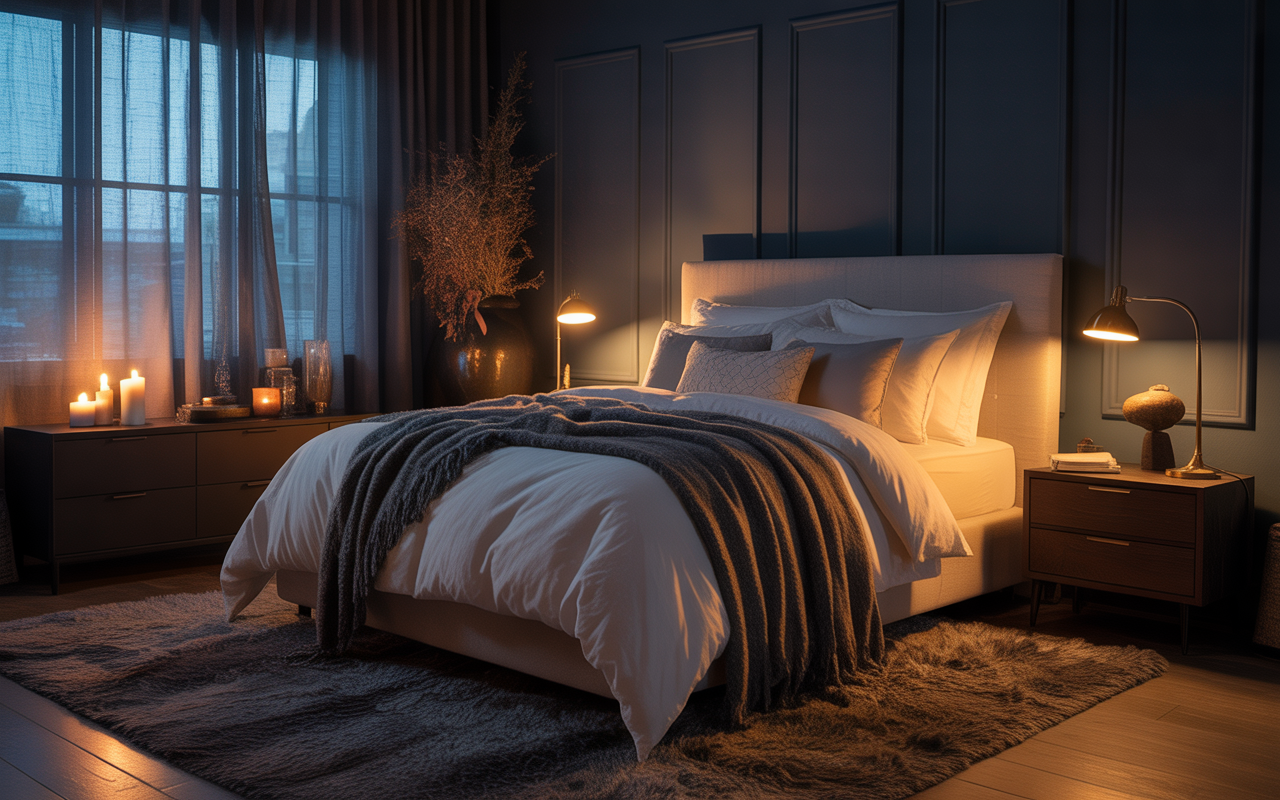
15 Cozy Moody Bedroom Ideas That Make You Never Want to Leave
I’ve wanted a moody bedroom for most of my adult life and spent a long time thinking it wasn’t practical — that dark walls and ambient lighting were for people with bigger bedrooms and better natural light than I had. Then I finally did it in my fourth apartment: one charcoal wall behind the bed, warm bulbs everywhere, layered linen and velvet on the bed, a reading lamp that never went above 40 watts. I slept better. I spent more time in the room. Friends who came over lingered in the doorway and said some version of “this feels so good in here.”
A moody bedroom doesn’t require a renovation or a large room or an unlimited budget. It requires understanding what creates that feeling — the quality of warmth, intimacy, and genuine rest — and applying it deliberately.
These fifteen ideas are the ones that actually move the needle.
Deep Jewel Tones — One Wall First, Then Decide
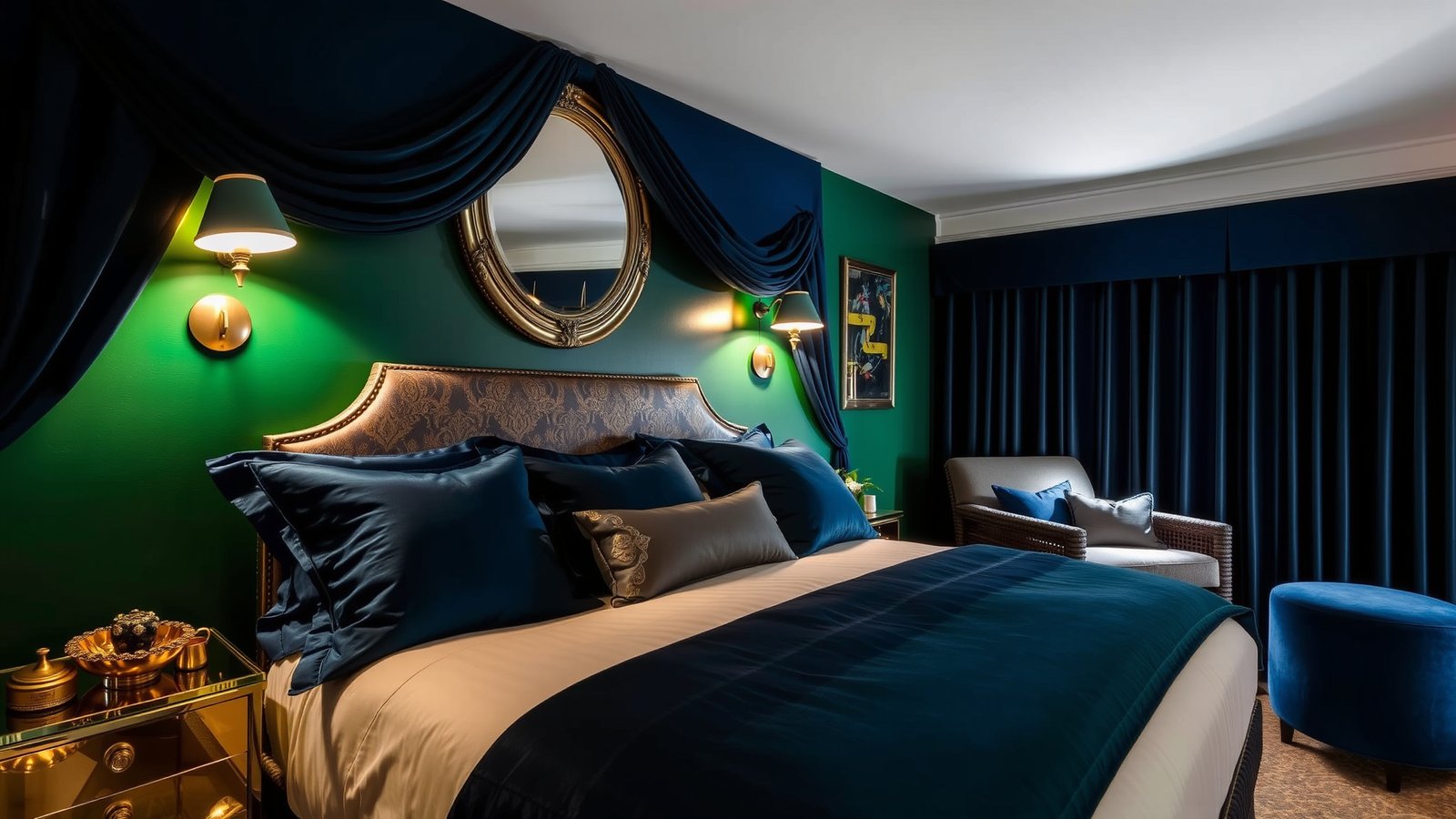
Deep jewel tones — emerald green, sapphire blue, rich burgundy, inky teal — create the kind of bedroom color that makes people stop at the doorway. They add depth and warmth simultaneously, which is the quality that’s hardest to achieve with lighter colors and impossible to fake.
The version of this that consistently works: one wall in the jewel tone, the remaining three in a warm neutral that reads as a slightly lighter extension of the same warmth. Deep emerald on the wall behind the bed with warm cream on the other three walls feels intentional and rich. Four emerald walls in a standard bedroom feel like you’re sleeping inside a bottle.
The specific paints I’d recommend: Sherwin-Williams Jasper for a muted, sophisticated emerald that doesn’t tip into Christmas-tree green. Benjamin Moore Hale Navy for the sapphire direction. Sherwin-Williams Antique Red for burgundy that has enough brown to feel warm rather than loud. All three look completely different in evening lamplight than in afternoon daylight — get a sample pot and live with it on the wall for 48 hours before committing.
Brass and unlacquered gold hardware against jewel tones is a combination that looks expensive in a way that requires zero budget: swap the existing hardware on a dresser or nightstand ($4–8 per piece at most hardware stores) and the whole room shifts.
Layered Textiles — The Bed Is the Room
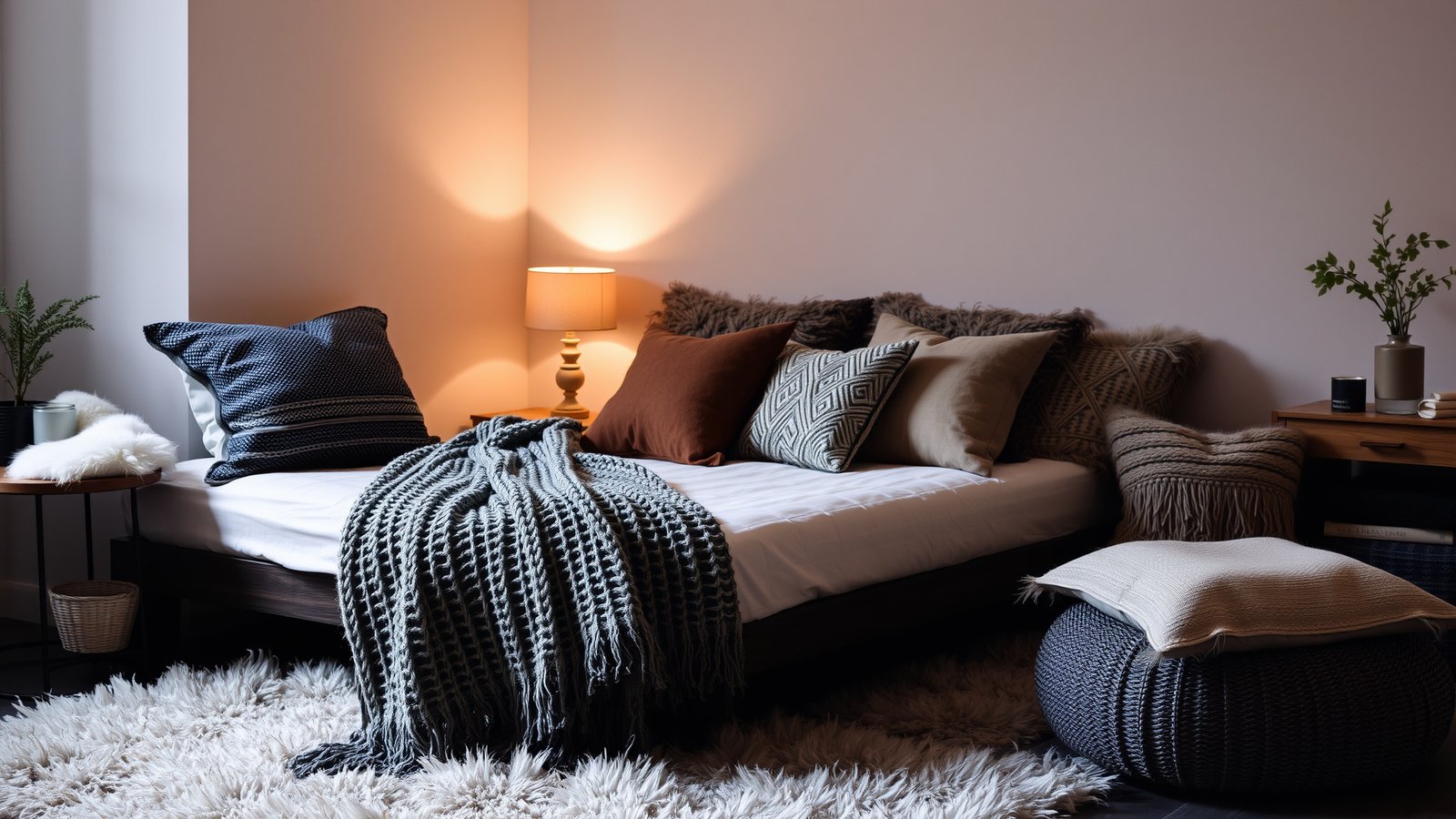
In a moody bedroom, the bed isn’t just where you sleep — it’s the room’s central argument for itself. A beautifully layered bed in a moody bedroom is the thing that makes everything else make sense. Get this right and the room works even if nothing else is perfectly styled.
The layering formula I use: fitted sheet in a smooth cotton or linen, duvet or comforter in the room’s main color (dark linen works beautifully — it wrinkles in a way that looks intentional rather than messy), a folded textured throw across the lower third of the bed (a chunky knit in a contrasting tone, or a faux fur in a neutral), and two layers of pillows — sleeping pillows behind and two or three decorative pillows in front.
The textures that read “moody” rather than just “cozy”: velvet (a velvet euro pillow in deep burgundy or forest green, $25–45 each), washed linen (not crisp linen — washed linen that has some softness and movement to it), and chunky knit (a throw in a warm charcoal or cream, $35–65). None of these individually is expensive. Together they create a bed that looks like someone made a series of considered choices.
Soft Ambient Lighting — The Most Important Change in Any Bedroom
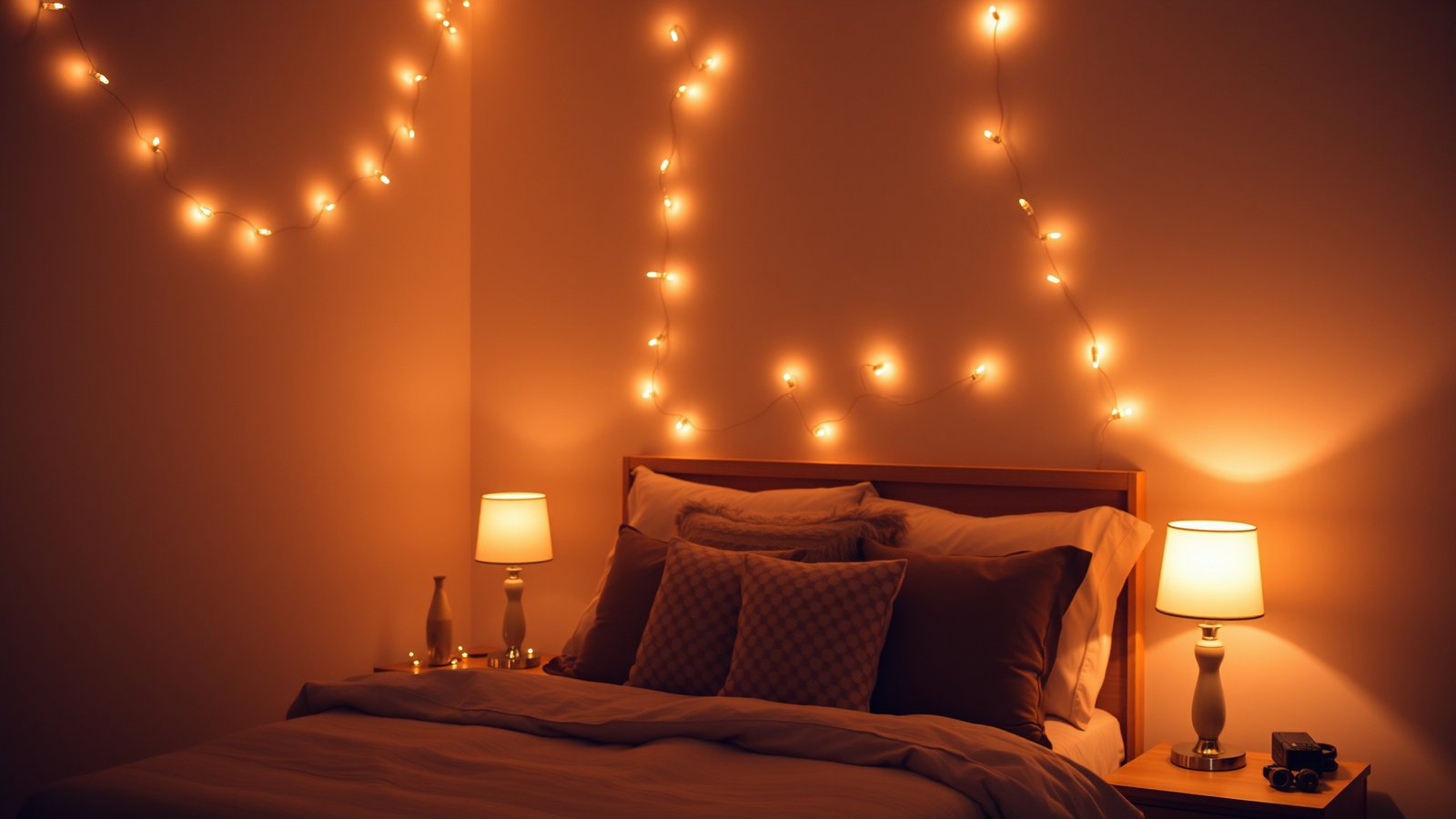
Lighting is where a moody bedroom is made or lost. Overhead lighting — the ceiling fixture that came with the room — is the enemy of a moody bedroom. It’s harsh, it’s flat, and it makes every room look like a workspace regardless of the wall color or the bedding.
The moody bedroom uses layered light at multiple heights, all of it warm. A wall-mounted sconce on each side of the bed (IKEA SKURUP, $20 each, is genuinely good and reads more expensive than it is) at head height for reading. A floor lamp in the corner for ambient fill. A small table lamp on the dresser. No overhead fixture switched on in the evening if it can be avoided.
Bulb temperature is the detail that changes everything: 2200K–2700K only. That’s the amber-warm range that makes skin look good, makes rooms feel intimate, and creates the soft glow that distinguishes a moody bedroom from a room that’s just dark. I replaced every bulb in my bedroom with 2200K warm whites ($8–12 for a pack of four) and the room was transformed before I changed anything else. Start there.
Nature-Inspired Elements — Wood and Stone, Specifically
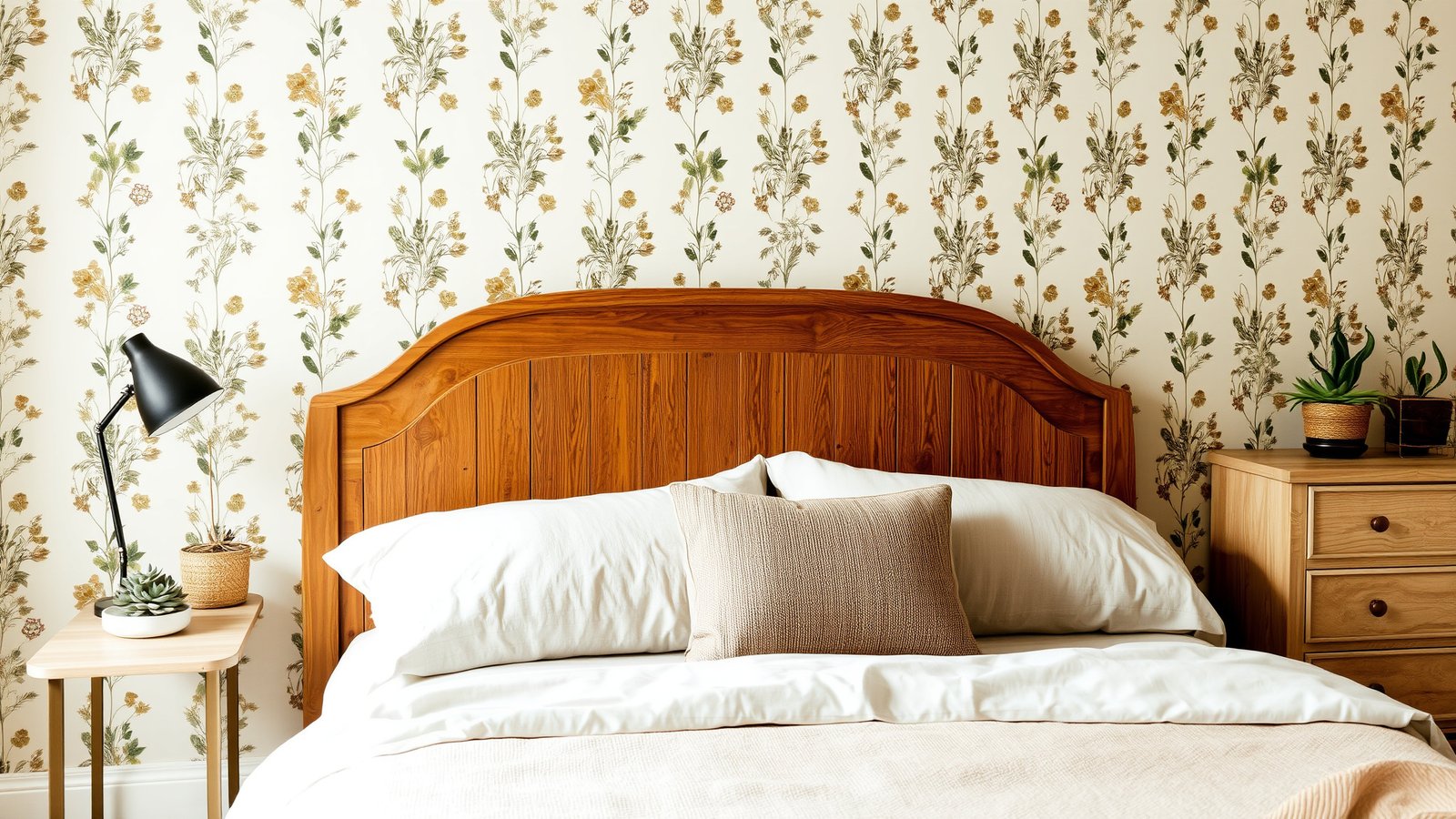
Nature-inspired elements in a moody bedroom aren’t the same as nature-inspired elements in a bright Scandinavian room. The materials are the same — wood, stone, plants — but they’re used differently: darker wood tones rather than light ash, substantial stone or ceramic rather than delicate natural finishes, plants that tolerate low light rather than sun-loving varieties.
The wood tone that works best in a moody bedroom: walnut, dark oak, or any timber in the amber-to-brown range rather than the gray-blonde range. IKEA’s HEMNES range (available in dark stain, $150–300 depending on the piece) hits this well. The darker wood adds warmth while reading as substantial and grounded rather than precious.
For plants in a moody bedroom: snake plants, ZZ plants, and pothos are the three species that genuinely tolerate the low light conditions that come with a moody, dark-walled room. I’ve killed succulents and fiddle leaf figs in rooms that didn’t get enough light. Snake plants in dark bedrooms look like they’ve always lived there, because they essentially have.
Statement Wallpaper — The One Wall That Does All the Work
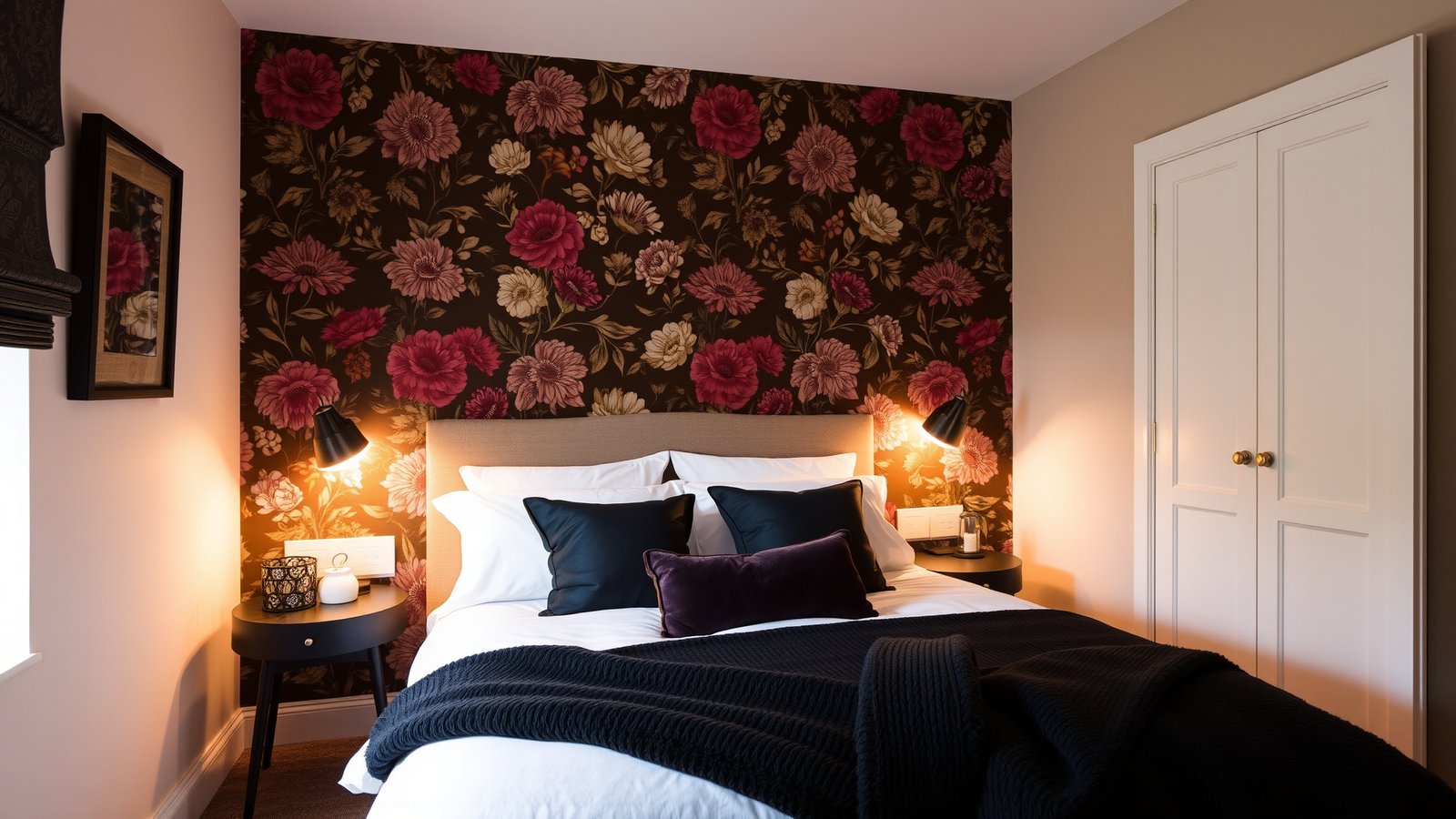
Statement wallpaper in a moody bedroom does something paint can’t quite achieve: it adds pattern and depth simultaneously. A deep botanical print, a moody geometric, a dark floral in burgundy and forest green — any of these creates a wall that functions as the room’s artwork, its backdrop, and its mood-setter all at once.
The accent wall approach — one wall in wallpaper, the remaining three in a complementary paint color — is the right call for most bedrooms. It’s also the version that photographs best, which matters if you’re ever selling the house. Full-room wallpaper is a commitment that requires genuine conviction about the pattern.
For renters: peel-and-stick wallpaper quality has improved significantly. Chasing Paper and Tempaper both make moody botanical and geometric patterns that go on smoothly, look close to traditional wallpaper, and come off cleanly. A bedroom accent wall in peel-and-stick runs $80–150 in materials depending on wall size, and it can be taken down without damage. That’s a meaningful room transformation at a fraction of the cost of a traditional wallpaper installation.
Vintage Finds — One Per Room, Chosen Carefully
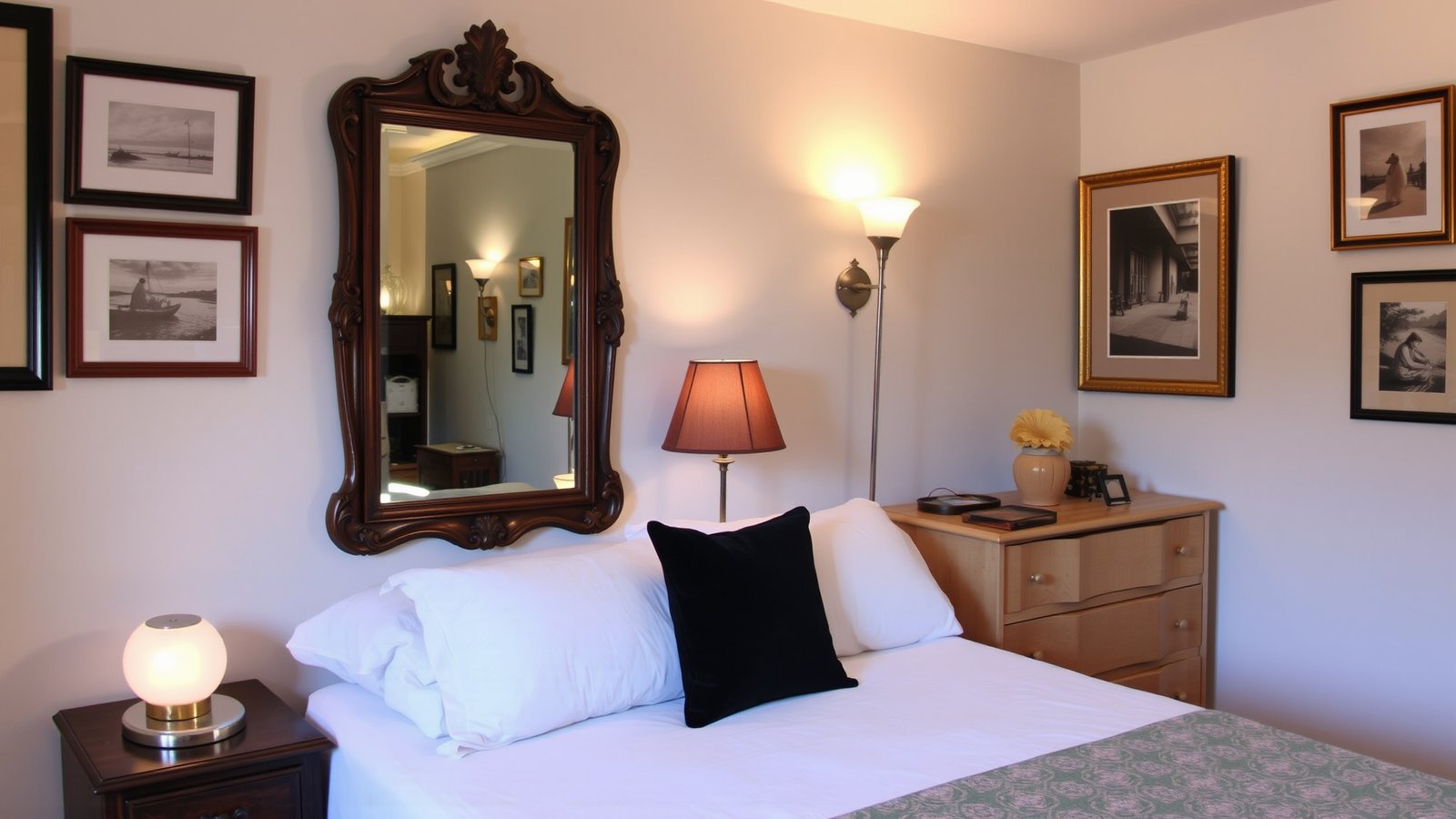
Vintage furniture in a moody bedroom adds something that no amount of new pieces can provide: the sense that the room accumulated its character rather than being assembled from a catalog. A beautiful 1960s dresser with its original hardware, a pair of antique ceramic bedside lamps, a vintage mirror with a worn gilded frame leaned against the wall — each of these brings authenticity that makes the room feel like it belongs to a specific person rather than a design concept.
The vintage piece that does the most work in a moody bedroom for the least investment: a lamp. Antique table lamps from the 1960s and 70s — ceramic bases in warm tones, interesting shapes, available at estate sales and Goodwill for $8–25 — cast completely different light than any new lamp equivalent. The slightly aged shade diffuses light in a way that adds to the moody quality of the room without any additional effort.
The rule I apply at any thrift store or estate sale before buying: does this piece have something to it in person, or does it only look interesting as a concept? A piece has to earn its place in the room on its own terms. Beautiful object you can see yourself loving in five years — buy it. Interesting idea you’re not sure about — leave it.
A Canopy or Draped Bed — Intimacy Without Architecture
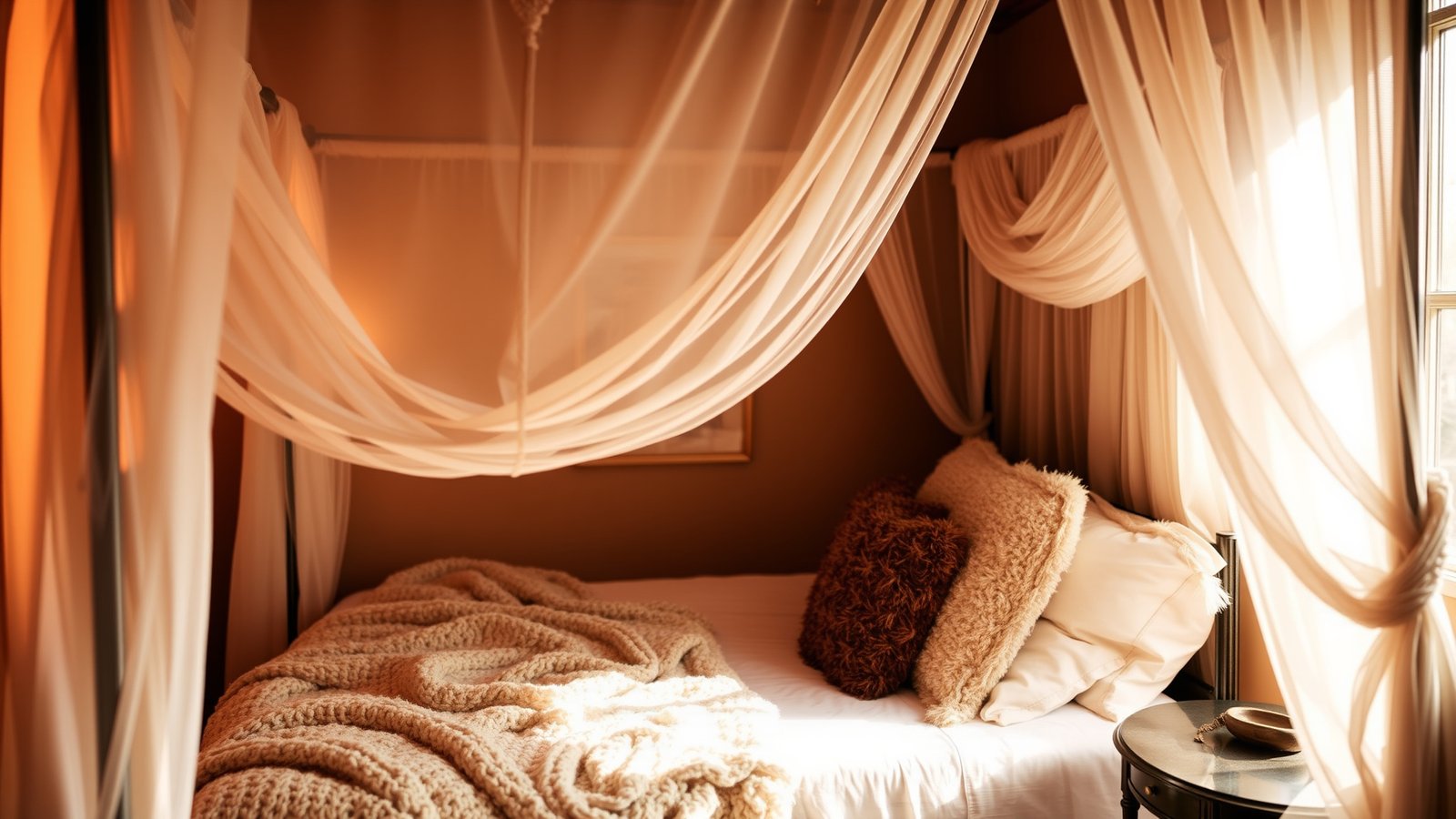
A canopy bed creates something no other bedroom element does: a sense of enclosure around the sleeping space that makes the bed feel like a room within the room. That enclosure is the physical version of the moody bedroom’s emotional quality — contained, intimate, separate from the rest of the world.
For a proper canopy bed frame: IKEA’s GJÖRA ($249) or HEMNES canopy bed options are the accessible entry points. For an existing bed without a canopy, the DIY version involves ceiling-mounted curtain rods in a rectangle above the bed with sheer or velvet panels hung from them. This looks deliberate and dramatic, costs $60–120 in hardware and fabric, and can be removed without damage.
The fabric choice changes the entire character of the canopy: sheer linen or voile in a warm white reads airy and romantic. Dark velvet or heavy cotton in a deep color reads intimate and dramatic. For a moody bedroom, the darker version is usually more aligned — a canopy in deep burgundy velvet or charcoal linen creates exactly the cocoon quality that a moody bedroom is aiming for.
Dark Color Palettes — With One Important Counterbalance
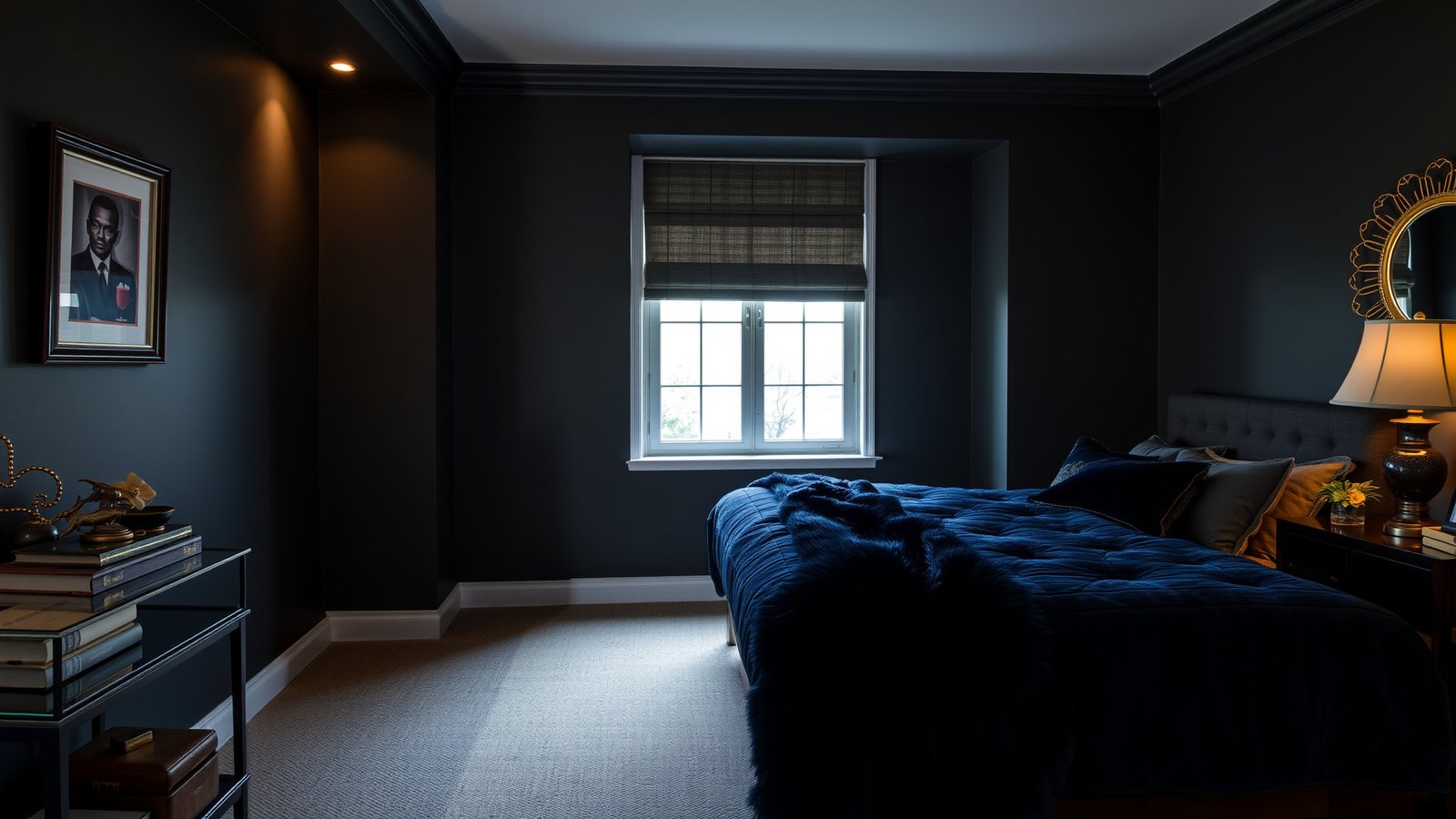
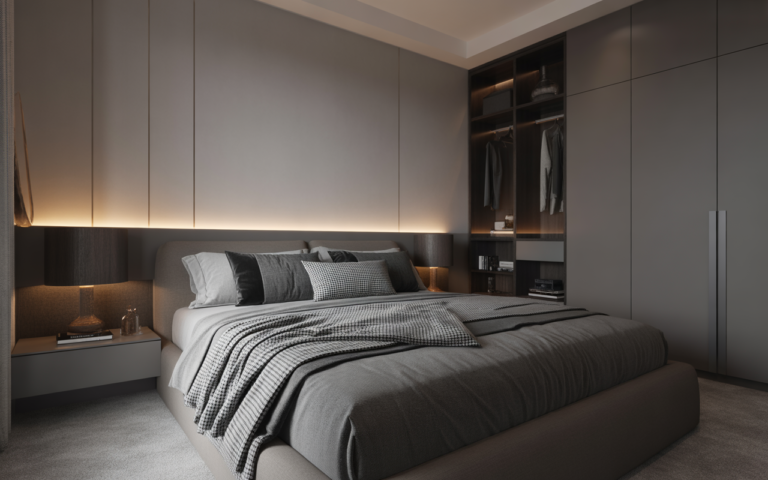
A dark bedroom palette — deep gray, navy, charcoal, forest green — creates what I think of as the cave effect, and the cave effect is either wonderful or suffocating depending on two things: the quality of the artificial lighting and the lightness of the bedding.
I made the mistake of going full dark once: dark gray walls, dark gray bedding, dark wood furniture, blackout curtains. The room looked incredible in photographs taken in the afternoon. At 10pm with warm lamps it was beautiful. At 7am with morning light trying to filter through the blackout curtains it felt like a place that didn’t want to wake up. The fix: light bedding. Always light bedding against dark walls. The contrast between a dark room and white or cream linen bedding is one of the most visually striking combinations in bedroom design, and it prevents the dark palette from becoming oppressive.
For more on navigating dark bedroom colors specifically, the 2026 paint color trends guide covers charcoal, navy, and deep green in detail — including which specific paints stay warm in evening light rather than going cold and blue.
Personal Touches — Gallery Walls Done Right in a Moody Room
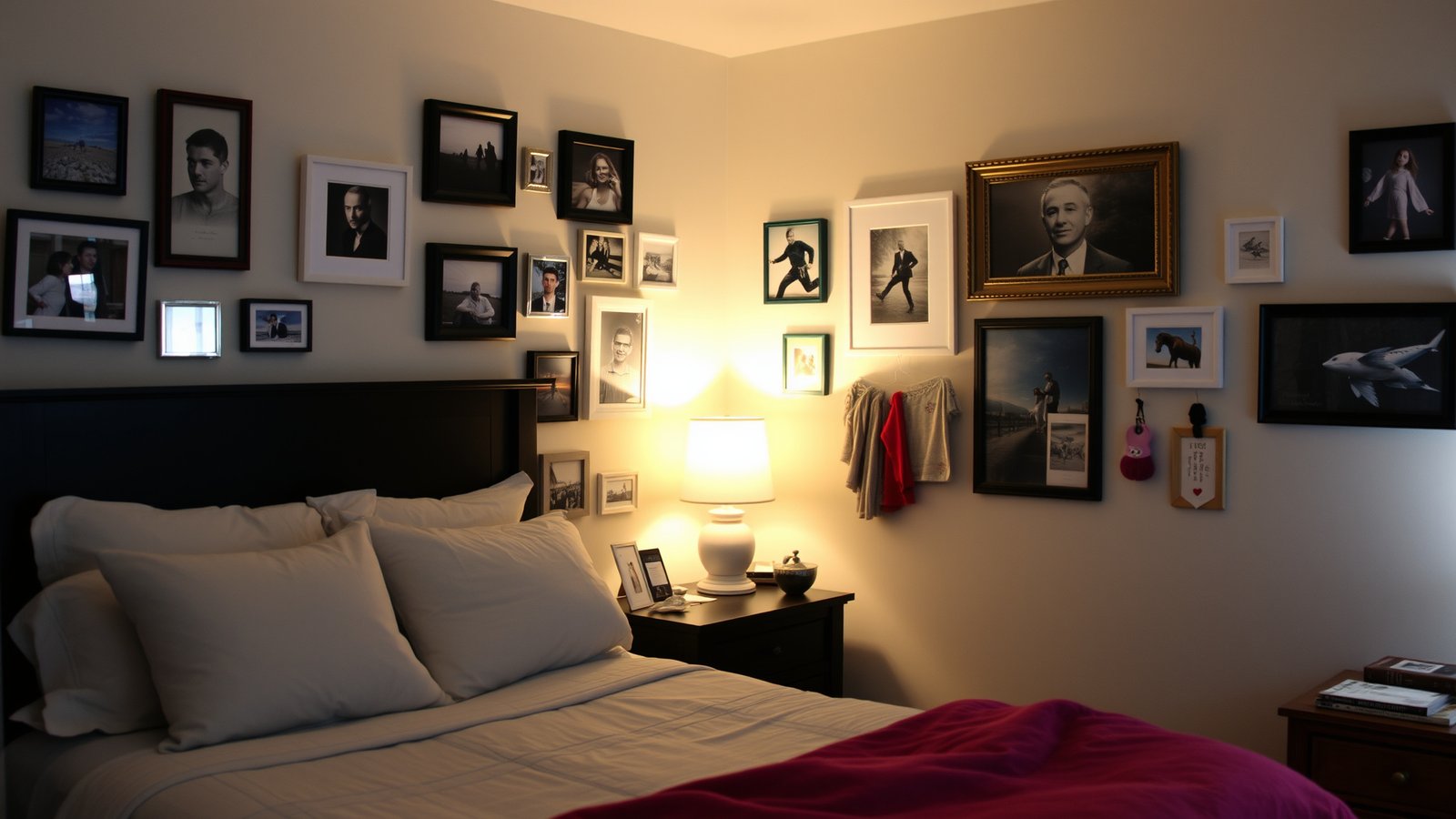
A gallery wall in a moody bedroom reads differently than a gallery wall in a bright room — the contrast between artwork and the dark wall creates depth that a white wall can’t produce. Even relatively simple artwork looks considered against a deep-colored wall.
The moody bedroom gallery wall works with dark or black frames, consistent in style if not in size. Matte black frames against a deep green or charcoal wall are one of the best combinations in bedroom wall styling — graphic, bold, and sophisticated simultaneously. The content doesn’t all have to be formal artwork: personal photos in black and white, a pressed botanical specimen, a postcard from somewhere that mattered — these fit the gallery wall in a moody room more naturally than in a bright one.
The arrangement: laid out on the floor first, every time. The wall doesn’t forgive the rearrangement that a floor does. Get the grouping right on the floor, measure it, transfer the measurements to the wall with painter’s tape, then hang. No unnecessary holes, consistent visual result.
Fabric Wall Hangings — Texture on the Wall
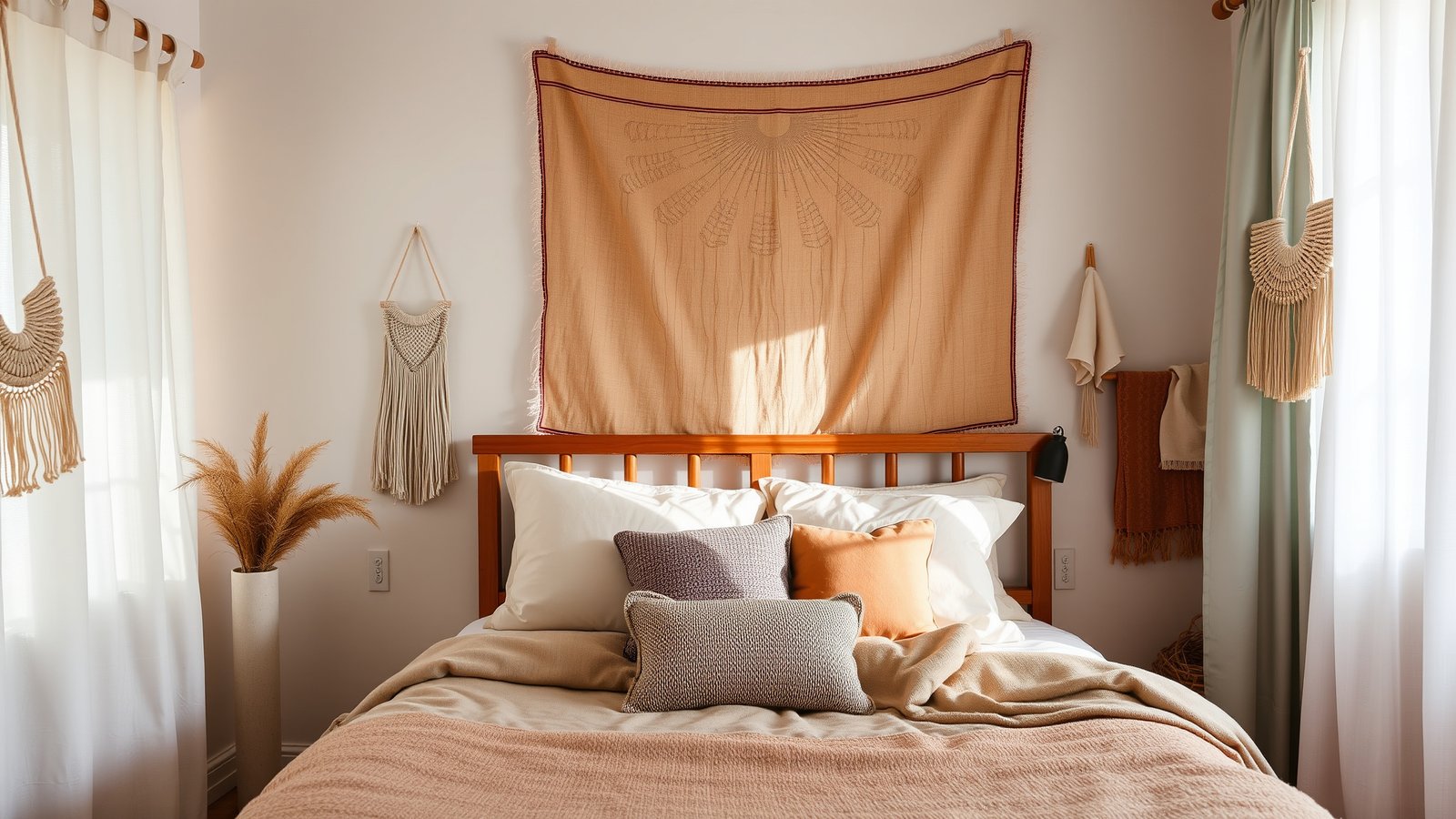
A fabric wall hanging above the bed in a moody bedroom does something framed art doesn’t: it adds texture to the wall surface, which makes the whole room feel warmer. A woven tapestry, a macramé piece, a length of interesting fabric stretched over a rod — any of these creates a different quality of presence on the wall than a hung frame.
For a moody bedroom specifically: tapestries in earthy tones — deep terracotta, warm brown, forest green, rust — rather than the lighter boho versions that work in brighter rooms. The Etsy market for handmade tapestries is extensive, and original pieces from independent weavers run $60–200 depending on size. A piece that’s made by hand, from natural fibers, reads completely differently than a mass-produced tapestry — the slight irregularity is part of what makes it beautiful.
Size is important: the piece should be roughly two-thirds the width of the bed for proper visual proportion. A hanging that’s too small above a king or queen bed looks like an afterthought. A full-width hanging creates a headboard-alternative that’s particularly effective in rooms without a traditional headboard.
Warm Wood Accents — The Amber Spectrum Only
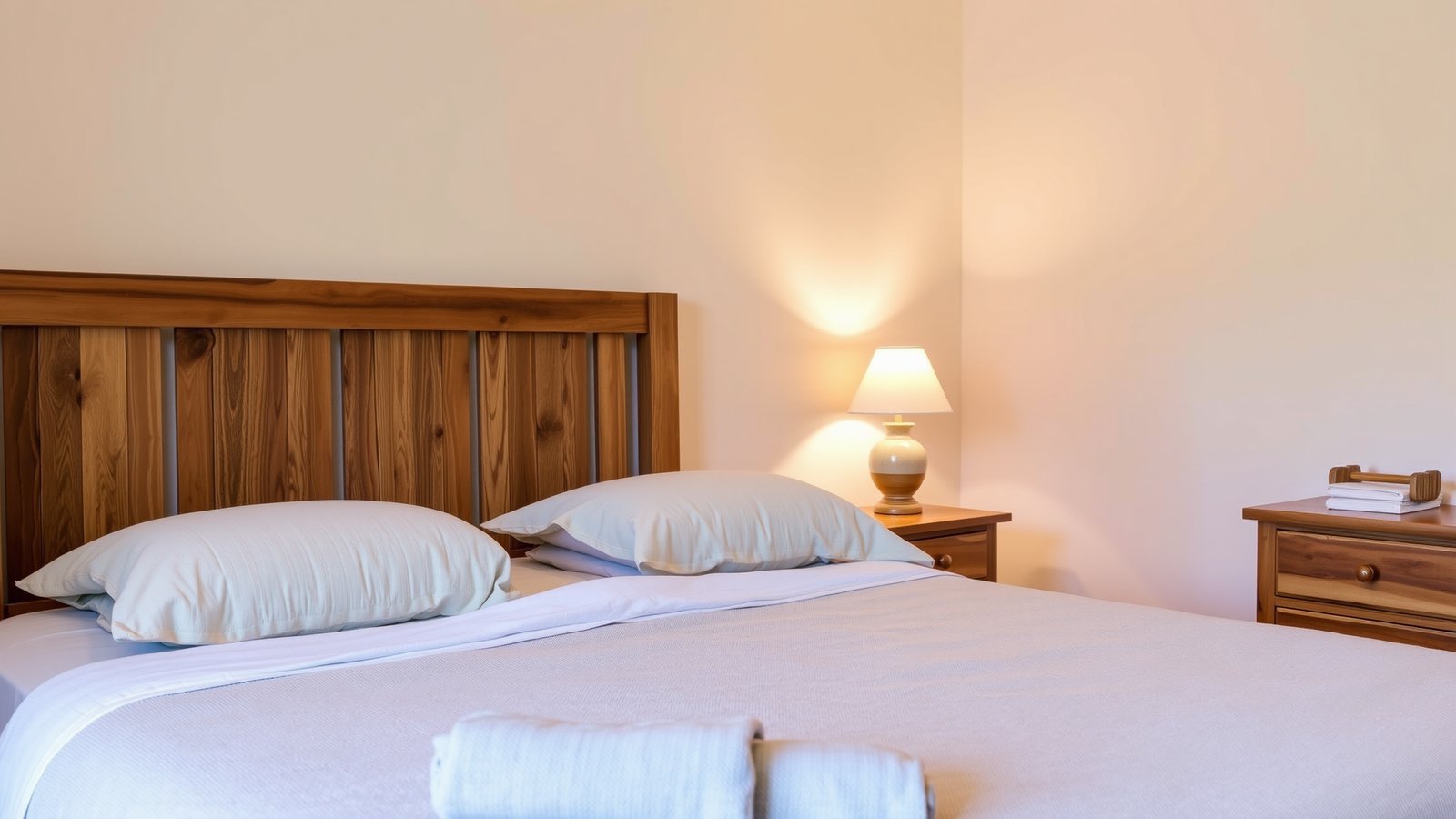
Wood in a moody bedroom does something that painted or lacquered furniture can’t: it brings organic warmth that reads as genuinely natural rather than decoratively natural. The grain, the slight variation in tone, the way it absorbs and reflects warm light — these qualities make wood the perfect material companion for moody wall colors and ambient lighting.
The wood tones that belong in a moody bedroom: anything in the walnut-to-amber range. Dark brown walnut is the richest and most dramatic — a walnut nightstand next to a deep green wall is one of the best material pairings in bedroom design. Amber oak adds warmth without going as dark. What doesn’t work in a moody bedroom: gray-washed wood, whitewashed wood, or anything that pulls cool — these fight against the warmth the room is trying to establish.
For specific pieces: IKEA’s TARVA dresser in pine ($199) takes stain beautifully if you sand and apply a dark walnut stain yourself — a $15 can of Minwax Dark Walnut transforms it into something that looks like proper furniture. That’s the budget route to a warm wood piece in a moody bedroom.
A Reading Nook Corner — The Spot That Makes the Room
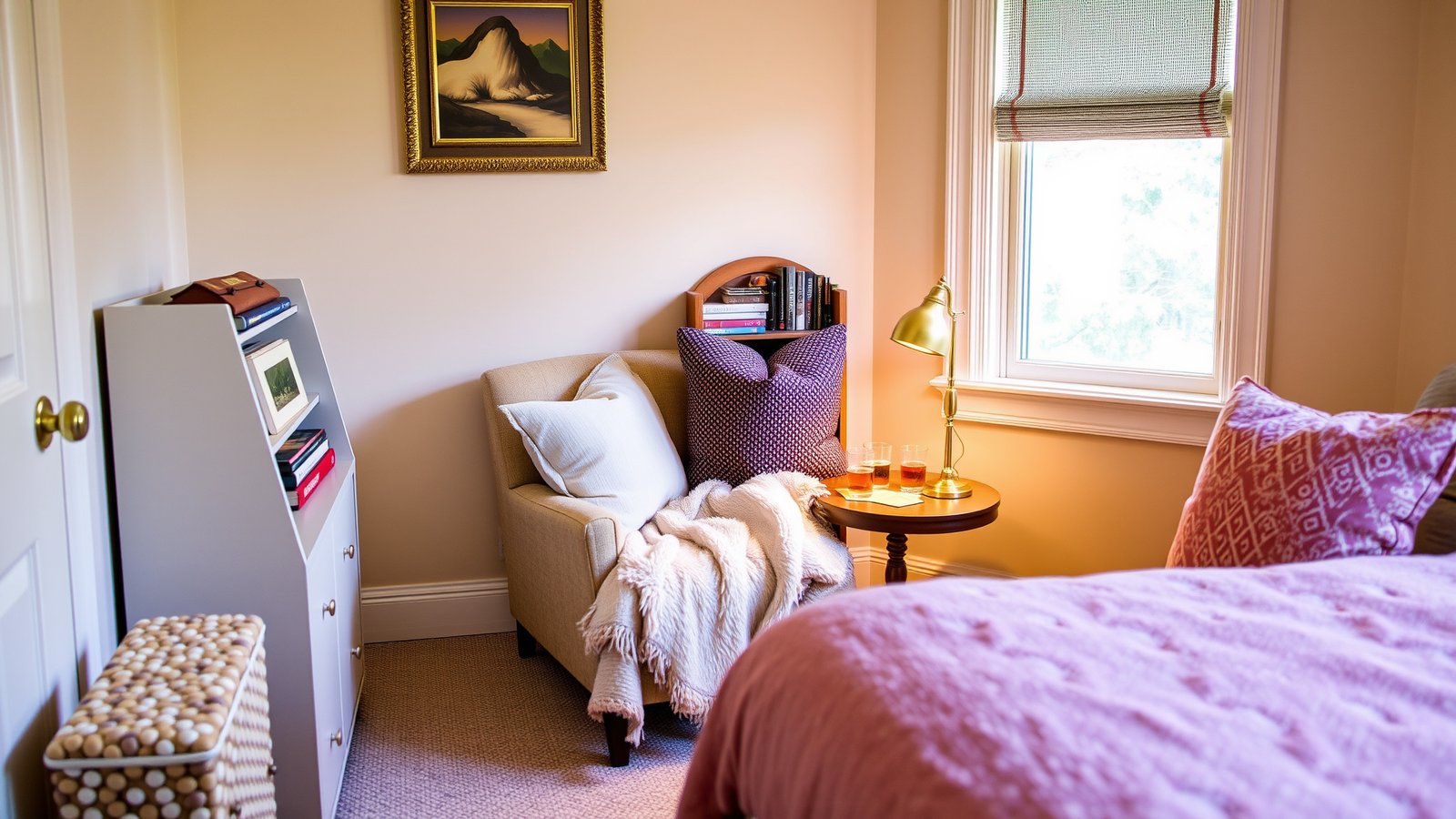
A reading nook in a moody bedroom isn’t just functional — it changes the quality of how you use the whole room. When there’s a designated spot that’s specifically for sitting, reading, and being somewhere comfortable that isn’t the bed, the room becomes a retreat in the fullest sense. You spend time there intentionally rather than just collapsing onto the bed at the end of the day.
The foundation: a proper armchair, not a decorative one. An armchair you can sit in for an hour with a book without your back complaining. IKEA’s STRANDMON wingback ($299) is the one I come back to consistently — it looks more expensive than it is, it’s genuinely comfortable, and the wingback design contributes to the enclosed, cocooned quality of a moody reading corner.
The lighting in the reading nook needs to be separate from the room’s ambient lighting — a floor lamp positioned behind and above the chair, on a dimmer, provides the task light for reading without lighting the whole room. A small side table at the right height (the seat height of the chair plus about 2 inches, typically 24–26 inches from the floor) completes it. That’s four pieces: chair, throw, lamp, side table. The nook is done.
Textured Ceilings and Exposed Beams — When You Have Them
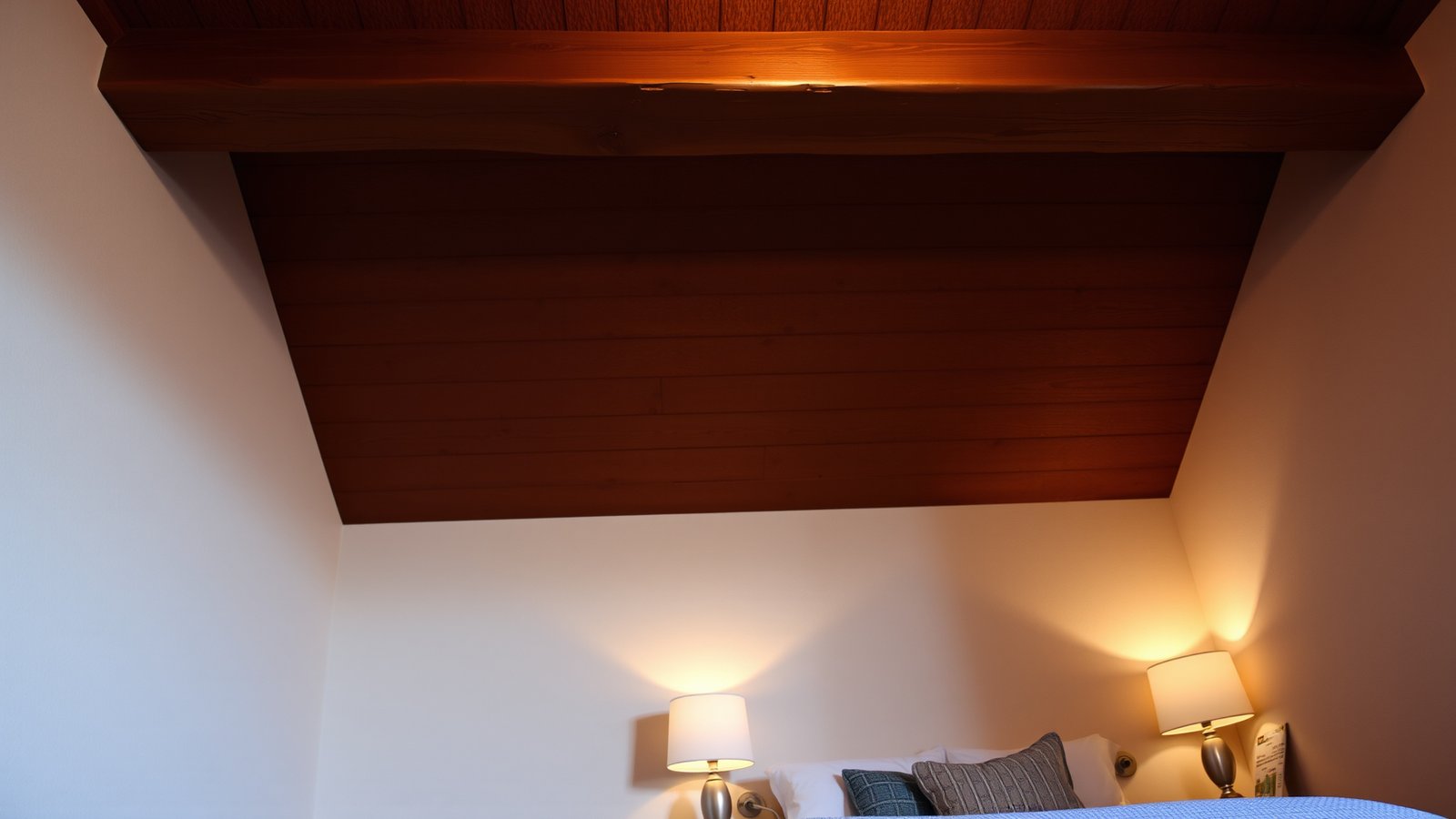
If your bedroom has exposed wood beams, a textured plaster ceiling, or any architectural ceiling detail — this is the feature that defines the moody bedroom more than any paint color or furniture choice. Exposed beams specifically create the quality of enclosure that a moody bedroom is looking for: the room feels bounded, defined, like it knows what it is.
If your ceiling is flat and plain: there are two paths. The first is doing nothing and letting the walls, lighting, and textiles create the moody quality — which works well and is what most people do. The second is adding character with paint: painting the ceiling the same color as the walls (a monochromatic ceiling treatment) makes the room feel lower and more intimate in the best way. A charcoal ceiling over charcoal walls with warm lamplight below is one of the more dramatic and beautiful room effects available without any structural work.
Warm lighting that highlights ceiling texture — whether existing exposed beams or simply an interesting painted surface — makes the architecture feel more present. Up-lighting (a floor lamp directed upward in a corner) or wall sconces that throw light upward create the effect.
A Mood Board Before You Start
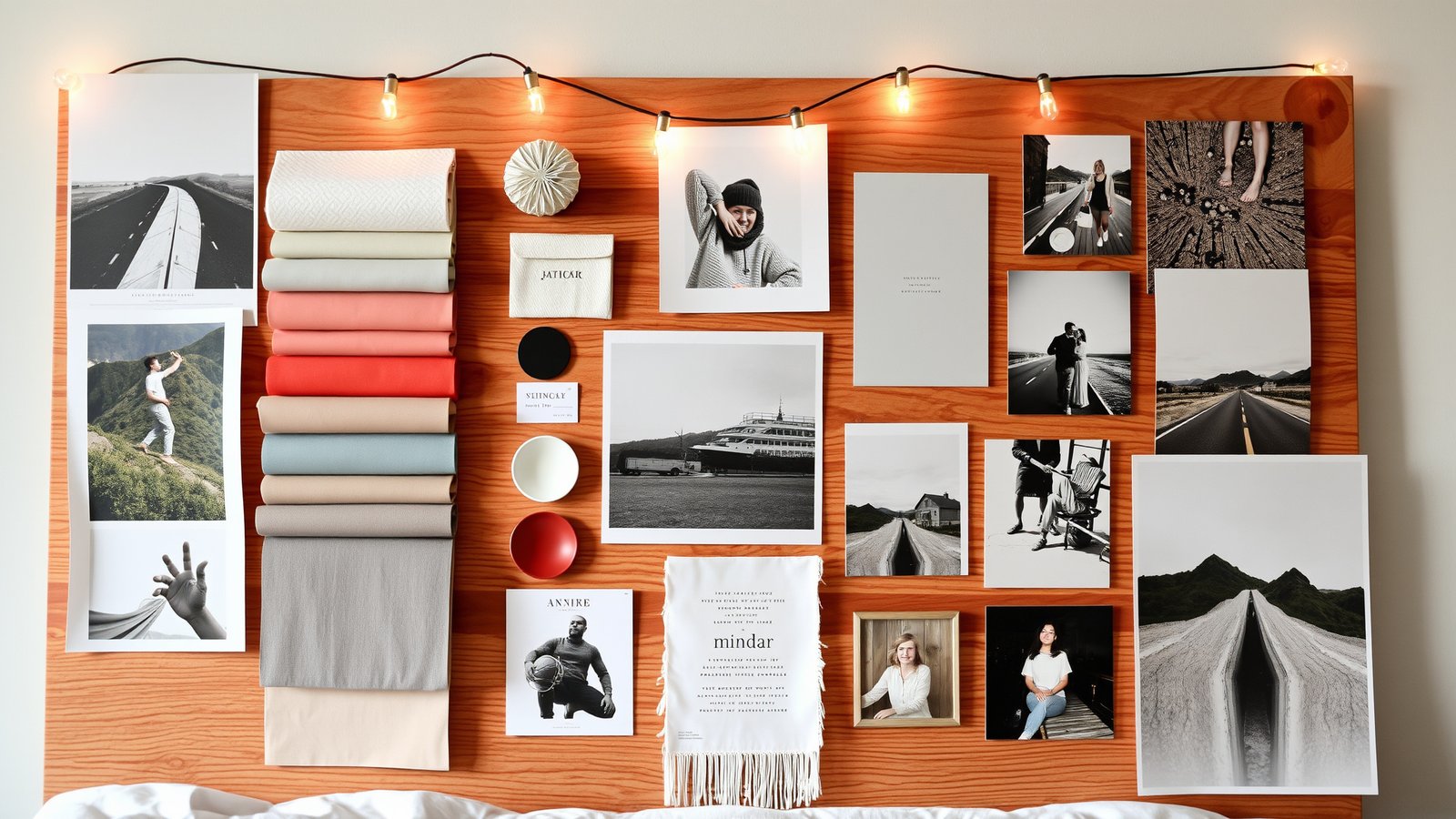
This is the step most people skip and the reason most bedroom redesigns end up looking like three good ideas that don’t quite belong together. A mood board — even a simple digital collection on Pinterest, or physical paint chips and fabric swatches on a piece of cardboard — forces you to look at your choices simultaneously rather than sequentially.
The most important thing a mood board reveals: whether the warm tones and cool tones in the room are going to fight each other. A charcoal wall (slightly cool) with warm walnut furniture (very warm) and brass accents (warm) and a burgundy throw (warm) — the mood board shows that the charcoal is the only cool element and that it’s going to need something to bridge it to the warm materials. Maybe a warm gray rather than a cool charcoal. Maybe adding a warm olive textile to bridge the gap.
Make the mood board before buying anything. Change it as many times as you need to before it feels right. Then shop from it.
The Bedding — Where the Budget Actually Matters
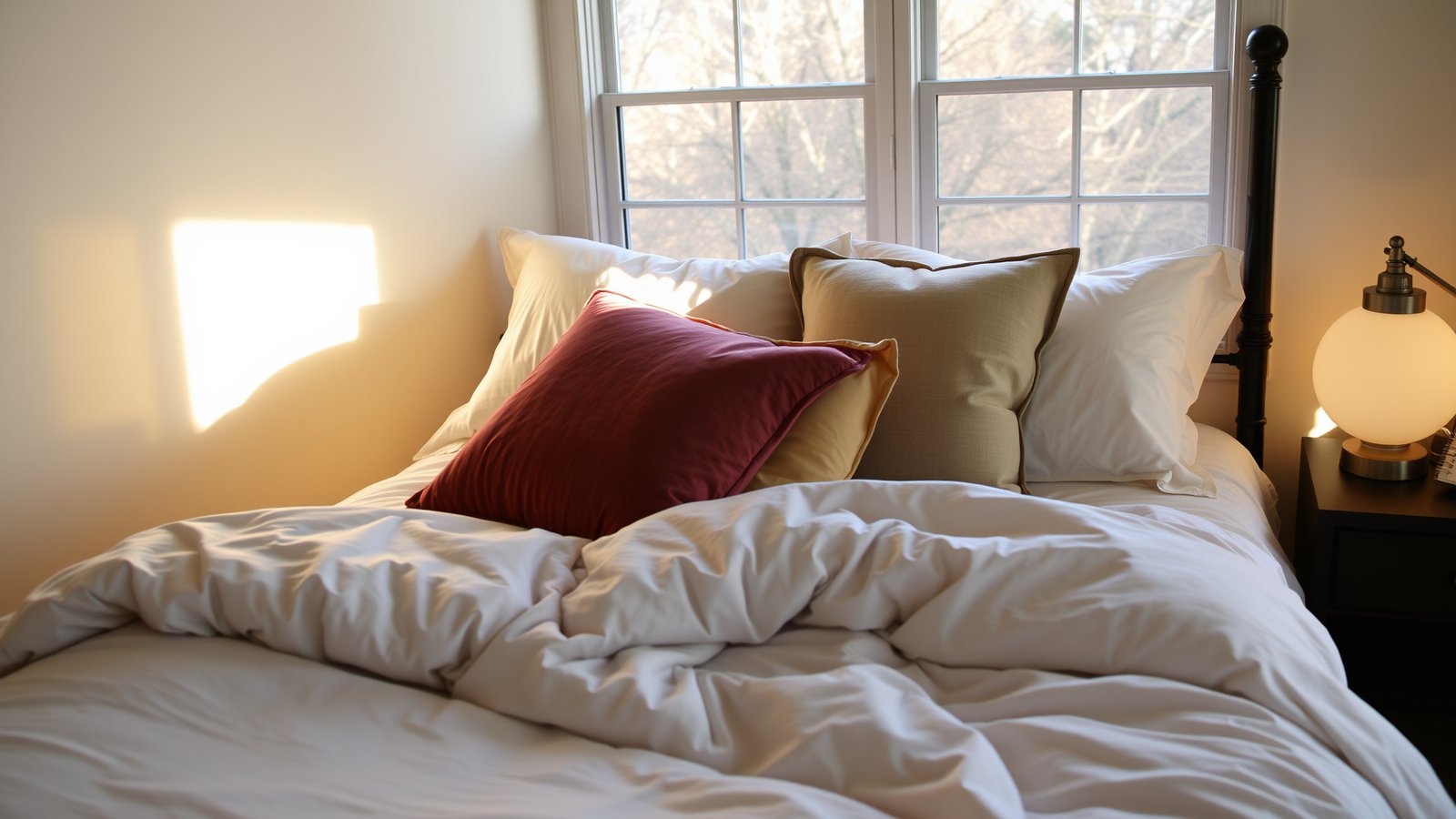
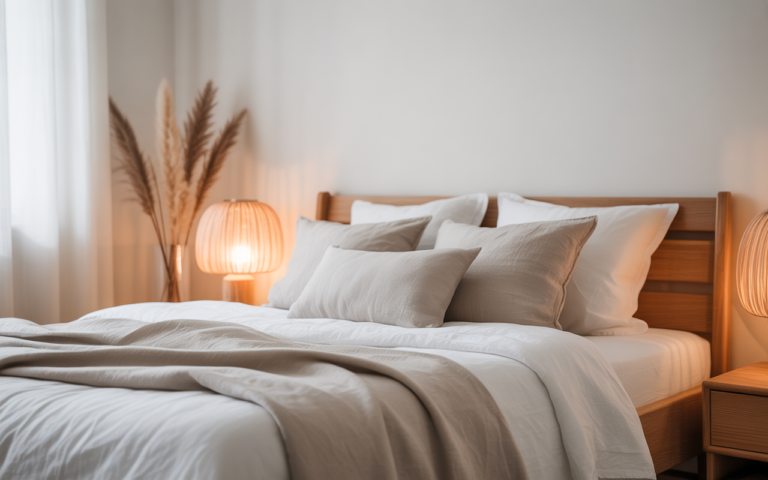
In a moody bedroom specifically, the bedding quality shows more than in any other style. Because the room is darker and the lighting is lower, the texture and drape of the bedding are visible in a way they aren’t in a brightly lit room. Cheap polyester bedding looks flat and slightly shiny in warm lamplight. Quality linen or cotton looks soft and dimensional.
The investment worth making: a linen duvet cover. Washed linen duvet covers from Cultiver, Quince, or IKEA’s DYTÅG range ($45–150 depending on brand and size) look better every time they’re washed, wrinkle in a way that looks intentional, and have the kind of drape that photographs like a boutique hotel. In a warm neutral — oatmeal, warm white, dusty sage — against a dark wall they’re one of the most beautiful combinations available in a bedroom.
The pillows underneath: sleeping pillows in a good cotton pillowcase, two or three euro squares in a velvet or textured cover in a color that references the wall tone (deep green euros against a sage wall, burgundy euros against a charcoal wall), and one or two smaller throw pillows in a contrasting texture. That’s the formula. The moody bedroom bed should look like it took thought and look comfortable at the same time — those two things are not mutually exclusive.
Questions I Get Asked a Lot About Cozy Moody Bedrooms
Will a dark bedroom make my small room feel even smaller? It can — but it doesn’t have to. The factors that make a dark room feel small are dark walls plus dark furniture plus no contrast in the bedding plus inadequate lighting. Fix any two of those and the room stays moody without feeling like a closet. The most important counterbalance: light bedding. White or cream linen bedding against a dark wall creates contrast that opens the space visually. The second most important: layered warm lighting rather than no overhead light. More on this in the small bedroom ideas guide which covers dark versus light choices specifically for smaller spaces.
What’s the single most impactful change for creating a moody bedroom? Changing the light bulbs. Replace every cool or neutral white bulb in the bedroom with 2200K–2700K warm bulbs. This costs under $15 and the change in evening atmosphere is immediate and significant. The second most impactful: one dark accent wall behind the bed. Together these two changes — which take an afternoon and cost under $100 — create most of the moody bedroom effect that people are working toward.
How do I make a moody bedroom feel cozy rather than depressing? Warmth in three forms: warm color (amber tones in the lighting, warm wood tones in the furniture, warm neutrals in the bedding), warm texture (layered textiles, a rug underfoot, soft materials that invite touch), and personal elements (things in the room that mean something to you specifically). A moody bedroom that’s dark but cold and impersonal feels oppressive. A moody bedroom that’s dark, warm, and personal feels like a retreat.
Can I do a moody bedroom if I rent and can’t paint the walls? Yes — and sometimes the rental constraint produces better results. Dark bedding against a white wall creates the light-and-dark contrast that makes moody bedrooms work, without touching a wall. A statement fabric wall hanging above the bed adds the dark textural element. Layered warm lighting eliminates the harsh rental-standard ceiling fixture from the equation. A moody bedroom can be achieved almost entirely through furniture, textiles, and lighting — none of which are permanent changes.
What’s the most common moody bedroom mistake? Going dark on everything simultaneously. Dark walls, dark bedding, dark furniture, dark curtains — the room becomes depressing rather than moody because there’s no contrast for the eye to rest on. The moody bedroom needs one light element (usually the bedding), one warm element (usually the lighting), and one personal element (usually art or a meaningful object) to balance the depth of the dark palette. Contrast is what makes darkness feel intentional.
A Moody Bedroom Is the One You Never Want to Leave
The rooms that function best as genuine retreats are almost always on the darker, warmer, more enclosed end of the design spectrum. They feel different from the rest of the house. They have a quality of separation that lighter rooms don’t — the sense that stepping into them is stepping out of the day rather than continuing it.
That quality is achievable in almost any bedroom with the right combination of lighting, color, and textile choices. Start with the light bulbs. Then the bedding. Then the wall color. The room will tell you what it needs from there.
My current project: I’m finally adding a proper reading chair to the corner of my bedroom that’s been used as a clothes deposit for too long. I’ve had my eye on the STRANDMON in a dark velvet for months. I’ll report back when it’s in place.
— Emily
What’s the element your bedroom is most missing right now — the thing that would make it feel most like the retreat you want? Tell me in the comments.