15 Spring Table Decor Ideas That Make Every Meal Feel Worth Sitting Down For
There’s a difference between a table that’s set and a table that’s been thought about. The first version has everything you need to eat. The second version makes people slow down when they walk in the room, pull out their chairs a little more deliberately, and stay longer than they planned.
Spring is the easiest season to get that second version right, because the raw materials are everywhere and most of them are inexpensive. Fresh flowers, light fabrics, bright color. The work is in the editing and the arrangement, not in the buying.
These fifteen elements are the ones I come back to most consistently for spring table styling — some are foundations, some are finishing touches, all of them are worth knowing.
Floral Centerpieces — One Type of Flower, Two Vessels
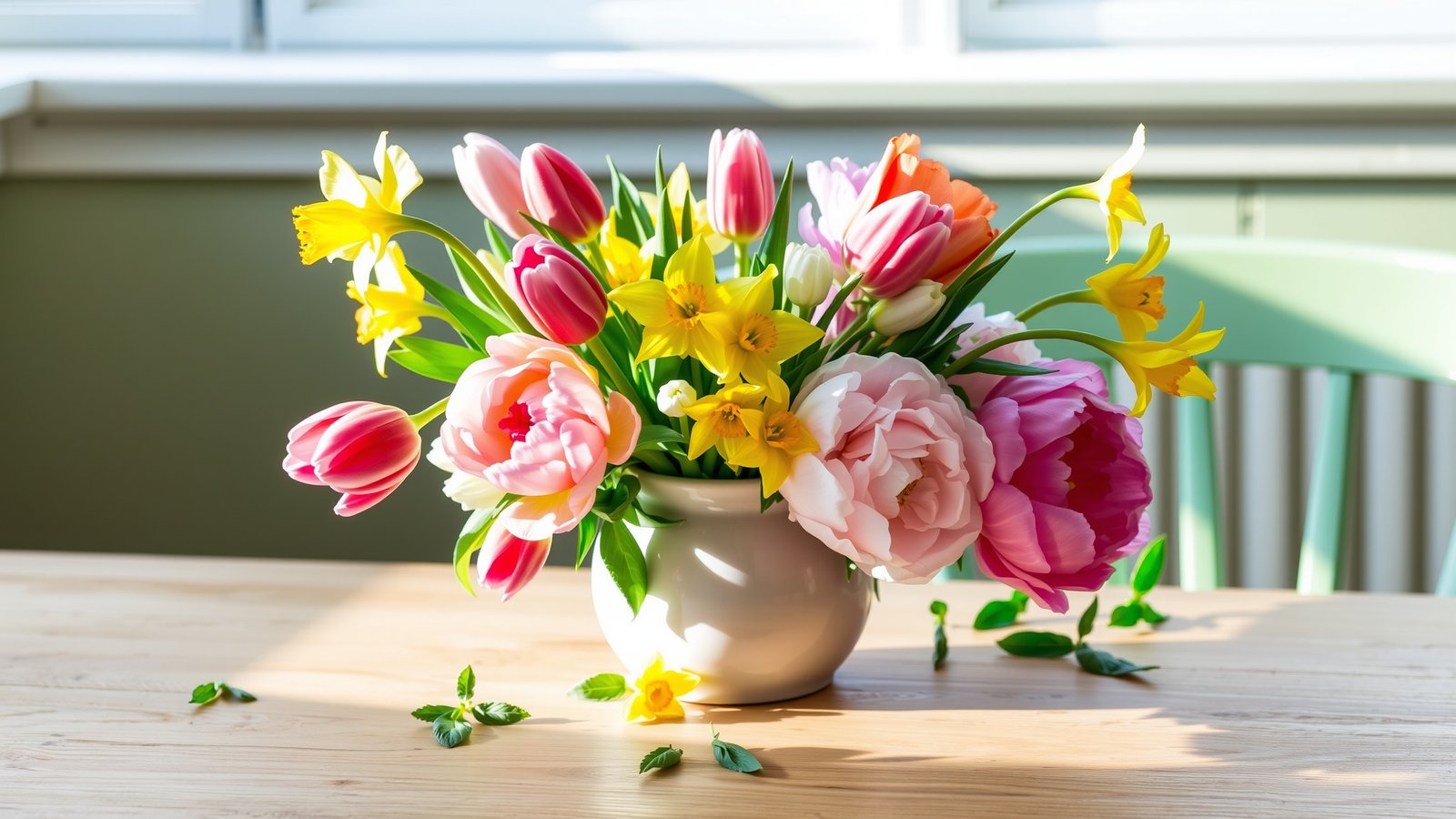
A floral centerpiece is the fastest way to transform a table from practical to beautiful, and it’s also the easiest to get wrong. The mistake I made for years: buying a large, mixed bouquet from a florist, putting it in one big vase in the middle of the table, and watching it decline unevenly over the next week as one flower type went before the others.
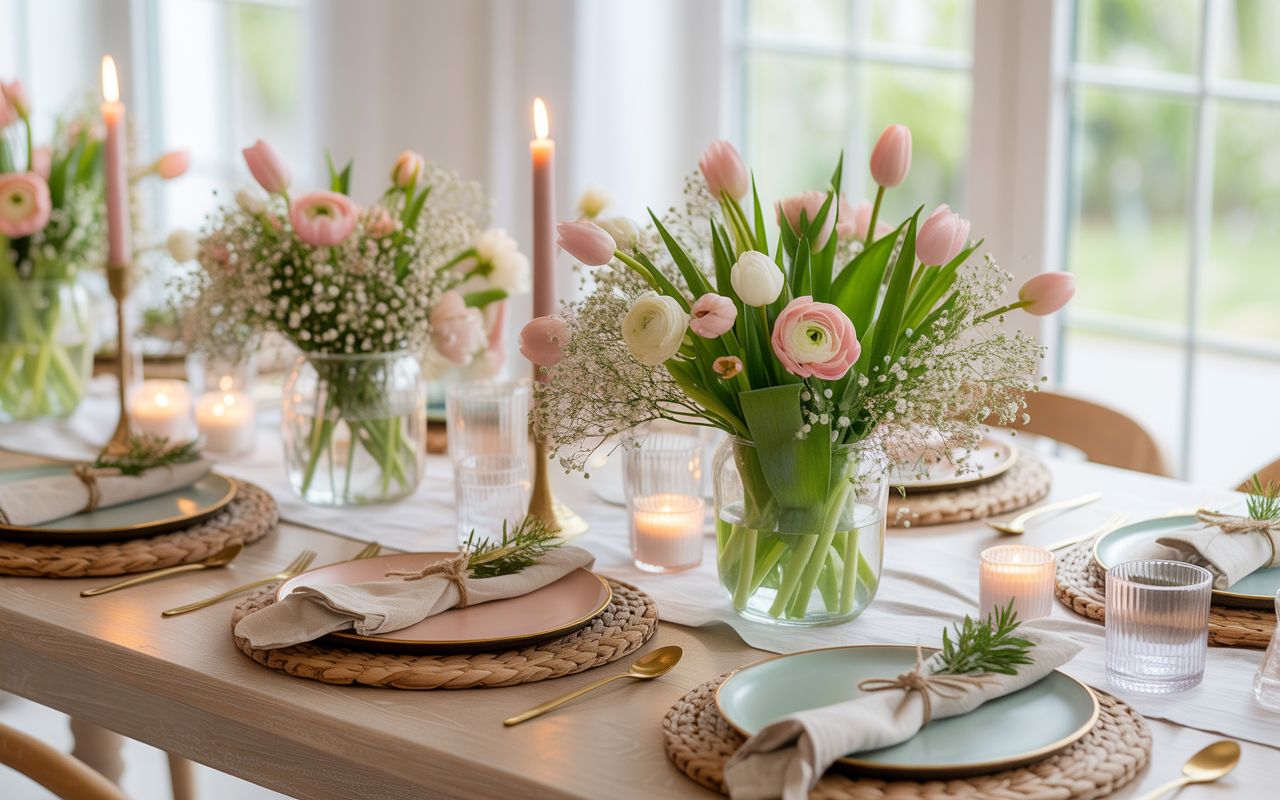
What works better in a real home: one type of flower, split between two or three smaller vessels placed at varying points down the center of the table rather than one large arrangement in the center. Three stems of ranunculus in a simple glass bud vase, two more stems in a small ceramic vessel beside it — that reads more intentional than one large arrangement and is significantly easier to replace as flowers fade.
For spring specifically: tulips ($6–8 a bunch at Trader Joe’s, where they’re usually excellent), peonies when they’re in season ($8–12 for a grocery store bunch), or hyacinths for the scent as much as the look. All three work. All three are better in single-type arrangements than mixed.
Pastel Tableware — Layered, Not Matched
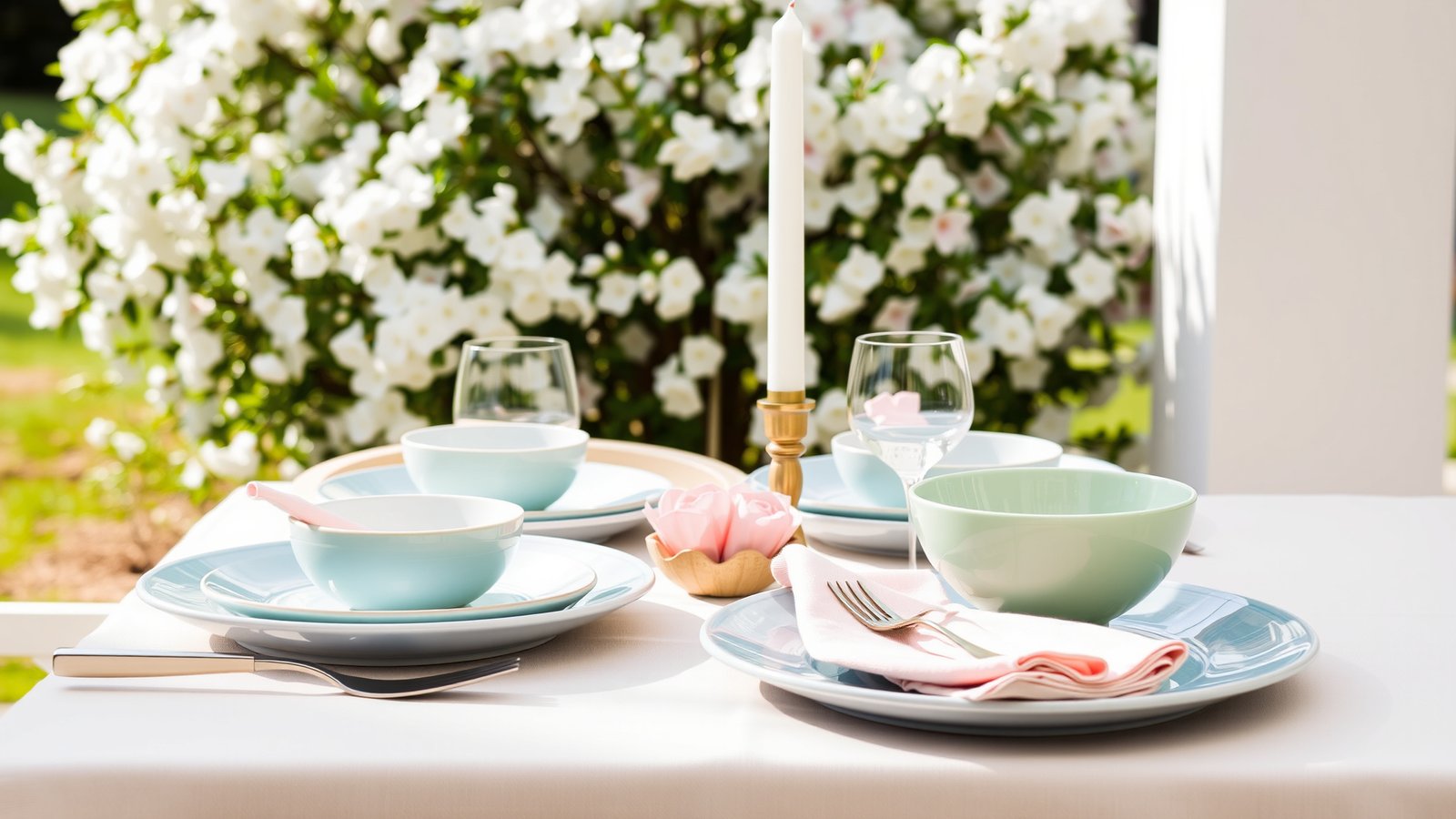
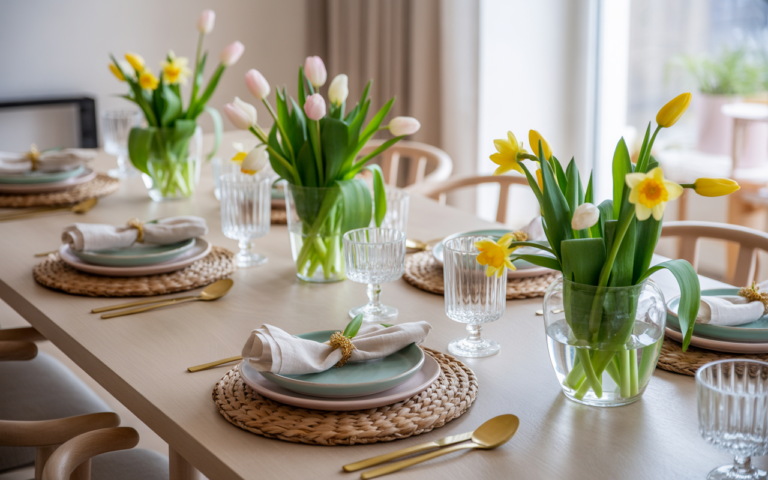
Pastel tableware for spring works when the plates, bowls, and napkins are different tones of different colors rather than a matched set in one color. A matched set reads like a theme. Different soft tones layered together — a dusty blush dinner plate with a sage green salad plate and a warm cream bowl — reads like someone with a good eye put it together over time.
The easiest version: a set of white dinner plates (which you probably already own) as the base, with pastel salad plates on top from a seasonal collection. Target and IKEA both do seasonal pastel tableware at $3–8 per plate, which makes buying a set of four for one season completely reasonable. They’re stackable and storable.
The napkin is where most of the color comes from in a well-layered place setting. A sage green linen napkin on a white plate with a blush salad plate is three colors without being chaotic. The tablecloth underneath should be white or warm cream — neutrals that let the pastel tableware read clearly.
Natural Elements — As the Table, Not On the Table
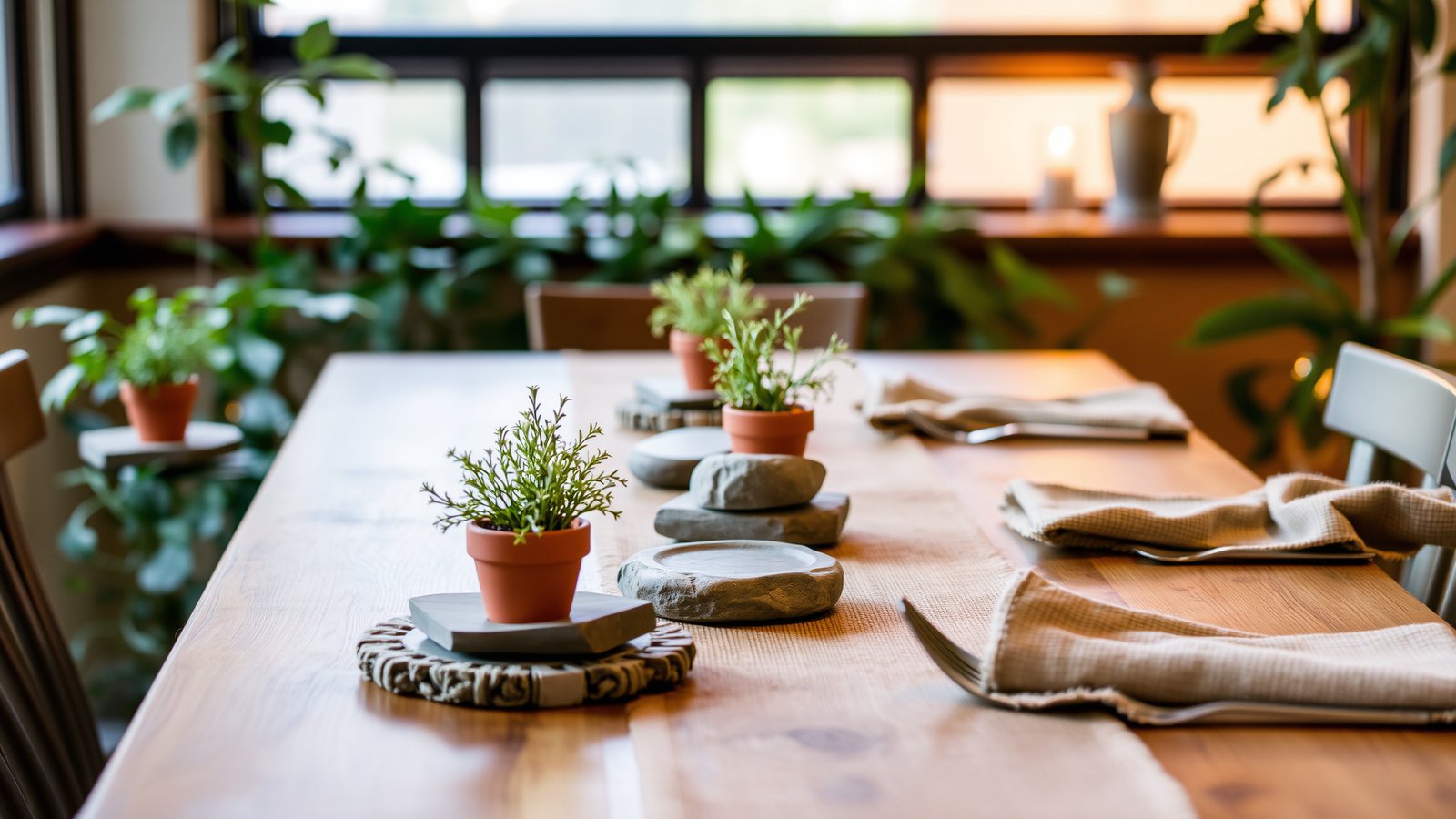
The mistake with natural elements in table decor is using them as accessories — a few stones placed decoratively, a wooden board leaned against a vase, some moss scattered around a centerpiece. This looks like a Pinterest project rather than a thoughtful table.
The version that works: natural elements as the actual tableware or infrastructure. Wooden chargers under every place setting (a set of four runs $20–35 at most home goods stores or on Amazon) give the table warmth and texture as the foundation everything else sits on. Small terracotta pots as individual bud vases at each place setting — one sprig of rosemary, one small bloom — function as both decor and a favor guests can take home. Stone or slate coasters that are beautiful enough to sit on the table rather than being hidden until drinks arrive.
The difference is function first, beauty second. Natural elements that do an actual job at the table look more considered than natural elements that are simply placed to look natural.
Colorful Table Runners — The One Piece That Changes Everything
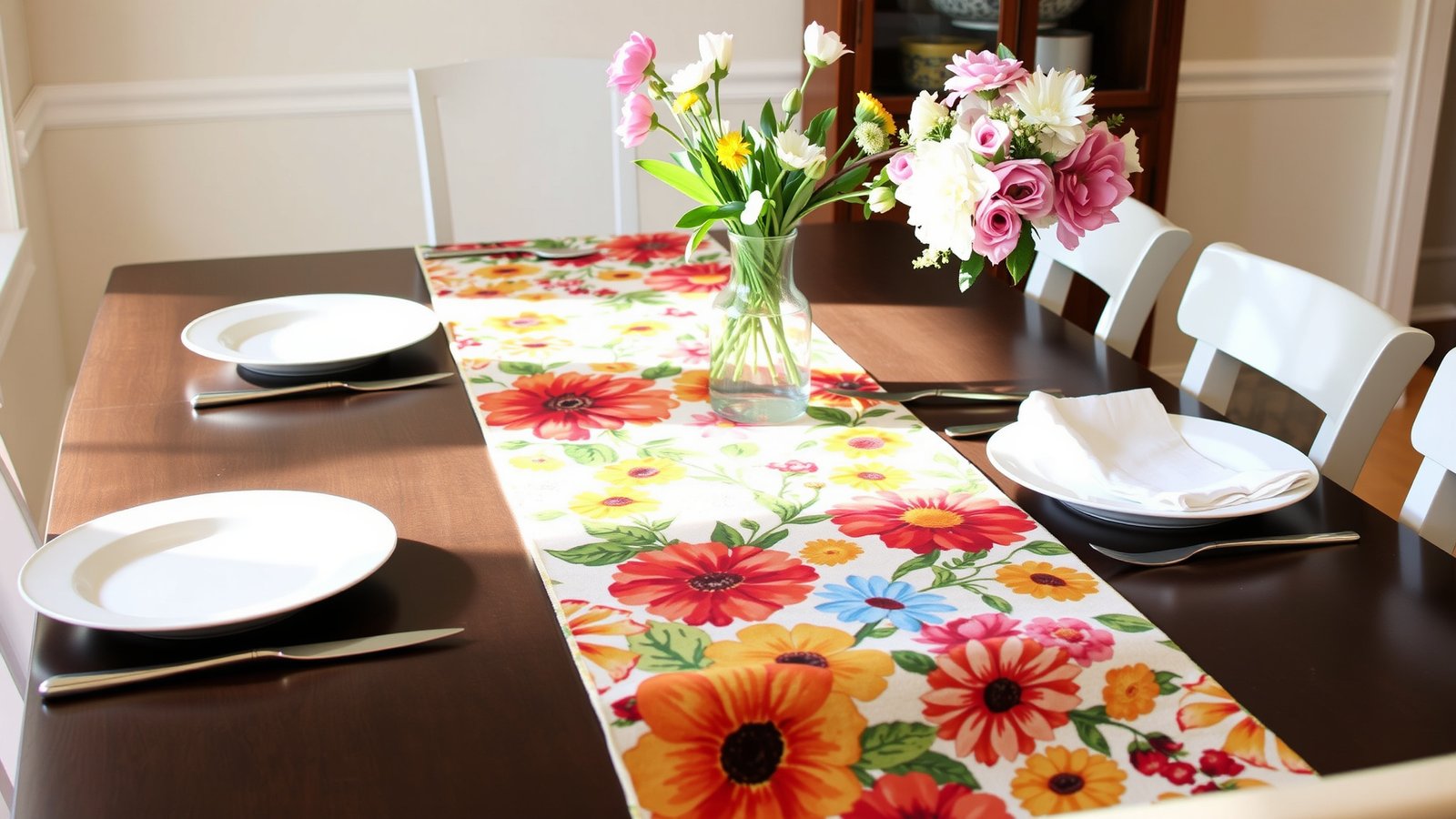
A table runner is probably the highest-impact table decor purchase available because it covers the most surface area for the least money and can be swapped seasonally without affecting anything else on the table. A spring runner over a neutral tablecloth or directly on a wood table changes the character of the whole setup in thirty seconds.
The runners that work best for spring: linen in a warm stripe, a simple botanical print in muted tones, or a solid in a spring color (sage, dusty rose, warm yellow). Avoid anything with obvious seasonal motifs — chicks, bunnies, large floral patterns that only work in one season. A stripe or a botanical print works in spring and summer both, which doubles the use.
Width and length matter: a runner should be 12–14 inches wide and extend about 6 inches past each end of the table. Too narrow reads like a placemat. Too short looks like someone ran out of fabric. Most commercially sold runners are cut for rectangular tables — measure before buying.
Vintage Tableware Finds — One Good Thing
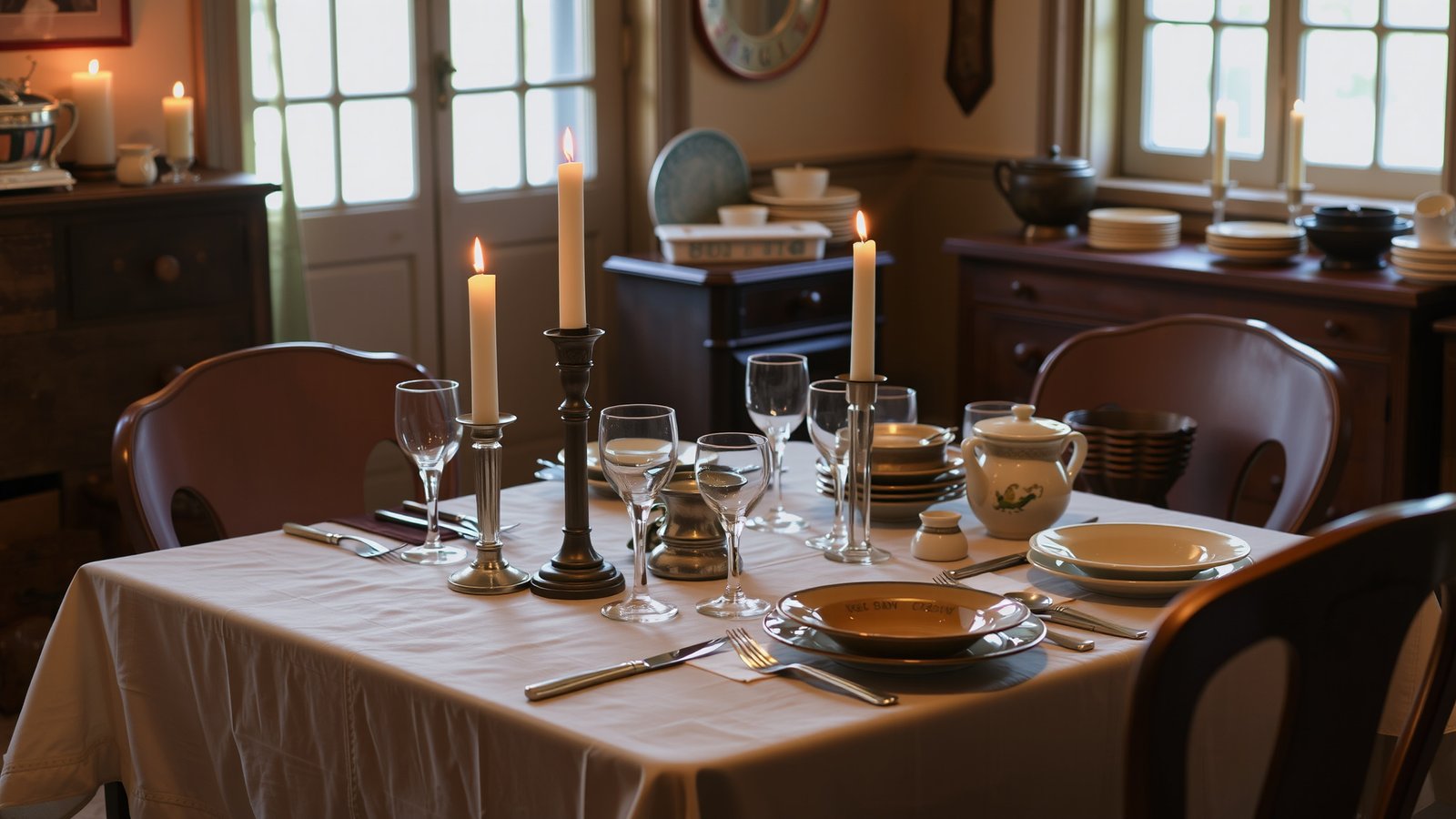
Vintage tableware has a quality that no new piece replicates: the sense that it arrived at the table from somewhere specific, that it has a life before this moment. A set of mismatched glasses from an estate sale, a hand-painted ceramic serving bowl from a flea market, a linen tablecloth with drawn-thread hemstitching that comes from someone’s grandmother’s linen closet — these objects make a table feel personal in a way that a complete matching set never does.
The sourcing approach: Facebook Marketplace and estate sales for anything structural (tablecloths, chargers, serving pieces). Thrift stores for individual glasses and small dishes — look for pieces that share a material or era rather than a pattern, since pattern-matching vintage looks dated while material-matching looks curated. Four different cut-glass tumblers that are all clear and all cut-glass read as a collected set. Four different patterns in four different colors just look mismatched.
One good vintage piece — a beautiful jug used as a vase, a ceramic serving bowl as the centerpiece, a pair of antique candlesticks — does more than an entire vintage-themed table setup.
Candles — Simple Taper, Proper Height
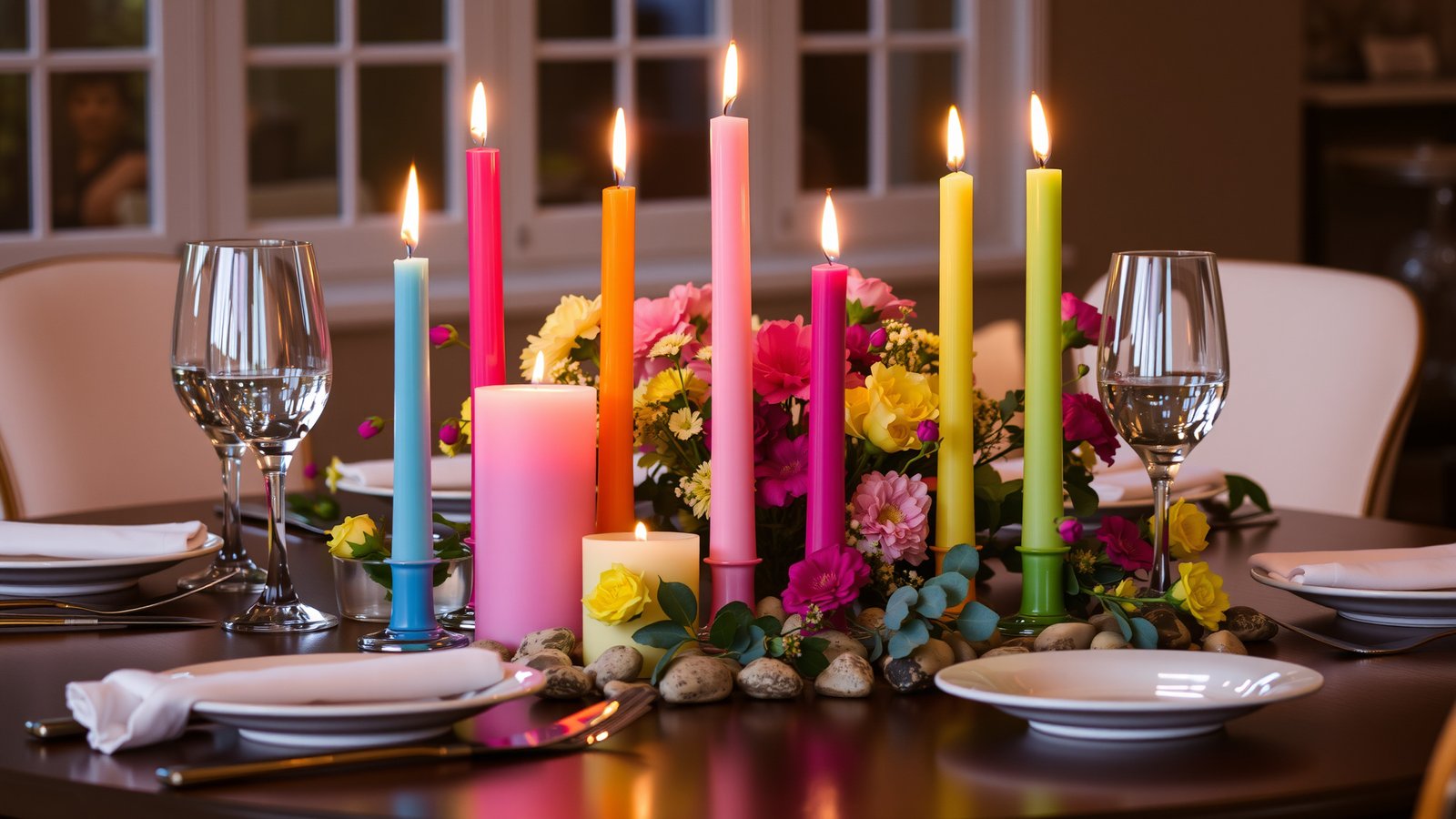
Candles on a spring table serve a specific purpose that most other decor elements don’t: they add moving light, which makes everything on the table look better and everyone around the table look warmer. That flickering quality at eye level during a dinner changes the atmosphere in a way that no overhead light can replicate.
Taper candles rather than pillar candles or tea lights for a dining table — they’re tall, their light is at the right height, and they’re slender enough not to block sight lines across the table. A pair of brass candlestick holders ($15–30 for a set) or simple ceramic taper holders in a spring color look genuinely elegant for minimal investment.
The one rule I hold consistently: no scented candles on a dining table when food is being served. The fragrance competes with the food in a way that’s uncomfortable to eat around. Unscented beeswax or unscented paraffin tapers only. The visual warmth is the point — the scent comes from the food and the flowers.
Fresh Fruit as Decor — Functional and Beautiful
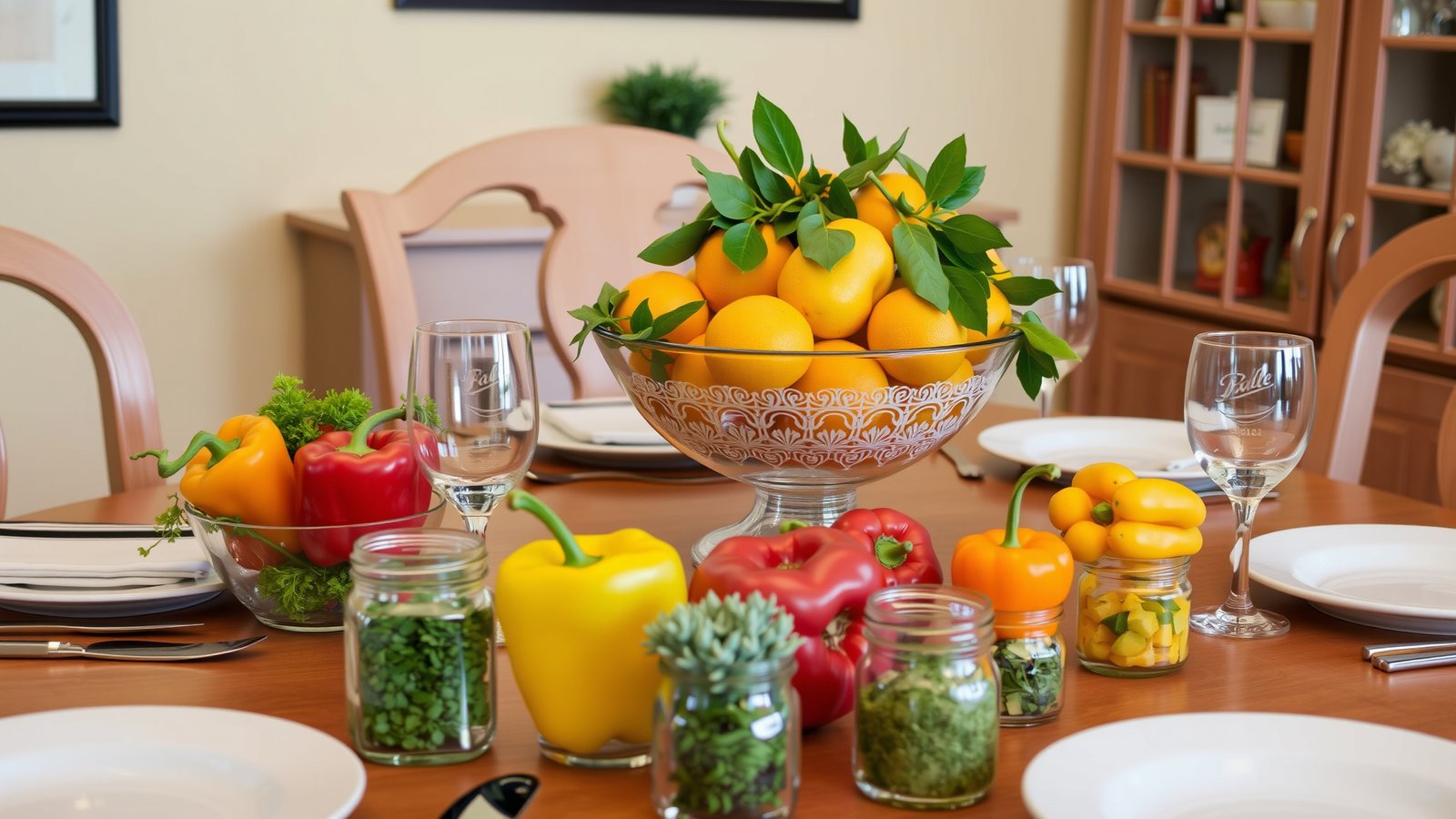
A bowl of fruit on a dining table is the decor piece that never needs to be thrown away — it gets eaten. And as a centerpiece or a decorative element, a simple ceramic bowl of lemons, limes, and oranges provides more color and more visual interest than a decorative object that costs more and does nothing.
The fruit that works best for spring decor: citrus in warm tones (lemons, blood oranges, kumquats), fresh strawberries in a bowl, small green apples stacked in a shallow dish, or a mix of the above. All of these are available and in season in spring, which keeps the color fresh and the cost reasonable.
The bowl matters: a simple ceramic bowl in a matte finish (terracotta, white, sage green) holds fruit beautifully. A clear glass bowl reads more casual. A wooden bowl adds warmth. Whatever you choose, the vessel should be simple enough to let the fruit color do the work.
Seasonal Tablecloths — Lightweight Fabric Only
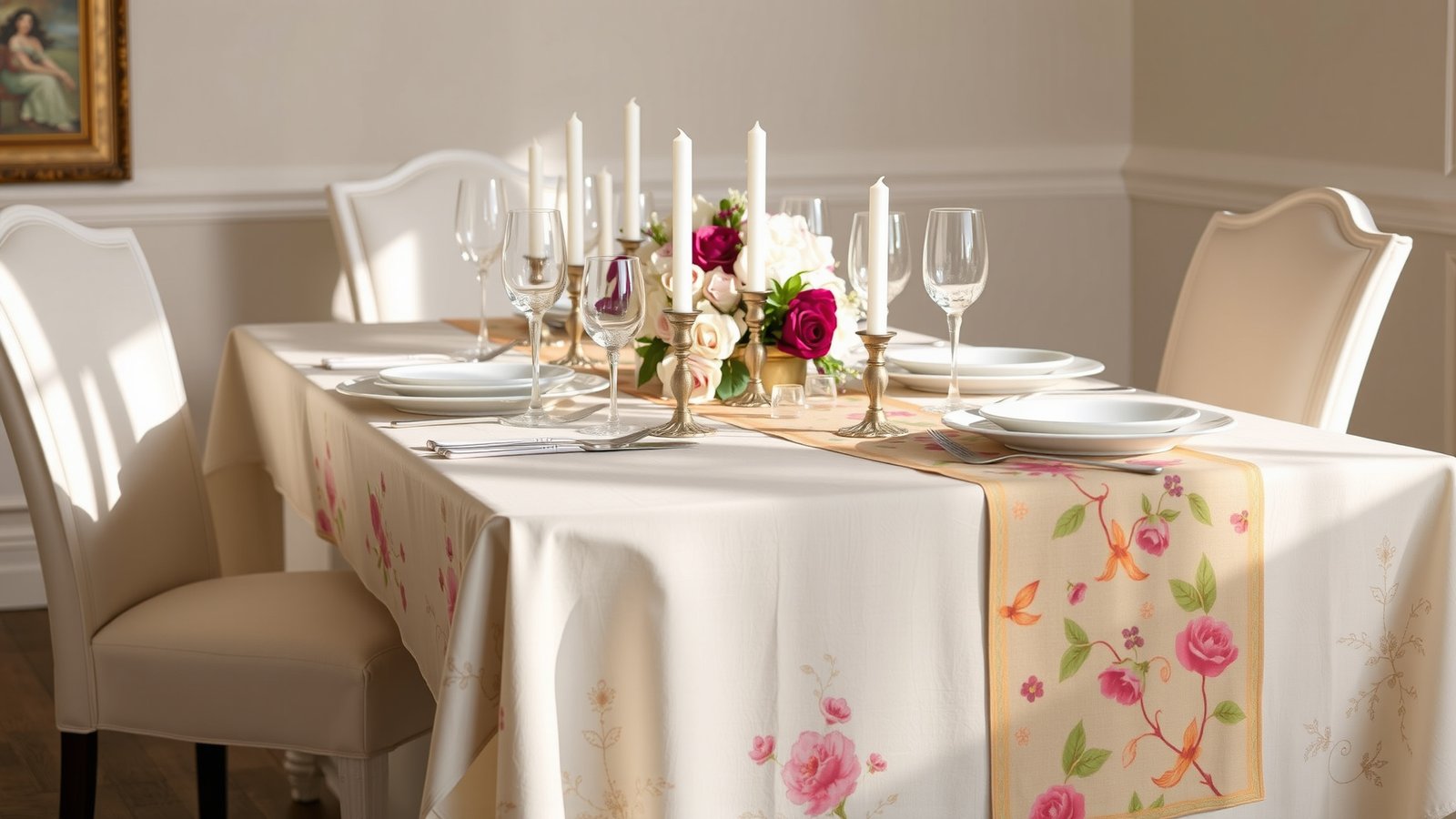
The tablecloth is the foundation of the whole spring table setup, which means getting it right matters more than any other single element. A tablecloth that’s the wrong weight, the wrong length, or the wrong pattern undermines every good decision made on top of it.
For spring: lightweight woven cotton or linen, nothing with any thickness or pile. The tablecloth should drape slightly over the table edges — 8–12 inches of drop on each side is the standard for a dining table, 6–8 inches for a more casual setting. A tablecloth that’s too short looks like a placemat. A tablecloth that pools on the floor at a dining table (not at a formal event, just at home) looks like a staging mistake.
Pattern for spring: soft stripes, small-scale botanicals, or simple geometric wovens work for the whole season and into summer. Large-scale prints and obvious seasonal patterns (florals with visible spring themes, bold color-blocked patterns) are harder to use across multiple meals and gatherings without looking themed.
Place Cards — When They’re Worth Making
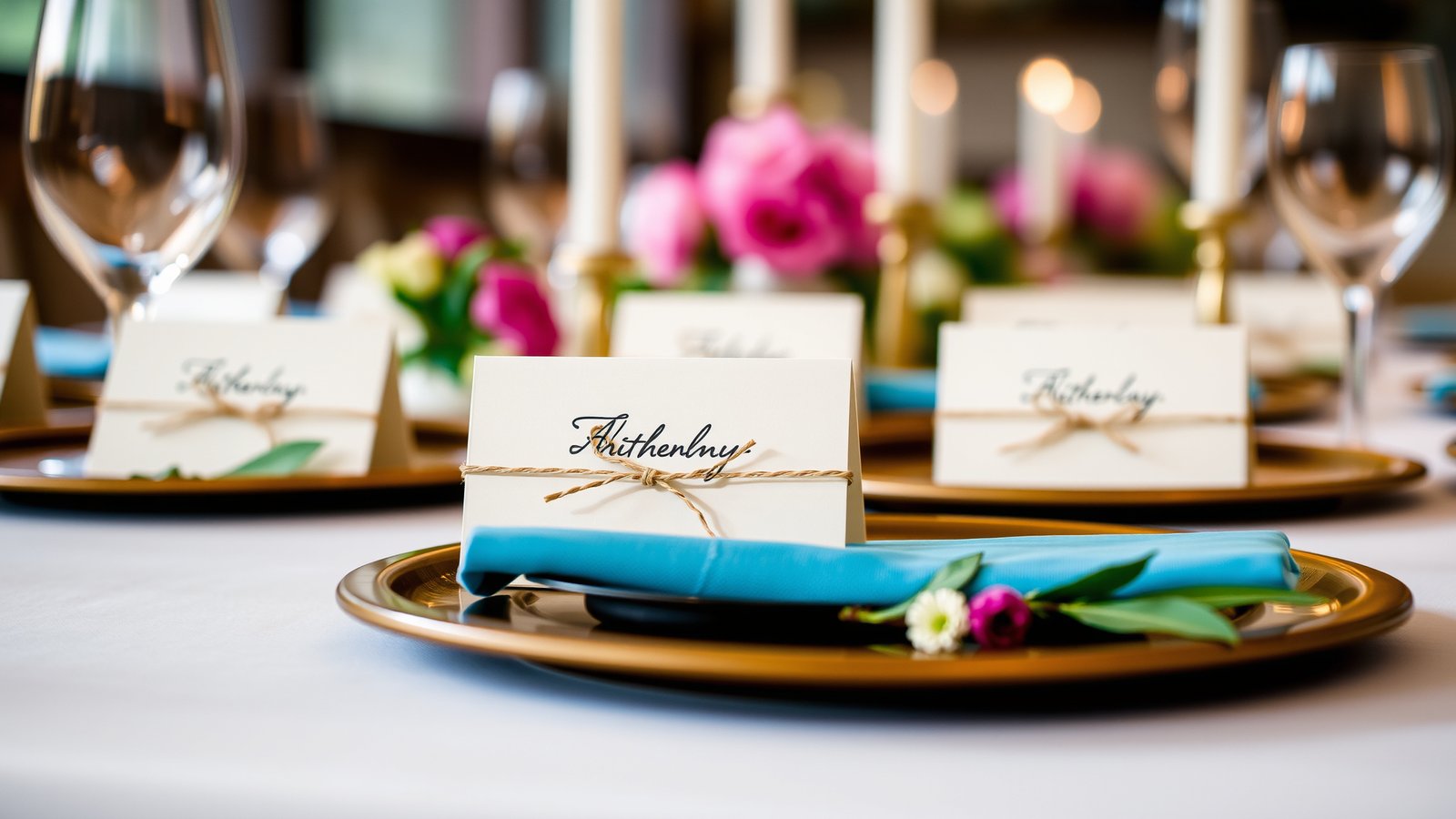
Place cards are worth making for a gathering of six or more where seating benefits from some organization, or for any meal where the table feels special enough to deserve the extra detail. For a casual family dinner of four, they’re unnecessary. For a spring brunch with eight people you’re excited about, a simple handwritten place card with a small natural element makes each guest feel like the seating was thought about with them in mind.
The version that takes ten minutes and looks genuinely considered: heavy white cardstock (not printer paper — the weight matters) cut into 3×2 inch rectangles, folded into tent cards, with names written in a consistent hand using a fine-tip black pen. A small sprig of lavender or a single eucalyptus leaf laid across the top of each card. Total cost: under $5 for materials, ten minutes of time.
The style mistake: handwritten place cards with elaborate calligraphy that’s practiced and clearly rehearsed. Slightly imperfect handwriting looks more genuine and more personal than something that looks like a font.
Napkin Folds — One Good One, Not Five
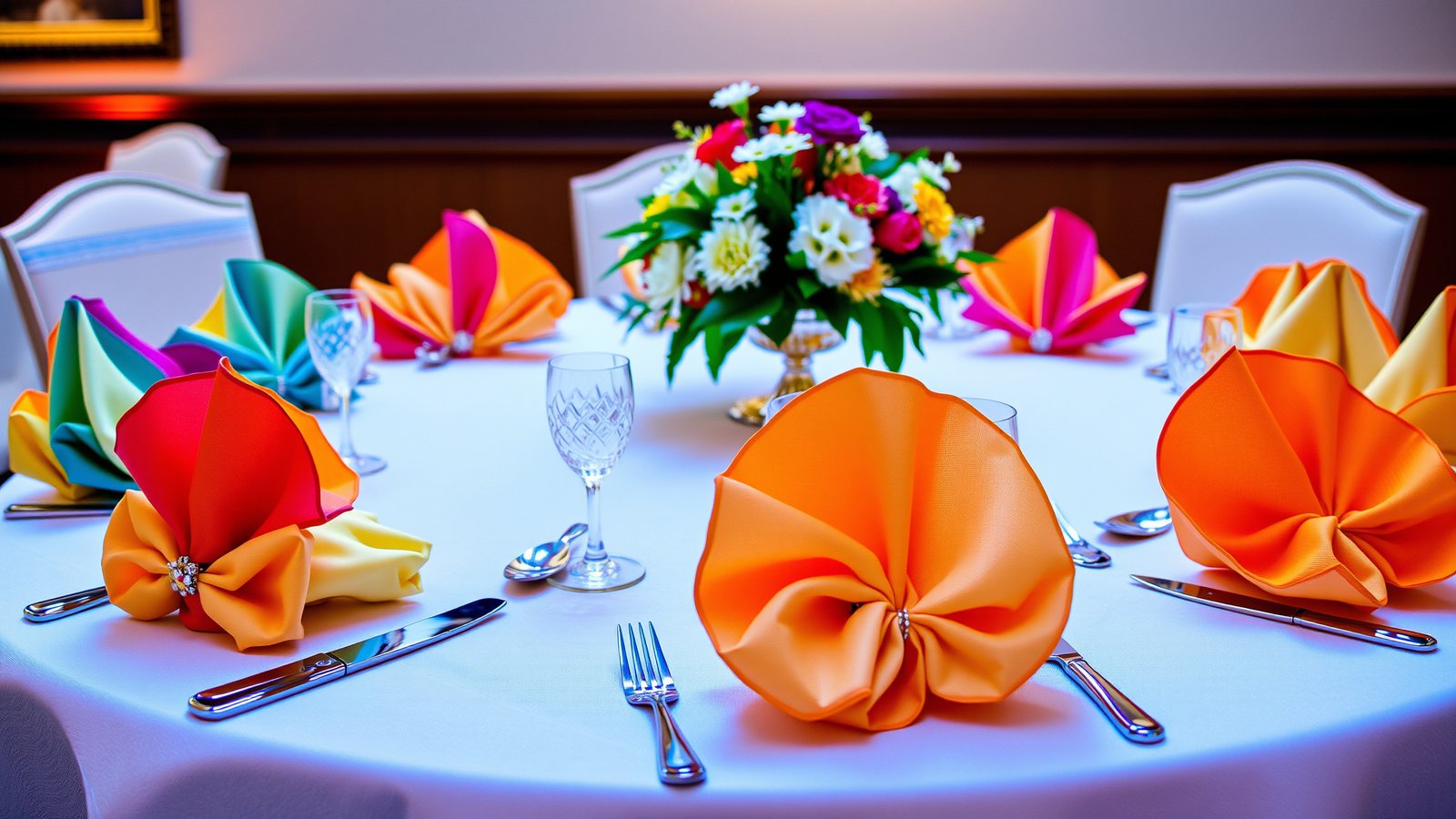
Napkin folding as an art form peaked in the 1980s and the elaborate swan-and-bishop’s-hat versions have not aged well. What works now is simple: a napkin folded beautifully and placed consistently at every setting, or a napkin ring that does the folding work for you.
The fold that always works: the simple roll, cinched with a napkin ring, placed diagonally across the plate. The fold that looks most contemporary: the napkin folded into a soft rectangle, laid flat under the fork or directly on the plate. Both take thirty seconds per place setting and read as considered without being fussy.
Napkin rings for spring: macramé or natural fiber rings at $8–15 for a set of four (Etsy is the right source for these), simple brass rings at $12–20, or a sprig of fresh rosemary or lavender tied around each rolled napkin with kitchen twine. The plant version is particularly spring-appropriate and the herbs can be taken home or added to cooking.
Activities at the Table — Only If They Fit
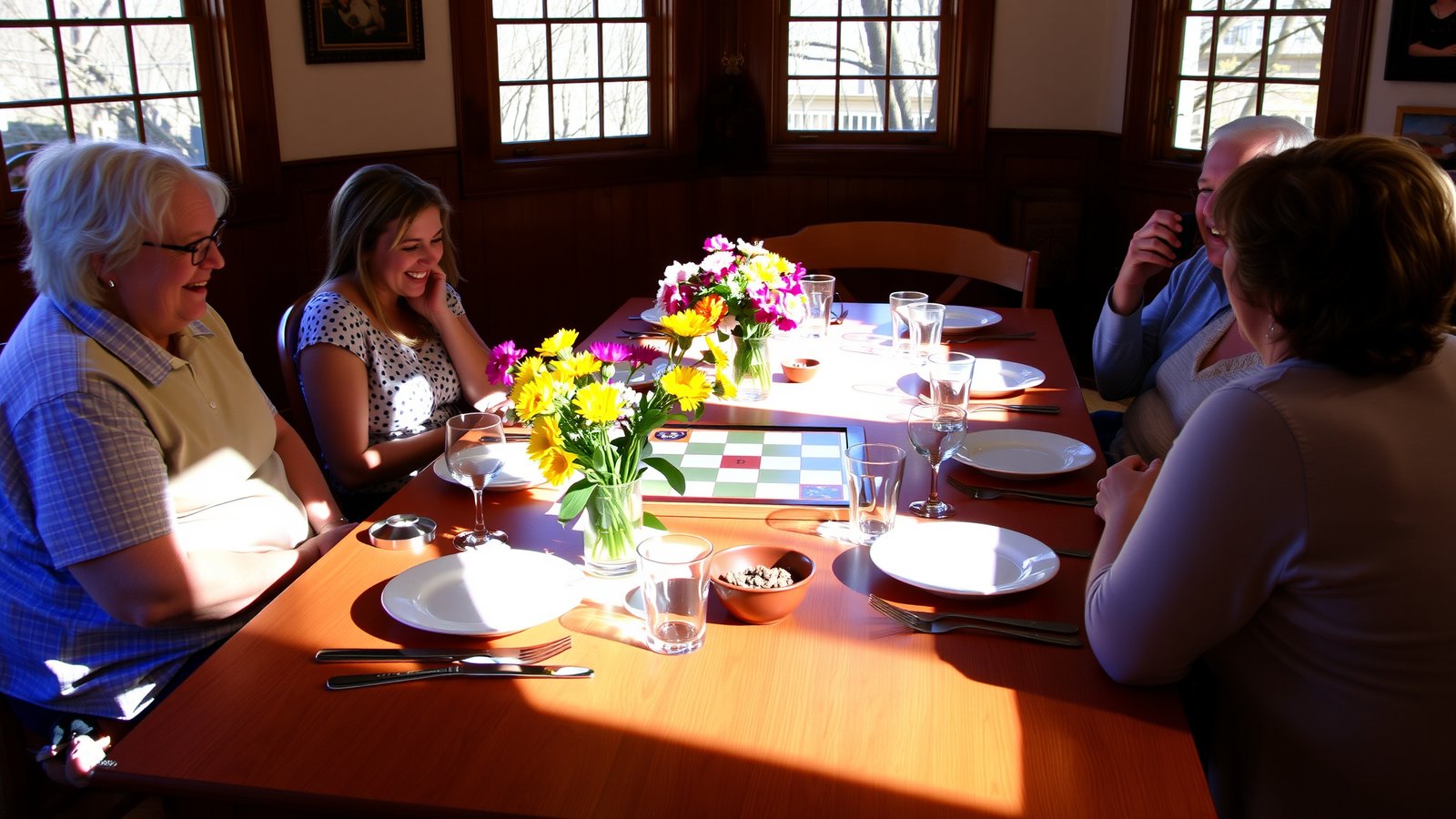
Table games and activities at a dinner party are the kind of idea that works for some gatherings and completely derails others. The key question: is this a gathering where people need help talking to each other, or is it a gathering where the conversation will happen naturally? Activities are for the first situation, not the second.
When they do work: simple conversation-starter card sets (Table Topics, which runs $25–30 for a box, or printed-at-home versions) placed at the center of the table. These work because they’re low commitment — guests can pick one up if there’s a natural moment for it and ignore them if the conversation is flowing. Board games and puzzles are better for the second or third hour of a casual gathering, after dinner, rather than during the meal itself.
The one activity that works at every spring table without exception: a small card at each place with one question written on it. Something seasonal (“What’s something you want to do this spring?”) or genuinely interesting (“What’s the best meal you’ve eaten in the last year?”). Simple, participatory, and it costs a few cents per person.
Bright Table Accents — Placemats Over Tablecloths
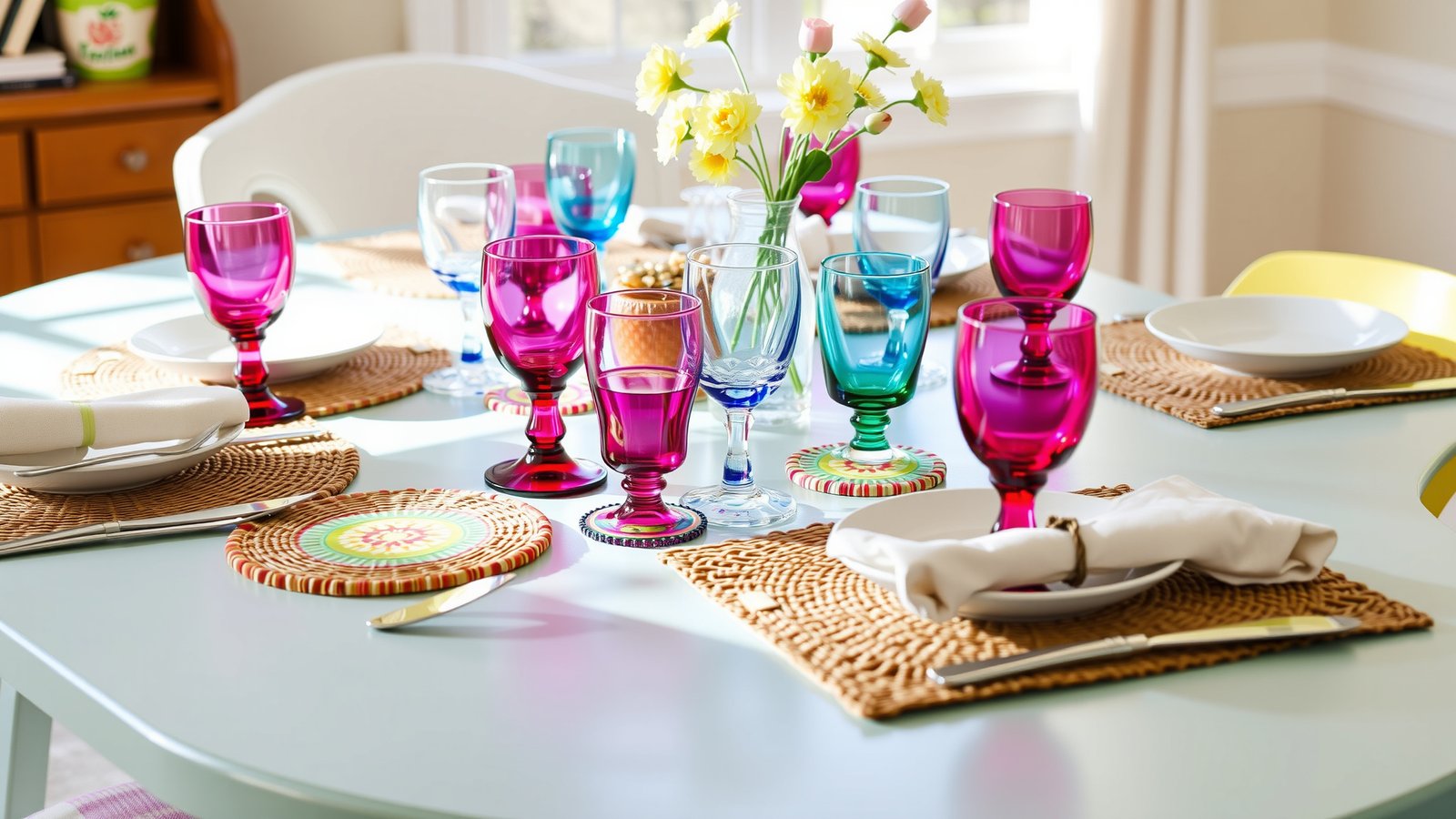
Individual placemats instead of a tablecloth is the spring table move that shows off a beautiful wood table while still defining each place setting clearly. A woven placemat in a spring color — sage, warm yellow, dusty rose — at each seat with a simple white plate on top reads contemporary and seasonal without covering the table completely.
The texture of the placemat matters: woven natural fiber (seagrass, rattan, jute) adds warmth and works with almost any dish color. Printed fabric placemats work but require more care in choosing the pattern. Solid linen placemats are the most versatile — they pair with patterned dishes without competing.
For glassware as an accent: colored glassware in spring tones — sage green wine glasses, amber water glasses, pink champagne flutes — adds significant color without requiring any other changes to the place setting. These are available at most home goods stores for $4–8 per glass and stack easily between seasons.
Outdoor Elements Brought In
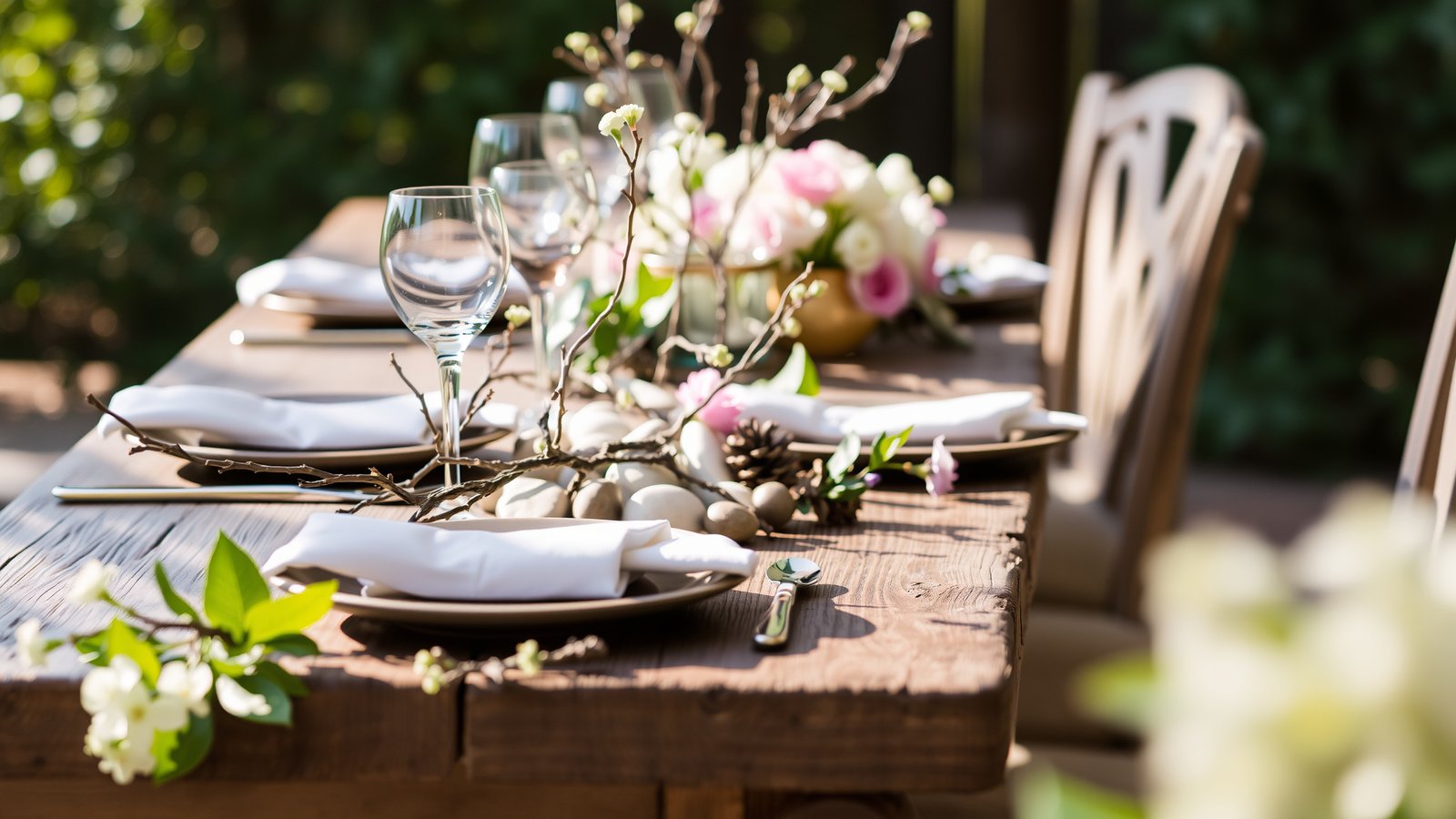
Branches cut from a garden or found on a walk — cherry blossom branches in early spring, dogwood, magnolia — make some of the most dramatic table centerpieces available and cost nothing. A single flowering branch in a tall ceramic vase on a spring table is architectural and beautiful in a way that a floral arrangement isn’t.
The branches that work best: anything actively blooming (cherry blossom, apple blossom, forsythia in early spring) or anything with interesting leaf or structural shape (olive branches, eucalyptus, Japanese maple). They need to be genuinely clean — rinse and wipe before bringing inside — and placed in water if you want them to last.
Small stones, smooth pebbles, or a handful of fresh moss as a base for a centerpiece arrangement are the outdoor-to-table materials that add texture without looking like you raided a garden supply store. A low, shallow dish with water, smooth stones, and a few floating flowers is a genuinely beautiful spring centerpiece that takes five minutes and costs under $10 in materials.
Treats as Decor — The Edible Centerpiece
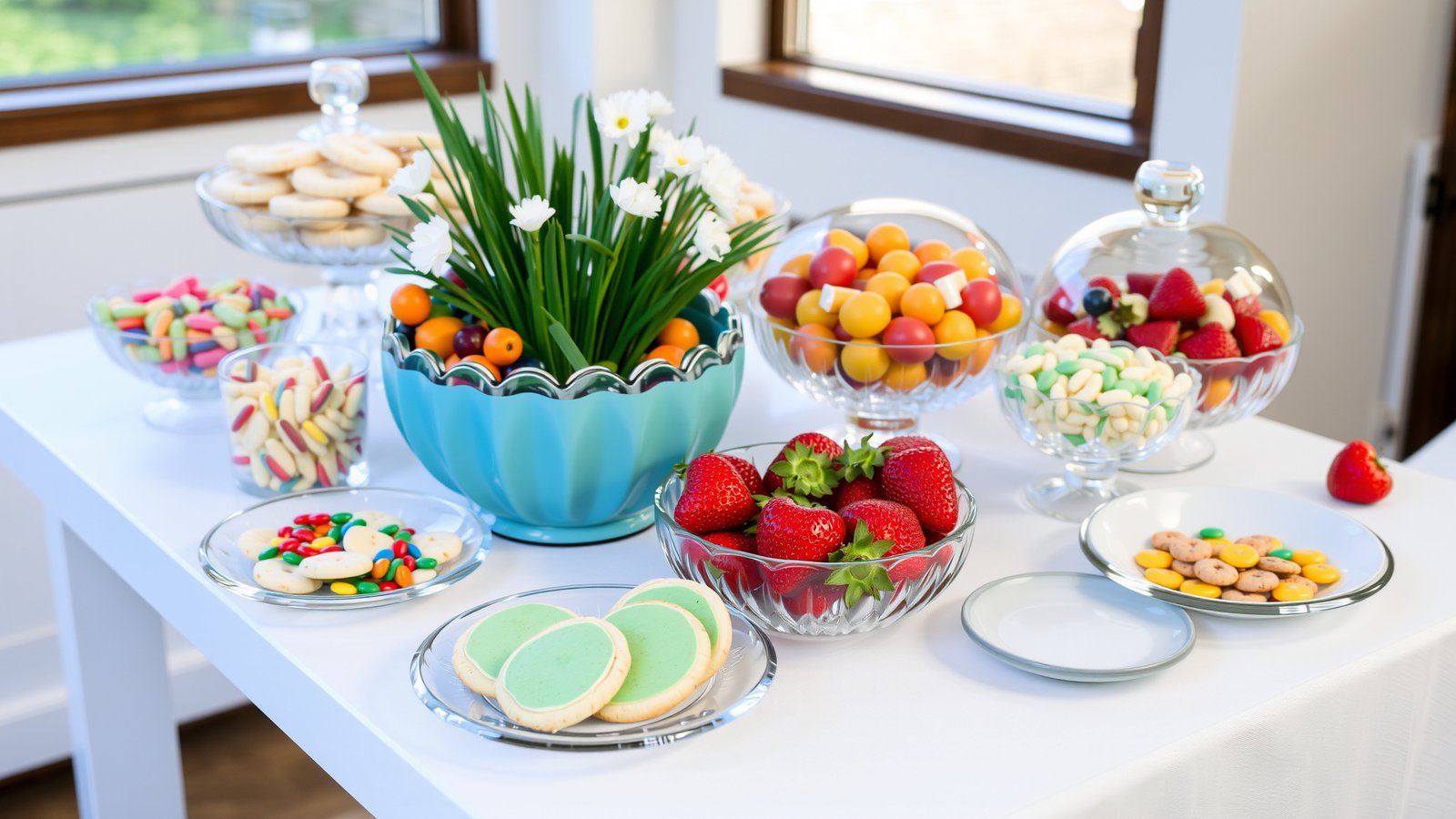
The edible centerpiece is the one that serves two purposes simultaneously: the table looks beautiful and guests get to eat something. For a spring brunch or an afternoon gathering, a tiered stand or a simple ceramic bowl of good-looking food in the center of the table does both jobs.
What works well as edible decor for spring: shortbread cookies in spring shapes (a local bakery usually does these seasonally, $12–20 for a dozen), fresh strawberries in a simple bowl, small macarons in spring colors arranged on a plate, or a cluster of small chocolate eggs in a nest of shredded paper in a basket. All of these look intentional, all of them get eaten, and none of them need to be thrown away at the end of the event.
The practical note: edible decor at a meal table should sit slightly away from where food is being actively served, so it stays looking intentional rather than getting incorporated into the meal before guests have had a chance to notice it.
Eco-Friendly Choices — The Ones That Look Good
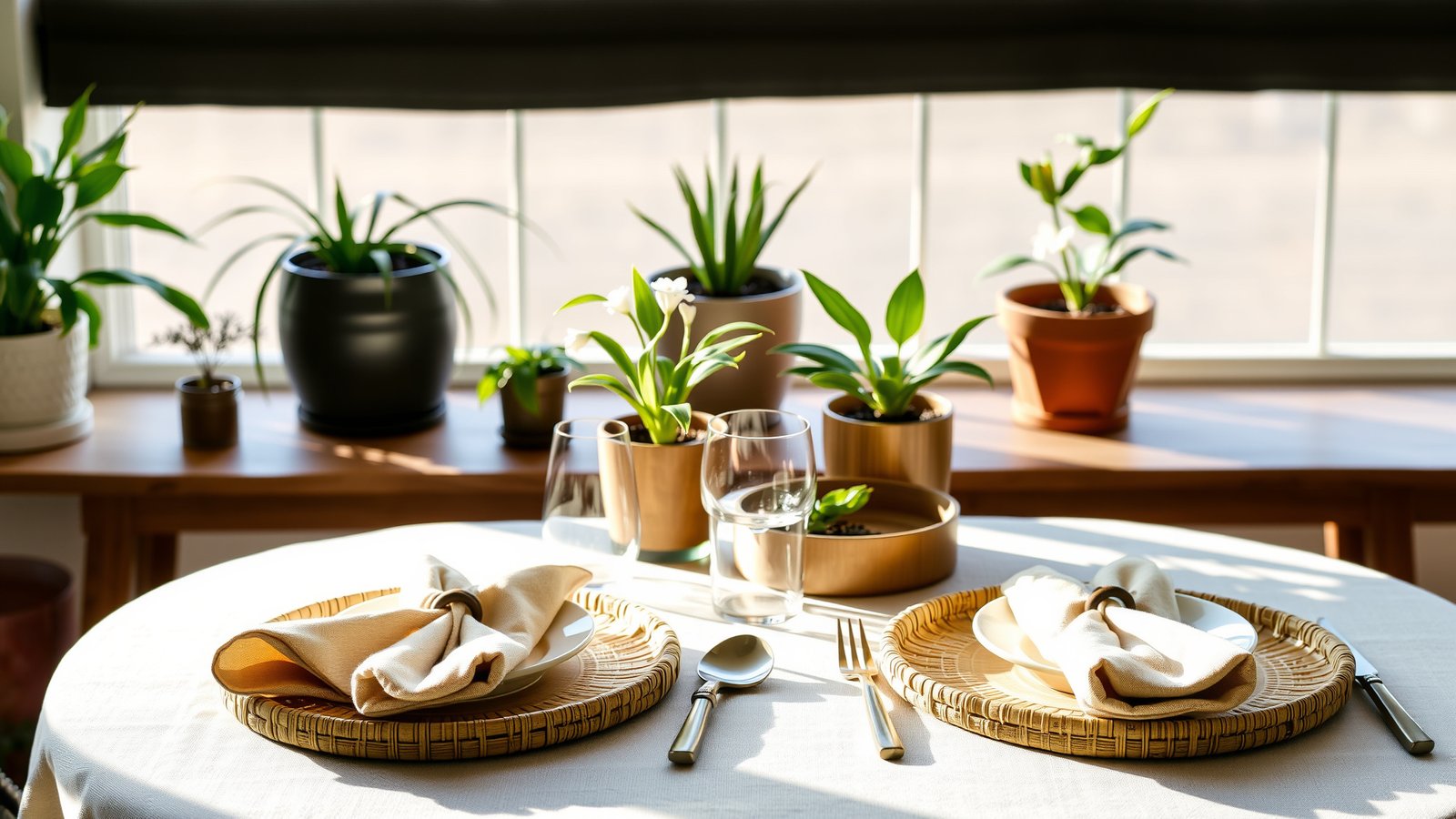
Eco-friendly table decor is the category where the choices that are better for the environment are also frequently the choices that look better. Cloth napkins over paper napkins: better aesthetically, more sustainable, and cloth napkins are a one-time purchase that pays for itself within a few uses. Potted plants over cut flowers: the plant can be replanted or kept growing after the gathering, and a small herb in a terracotta pot looks as beautiful as a cut flower arrangement. Beeswax candles over paraffin: cleaner burning, longer lasting, and beeswax has a natural warm gold color that paraffin can’t replicate.
The place to start if you’re building toward a more sustainable table setup: a set of quality cloth napkins. Six to eight linen or cotton napkins ($12–20 for a set of four) replace paper napkins for every gathering you host for years. They wash easily, improve with use, and look significantly better than paper at any table.
For a spring table specifically: potted herbs — basil, mint, thyme in small terracotta pots — as centerpiece elements that guests take home afterward. The pot costs $1–2, the plant costs $3–5, and it’s one of the most genuinely spring-appropriate table details available.
Questions I Get Asked a Lot About Spring Table Decor
How do I make a spring table look intentional without spending much? Fresh flowers and a clean tablecloth do 80% of the work. A $6 bunch of tulips split between two glass vessels you already own, a tablecloth that’s been properly ironed or steamed (the single most underrated table prep step), and white plates you already have. The table looks spring-appropriate and considered for under $10. Everything else is addition, not foundation.
How far in advance can I set a spring table? The table setup without flowers: the night before, easily. Tablecloth, chargers, plates, glasses, napkins, candles — all of that can be done 12–24 hours ahead. Fresh flowers: add them the morning of the event, or the evening before if they’ll be in water and the room is cool. Fresh fruit and edible decor: add the day of to keep everything looking its best.
Do I need a tablecloth or can I use the bare wood table? A beautiful wood table — one you’re proud of — is worth showing. Use individual placemats instead of a tablecloth, keep them consistent in material and color, and let the table itself be part of the design. A tablecloth is the right call if the table is older, has surface marks, or if you want the cloth as a color and texture element in its own right.
What’s the biggest spring table decor mistake? Centerpieces that are too tall. Anything above 10–12 inches blocks conversation across the table and makes the whole setup feel like a showpiece rather than a place where people eat and talk. Low arrangements — flowers at 8–10 inches in bud vases, fruit in a shallow bowl, a spread of herbs in small pots — keep the table looking full without interrupting the reason people are sitting there. For more complete spring table setups by style and occasion, the spring tablescape ideas guide covers fifteen full directions.
Can I mix all these elements together or should I pick a few? Pick a few and do them well. A table with a runner, individual chargers, fresh flowers, a vintage jug, handmade place cards, seasonal treats, and candles is visually overwhelming — too many things asking for attention at once. Choose two or three elements as the foundation (tablecloth or runner, fresh flowers, consistent napkins) and one or two as special details (candles, place cards, or edible decor). Edited tables look designed. Busy tables look cluttered.
The Spring Table Is Worth the Extra Fifteen Minutes
The difference between a table that’s been thought about and one that hasn’t is usually about fifteen minutes. Setting proper place settings instead of just putting plates down. Splitting a flower bunch into two vessels instead of one. Ironing the napkins instead of leaving them folded. Lighting candles before people sit down rather than during the meal.
These are small decisions that add up to something noticeably different — a table that makes people feel like sitting down at it is an event, not just a meal.
I’m styling a spring brunch table this weekend for the first time in my new apartment. I’m going with wooden chargers, white plates, sage linen napkins, and tulips in two small glass vases. I’ll share how it actually looks with people and food on it.
— Emily
What’s the one spring table detail you come back to every year — the thing you always do? Tell me in the comments.