15 Spring Home Decor Ideas That Actually Make Your Home Feel Different
There’s a version of spring decorating that feels like wearing a costume. Pastel everything, bunnies on the mantle, a wreath that looks like it came from a craft fair. And there’s a version that feels like the house exhaled — lighter, brighter, genuinely different from how it spent the winter. The second version is what I’m after every year, and it has less to do with seasonal accessories and more to do with a handful of specific changes that actually shift how a space feels.
These fifteen ideas are the ones I return to. Some cost almost nothing. Some require a weekend. All of them are worth doing.
Fresh Flowers — The Grocery Store Version, Not the Florist Version
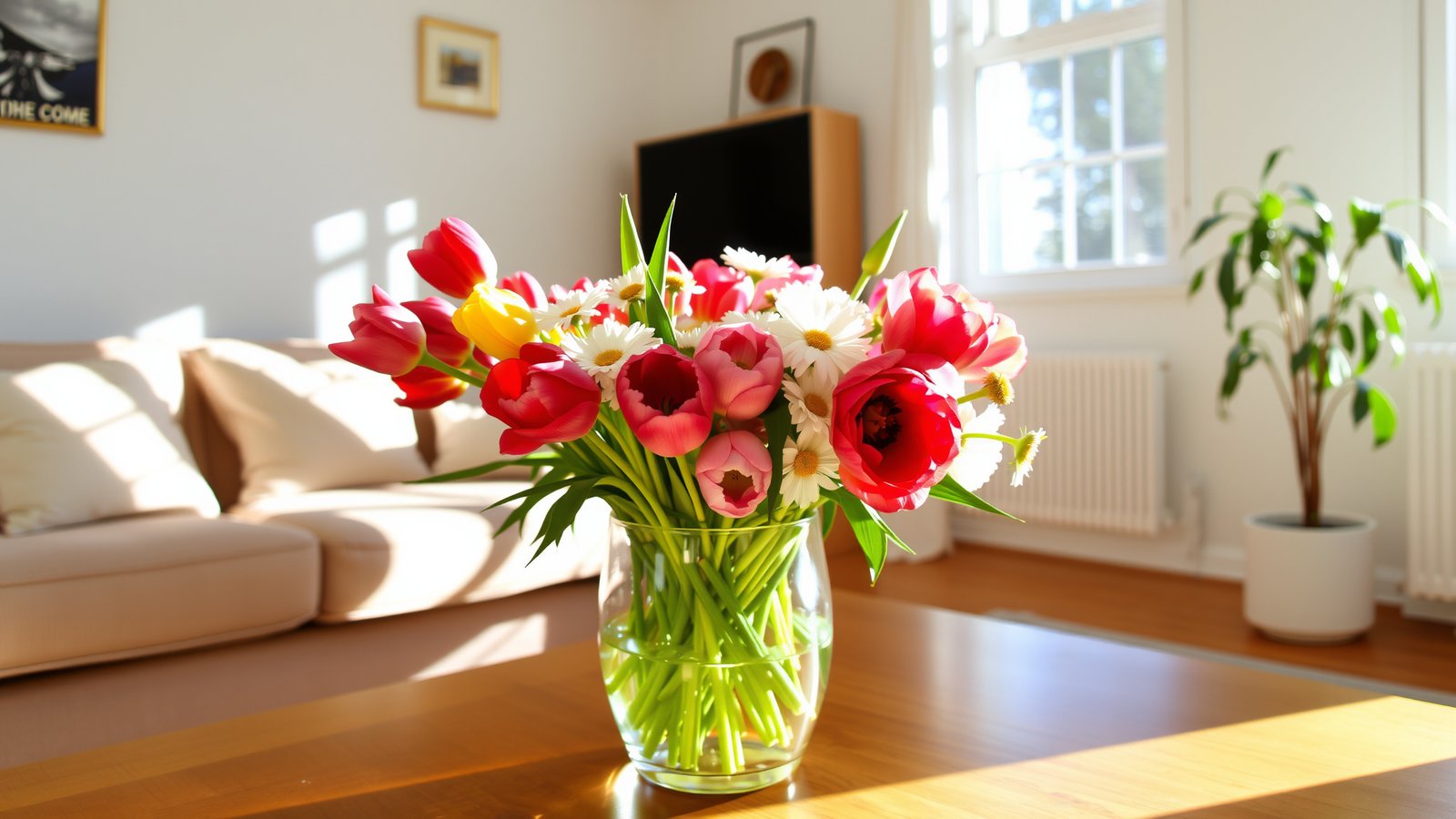
The version of spring flowers that works in a real home isn’t an elaborate arrangement. It’s three stems of ranunculus in a simple glass vase on the kitchen counter. It’s a bunch of tulips split between two bud vases on either side of the bathroom mirror. It’s peonies in a ceramic jug on the dining table that are worth every bit of the $8 they cost at Trader Joe’s.
The mistake I made for years: buying a big mixed arrangement that looked good for two days and then started declining unevenly, with one flower going first and making the whole thing look sad. The fix: single-flower arrangements. One type of flower per vessel, a few vessels rather than one large one, replaced when they’re past their best rather than kept past their time. Grocery store flowers in this arrangement look significantly more considered than florist arrangements arranged by someone else.
The flowers that last longest from a grocery store: alstroemeria (7–10 days), chrysanthemums (10–14 days), and carnations (longer than they get credit for, especially in spring colors). Tulips last about a week but they’re worth the shorter run.
Light Fabrics — The Seasonal Swap That Takes Thirty Minutes
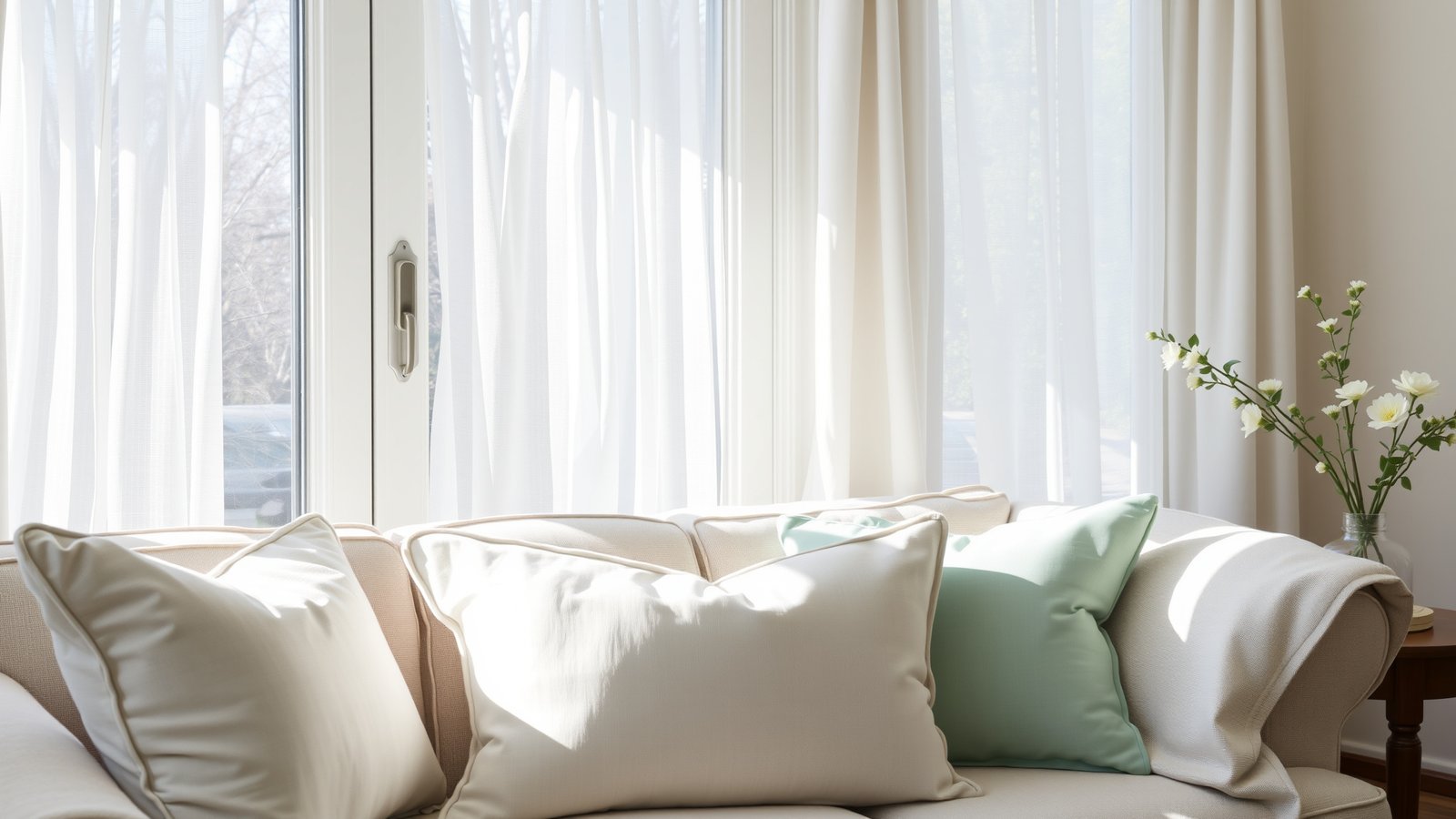
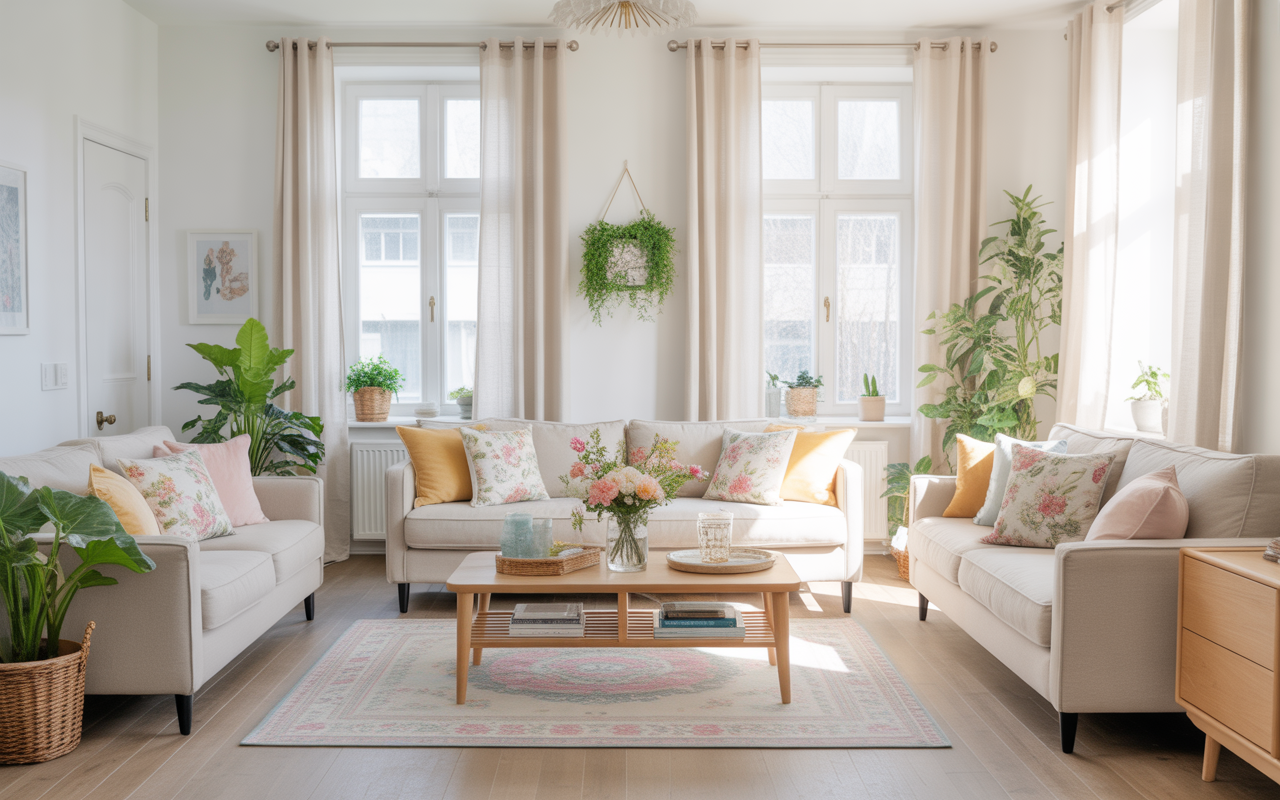
The single fastest way to make a home feel like spring arrived: take down the heavy curtains and replace them with something light. Blackout curtains, heavy drapes, or thick thermal panels serve a purpose in winter. In spring they block the light that’s finally there to be let in.
Sheer linen or cotton voile panels hung from ceiling height — not window frame height, ceiling height — let in the maximum amount of light while still providing some privacy and a soft visual boundary. IKEA’s LILL sheer curtains are $6.99 for a pair and hang beautifully. Pottery Barn’s Belgian linen sheers are $40–80 per panel and look the way expensive things should look. Either works.
While the curtains are down: swap the winter throw blankets and pillows for lighter versions. A chunky knit throw in charcoal lives in a basket from November through March. In April, out comes the washed cotton or waffle-weave version in a warm white or soft stripe. The room looks immediately lighter before anything else changes.
Nature-Inspired Wall Art — One Good Piece, Not a Gallery
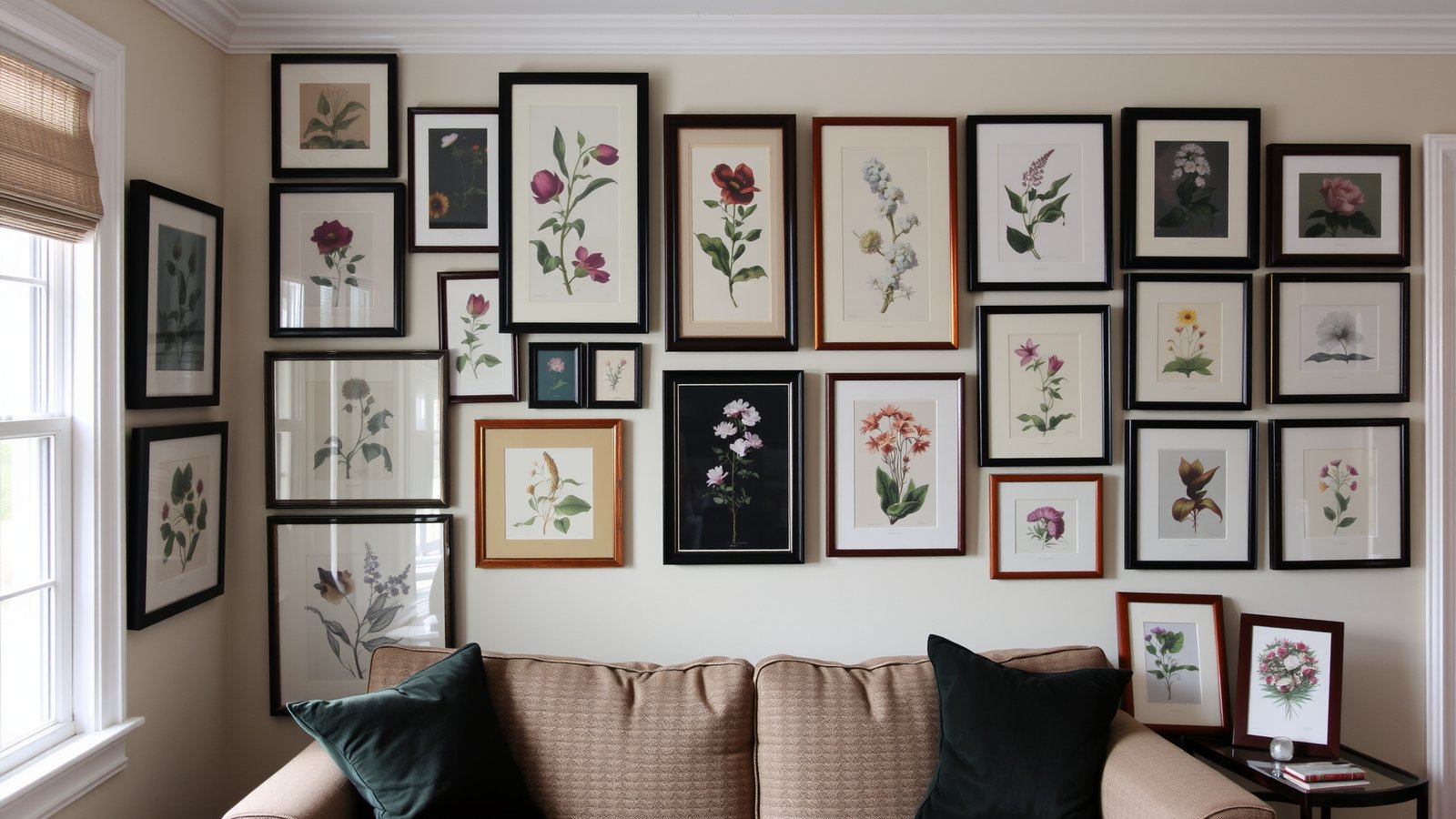
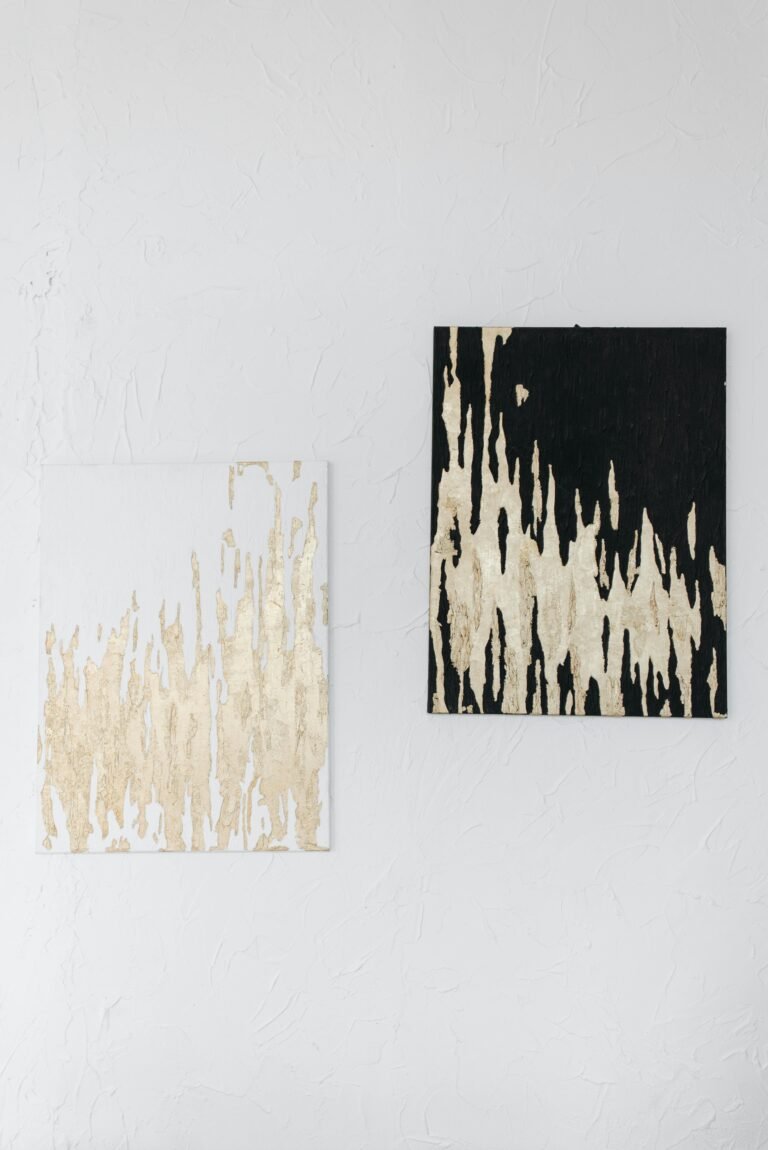
Botanical prints are one of the oldest and most reliable forms of wall art for a reason: they reference the natural world in a way that’s visually calm and completely timeless. A framed botanical illustration from a vintage book, a simple leaf print, a watercolor of wildflowers — any of these shifts the visual register of a room toward spring without screaming “seasonal.”
For finding good botanical art without spending much: Etsy sellers do digital download botanical prints for $3–8 that you print at a local print shop (typically $5–15 depending on size) and frame yourself. A 16×20 print in a simple black or natural wood frame costs under $30 total and looks like something you paid considerably more for.
The framing matters as much as the art. Simple frames — thin black, natural wood, or a thin white — let the print speak. Heavy ornate frames compete with botanical art and make the whole thing look more serious than it wants to be.
Fresh Greenery — Plants That Will Actually Survive
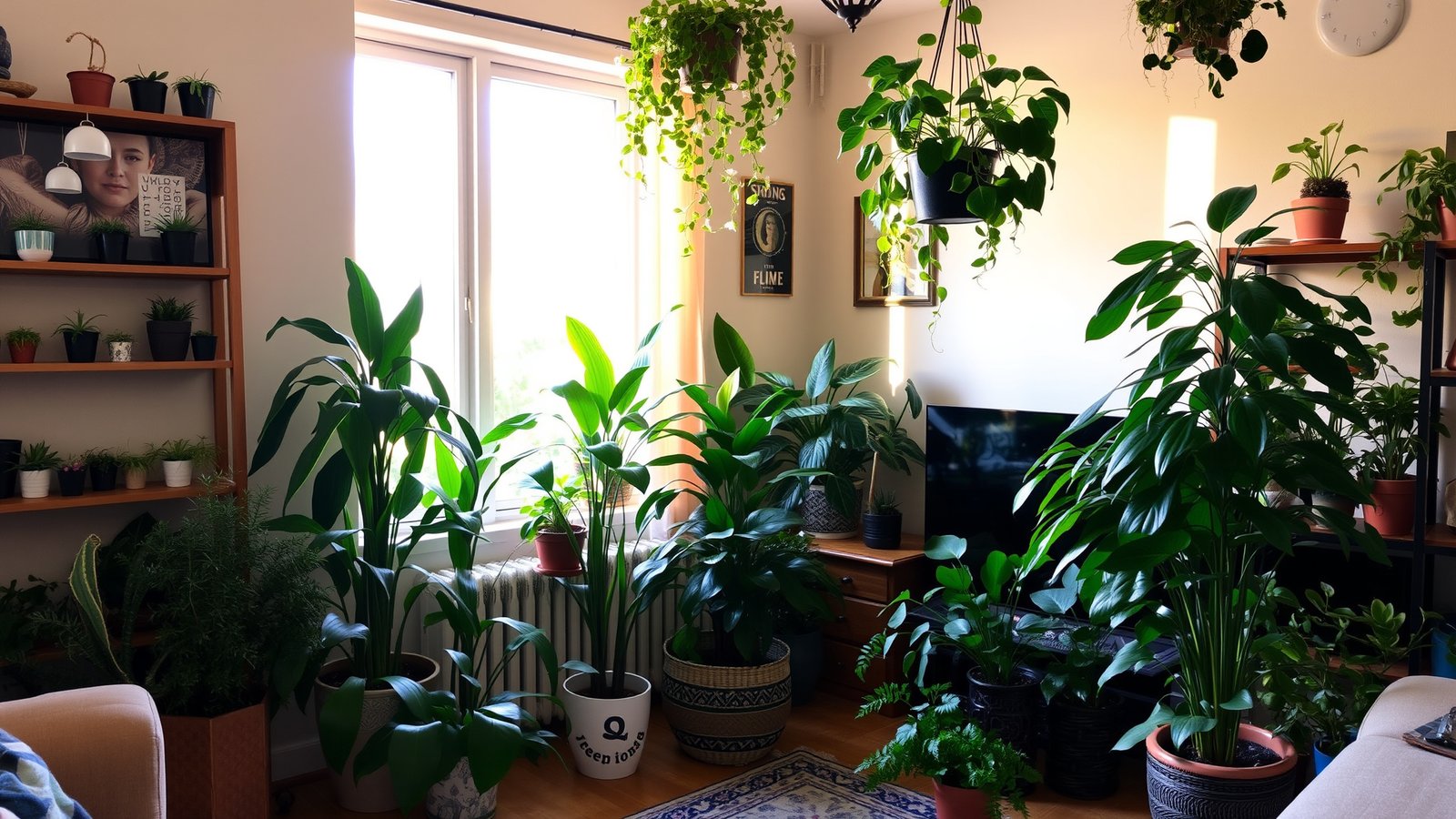
I killed succulents for three consecutive years before I accepted that my north-facing windows don’t provide enough light for them. The plant that looks great in a well-lit Scandinavian interior does not automatically survive in my apartment. This is the most important thing to know about adding plants to your home: match the plant to your actual light conditions, not the light conditions in the inspiration photo.
For genuinely low-light spaces: pothos (a cutting in a glass of water costs nothing and grows readily), snake plants ($8–15 at most garden centers, virtually indestructible), and ZZ plants (tolerate near darkness, stay glossy, require water only every 2–3 weeks). All three look good, require minimal attention, and will actually be alive in June.
For spring specifically: forced bulbs — hyacinths and paperwhites — are available at garden centers from March onward and bring both color and fragrance. They’re temporary (they bloom for 2–3 weeks) but the bloom is spectacular and they cost $4–8 per bulb. A cluster of three hyacinths in terracotta pots on the kitchen windowsill is one of the most spring-forward things you can put in a home.
Outdoor Spaces — The Five Changes That Actually Matter
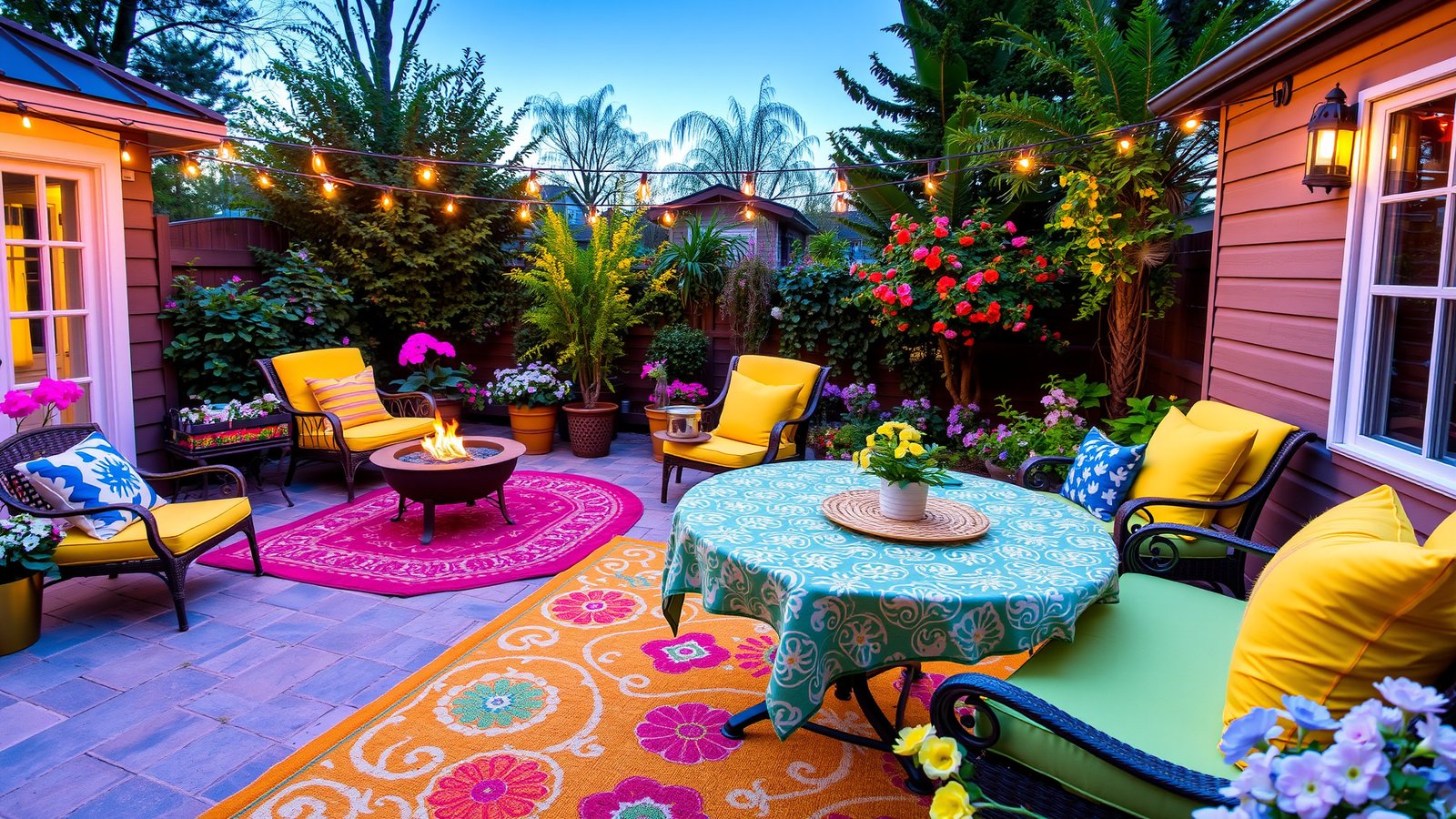
Outdoor spaces need less than most people think to feel genuinely good. The five changes that make the most difference, in order of impact: clean the furniture properly (a season of weather accumulates in ways that are invisible until you actually wipe things down), add one new outdoor rug, replace or recover cushions in a fresh color, add string lights, and add one plant.
For outdoor cushions: Sunbrella fabric is the standard for weather resistance and it’s worth the investment ($30–60 per cushion) if you’re in a climate where cushions stay outside through rain. For mild climates or covered spaces, any outdoor fabric works and the price range drops significantly.
Outdoor string lights on a timer ($15–30 for a quality strand) do more for an outdoor space in the evening than any furniture purchase. They change the character of a patio or balcony from utility to destination — somewhere you actually want to be after dinner rather than a place you walk through to get to the yard.
Pastel Color Accents — Without Repainting
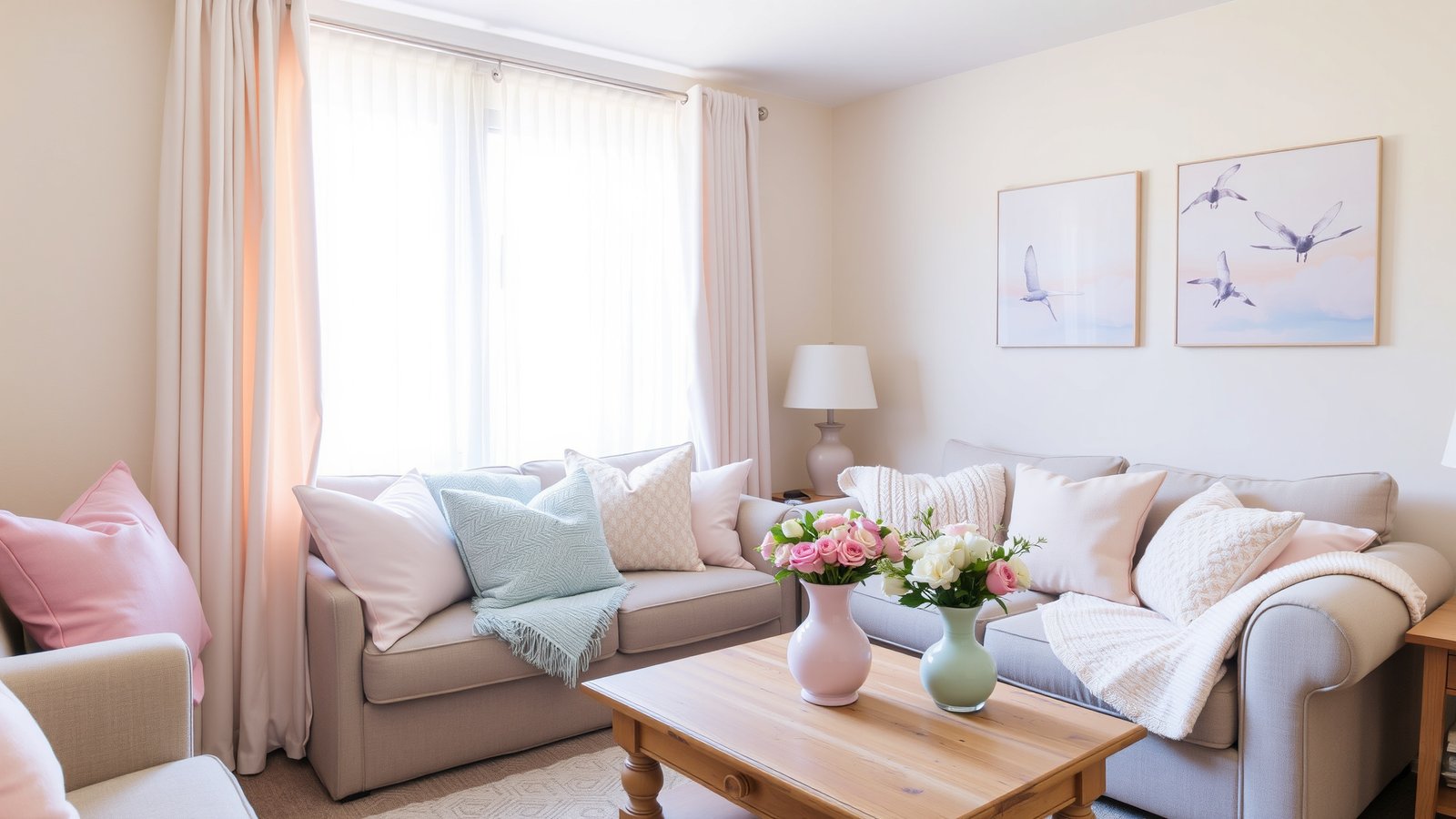
Pastel colors in spring decor work when they’re additions to a neutral room, not when the whole room goes pastel. A neutral base — warm white walls, natural wood furniture, linen or cotton in undyed tones — with soft blush, sage, or lavender accents reads sophisticated and seasonal. The same accessories in a room that already has a lot of color reads chaotic.
The accents worth adding for spring: a set of linen pillow covers in a soft sage or dusty rose ($15–25 per cover from most linen-focused shops), a ceramic vase or two in a muted pastel that complements the room’s existing palette, a simple framed print in spring tones. None of these require any permanent commitment — they store flat or stack easily between seasons.
The accent color I keep coming back to for spring 2026: soft dusty sage that pulls slightly gray. It works with warm neutrals, with natural wood, with white, and with most existing furniture colors. It reads seasonal without being overtly spring-themed.
The Spring Table — Simpler Than a Full Tablescape
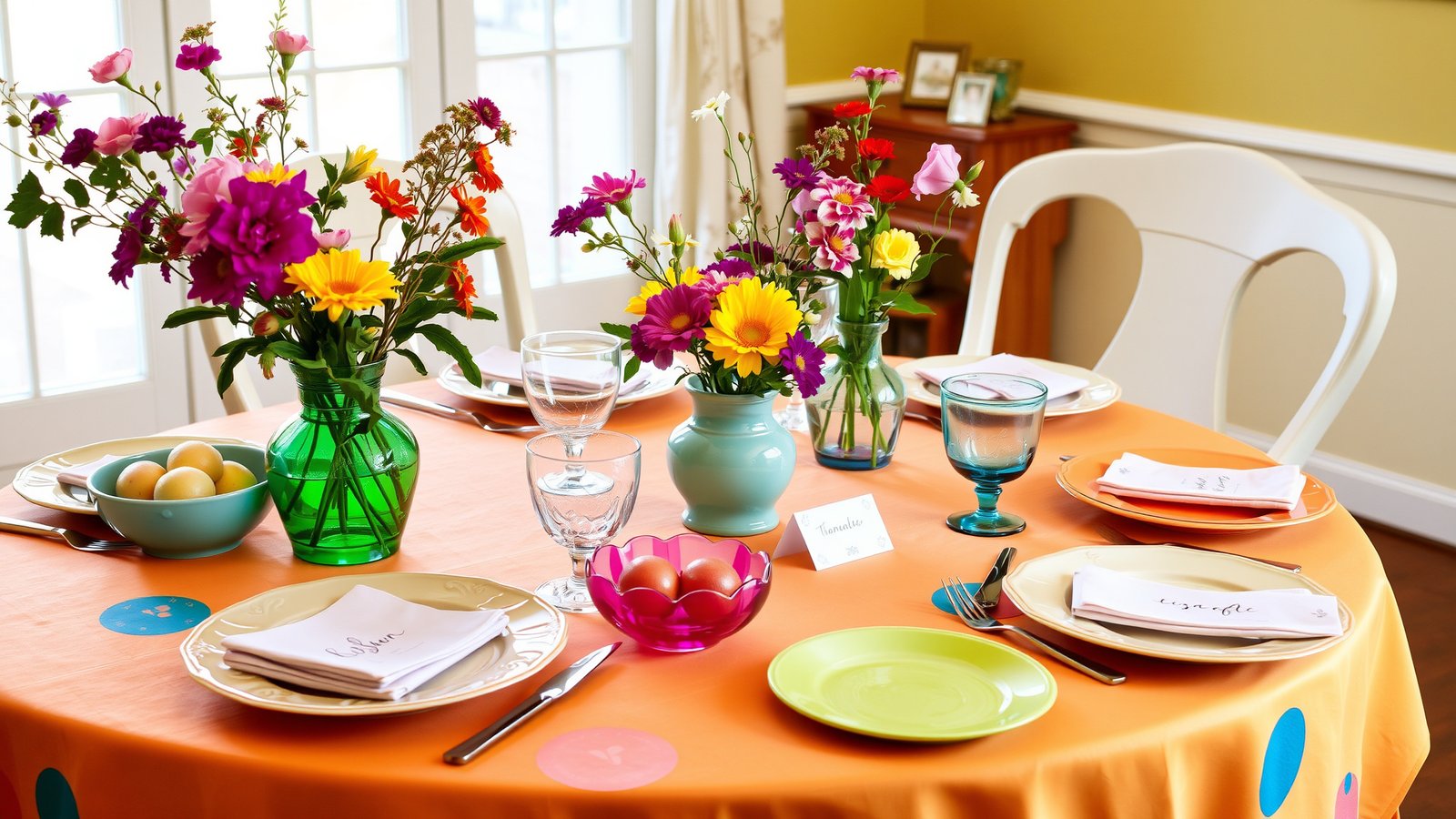
A spring-refresh of the dining table doesn’t require a full tablescape setup. It requires a tablecloth or runner that’s lighter than the winter version, a simple fresh flower arrangement, and napkins in a seasonal color. That’s it.
Linen tablecloths in warm white or natural work for every season and every occasion. A spring-specific runner — something in a soft stripe or a botanical print — layered over a neutral tablecloth takes the table from winter to spring in thirty seconds. For napkins: a set of linen napkins in sage green or blush ($12–20 for a set of four) brings color to the table without the commitment of painting anything.
For a full approach to spring table styling — tablescapes for gatherings, not just everyday meals — the spring tablescape ideas guide covers fifteen specific directions in detail.
Scent — The Room Change Nobody Sees But Everyone Notices
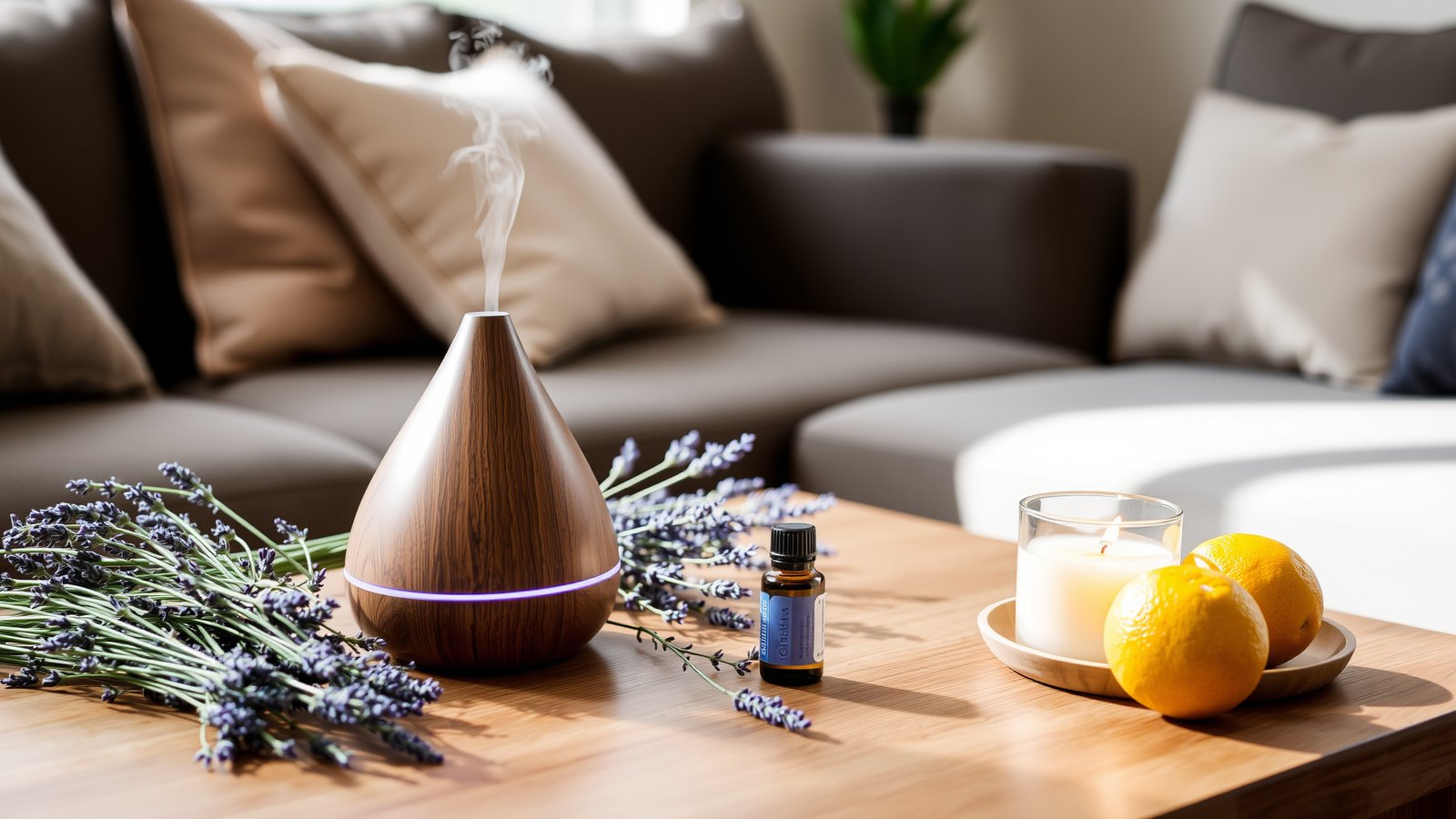
Scent is the most underused design tool in most homes, and spring is when it matters most. After months of indoor heat and closed windows, the smell of a house in winter is often stale in ways that are invisible until it changes. Opening windows is the first fix. The second fix: adding a scent that references spring without being overpowering.
The scents that work for spring without becoming cloying: fresh linen, light citrus (grapefruit or yuzu rather than orange, which can read heavy), hyacinth, and green tea. Anything that smells like a heavily perfumed candle store — too much vanilla, too much patchouli, too much synthetic floral — works against the light and airy quality you’re going for.
For diffusers: a simple reed diffuser in a ceramic vessel ($15–30 for a quality one) works continuously without requiring attention. For candles: a single wick soy candle rather than a large triple-wick — the single wick burns longer and the scent stays subtle rather than filling the room. Prices for good quality options: $18–30 at most home goods stores, less if you’re buying from smaller makers.
Nature-Pattern Fabrics — Used Once, Not Everywhere
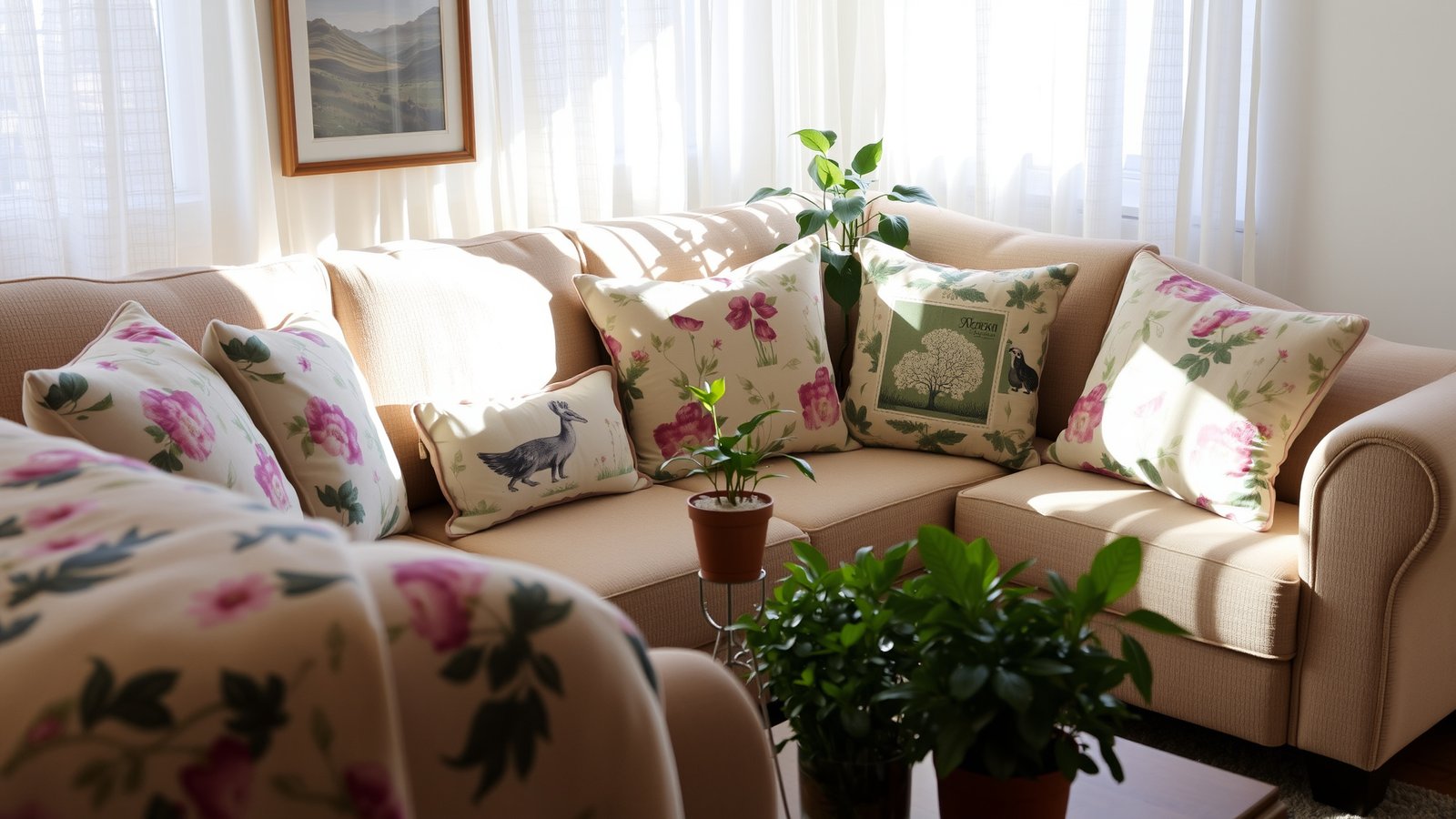
Floral and botanical-pattern fabrics for spring work on the same principle as any pattern in interior design: they need a neutral ground to read against. One floral cushion on a solid-colored sofa looks beautiful and intentional. A sofa covered in floral cushions with floral curtains and a floral throw looks like the inside of a garden center.
The pattern scale matters: smaller, more graphic patterns (a simple leaf repeat, a small botanical print) work in smaller spaces. Larger, more exuberant florals need room to breathe — a large sofa, a long curtain run, a generous armchair. Scale the pattern to the surface.
For spring 2026 specifically: the botanical patterns doing the most work are loose watercolor-style botanicals in muted tones — sage, dusty pink, cream — rather than bright graphic florals. They read sophisticated rather than themed. H&M Home and Anthropologie both have good options at different price points ($15–45 for a cushion cover).
A Handmade Spring Wreath — Actually Worth Making
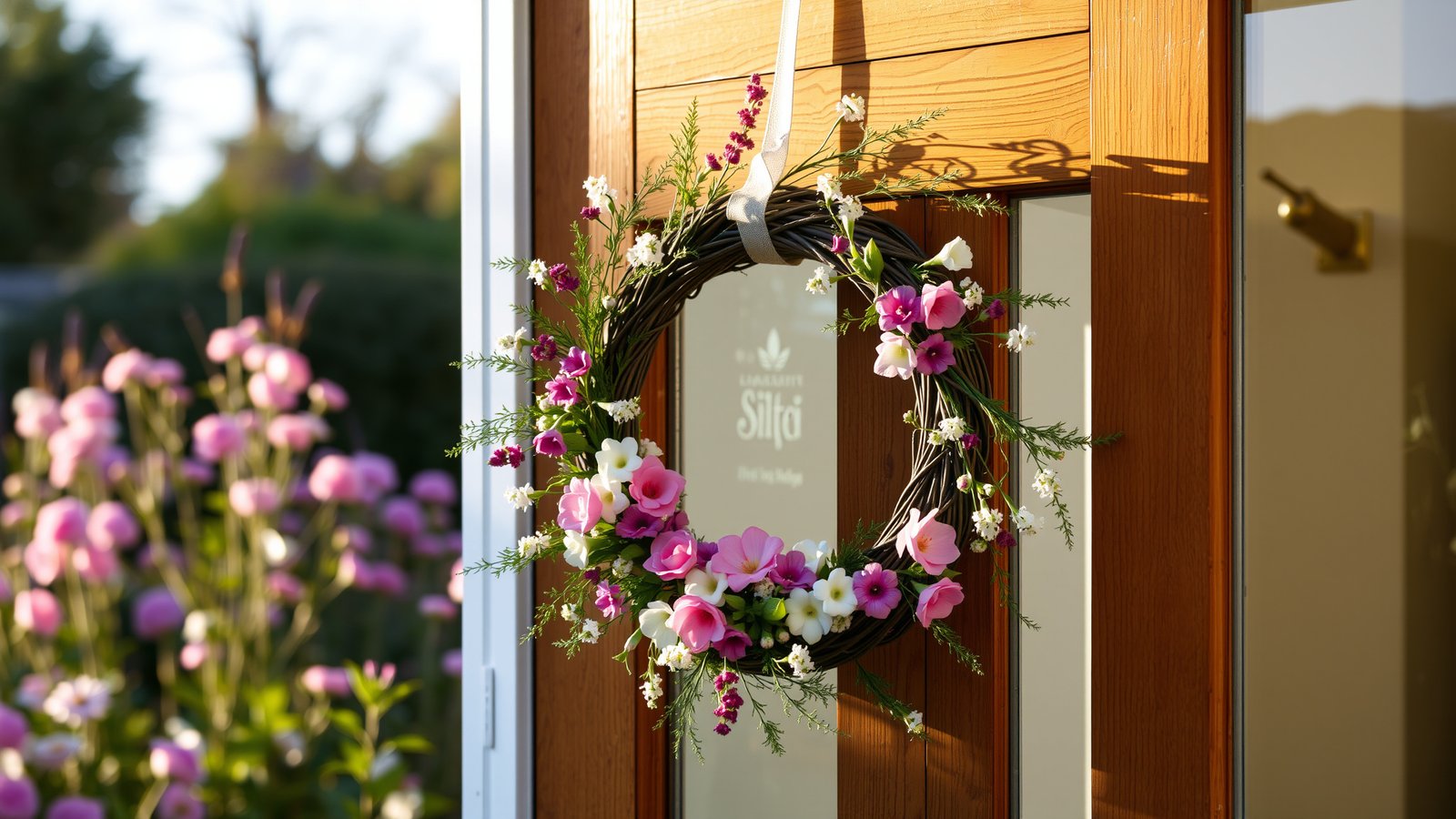
A spring wreath is one of the home decor projects that sounds more effort than it is and looks significantly more impressive than the time invested suggests. A basic grapevine wreath ($5–8 at a craft store) plus fresh or dried flowers attached with floral wire ($3 for a spool) takes about 30–45 minutes and produces something that genuinely looks handmade in the good sense of the word.
The fresh flowers that work best for a wreath: lavender (dries beautifully and keeps its color), eucalyptus (smells incredible and stays green for weeks), dried pampas grass for texture, or fresh blooms if the wreath is just for a day or weekend. A combination of eucalyptus, dried lavender, and a few ranunculus blooms — total materials cost under $20 — makes a wreath that looks like it came from a market stall.
The wreath doesn’t have to go on the front door. Inside on a large blank wall, above a bed instead of traditional art, leaning against the mantle — any of these works and makes the wreath feel like an intentional design element rather than a seasonal obligatory item.
A Proper Outdoor Reading Nook
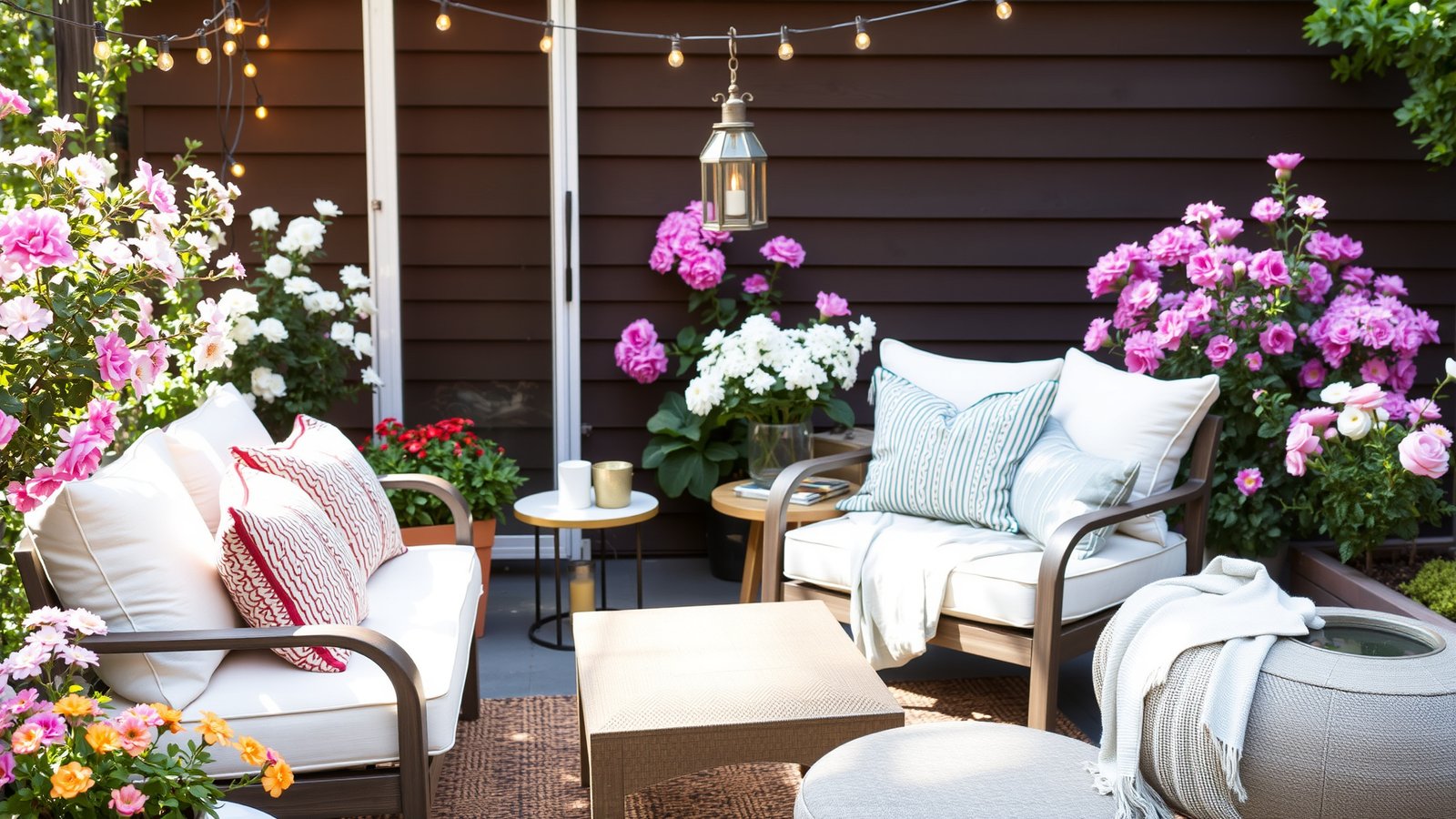
A reading nook outside — a corner of the balcony, a shaded spot in the garden, a porch chair that’s finally comfortable — is one of those additions that sounds small and changes how you actually use your outdoor space. The difference between a chair on a patio and a reading nook is two things: a side table at the right height for a drink, and a source of comfortable light for evening reading.
For outdoor seating that’s genuinely comfortable: a proper outdoor armchair with arms and a cushioned seat rather than a chair designed for dining. The price range for outdoor lounge chairs worth sitting in for more than twenty minutes: $80–250. A small folding side table ($25–50) and an outdoor lantern ($20–40) or string lights on a dimmer complete the nook.
The detail that makes an outdoor space feel intentional rather than incidental: a small outdoor rug. Even a basic flatweave outdoor rug ($30–60 for a 5×7) under the chair turns a corner of a patio into a defined zone — somewhere with a clear purpose and edges.
Vintage Spring Finds — Thrifted, Not Themed
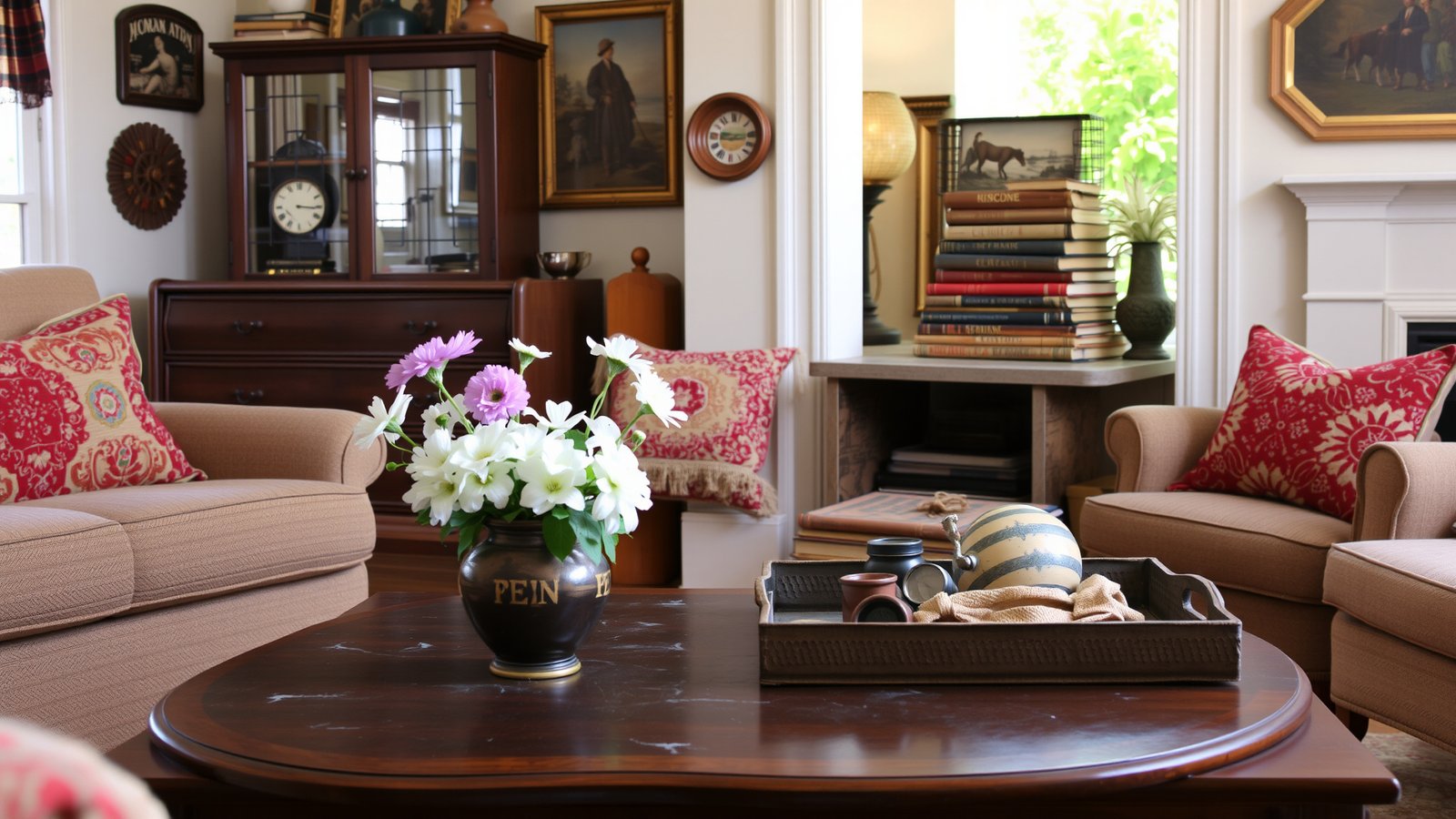
Spring is the peak season for estate sales, flea markets, and thrift store inventory turnover — which makes it the best time of year to find something genuinely good for relatively little money. The principle: buy one thing that’s beautiful rather than five things that fill space.
The vintage finds that translate most easily into a spring refresh: ceramic vases and vessels in interesting shapes or glazes (perfect for spring flowers), linen napkins from estate sales that have more character than anything sold new, glass vessels in soft green or amber for botanical cuttings, and simple frames for botanical prints.
The test I apply at any thrift store before buying: does this object stand on its own, or does it need to be part of a collection to work? A beautiful handmade ceramic bowl passes. A novelty item that only works as part of a themed grouping doesn’t. One beautiful thing is always more effective than five mediocre things.
Kitchen Accents — Functional Color That Earns Its Place
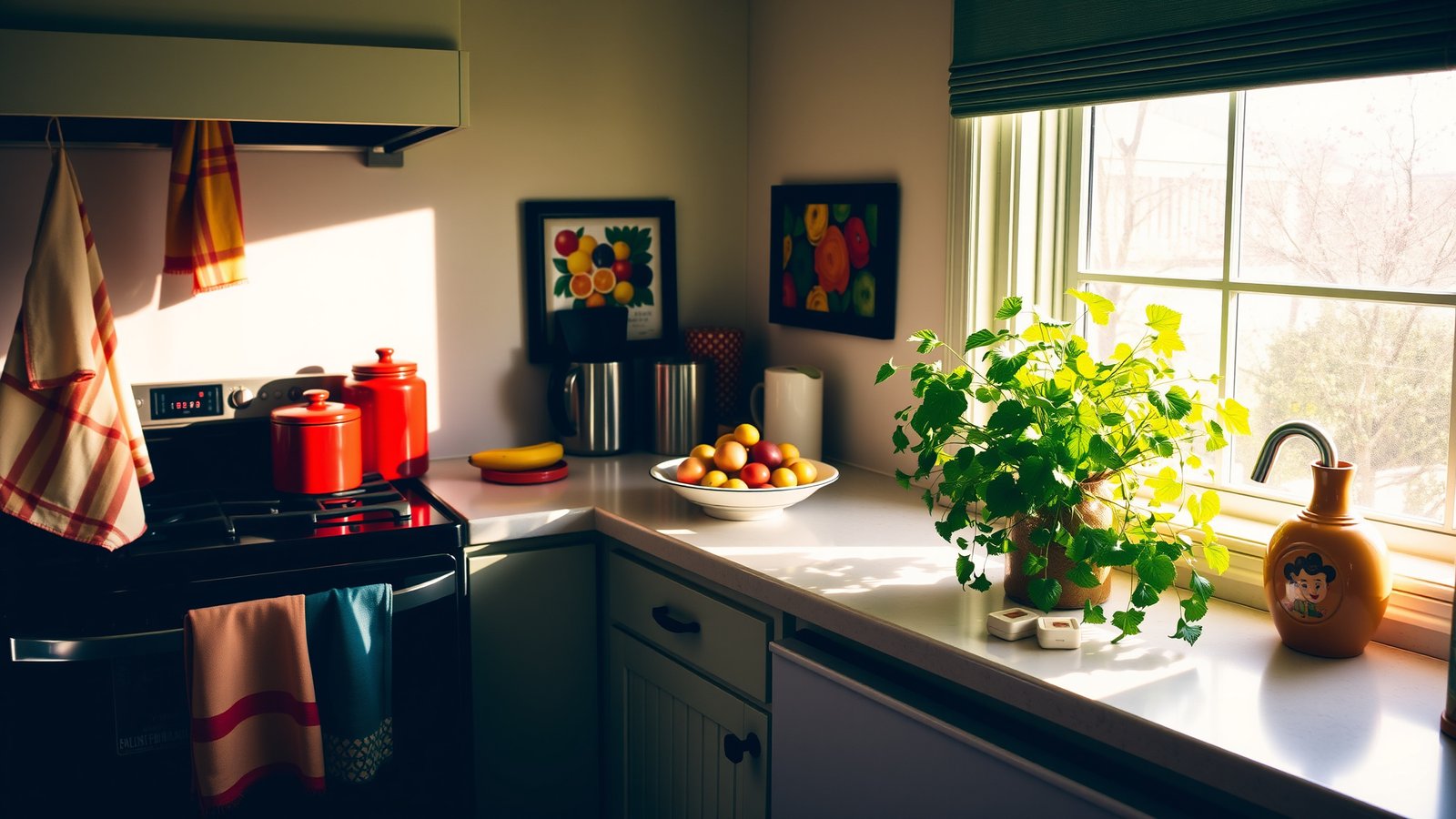
The kitchen spring refresh is the easiest version of seasonal decorating because everything in the kitchen is functional — you’re not adding decorative objects, you’re replacing utilitarian things with better versions of the same thing in a fresh color.
Dish towels: a set of four in sage green, dusty rose, or warm yellow replaces the faded winter versions for $12–20 and the kitchen immediately looks more cared-for. A ceramic fruit bowl in a terracotta or muted color ($15–35) on the counter holds what’s already going to be there anyway. Fresh herbs in a small pot on the windowsill ($3–5 each at a garden center) — basil, mint, chives — smell like spring every time the window is open.
The kitchen accent rule: everything on the counter needs to earn its place by being used. A decorative item that never gets touched becomes invisible within two weeks. Fresh herbs get used. Dish towels get used. A colorful kettle gets used. These are the kitchen changes worth making.
Lighting — Warmer, Layered, and Lower
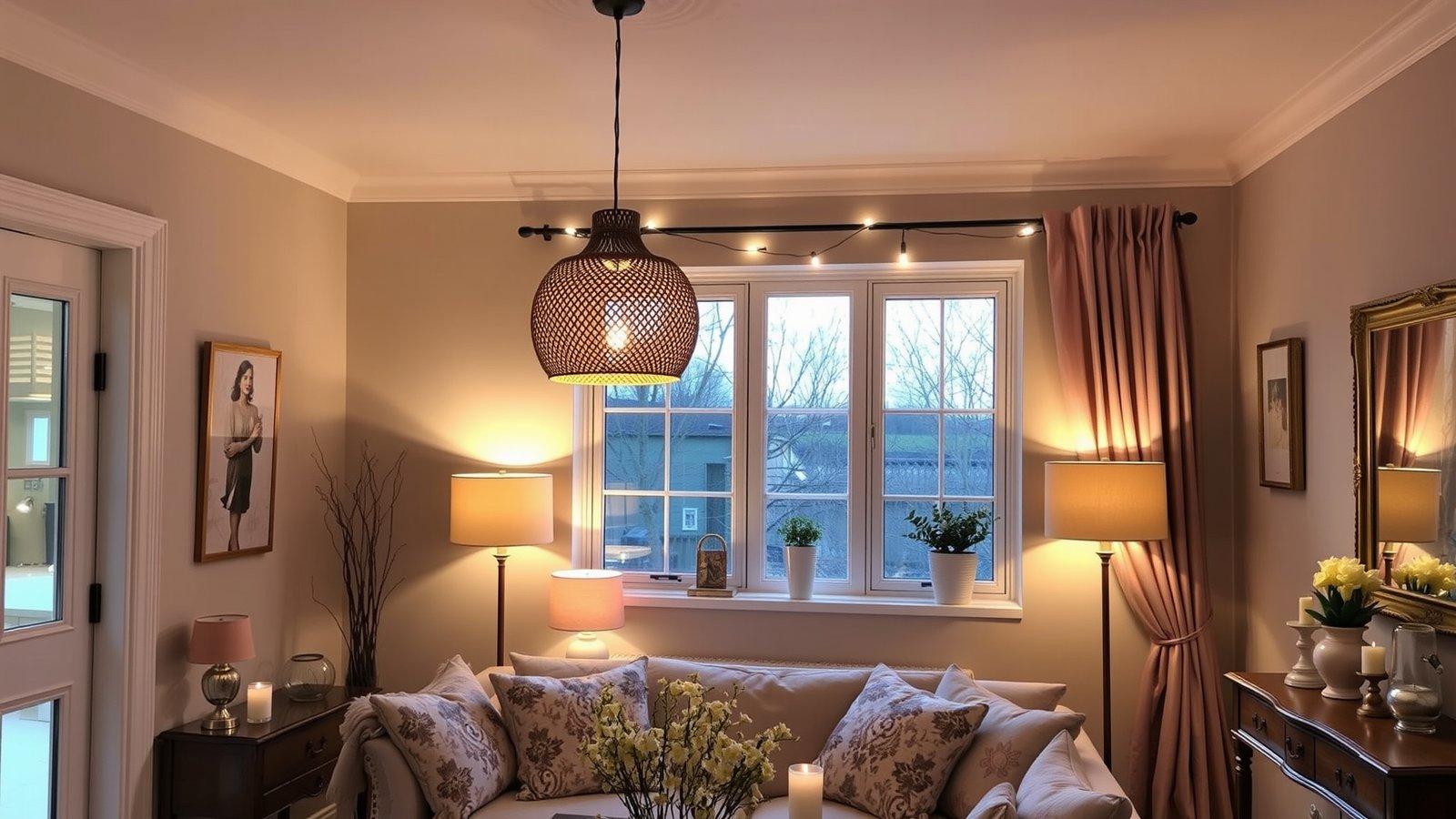
Spring evenings call for lighting that bridges the longer, brighter days with the still-cool nights — warm and inviting without being heavy. The change that makes the most difference: moving away from overhead lighting only and adding at least one floor lamp or table lamp that creates warmth at eye level.
If you only make one lighting change for spring: replace any cool-white bulbs (5000K or 4000K) with warm-white ones (2700K). This costs $8–15 for a pack of bulbs and changes the entire character of a room in the evening. Cool light in a living space makes spring evenings feel like a waiting room. Warm light makes them feel like somewhere you’d actually want to spend time.
For something more: a plug-in pendant light ($25–50) hung over a dining table or in a corner replaces nothing permanently and creates a beautiful focal point of warm light. Combined with a few candles ($6–12 for a pack of unscented tapers), the room shifts completely from day to evening mode.
Spring Throw Pillows — Fewer, Better
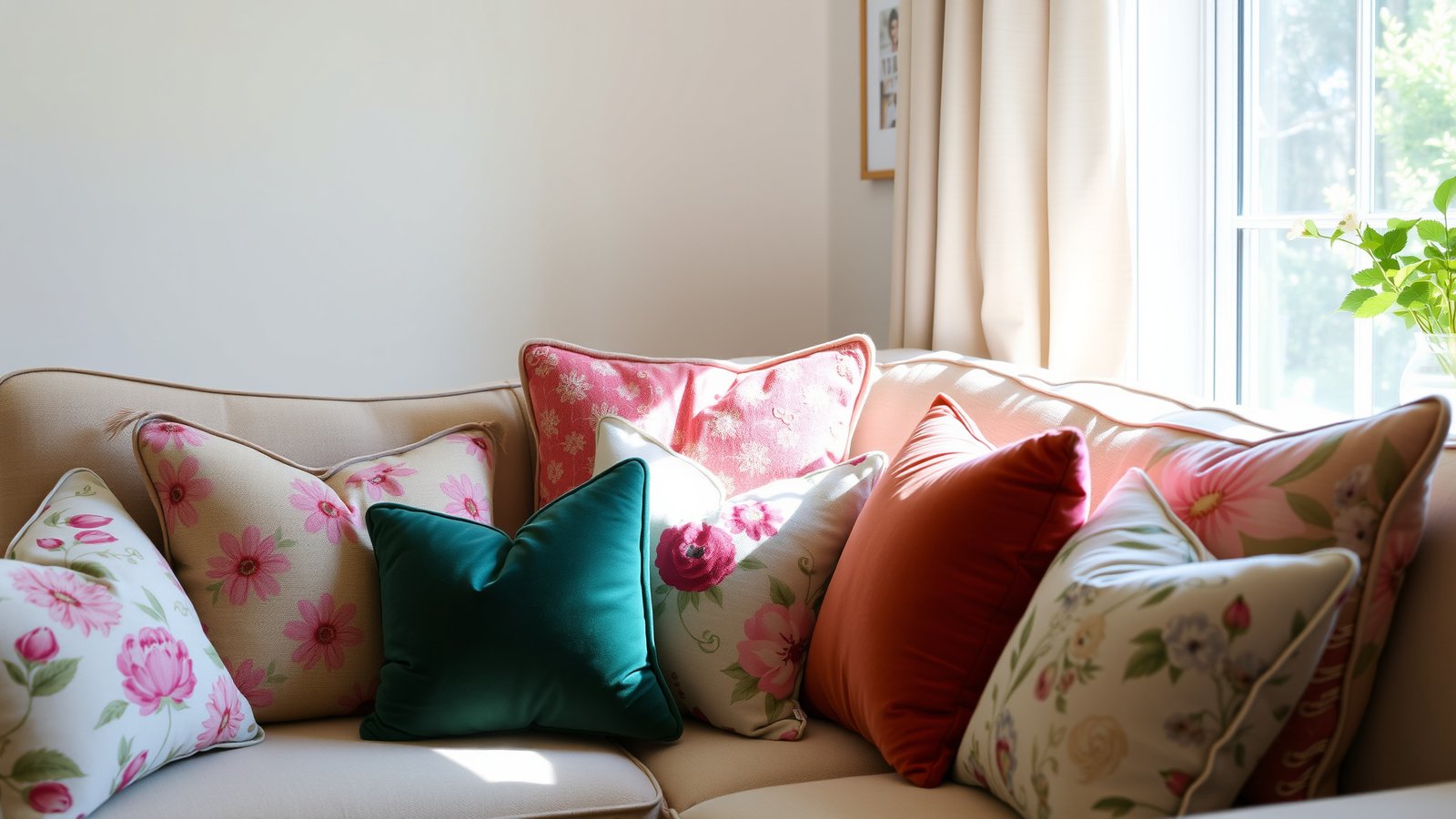
Throw pillows are the seasonal accessory most people have too many of and most stores encourage you to buy more of. The spring pillow refresh works better when you’re subtracting the winter versions and adding fewer — not the same number in a different color.
The formula: two large pillows (24×24 or 22×22) in a solid color or subtle texture, two medium pillows (18×18 or 20×20) in a complementary solid or simple pattern. That’s four pillows. Four pillows on a standard three-seat sofa look generous and considered. Eight pillows look like a display model.
The linen covers worth buying for spring: IKEA’s SANELA and GURLI covers are $6–10 each and come in good spring tones — soft pink, sage, warm white. H&M Home has better fabric quality at $15–25 per cover. For the version worth keeping longer: Cultiver linen pillow covers at $40–55 each last for years and look better after washing than before. If budget allows, fewer higher-quality covers are always better than more cheap ones.
Questions I Get Asked a Lot About Spring Home Decor
How do I make my home feel like spring without spending much? Fresh flowers from the grocery store and opening the windows. That’s genuinely it for the minimum effective version. A $6 bunch of tulips split between two jam jars, windows open to let in real air and real light, heavy curtains taken down — the house smells and feels like a different season before you’ve spent $20. Everything else builds from there.
What’s the single biggest spring decorating mistake? Buying seasonal accessories that only work for spring and then need to be stored for nine months. Bunnies, chick figurines, pastel-only accessories that clash with your existing decor the rest of the year — these accumulate and eventually live in a box in a closet. Better approach: buy additions that work year-round (botanical art, quality linen, good ceramic vessels) and use seasonal flowers as the changing element.
Should I change my color palette seasonally? You don’t have to — and for most people, I’d say don’t. A home with a consistent color palette throughout the year reads more considered than one that completely reinvents itself every season. What works instead: keep the palette consistent and change the accent level. The same sage green that’s in your fall decor can be more prominent in spring with the addition of fresh flowers and lighter fabrics. The room evolves without losing its identity.
How do I transition outdoor furniture from winter storage without spending on everything new? Clean it thoroughly first — a surprising amount of what looks like damage is actually just winter grime. Replace cushion covers (not the cushions themselves, just the covers, if they’re zip-off) which run $15–30 each. Add one new element: either an outdoor rug, string lights, or a new pot with a plant. The combination of clean furniture, refreshed cushion covers, and one new piece reads as a complete seasonal refresh at a fraction of the cost of buying new.
How long should spring decor last before switching? Spring and summer typically run together in most homes — the lighter fabrics, the plants, the fresh flowers all work for both seasons. The transition from spring to winter is the more significant one, when heavy curtains come back and the palette generally warms and deepens. There’s no rule about when to switch. The room should feel right for the weather and the light outside. When it stops feeling right, change it.
Spring Doesn’t Need a Complete Overhaul — Just the Right Few Things
The spring decor that feels the most genuine is the version with the fewest seasonal-specific elements. Fresh flowers, lighter fabrics, a plant that’s actually alive, windows open to real air — these are the changes that shift a room most effectively. The themed accessories and the full seasonal palette swaps feel good in the buying and often look overwrought in the room.
Pick two or three things from this list. Do them well. The house will feel like spring arrived.
My spring project this year: finally dealing with the outdoor corner of my apartment balcony that’s been empty all winter. I have a chair with bad cushions and a plant that didn’t survive February. I’m starting there.
— Emily
What’s the first spring change you make in your home every year? I’m always curious what other people reach for first — drop it in the comments.