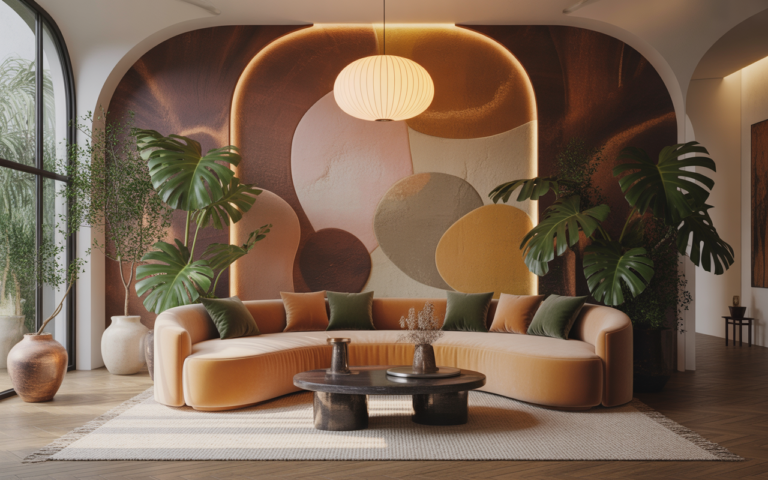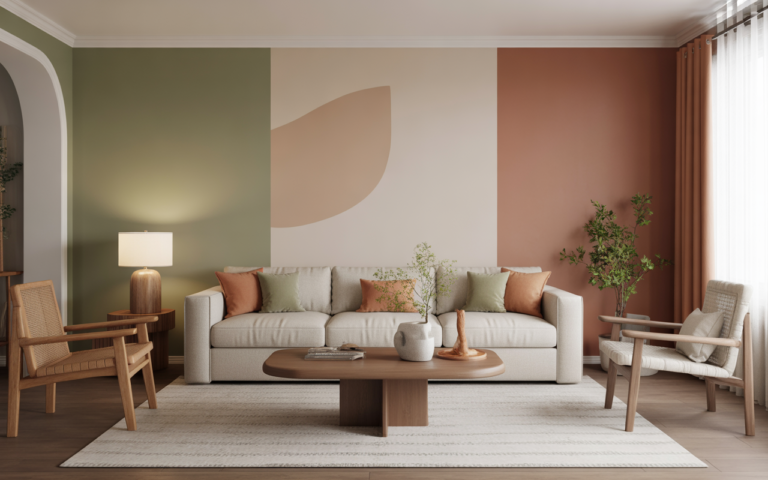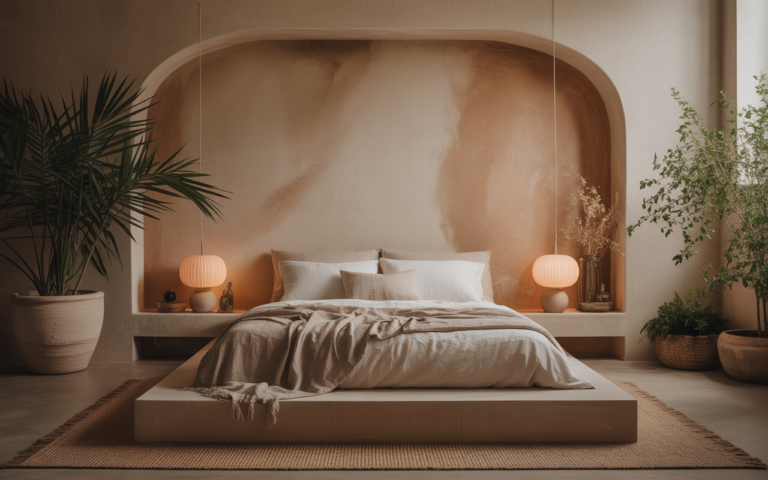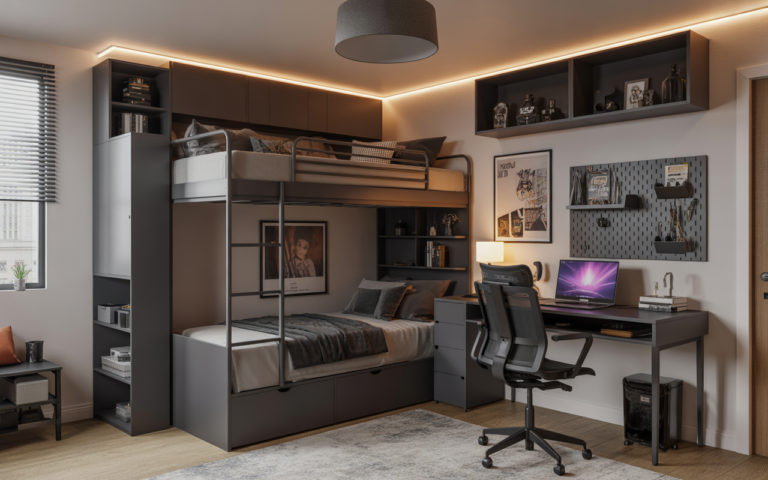
15 Modern Men’s Bedroom Ideas That Actually Look Good
I’ve helped three different guys redo their bedrooms over the years. A college roommate’s boyfriend, my cousin when he moved into his first apartment, and a friend who’d been sleeping in what was essentially a mattress on a floor surrounded by gym bags for four years. All three started with the same question: where do I even begin?
The problem isn’t that men don’t care how their rooms look. Most of them do — they just don’t know where to start, and the advice online either talks down to them or goes so abstract it’s useless. “Embrace minimalism.” Okay. How? With what? For how much?
This is the version of that guide that actually answers those question
Start With the Bed — Everything Else Follows
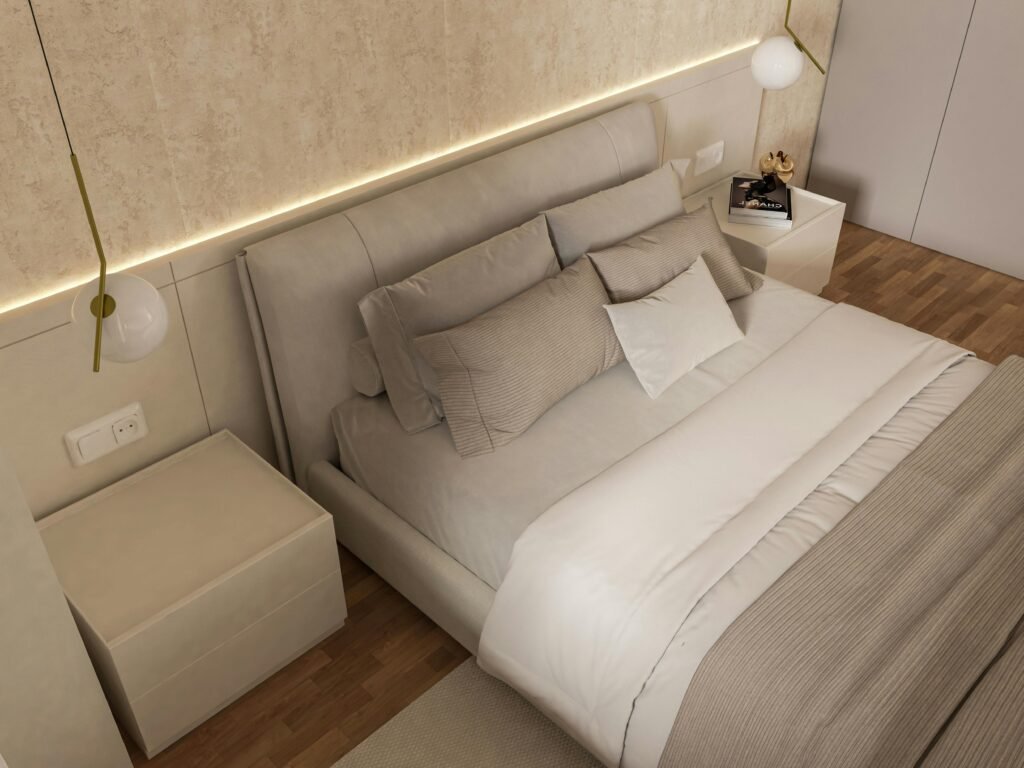
The bed is 70% of the room. In most bedrooms it’s the largest piece of furniture and the first thing you see when you walk in. If the bed looks good, the room looks good. If it doesn’t, nothing else you put in there will fix it.
Get a Real Bed Frame
A mattress on the floor was a phase. A platform bed with clean lines — no ornate headboard, no bulky footboard — is the move for a modern men’s bedroom. IKEA’s MALM bed frame starts at $379 and looks significantly more expensive than it is. The low profile creates a sense of space in smaller rooms and the lines are clean enough to work with almost any style direction.
If you want to spend more, West Elm’s Grid bed frame ($699–899) is worth it for the quality and the look. Either way: get a frame. It’s the single biggest upgrade you can make.
Layer the Bedding Properly
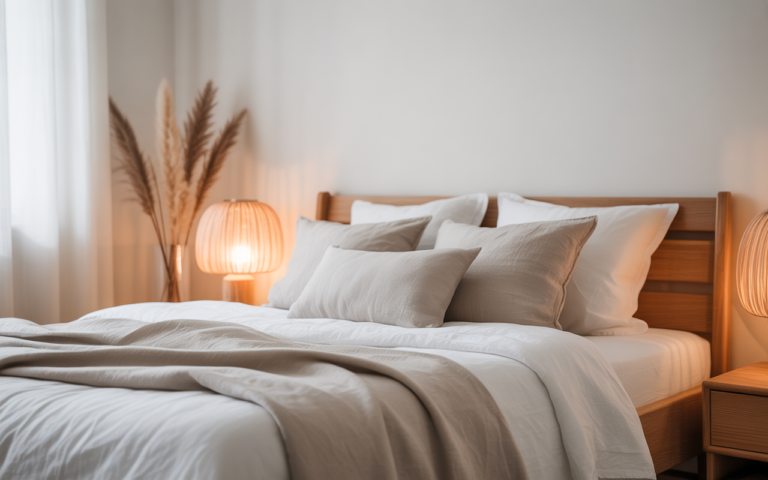
Here’s what I see in most guys’ bedrooms: a comforter, maybe two pillows, and that’s it. It looks fine. But fine is not what you’re going for. Layer a fitted sheet, a duvet with a proper duvet cover, a folded throw at the foot, and two sets of pillows — sleeping pillows behind two decorative ones. That’s it. That’s the formula.
For men’s bedrooms specifically, I’d go with deep navy, charcoal, or warm white for the duvet cover. IKEA’s DVALA duvet cover in white is $15 and looks clean and crisp every time. A throw blanket in a contrasting texture — a chunky knit or a waffle cotton — draped across the foot of the bed takes it from functional to intentional.
Build Around a Color Strategy, Not Just “Dark Walls”
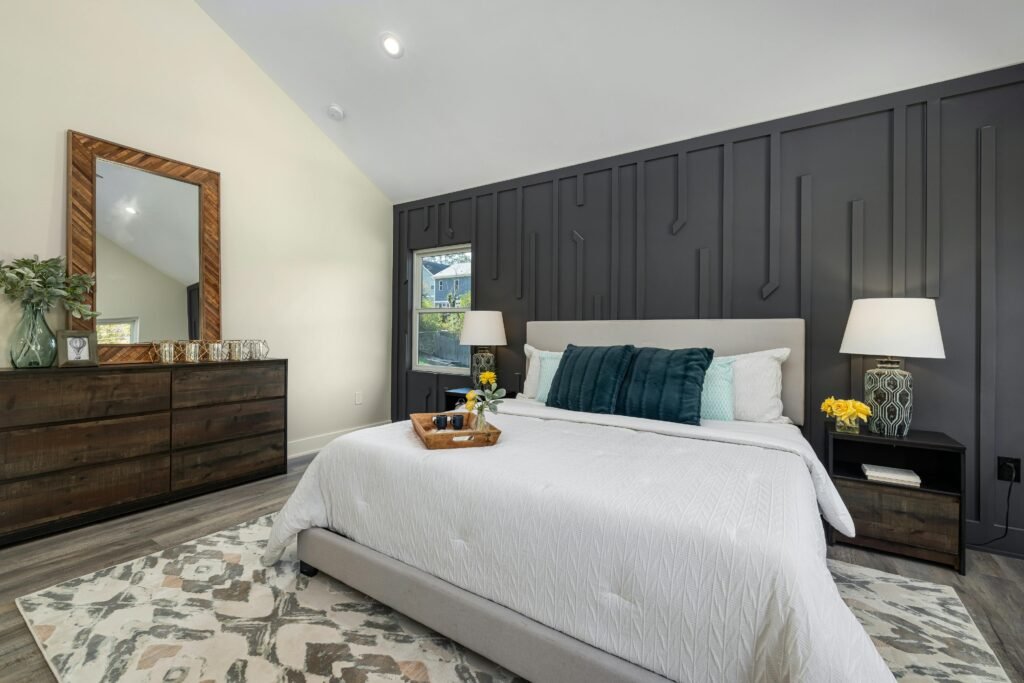
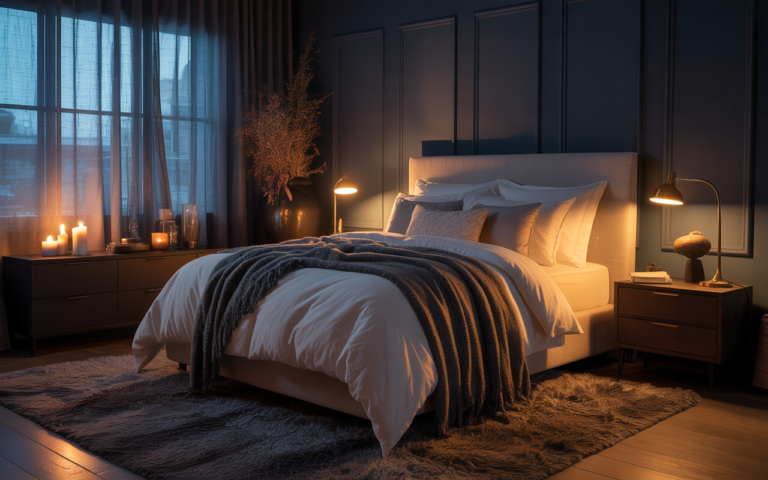
The default advice for men’s bedrooms is always “go dark.” And dark can look incredible — but only when it’s done intentionally. I made the mistake of painting my cousin’s bedroom charcoal on all four walls because he said he wanted something moody. We repainted three weeks later. The room felt like a cave by 2pm and no amount of lamps could fix it.
What actually works: one deep accent wall behind the bed, with the remaining three walls in a warm neutral. The depth and drama without the claustrophobia.
For the accent wall, Sherwin-Williams Iron Ore is a near-perfect dark gray with just enough warmth to keep it from going cold and blue in artificial light. Benjamin Moore Hale Navy works beautifully for something richer. Both run $65–70 a gallon.
The remaining walls: warm white, not bright white. Sherwin-Williams Alabaster or Benjamin Moore White Dove. Pure bright white reads clinical and cheap. Warm off-white makes the dark accent wall sing. For more on what’s working in bedroom color right now, the 2026 paint color trends guide breaks it down by mood and undertone.
Go Industrial or Go Minimal — Pick One Lane
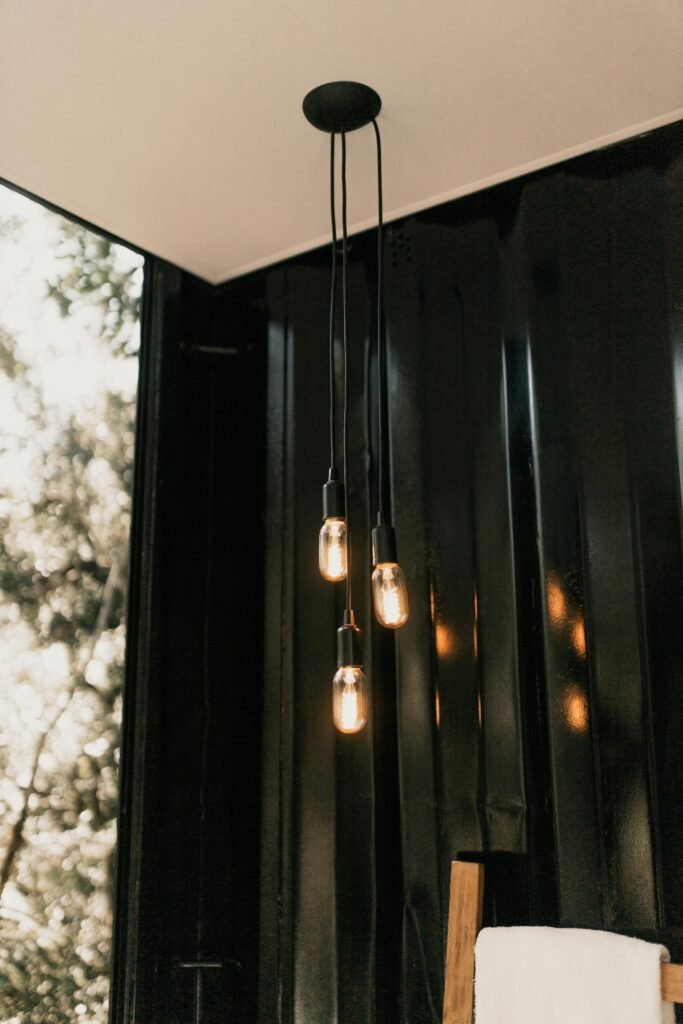
The two most common directions for modern men’s bedrooms are industrial and minimalist. Both look excellent when done well. Both look like a mess when mixed together carelessly.
Industrial means metal accents, warm wood, and texture. A steel bed frame, a reclaimed wood nightstand, an Edison bulb pendant light. The key is warmth — industrial without warm lighting and natural wood reads cold and unfinished. A basic exposed-bulb pendant from IKEA (RANARP, $45) adds character without requiring an electrician.
Minimalist means restraint. One piece of art, not six. Two decorative items on the nightstand, not twelve. Clean surfaces, nothing on the floor that doesn’t belong there. Minimalism only works as an aesthetic when it’s actually maintained — a minimalist room that’s messy looks worse than a maximalist room that’s messy. If that’s not your natural tendency, industrial is more forgiving.
Pick one direction. Commit. Then buy everything to support that direction rather than changing course halfway through.
Lighting Changes Everything — And Most Bedrooms Get It Wrong
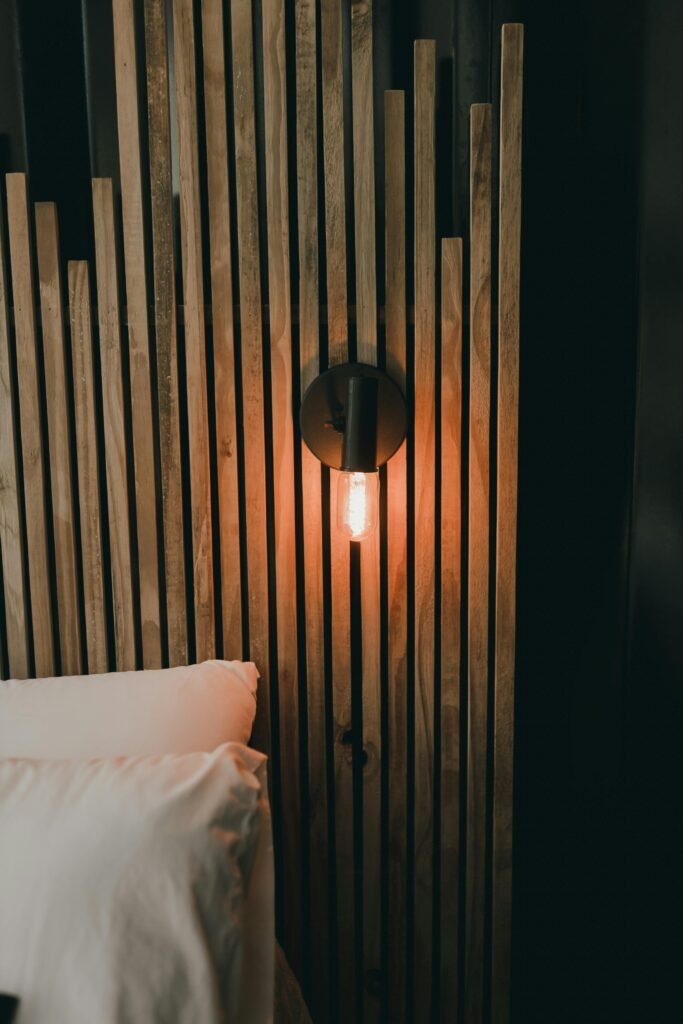
Most bedrooms have one overhead ceiling light and nothing else. That’s the lighting equivalent of wearing one shoe. Overhead-only lighting is harsh, flat, and makes any room look worse than it is.
A modern men’s bedroom needs at least three light sources: ambient (overhead or pendant), task (bedside), and accent (something that creates warmth — fairy lights around a shelf, a floor lamp in a corner).
For task lighting, wall-mounted sconces instead of table lamps are the move in most men’s bedrooms. They free up nightstand space and look more intentional than a lamp just sitting there. IKEA’s SKURUP wall lamp is $20 and looks like something from a much more expensive store.
Bulb temperature matters more than most people realize. Anything above 3000K starts reading cold and blue. For a bedroom, use 2700K bulbs throughout — warm, amber-toned light that makes the room feel like a place you’d want to be in at 10pm.
Make Storage Invisible
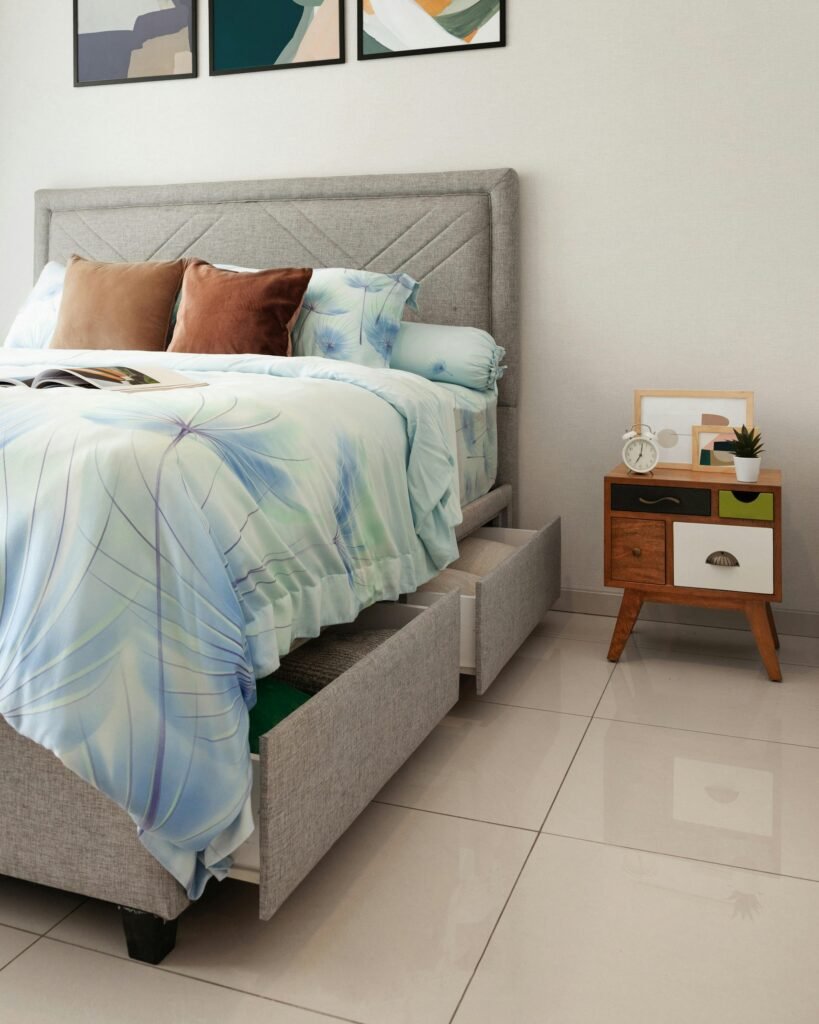
A modern men’s bedroom with stuff on the floor looks unfinished regardless of how expensive the furniture is. Storage is the unsexy part of a great bedroom. Do it right and nobody notices it. Do it wrong and it undoes everything else.
Under-bed storage is the most underused real estate in most bedrooms. A bed with built-in drawers on both sides (IKEA MALM handles this well) gives you dresser-level storage without adding a single additional piece of furniture. If your current frame doesn’t have drawers, flat rolling bins with lids ($12–18 each at most discount stores) slide underneath and organize by category — work clothes, extra bedding, whatever doesn’t fit elsewhere.
Floating shelves over the desk or beside the bed add display and storage without using floor space. I use IKEA LACK shelves ($8 each) in almost every bedroom I style. They’re not exciting. They work. For a men’s bedroom, keep what’s on them minimal: a book, a plant, maybe one decorative object. The shelf itself is the design element — don’t crowd it.
The Gallery Wall, Done Right
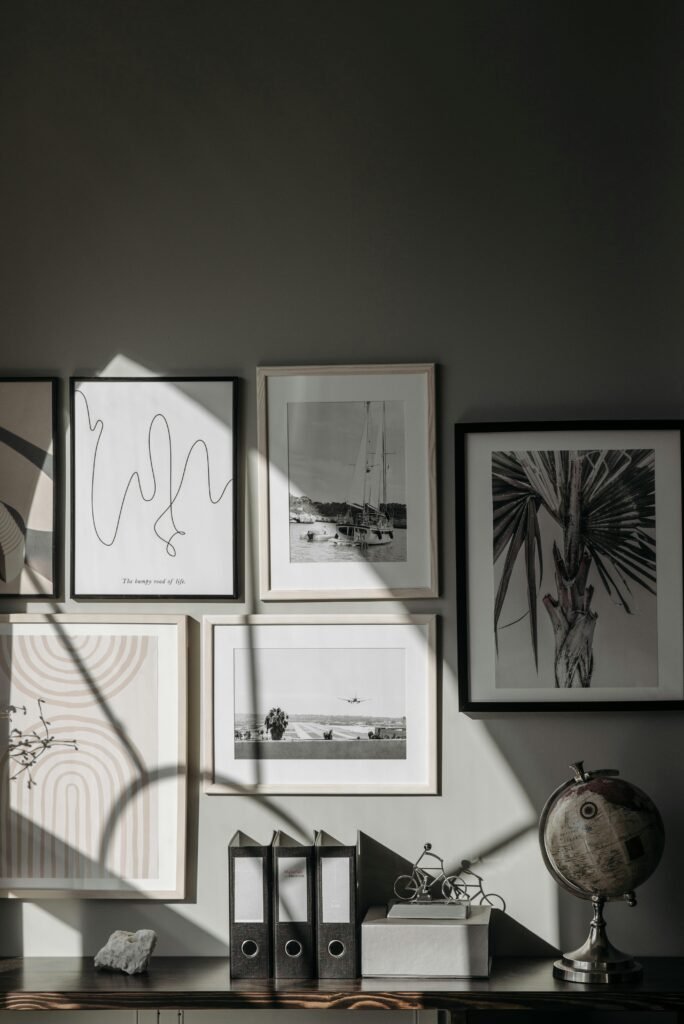
A gallery wall done badly looks like a collage your 14-year-old self made. A gallery wall done right is one of the most personal and visually striking things you can put in a bedroom.
The mistake most people make is mixing too many frame styles, too many sizes, and too many visual styles. For a modern men’s bedroom, the gallery wall should have a consistent frame color (matte black is the easiest), a consistent visual style (all travel photos, or all prints, not both), and breathing room between pieces.
Five to seven pieces is enough. Lay them on the floor first to figure out the arrangement before a single hole goes in the wall. The whole thing should feel curated, like you put thought into it — because you did.
A Reading Corner That Actually Gets Used
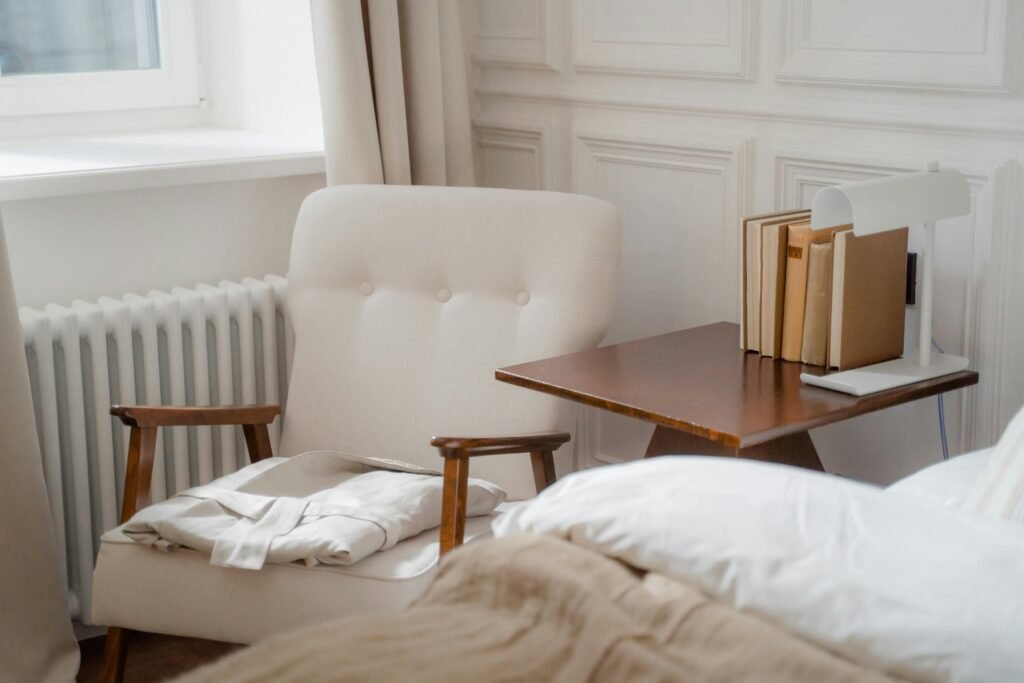
This is the detail that separates a bedroom that looks good in photos from one that genuinely works as a space. A chair in the corner of the bedroom — not a desk chair, a proper lounge chair — changes how you use the room entirely.
IKEA’s STRANDMON wingback chair ($299) looks like it costs twice that. A good leather accent chair from a discount furniture store runs $150–250 and holds up better than you’d expect. Add a side table and a floor lamp, and you have a spot to decompress that isn’t the bed — which is actually better for sleep than scrolling from your mattress.
I tried this in a friend’s bedroom and he said he’d never actually sat in his bedroom before that. Now he reads there every night. That’s the goal.
Integrate Tech Without Letting It Take Over
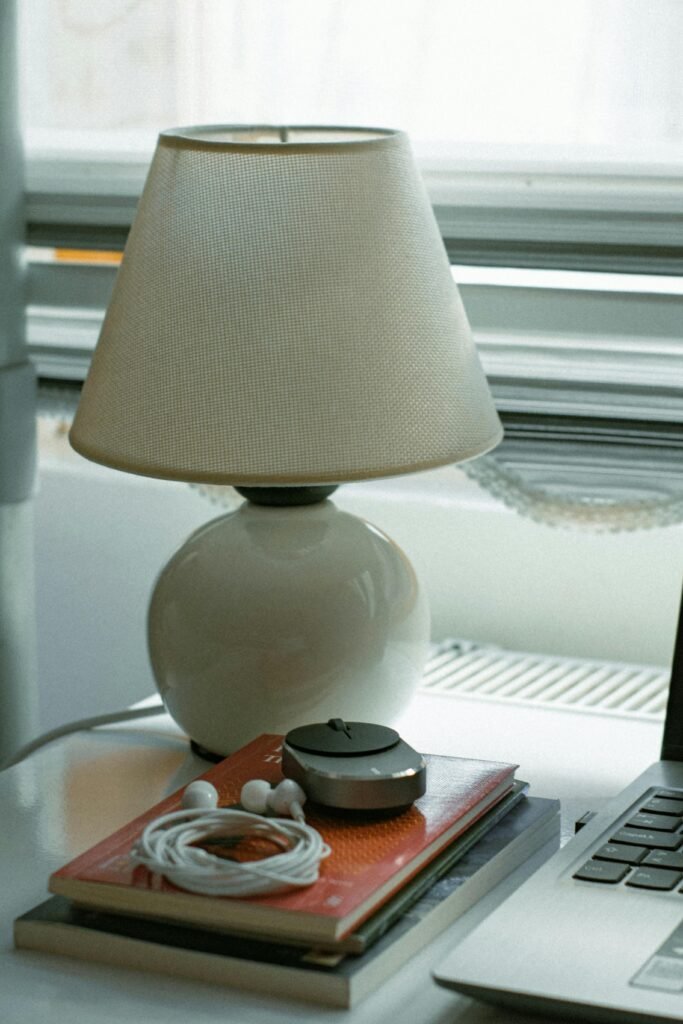
Smart tech in a bedroom should disappear when you’re not using it. A smart speaker that plays music or answers questions takes up one small spot on a shelf. Smart bulbs (Philips Hue white ambiance, $15–25 per bulb) let you shift from bright work light to warm evening light without getting up. A wireless charging pad on the nightstand means no cables to manage overnight.
What I’d avoid: a TV mounted opposite the bed if sleep is a priority. A large monitor on a desk in the corner is one thing. A screen directly in your line of sight from bed is another. If you want a TV in the bedroom, mount it high and off to the side so it’s not the focal point of the room — your bed should be.
Cable management is the thing nobody talks about and everyone notices. A cable management box ($15–20 on Amazon) hides the power strip and every cord that plugs into it. One box, no visible cables. The difference is immediate.
Natural Materials — Specifically Wood
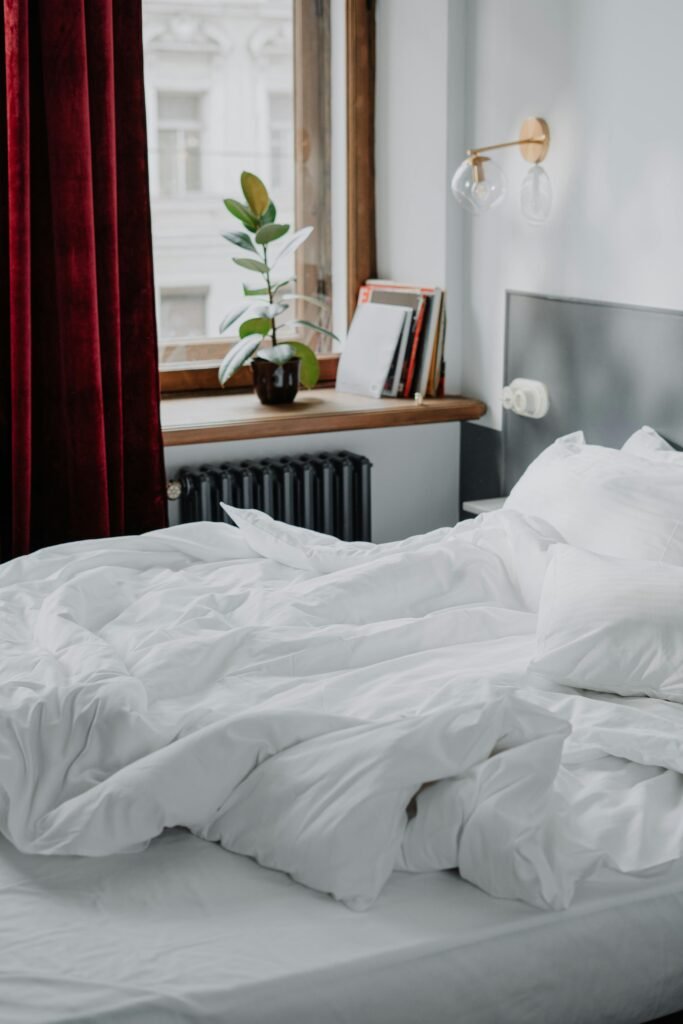
Wood in a men’s bedroom doesn’t mean rustic or cabin-core. A walnut-stained nightstand, a light ash bed frame, or open wood shelving adds warmth that no amount of gray paint can replicate. Natural materials make a room feel lived-in rather than staged.
For rugs, natural fiber works better in men’s bedrooms than plush pile — jute, sisal, or flatweave wool. An 8×10 jute rug runs $80–130 and anchors the space without competing with anything else in the room. It’s also more durable than a shag rug, which shows every footprint and piece of lint.
Plants belong here too — but the right ones. I killed three succulents in a north-facing bedroom before accepting that they need direct light I couldn’t provide. Snake plants and ZZ plants tolerate low light genuinely well and require water every two to three weeks at most. One plant in a simple ceramic pot on the shelf. That’s enough.
The Desk Setup — Functional and Styled
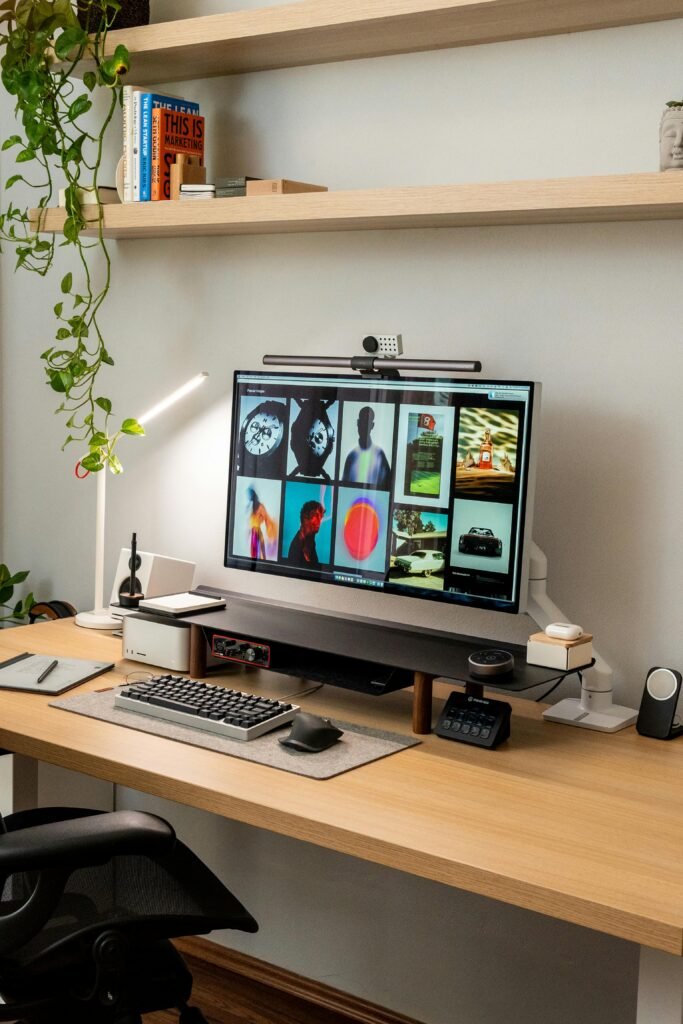
If you work from home or need a study space, the desk setup needs to pull double duty — functional enough to actually work at, and styled well enough that it doesn’t look like an afterthought dropped into a bedroom.
A wall-mounted fold-down desk (IKEA NORBERG, $50) is the right move in smaller bedrooms. Folded up, it disappears. Folded down, you have a real workspace. For larger rooms, a simple floating desk at the right height (28–30 inches is standard) looks cleaner than a freestanding desk with visible legs.
One monitor, one lamp, one small organizer. Everything else gets put away when work is done. The desk shouldn’t look like a desk when you’re not using it — it should look like part of the room.
Vintage Pieces That Don’t Look Like a Thrift Store
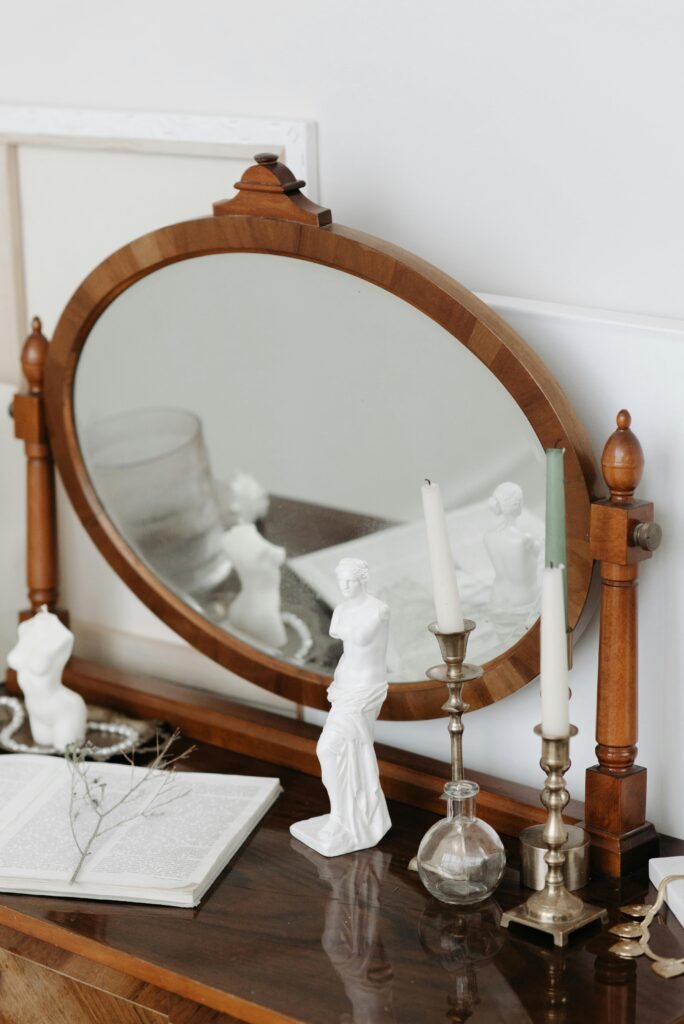
One well-chosen vintage piece in a modern bedroom — a solid wood dresser from the 1970s, an old mirror with a worn wood frame, an antique trunk used as a coffee table at the foot of the bed — adds a layer of character that no new furniture can replicate.
The key word is one. One vintage piece surrounded by clean, modern elements reads as intentional and sophisticated. Five vintage pieces mixed together reads as mismatched and cluttered.
Thrift stores, Facebook Marketplace, and estate sales are the right places to look. A solid oak dresser that would cost $800 new often sells for $60–120 used. Sand it, repaint it if the finish is worn, and put it in the room. Nobody has to know where it came from.
Color Blocking — For When You Want to Go Bolder
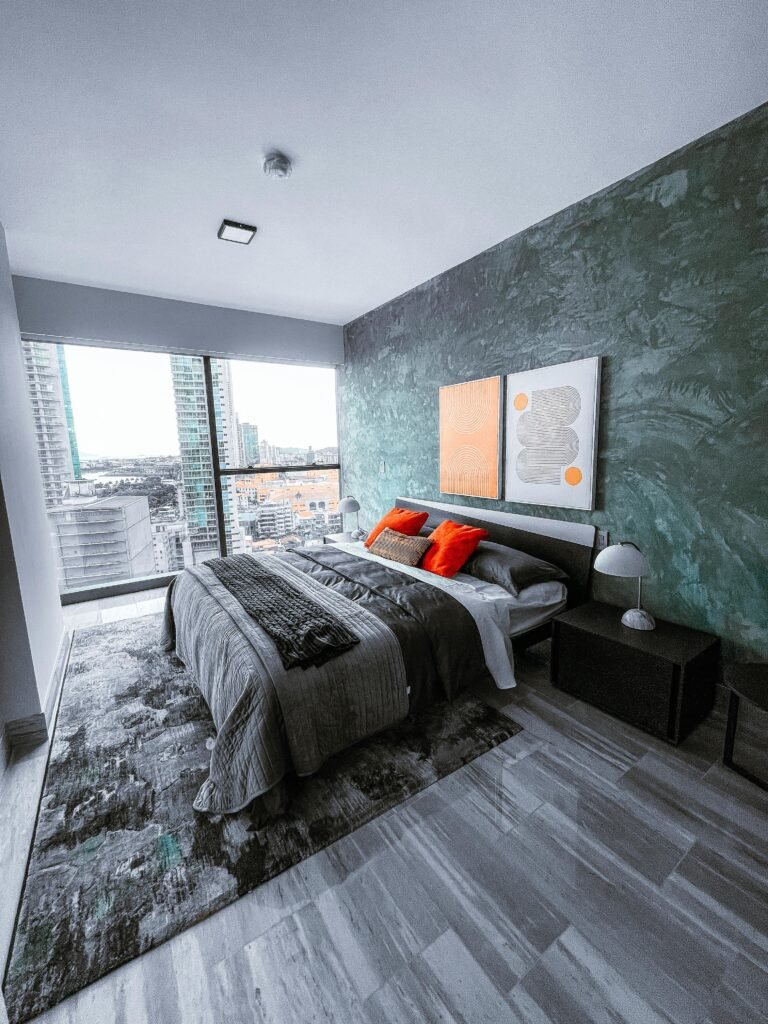
Color blocking is committing to two different colors in the same room and using the contrast deliberately. In a bedroom, this usually means one wall (or the lower half of all walls, divided by a chair rail) in a bold color and the rest in a neutral.
Deep navy on the bottom half of the walls, warm white on top. Terracotta on one full wall, warm gray on the other three. Forest green behind the bed, white everywhere else. The combinations that work have one thing in common: one color does most of the talking and the other one listens.
If you’re trying this for the first time, the earthy minimalist bedroom approach is a good entry point — it achieves visual interest without committing to anything dramatic.
Monochromatic Rooms — Harder Than They Look
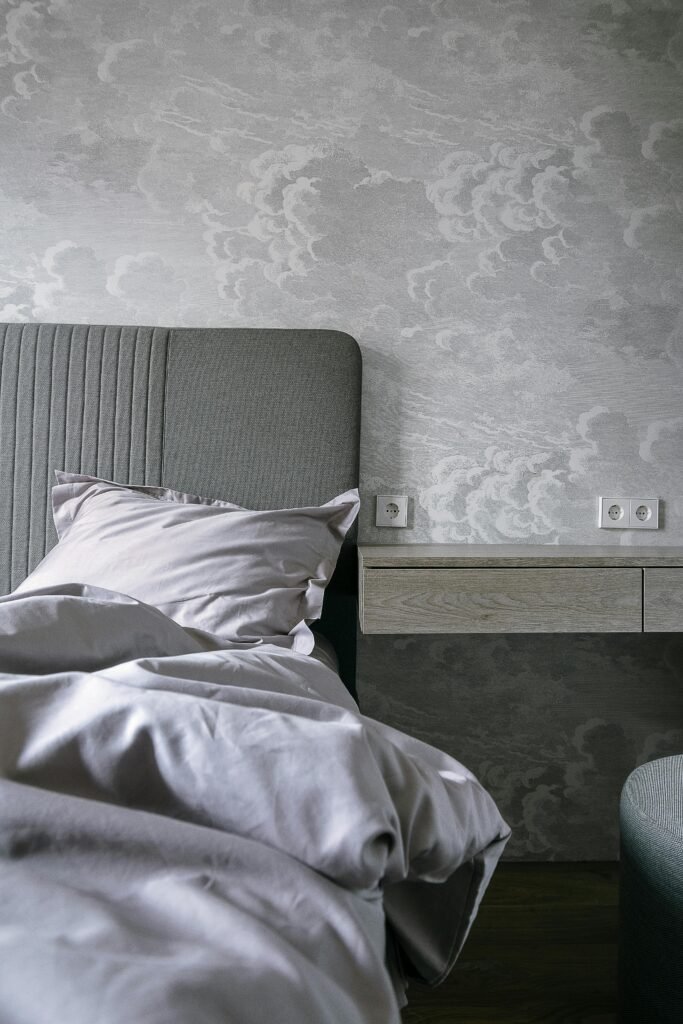
A monochromatic bedroom uses one color in multiple shades and textures throughout. Done well, it’s probably the most sophisticated-looking bedroom style there is. Done poorly, it looks flat and boring.
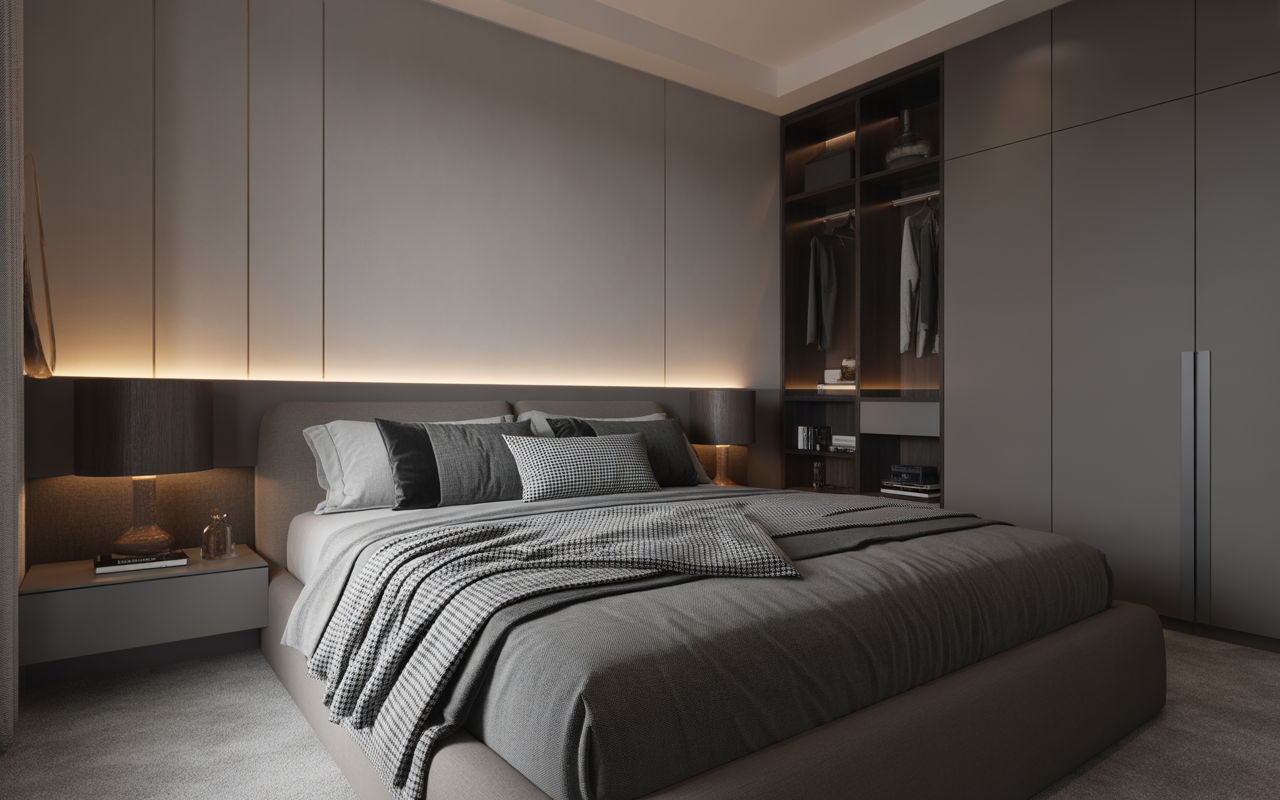
The texture variation is everything. A charcoal linen duvet, a medium gray waffle throw, a dark graphite rug, a light silver-gray wall. Same color family, five different materials. The eye travels around the room reading the texture differences, which is what keeps it from looking like a catalog photo that nobody actually lives in.
Charcoal is the most forgiving starting point for this approach in a men’s bedroom. Start with the bedding, match the rug to a mid-range shade, and let the walls be the lightest version of the color.
Statement Lighting as the Focal Point

If you’re not going with an accent wall as your focal point, a statement light fixture can do the same job from above. A sculptural pendant over the bed, a bold chandelier, a cluster of hanging globe lights — any of these draw the eye upward and give the room a centerpiece that’s functional rather than purely decorative.
For a modern men’s bedroom, matte black fixtures work in almost every context. Brushed brass reads warmer and more premium. Chrome reads more contemporary and slightly harder. Choose based on the overall direction of the room.
The fixture doesn’t have to be expensive to look good. IKEA’s SINNERLIG pendant ($35) and HEKTAR floor lamp ($80) are both used regularly by interior designers in rooms where budget matters. The brand is never visible once it’s installed.
Personal Details — Without Going Overboard
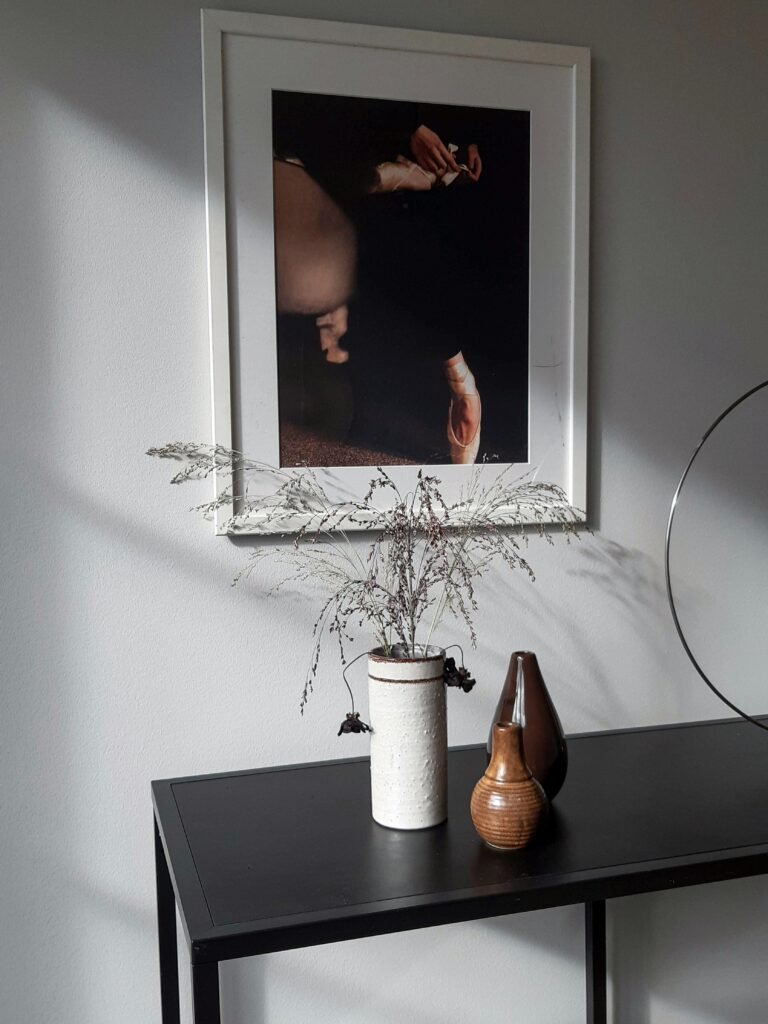
A bedroom without a single personal element looks like a hotel room. The goal isn’t a sterile showroom — it’s a room that looks like you.
But restraint matters here. Two or three framed photos arranged intentionally on a floating shelf, or one piece of art above the desk that actually means something to you. A small collection of objects that have a story — not because they’re decorative, but because they’re yours.
For family photos and personal images specifically: consistent frames in matte black or white, arranged in a cluster rather than scattered. Three frames in the same style on a shelf look designed. Three frames in different styles spread across three walls look random.
Questions I Get Asked a Lot About Men’s Bedroom Decor
Do men’s bedrooms need to look different from any other bedroom? Not really — the principles of good bedroom design apply regardless of who sleeps there. That said, most men I’ve worked with prefer a cleaner, less maximalist approach: fewer decorative objects, bolder color choices, and a stronger emphasis on functionality. The style direction should reflect the person, not a gender category.
What’s the best color palette for a modern men’s bedroom? Deep navy, charcoal, forest green, and warm white tend to work well together and are consistently popular in men’s bedrooms. Warm neutrals — camel, tan, warm beige — work beautifully as accent colors against darker backgrounds. Avoid cool-toned grays that veer into blue-gray territory — they look sharp in daylight and washed-out under artificial light. More on what’s trending in the 2026 paint color trends guide.
How do I make a small men’s bedroom look bigger? Get things off the floor (floating shelves, wall-mounted lighting), choose a low-profile bed frame, use a large mirror opposite the window, and keep surfaces clear. Everything that’s on the floor takes up visual space even if it’s small. The small bedroom ideas guide covers this in detail for rooms under 150 square feet.
What furniture is worth spending money on in a men’s bedroom? The bed frame and the mattress, in that order. Everything else — nightstands, shelving, lighting — can be sourced affordably without it showing. A quality bed frame that will last ten years is worth the investment in a way that an expensive decorative lamp simply isn’t.
How do I make my bedroom look more put-together without buying anything new? Start with the bed — make it properly with layered bedding and proper pillow arrangement. Then clear every surface down to almost nothing: nightstand, dresser top, desk. Put things away. The room will look significantly better before you’ve bought a single thing. Organization is 80% of the work in making a bedroom look intentional.
A Men’s Bedroom Should Feel Like the Best Room in the House
The bedrooms I’ve seen look genuinely excellent — not just “pretty good for a guy’s room,” but actually excellent — have one thing in common: they were built deliberately, one decision at a time. Start with the bed. Then the color. Then the lighting. Then the storage. Then the personal details.
You don’t need to do all fifteen ideas. Start with one or two. The bed and the lighting alone will transform the room more than anything else combined.
Right now I’m helping a friend rethink his bedroom storage situation — he’s got a small room and a lot of gear and we’re figuring out how to make the under-bed zone actually work for him. I’ll share what we land on.
— Emily
What’s the biggest thing holding your bedroom back right now? Drop it in the comments — I read every one and the most common questions turn into full posts.