15 Cozy Scandinavian Bedroom Ideas
Somewhere along the way, Scandinavian design got a reputation for being cold. All that white. All that empty space. All those rooms that look beautiful in photographs and feel, in person, like nobody actually lives there.
That’s not what I’m talking about here.
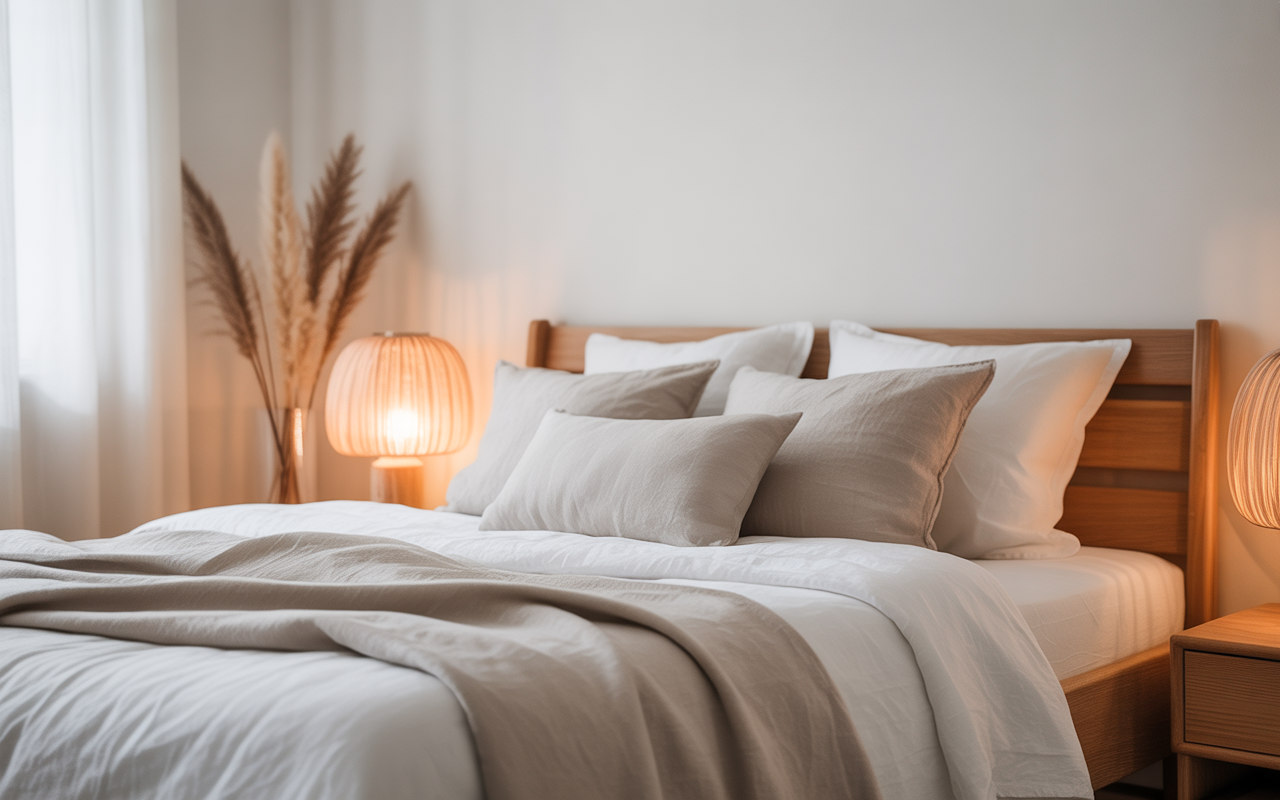
The Scandinavian approach to a bedroom — at its best — is about warmth that happens to be simple. It’s the linen duvet that feels like a cloud. The warm wood of a bedside table. The single pendant light that casts a glow at 9pm that makes you want to stay in bed with a book rather than scroll your phone. It’s the Danes calling it hygge and the Swedes calling it mysigt — that particular quality of a room that feels genuinely, physically cozy rather than just aesthetically styled.
I’ve been drawn to this aesthetic for years, mostly because it’s forgiving. You don’t need perfect taste or a designer budget. You need a few right things, edited down, and an honest commitment to what actually makes a space feel good to be in.
These 15 ideas are the ones I keep coming back to — some from my own bedrooms, some learned the hard way.
Start With the Right Neutral — There’s More to Choose From Than You Think
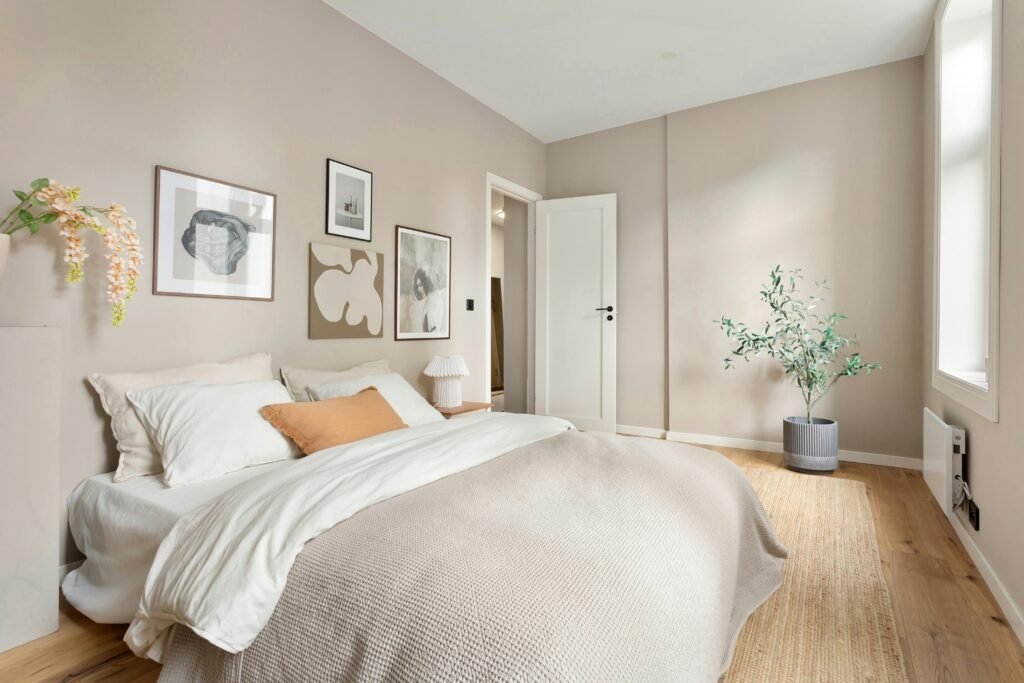
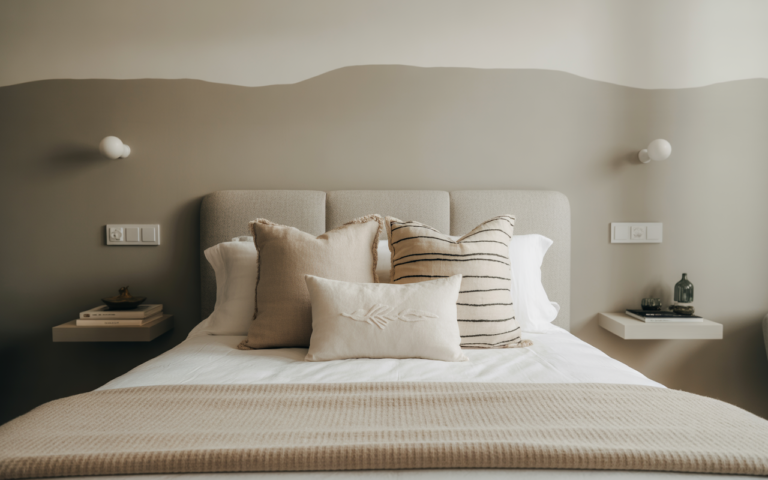
The neutral palette in a Scandinavian bedroom isn’t just “white walls and call it done.” The best Scandi bedrooms use neutrals with warmth — soft warm whites, pale creams, greige, the faintest blush or sage. Colors that reflect light without feeling clinical.
I painted a bedroom in what I thought was the perfect Scandinavian white three years ago — a bright, cool white I’d seen in every Nordic design blog. In natural light it looked beautiful. Under artificial light in the evening, it looked blue-grey and slightly institutional. I repainted within a month.
Benjamin Moore’s White Dove or Sherwin-Williams’ Alabaster are the warm whites I keep recommending — they read as white in good light and cream in the evening, and neither direction is wrong. A gallon is around $65–70 and covers a standard bedroom in two coats. If you want something with more color, a pale greige like Sherwin-Williams’ Accessible Beige reads as a natural backdrop for wood tones without leaning pink or yellow.
If you’re planning your bedroom color alongside other rooms, the 2026 paint color trends breakdown covers the warm neutrals that are showing up across interiors right now — several of them are perfect for this aesthetic.
Bring in Natural Wood — But Not All at Once
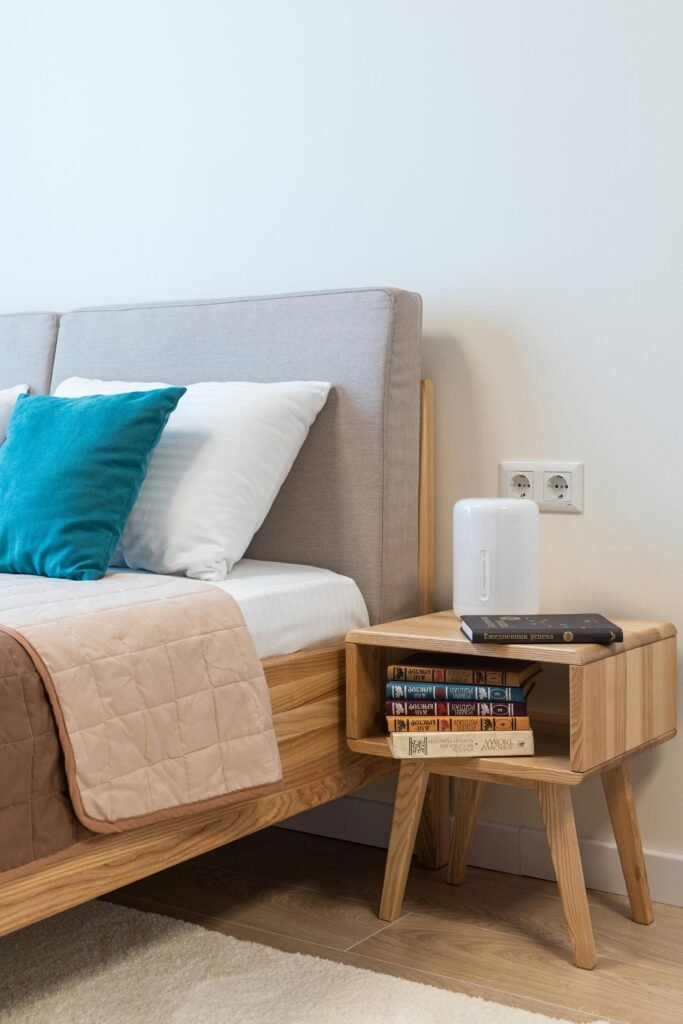
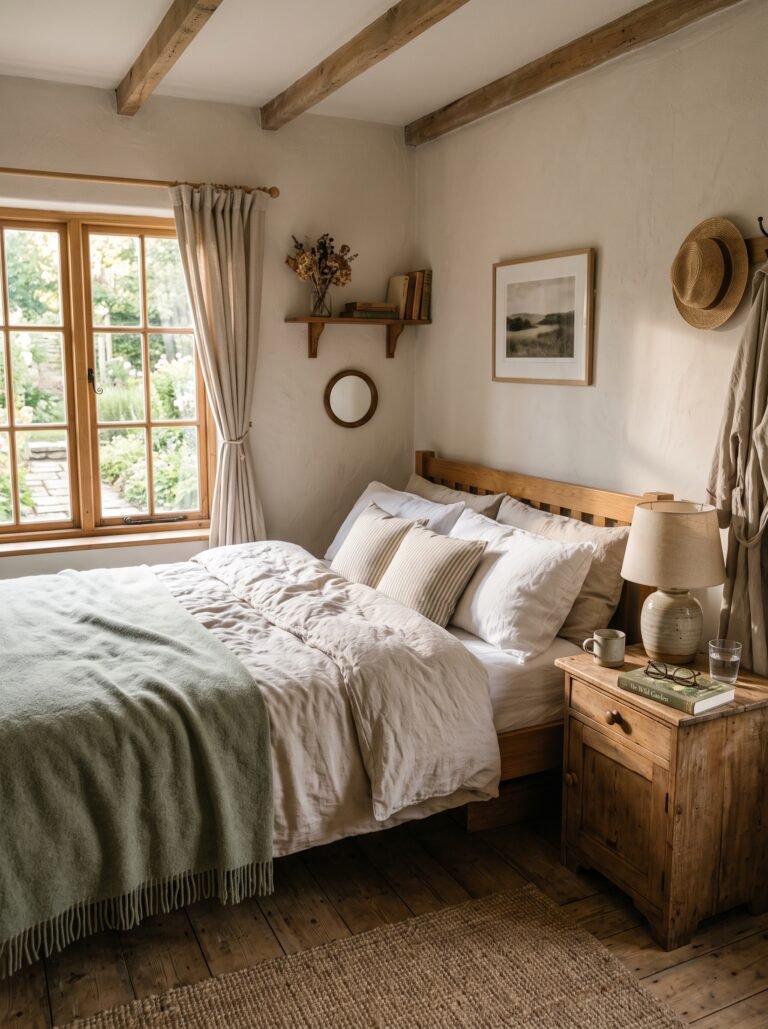
Wood is the material that makes Scandinavian bedrooms feel warm rather than cold. A wooden bed frame, a wooden nightstand, a wooden shelf with a slight grain — these are what save a neutral bedroom from feeling sterile.
The rule that helped me most: one finish, different tones are fine. Light oak and warm pine look good together because they’re both natural. Mixing dark walnut with light birch starts to look collected rather than cohesive.
You don’t need to buy everything new. Some of the best wood pieces I’ve used in bedrooms came from thrift stores and Facebook Marketplace — a side table for $12, a low wooden dresser for $35 that I sanded and oiled myself. Light natural wood like oak and birch reads more Scandinavian than dark finishes. IKEA’s TARVA bed frame in solid pine is $199 and is probably the most honest entry point for this style at a reasonable price.
Layer Your Textiles — This Is Where the Coziness Actually Lives
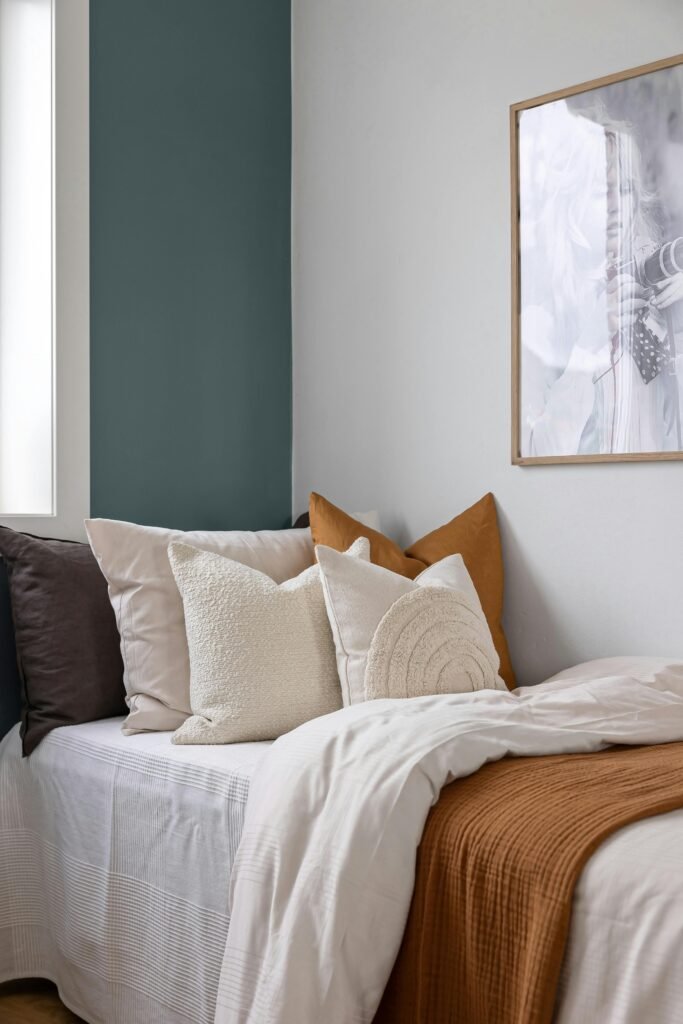
Here’s where the Scandinavian bedroom earns its warmth. Not in the furniture, not in the wall color — in the textiles. A well-layered bed in this style has depth, texture, and the visual quality of something you want to climb into immediately.
The layering formula that works: a linen duvet cover (wrinkles intentionally, looks lived in), a knitted or waffle-weave throw folded across the foot of the bed, two sleeping pillows in matching linen pillowcases, two or three decorative pillows in different textures (one boucle, one plain cotton). That combination looks like a boutique hotel version of a Scandinavian bedroom and costs far less than it looks.
A good linen duvet cover runs $60–90 from most home goods retailers. H&M Home has decent options in the $50–70 range. Avoid the ultra-bright whites — a warm oatmeal, a dusty sage, or a natural undyed linen reads more authentically in this style.
Choose One Piece of Art That Actually Means Something to You
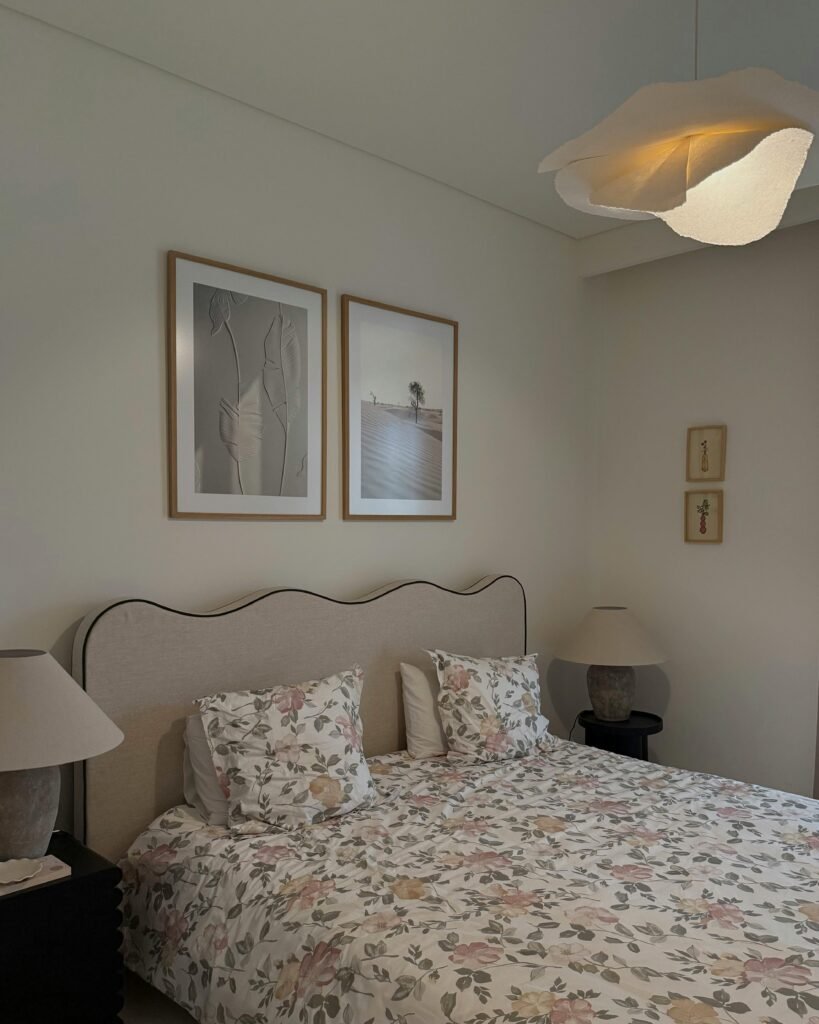
Scandinavian bedrooms done well tend to have one or two pieces of art, chosen carefully. What they don’t have is a wall covered in prints from the same online art shop that everyone else also has.
The prints that work in this aesthetic: botanical illustrations, abstract organic shapes in a limited palette (black and white, terracotta and cream, sage and off-white), simple line drawings, minimalist landscapes. The frame matters almost as much as the print — a clean natural oak or a simple black frame both work. Gallery walls in this style work best in muted, cohesive palettes with consistent framing.
A 12×16 print from Etsy (there are artists producing exactly the right aesthetic for $15–30 as a digital download, printed at a local shop) in an IKEA HOVSTA frame ($12) is a $25–40 piece of wall art that looks entirely considered. That’s the Scandinavian approach to art purchases.
Get the Lighting Right — It Matters More Here Than in Any Other Style
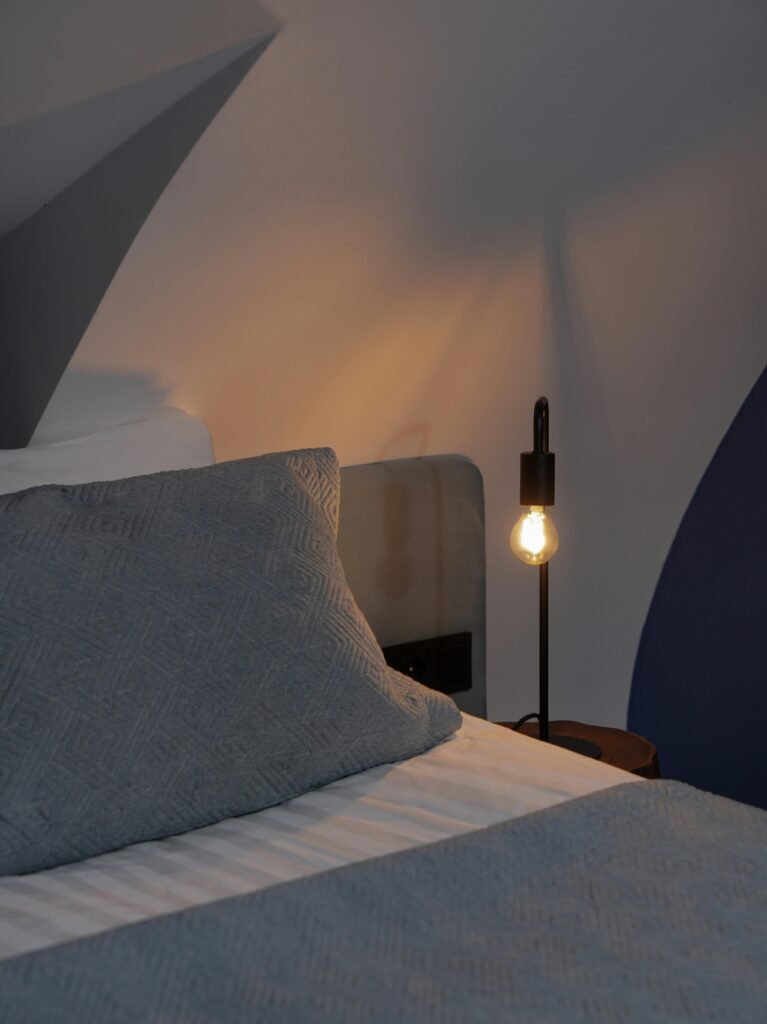
Scandinavian countries have long winters with very little daylight. The entire approach to interior lighting in Nordic design is shaped by that reality — how do you make a room feel warm and welcoming when it’s dark by 3pm for four months of the year?
The answer is layers. An overhead light at one level. A bedside lamp that casts a warm pool of light at another. A candle or two on a surface somewhere. The combination of light sources at different heights and intensities creates a quality of warmth that a single overhead fixture simply can’t replicate.
I made this mistake in my first apartment — one overhead light, one bedside lamp, nothing else. The bedroom felt flat and slightly harsh in the evenings. Adding a small lamp on the dresser (a $22 ceramic lamp with a warm bulb) changed the room completely. Always use 2700K bulbs — anything cooler reads blue and clinical in the dark.
Wall-mounted plug-in sconces (IKEA’s SKURUP is around $20) eliminate the need for table lamps entirely if surface space is limited, and they look intentionally built-in.
Maximize Natural Light During the Day
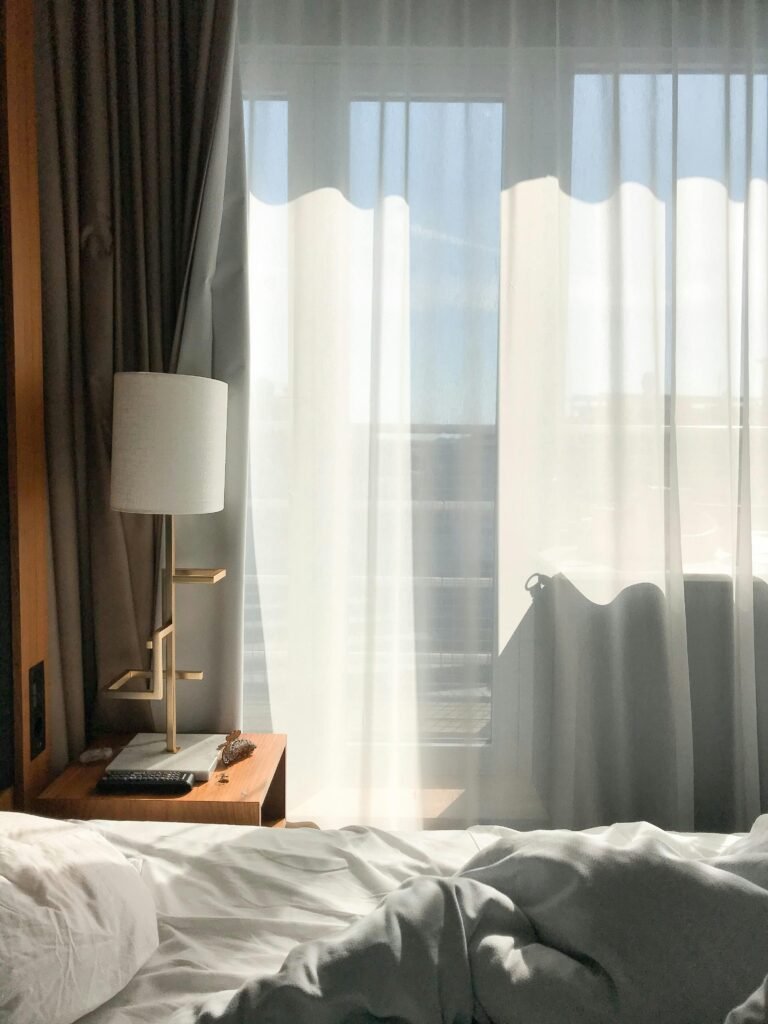
If the evening is about warm artificial light, the daytime version of a Scandinavian bedroom is about letting every bit of natural light in that it can get.
Sheer linen curtains floor to ceiling — even if the window itself is modest — create the impression of generous windows and flood the room with diffused light throughout the day. Hang the rod at ceiling height rather than window frame height. The visual effect is significant.
Keep window sills clear. A single small plant on a windowsill is fine. A collection of objects blocking the glass is not. One clean sill, plenty of light, simple curtain in a warm off-white — that’s the formula.
For blackout situations (you need to sleep during the day, or your window faces a lit street), linen-look blackout curtains in a warm neutral layer behind the sheer panel. They look like a simple linen curtain until you close them.
Add Plants — Specifically These Ones
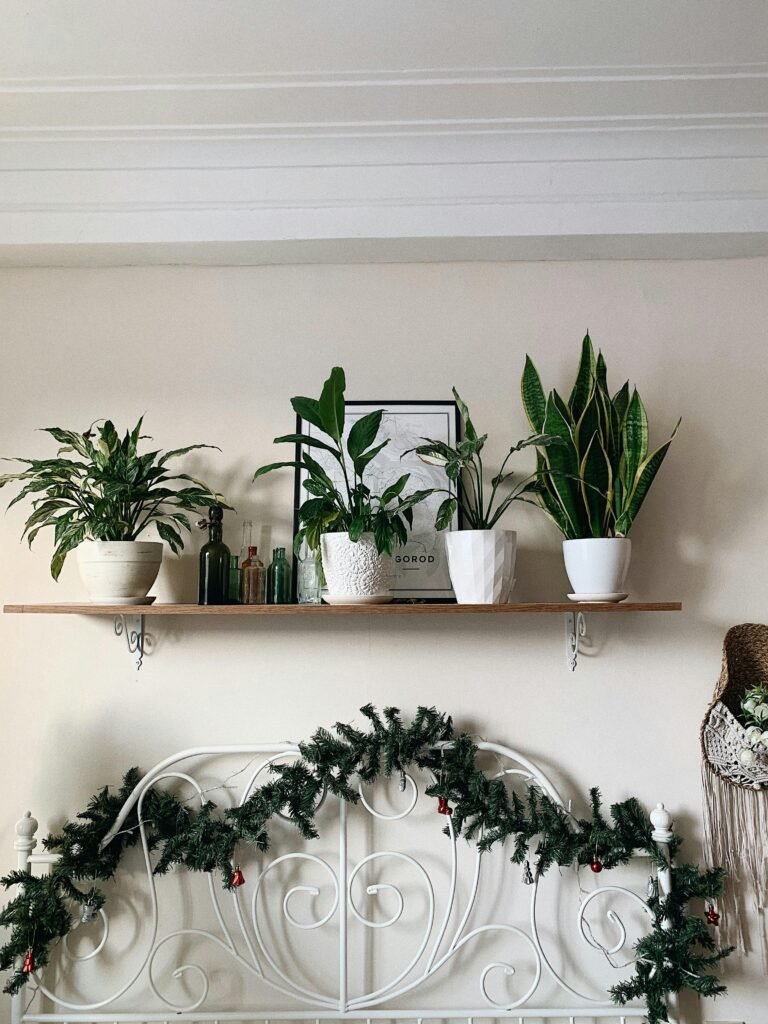
Every Scandinavian bedroom I’ve loved has had at least one plant in it. Not a collection, not a styled shelf of seventeen succulents — one or two plants, chosen for the right light conditions, placed where they actually make sense.
The plants that work best in bedrooms: pothos (trails beautifully from a floating shelf or a hanging planter, tolerates low light, basically indestructible), snake plant (vertical, architectural, handles the lower light of most bedrooms without complaining), peace lily (blooms occasionally, adds something the others don’t). A 4-inch nursery pothos costs $4–6. A 6-inch snake plant is $10–14 at most garden centers.
What doesn’t work: succulents in low-light bedrooms. I’ve killed more succulents than I can count by trying to make them work in a north-facing bedroom. They need direct sun for several hours a day and a north-facing window doesn’t provide it. Get a pothos instead.
Keep the Furniture Simple — But Not Sparse
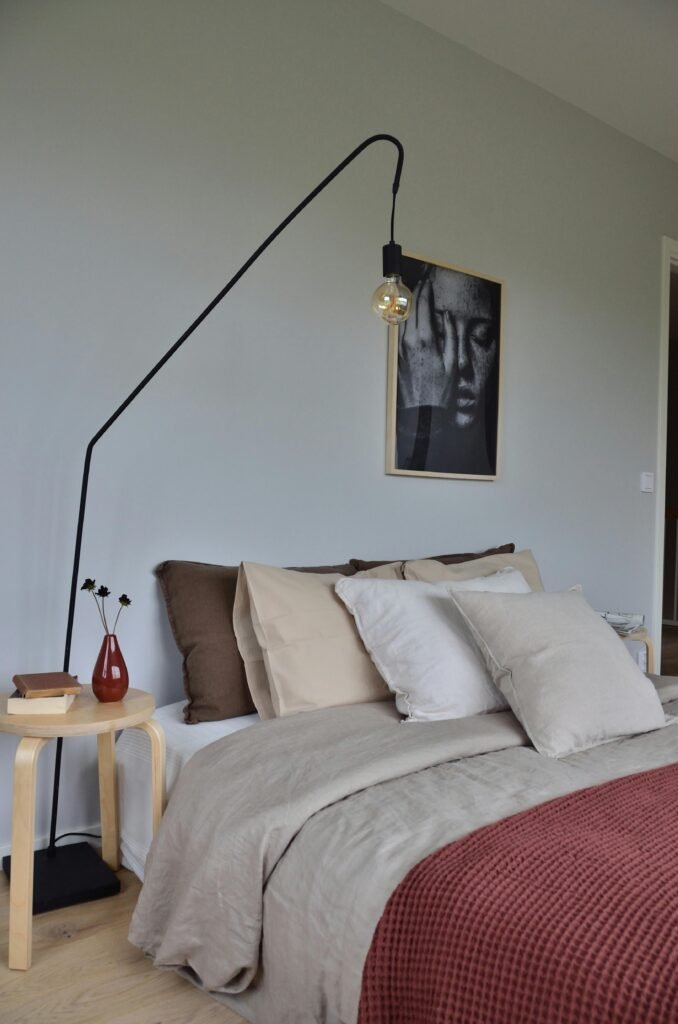
Minimalist doesn’t mean empty. The Scandinavian approach to bedroom furniture is about choosing pieces that earn their place — that are functional, well-made, and visually quiet enough not to compete with each other.
A bed frame in natural wood or upholstered in a textured neutral. Two matching nightstands (asymmetry feels restless in a bedroom). A low dresser with clean lines. That’s usually enough. Resist the impulse to add a chair because the corner feels empty — if there’s no natural place for a chair, the corner can stay empty or hold one tall plant.
Multi-functional pieces earn double the space they take. A bed with storage drawers underneath (IKEA MALM with four drawers, around $379) eliminates the need for a separate storage piece. A bench at the foot of the bed with a lidded interior handles extra blankets and keeps surfaces clean.
Create a Small Reading Corner If You Have Any Extra Floor Space
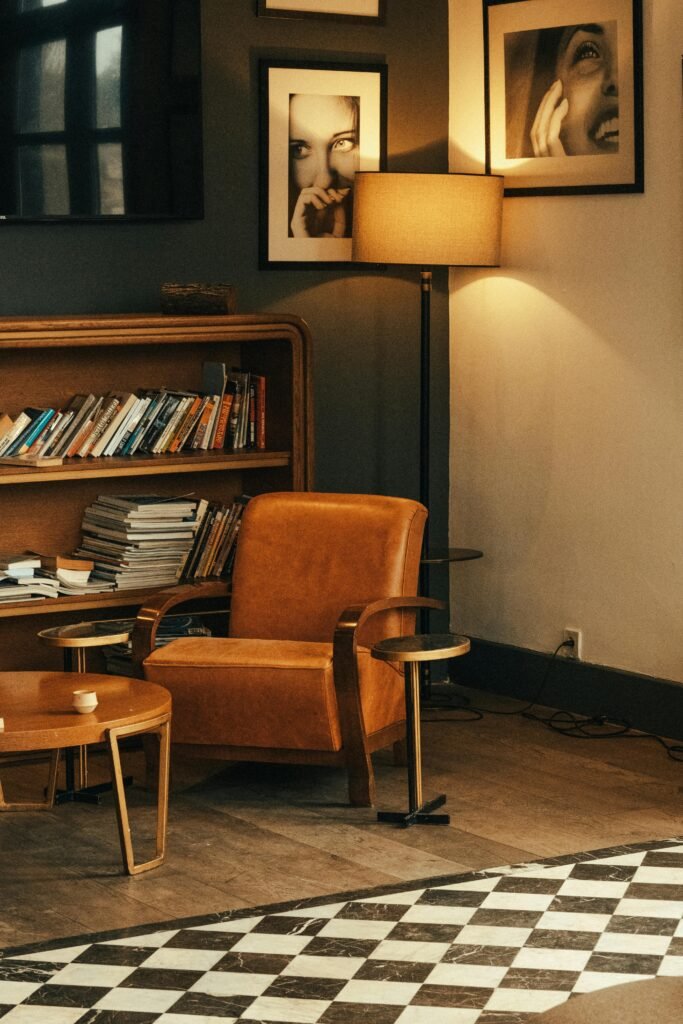
Not every bedroom has room for this, and I want to be honest about that upfront — don’t force a reading nook into a room that can’t comfortably hold one. But if you have a corner with 3–4 feet of clearance, a small armchair and a floor lamp can create a zone within the bedroom that makes the whole room feel more intentional.
The chair matters more than anything else in this setup. It needs to be comfortable enough to actually sit in for an hour, not just look good in photos. A small bouclé or sheepskin-covered chair — IKEA STRANDMON at $299 or a secondhand version for $40–80 — works well in this style. Add a simple floor lamp beside it ($35–60) and a very small side table or the kind of tray that sits on the arm of a chair. That’s the whole thing.
Use a Mirror to Work For the Room, Not Just Look Good
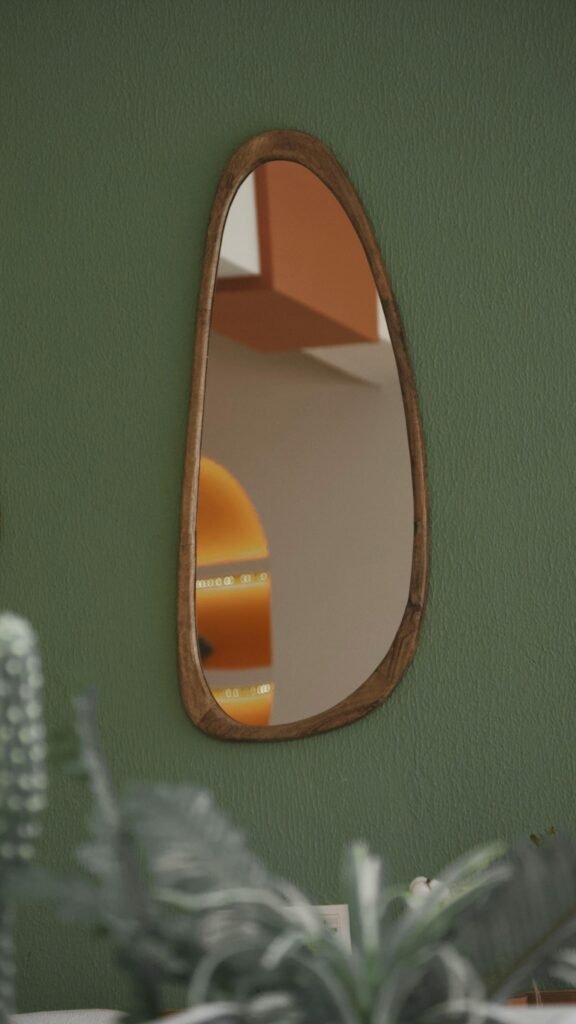
A mirror in a Scandinavian bedroom is a tool as much as a decorative piece. Placed opposite a window, it doubles the natural light. Placed beside a dim corner, it bounces whatever light exists back into the room. In a small bedroom, a large mirror also makes the room feel larger — genuinely, not just visually.
The style that works in Scandi bedrooms: a simple oval or round mirror with a thin natural wood frame, or a full-length mirror with a slim black or brass frame leaning against a wall. No ornate frames, no antiqued glass, no sunburst shapes. Clean, simple, functional.
A 24×36 inch oval mirror in a light wood frame costs $45–80 at most home goods stores. A full-length leaning mirror in the same aesthetic runs $80–130. Either one changes how light and space move through a bedroom.
Add One Personal Object That Has Nothing to Do With Trends
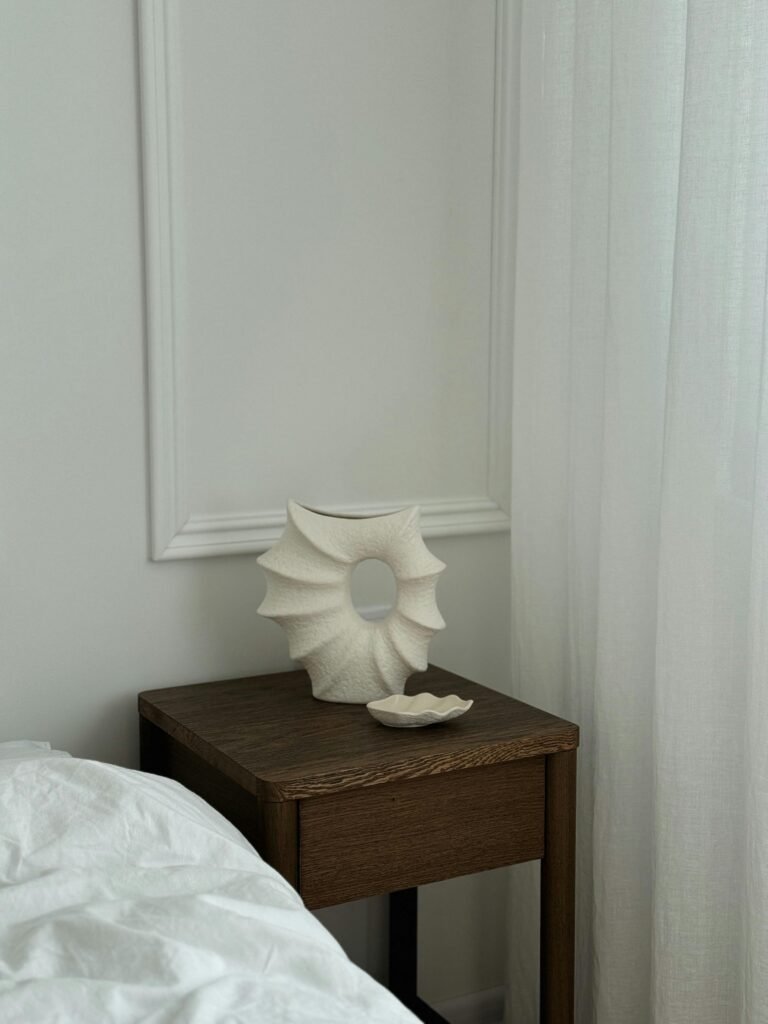
This is the detail that separates a room that looks like a Scandinavian bedroom from a room that feels like your Scandinavian bedroom. One personal object — a framed photo of someone you love, a ceramic piece you brought back from somewhere, a small sculpture that made you stop in its tracks in a market somewhere — grounds the whole room in actual life rather than aesthetic.
It doesn’t have to be styled. It doesn’t have to match. It just has to be genuinely yours. That contrast between the curated neutrals and the one honest personal object is what makes a room feel inhabited rather than staged.
Put it somewhere you see it when you wake up.
Choose a Headboard That Does Something
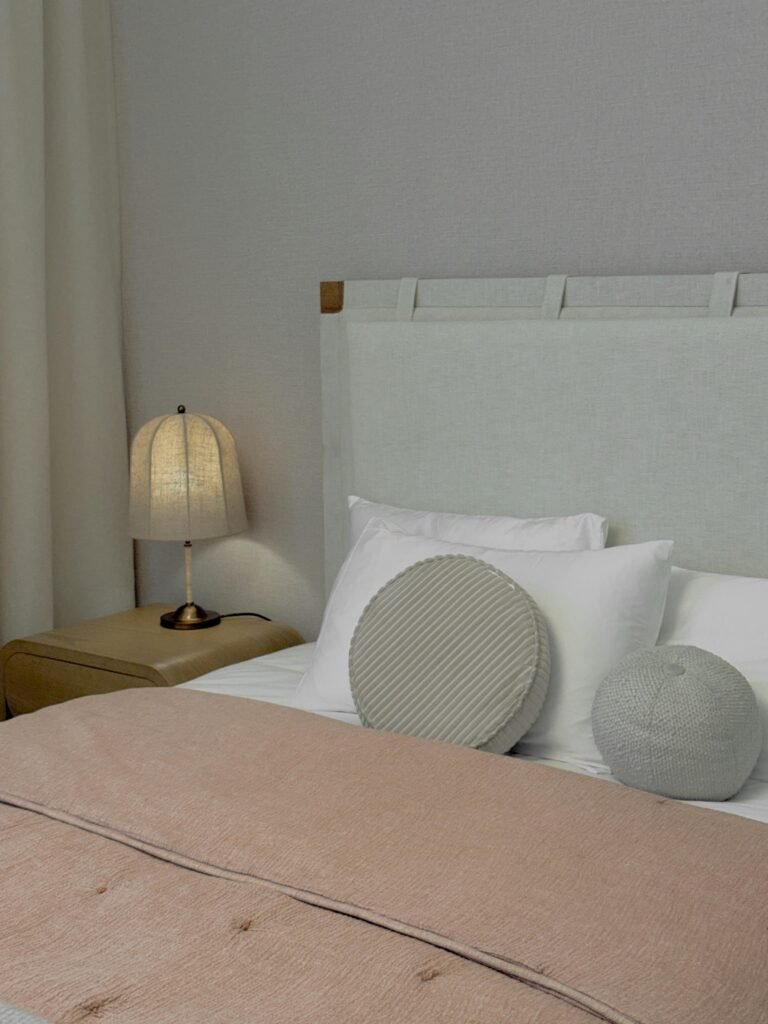
The headboard is the largest single visual element in most bedrooms. In a Scandinavian bedroom, it either works quietly in the background or serves as the one intentional statement in an otherwise understated room.
For the quiet approach: a simple slatted wooden headboard or a low upholstered panel in a neutral fabric. Clean lines, nothing that draws attention to itself. For the statement approach: a taller upholstered headboard in a textured boucle, bouclette, or linen in a warm neutral or a muted sage — the kind of piece that makes the bed feel finished even when it’s not perfectly made.
I went without a headboard for almost a year in one apartment — I thought it would feel minimal and intentional. It felt unfinished. The bed looked like it belonged in a temporary space rather than a real home. Even a simple IKEA headboard attached to a basic frame changes this immediately. For more on how a bed works without a traditional headboard when the room genuinely calls for it, the bed without headboard guide covers that specific situation well.
Keep the Surfaces Clear — Then Add Back Only What Earns Its Place
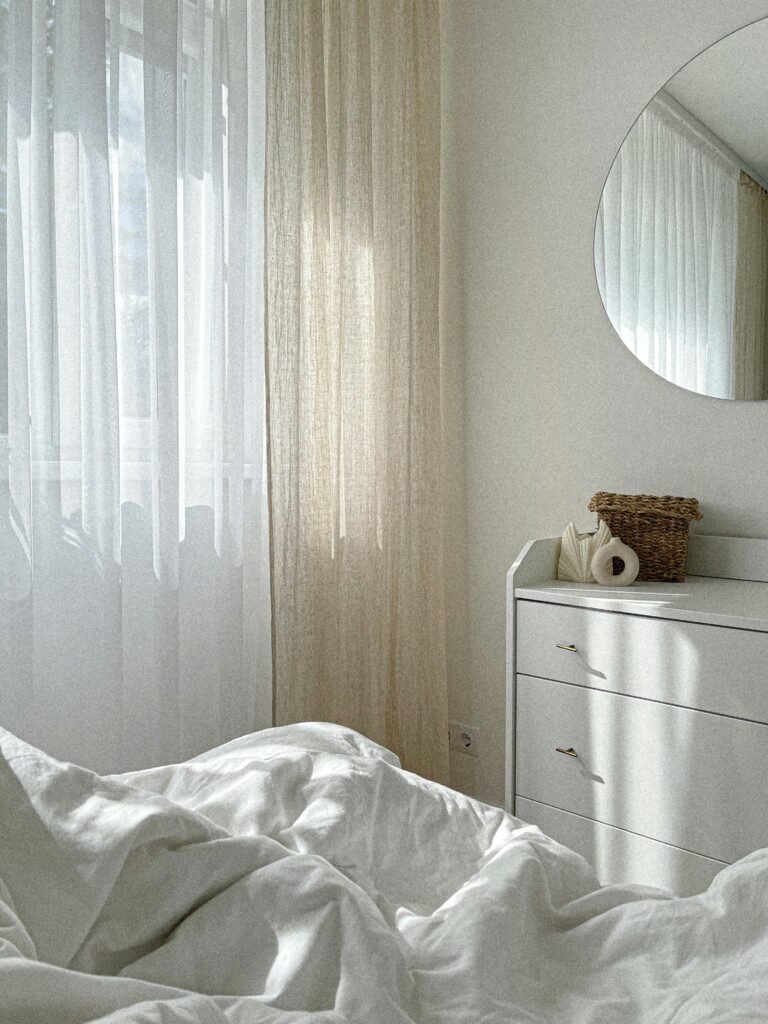
Clutter is the enemy of every style, but it destroys the Scandinavian aesthetic specifically — because the whole visual language of this approach depends on the calm of clear surfaces and edited spaces.
The practical approach: every surface in the bedroom has a maximum object count. Nightstands: lamp + one other thing (a book, a plant, a glass of water). Dresser top: one small tray holding 2–3 items, one plant or candle. That’s it.
If you can’t maintain it, you have too much stuff in the room — not too little self-discipline. The edit is the work. Go through the bedroom and remove anything that could live somewhere else in the house. What’s left should be there because it’s functional, beautiful, or both.
Baskets with lids for things that need to live in the bedroom but shouldn’t be visible — extra blankets, charging cables, books you’re not currently reading. IKEA’s NOJIG set of three baskets with lids is around $15 and handles most of what ends up as surface clutter.
Use Functional Accessories That Look Good Enough to Be Decorative
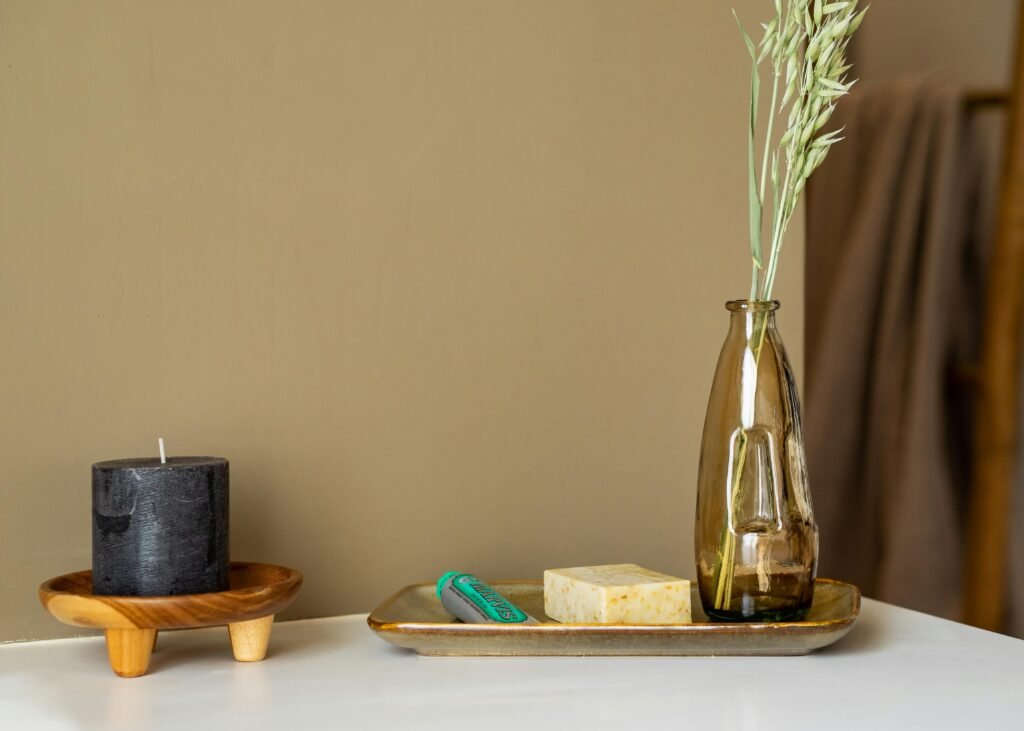
Accessories in a Scandinavian bedroom should be chosen for function first and visual impact second. A beautiful ceramic tray on the nightstand holds your rings and earrings overnight. A wooden tray on the dresser organizes your daily items. A woven basket beside the wardrobe holds tomorrow’s outfit. Each one is doing something — and each one looks good doing it.
The objects that consistently earn their place in this aesthetic: ceramic vessels in matte earth tones, wooden trays with visible grain, simple glass candleholders with unscented or lightly scented candles (beeswax or soy, cream or natural-colored), linen-covered storage boxes. Nothing plastic. Nothing bright. Nothing that has a brand logo on it.
The three-item rule for any surface: functional anchor (lamp, candle), natural element (plant, wooden object), personal or beautiful detail (ceramic piece, small framed photo). Three items, consistent in tone.
Finish With a Rug That’s Bigger Than You Think You Need
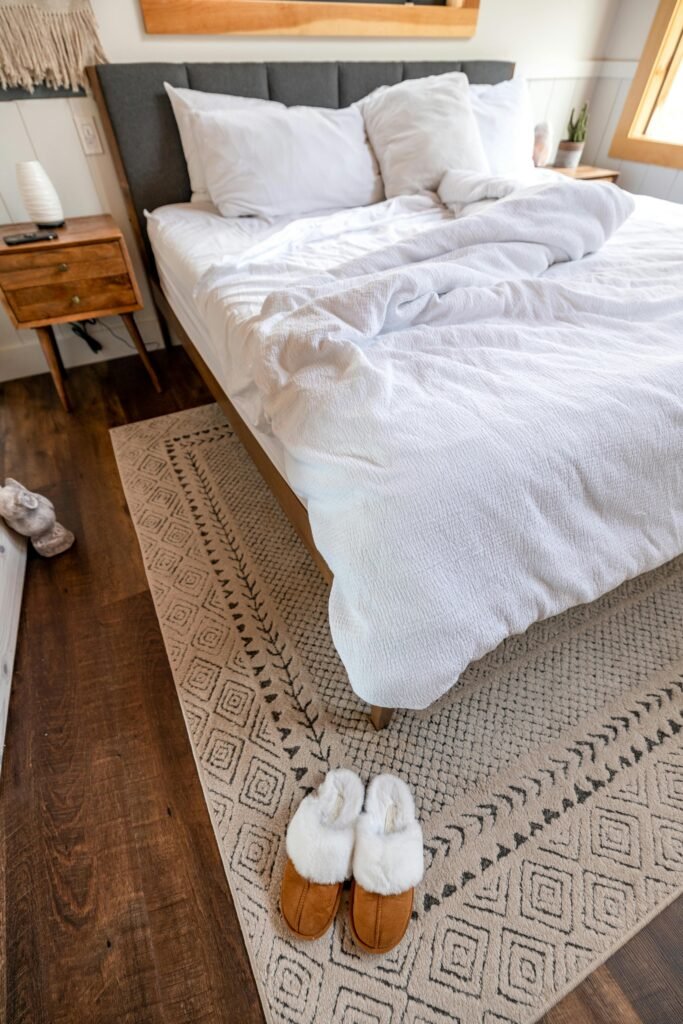
A rug is the last thing most people choose for a bedroom and the thing that most often gets undersized. A rug that’s too small looks like an afterthought — a postage stamp in a room that needed a blanket.
In a Scandinavian bedroom, the rug should sit under at least the front two-thirds of the bed, with a visible border on the sides and foot. For a queen or full bed, that means a minimum of 8×10 feet. A king needs a 9×12. Anything smaller creates an awkward gap between furniture and rug that makes the room feel unresolved.
Natural fiber rugs work best in this aesthetic — jute, wool, cotton flatweave. A jute rug at 8×10 costs $80–130 and adds warmth underfoot and visual texture without introducing any pattern or color that would disrupt the calm palette. A wool rug in the same size in a natural undyed cream or a muted sage is closer to $150–200 but softer underfoot and significantly warmer in winter.
Layering works here too — a smaller sheepskin or boucle rug placed on top of a larger jute base adds exactly the kind of texture that the Scandinavian bedroom does so well. The top rug can be small and expensive; the base can be large and affordable.
Questions I Get Asked a Lot About Scandinavian Bedroom Design
Does a Scandinavian bedroom have to be all white? Not at all — and the all-white version is actually the least interesting interpretation of the style. The best Scandi bedrooms use warm off-whites, pale greiges, dusty sage, and muted terracotta alongside the neutrals. The point is a calm, edited palette rather than specifically white walls.
How do I make a Scandinavian bedroom feel warm and not cold? Textiles are the answer. Linen, wool, knitted throws, sheepskin — the tactile warmth of these materials is what separates a cold minimalist room from a genuinely cozy one. Lighting matters equally — warm bulbs (2700K) at multiple heights, never just one overhead fixture. Wood tones in the furniture add the visual warmth that pale walls alone don’t provide.
Can I do Scandinavian style in a small bedroom? It’s actually easier in a small bedroom — the restraint the style demands is naturally enforced by limited space. The principles of edited surfaces, functional furniture, and vertical storage work particularly well when every inch matters. More on making small bedrooms work in the small bedroom ideas guide.
What are the most important pieces to get right in a Scandinavian bedroom? In order of impact: the bedding (linen, layered, warm-toned), the lighting (warm bulbs, multiple sources), the rug (larger than you think, natural fiber), and the wood tones in the furniture. Get those four right and the rest of the details fall into place.
How do I add personality without ruining the calm aesthetic? One or two personal objects that mean something to you — not styled, just placed. One piece of art you genuinely love rather than one that photographs well. Plants you actually take care of. A book on the nightstand you’re actually reading. The personality in a Scandinavian bedroom comes from evidence of real life, not additional decorative objects.
This Is a Bedroom Worth Coming Home To
The best version of a Scandinavian bedroom isn’t the one that looks best on Instagram. It’s the one that makes you exhale when you walk in at the end of a hard day. The one that feels genuinely restful because everything in it is there for a reason.
You don’t have to do all fifteen of these ideas. Pick the two or three that feel most achievable right now — maybe it’s finally getting the right rug size, or swapping the cool-white bulbs for warm ones, or adding a linen throw to a bed that’s been missing one. Small shifts accumulate quickly in a bedroom.
I’m currently working on my own bedroom lighting — I have one overhead fixture and it’s making my evenings harder than they need to be. Layering is next on my list.
— Emily
Which of these ideas are you most drawn to? And if you’ve already tried any of them, I’d genuinely love to know what worked. Drop it in the comments.