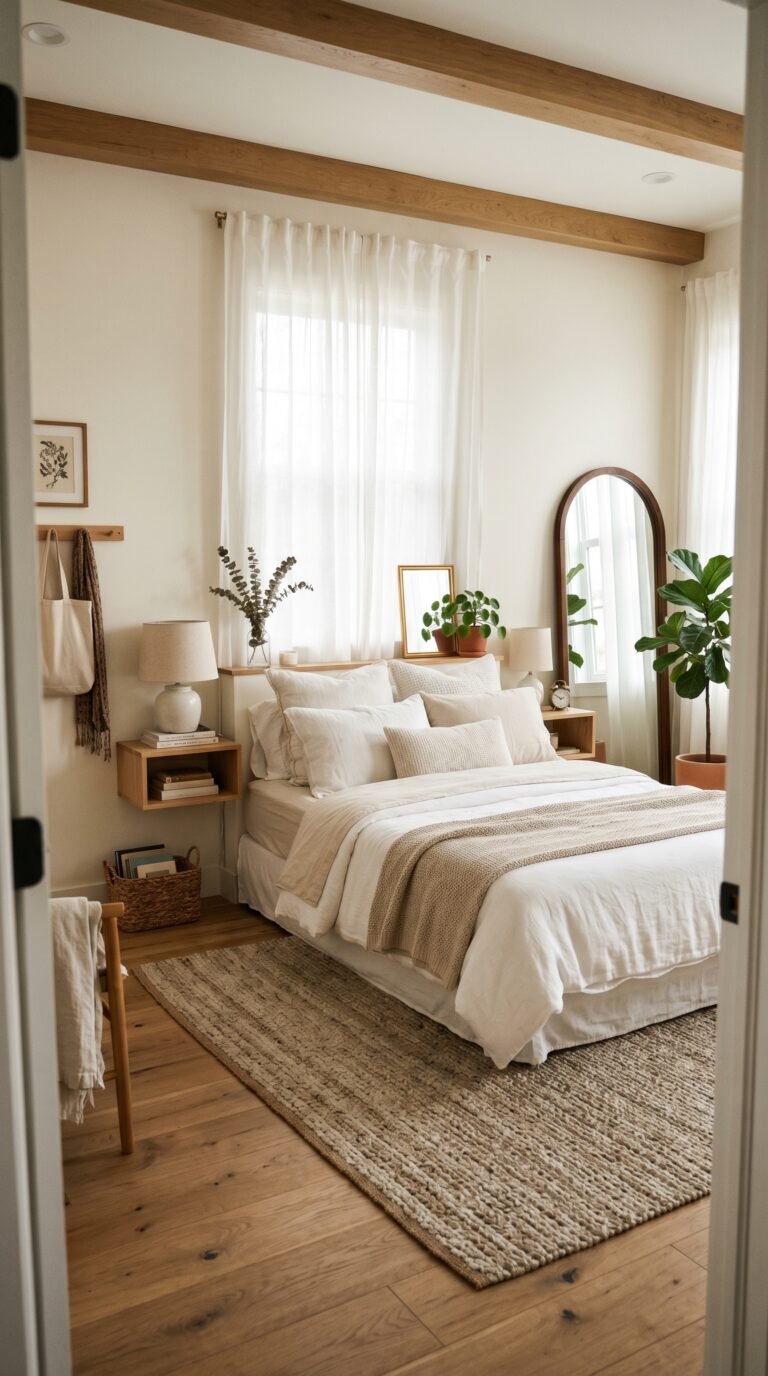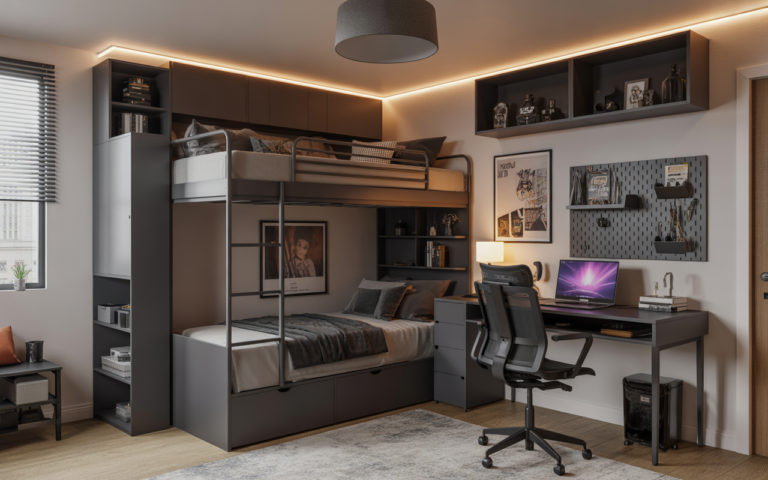
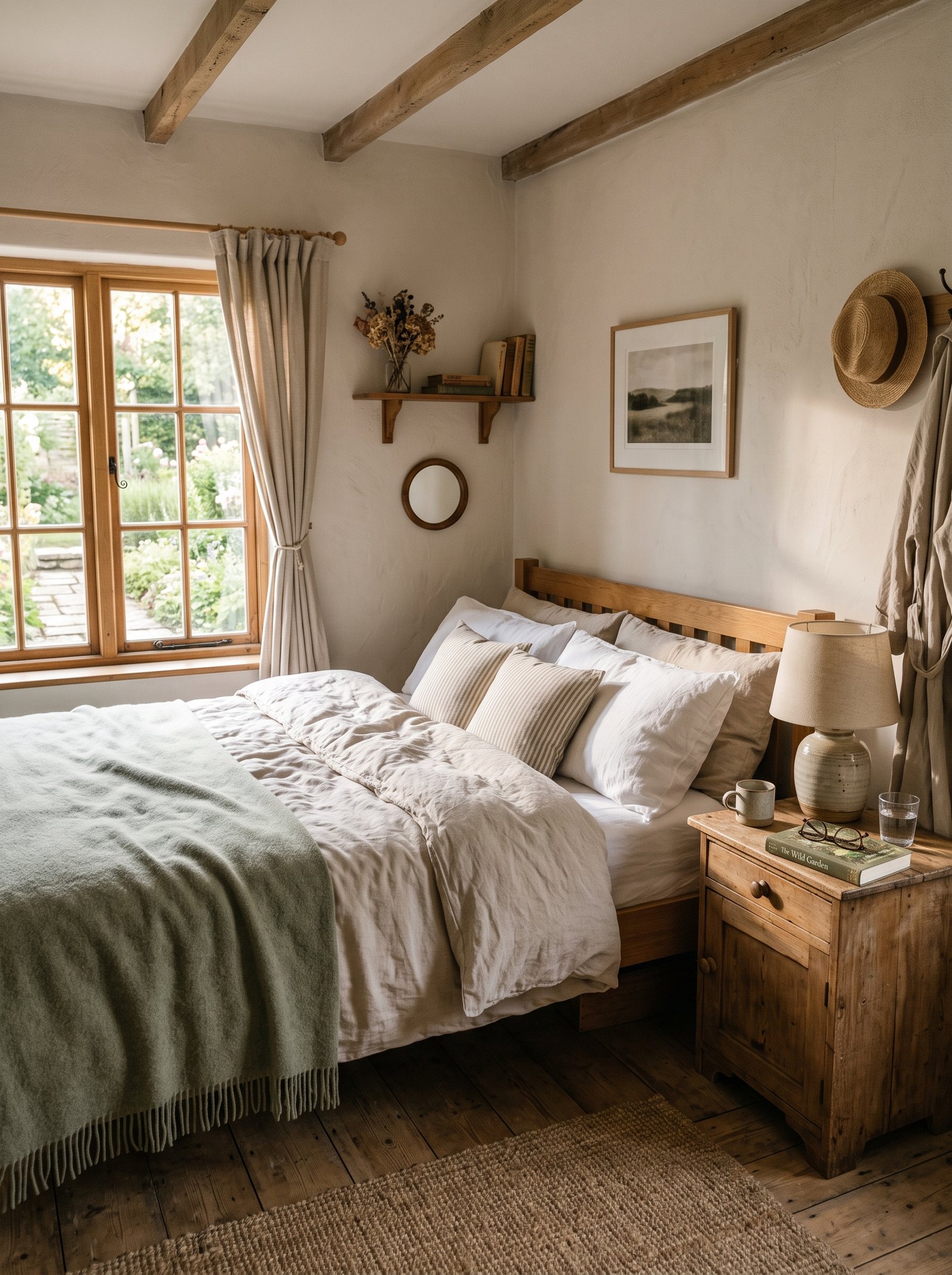
12 Small Bedroom Ideas That Actually Work (Not Just Look Good in Photos)
Most small bedrooms feel cramped. Not because they’re actually too small — because everyone furnishes them like they’re trying to fit a showroom into a shoebox. I did this exact thing in my first studio apartment. Learned the hard way that more furniture doesn’t mean more comfort. It usually means less floor to stand on.
That 480-square-foot studio taught me more about small-space design than any of the four homes I’ve decorated since. I had $200 left after rent that first month, a full-size bed I couldn’t return, and a room that felt smaller every time I added something to “fix” it. It wasn’t until I started taking things out — not adding them — that the room finally breathed.
This list isn’t the usual “add a mirror and some fairy lights” advice you’ll find everywhere else. These are the twelve things I’ve actually used, in actual small bedrooms, across five different homes and more mistakes than I’d like to admit.
Get the Bed Off the Wall It “Should” Go On
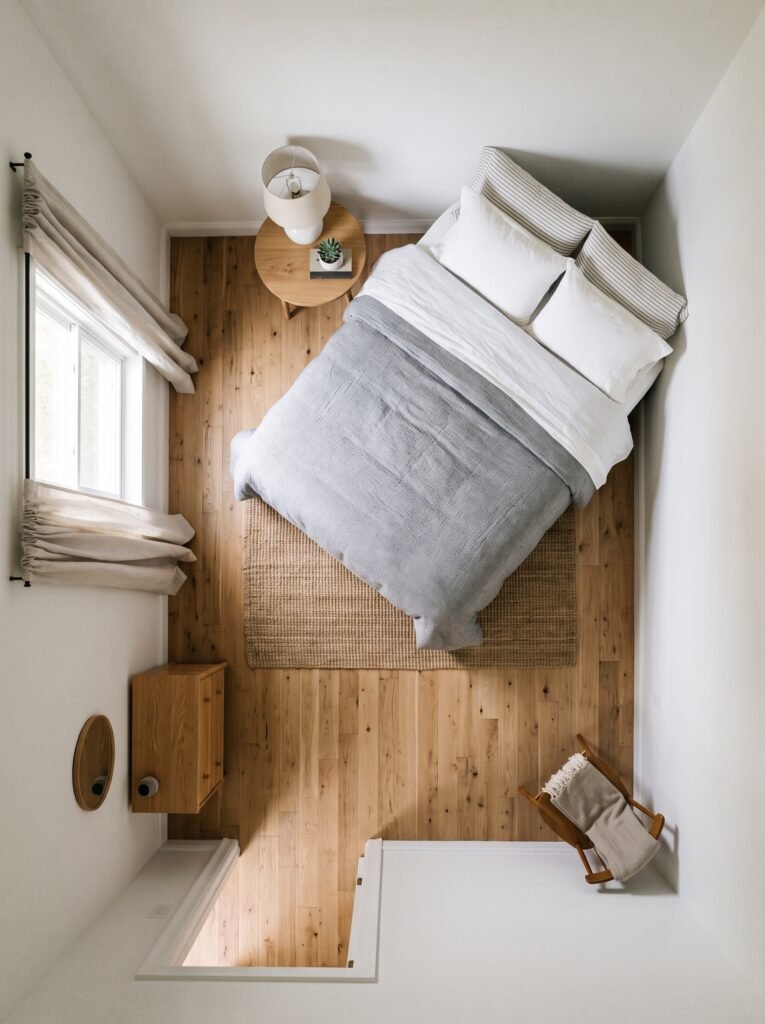
Everyone pushes the bed against the longest wall automatically. In a small room, that’s often the wrong move — it can block the natural walking path and leave you with one awkward strip of unusable floor on either side.
In my second rental, I moved my bed diagonally into a corner for about three weeks, just to see. It looked strange in photos but it actually opened up more usable space than the “correct” placement did. I ended up going back to a wall placement eventually, but the point stands: measure your actual walking path before you assume the obvious wall is the right one. Grab a tape measure and make sure you’ve got at least 24 inches of clearance on each side you regularly walk through.
Common mistake here — people measure the bed frame but forget to account for how far a door swings open, or how much space a dresser drawer needs to fully extend. I learned that one when I couldn’t open my closet door more than halfway for two months.
Buy a Bed Frame With Storage Built In — But Check the Weight First
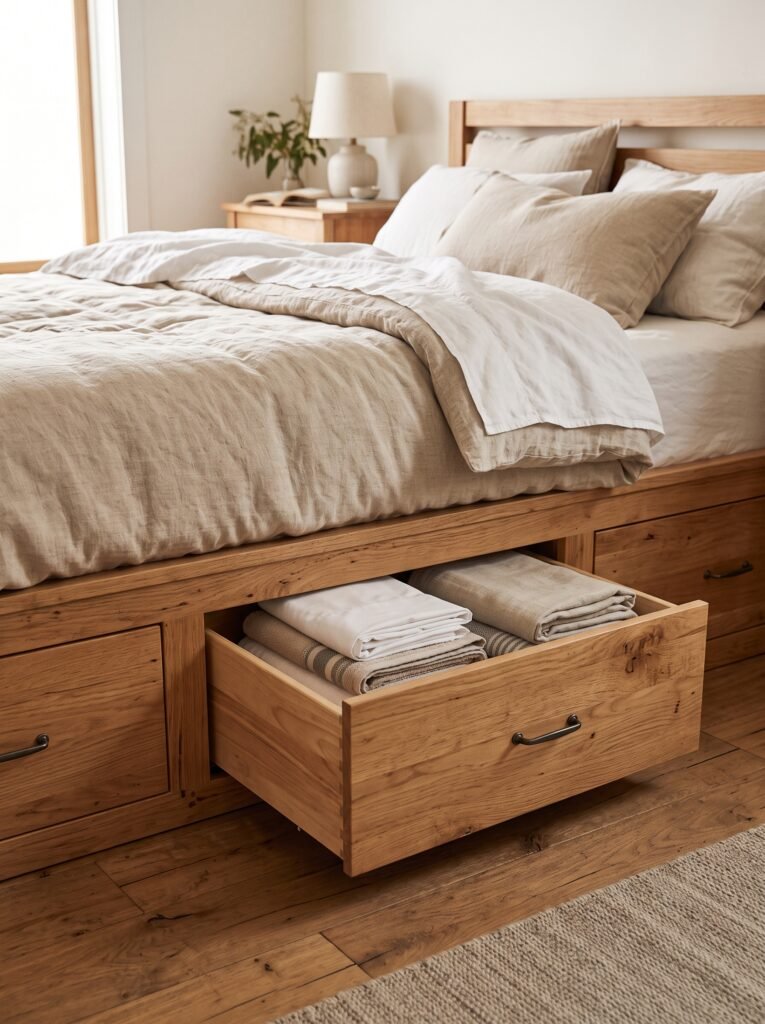
I know this isn’t the popular take, but I don’t think everyone needs an under-bed storage bed frame. Here’s why the conventional advice doesn’t hold up in every real home: a lot of these frames are heavier than people expect, and if you’re in a rental with wood floors, moving them in and out is its own project.
That said, when it works, it really works. The IKEA MALM with the four storage drawers underneath is genuinely one of the better values out there for a small bedroom — I’ve used it in two different homes now. If that’s not in the budget, and for a long time it wasn’t in mine, vacuum-sealed storage bags under a regular bed frame do almost the same job for under $15.
Either way, this is where your off-season clothes, spare bedding, and the boxes you don’t know what to do with should live. Not on top of your dresser. Not in a pile in the corner, which — I’ll be honest — is exactly where mine used to end up before I got serious about this.
Choose One Light Wall Color and Actually Test It First
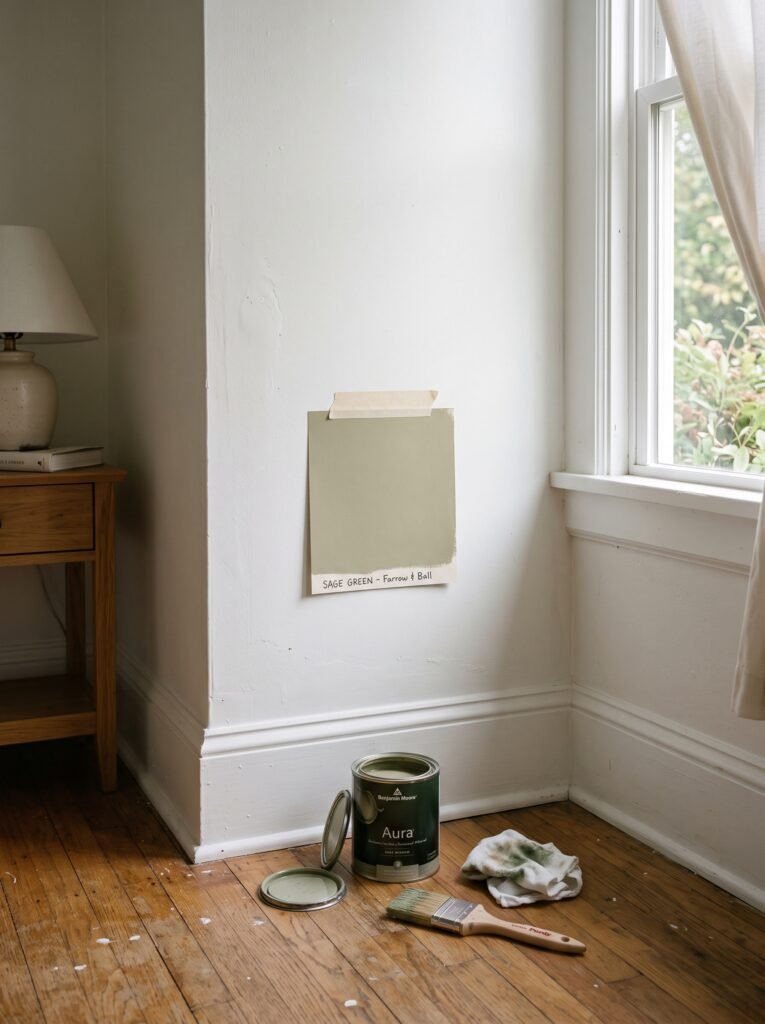
I painted a bedroom the wrong color once. Loved the swatch, loved it on the paint chip, painted the entire room — and hated it within a month because it looked completely different in actual daylight versus the store lighting. Had to repaint. That was an expensive, exhausting weekend I don’t want to repeat, and neither do you.
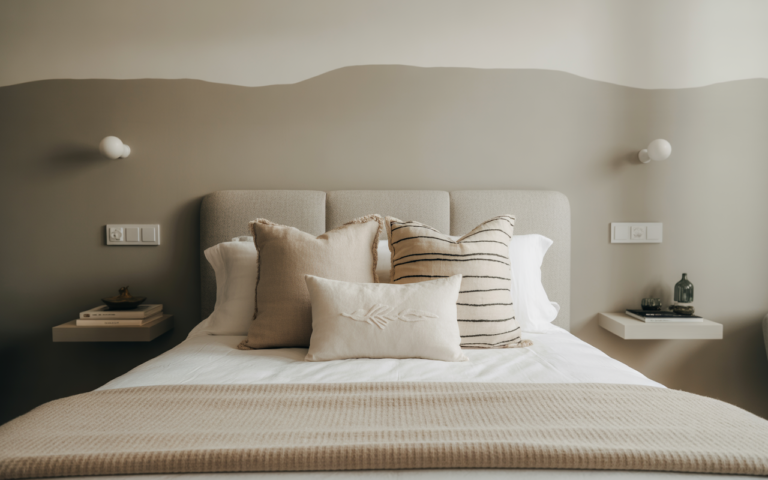
For small bedrooms, lighter, warmer neutrals genuinely do make the room read bigger. Not because “light colors make rooms bigger” is some magic trick — it’s because they don’t visually chop up the walls the way a dark, moody color can in a room that’s already tight on square footage. Farrow & Ball’s “String” or Benjamin Moore’s “White Dove” are both reliable if you want something soft without going stark white. If Farrow & Ball’s price tag makes you wince — mine did — Behr’s “Swiss Coffee” from Home Depot gets you most of the same effect for a fraction of the cost.
Buy a sample pot. Paint a two-foot square on the actual wall. Look at it in the morning and at night before committing to the full room. This step takes one extra day and saves you an entire weekend of repainting.
Use Vertical Space Before You Touch the Floor
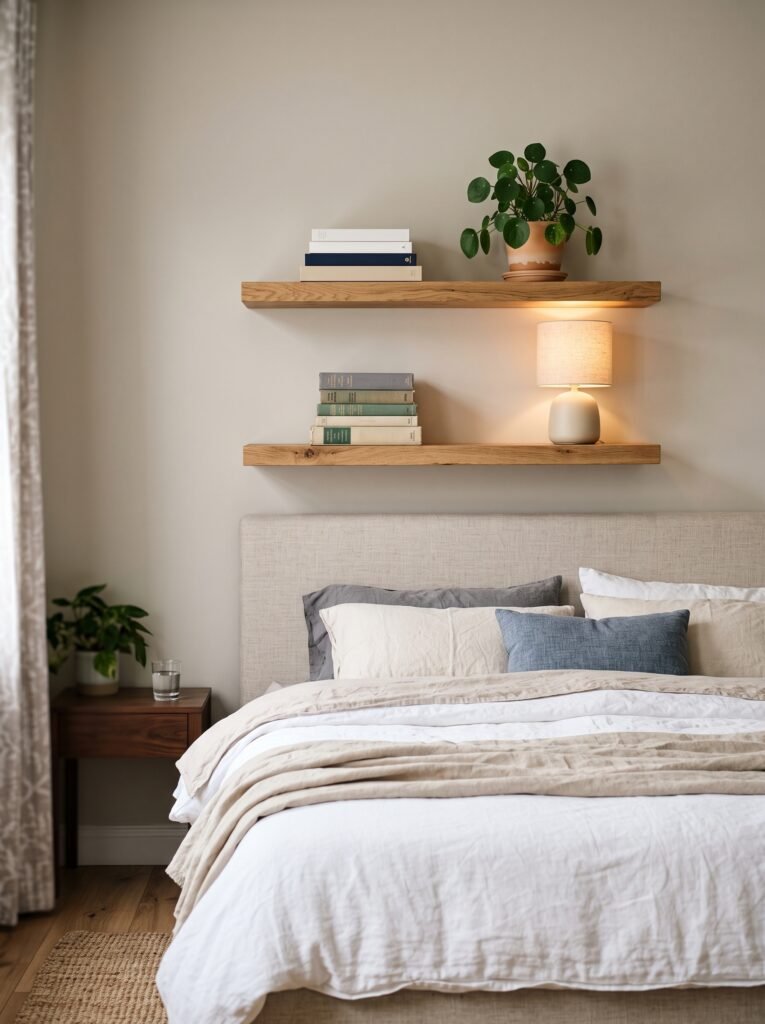
Nobody talks about this, but the ceiling height in a small bedroom is often the most underused real estate in the entire room. Floor space is finite. Wall space, going up, usually isn’t.
Floating shelves above a headboard, a tall narrow bookcase instead of a wide low one, hooks near the door for bags and jackets instead of a chair that becomes a clothes pile — all of it keeps the floor clear while still giving you storage. I use a set of IKEA LACK floating shelves above my nightstand for books and a small lamp, and it freed up almost a full square foot of surface space I didn’t realize I was missing.
This is also where a lot of small bedrooms go wrong with closets. If you’ve got a reach-in closet, a double-hang closet rod system roughly doubles your hanging storage without adding a single inch of footprint. It’s a weekend project, not a renovation.
Skip the Full Dresser If the Closet Can Handle It
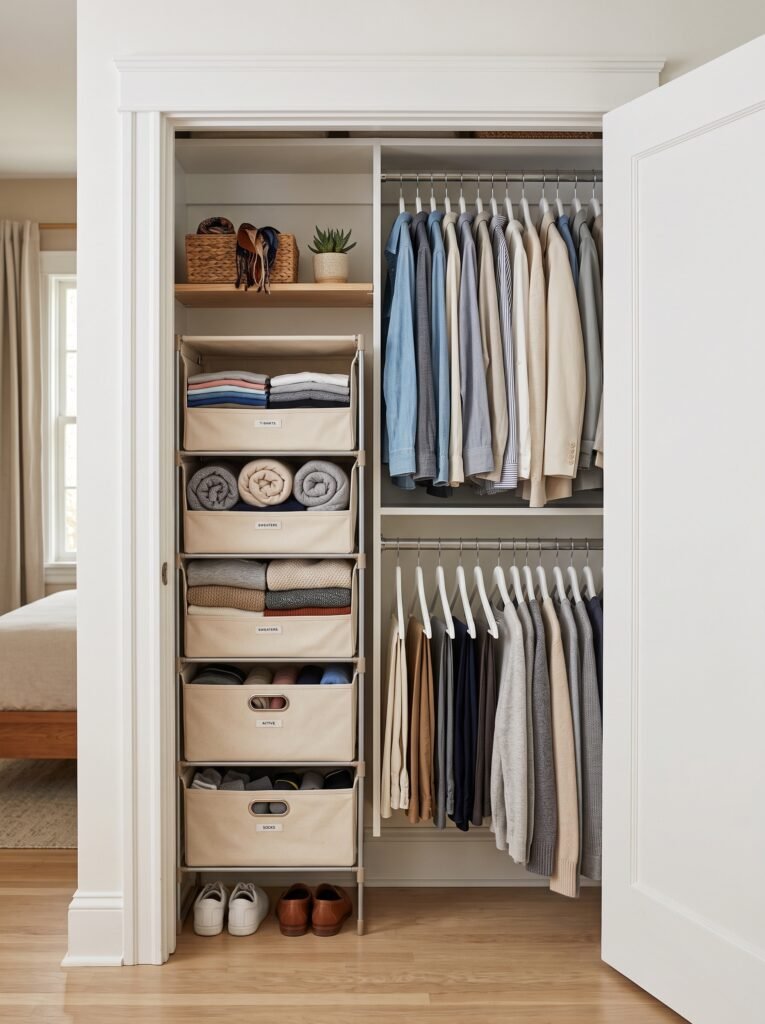
I know this contradicts what most bedroom guides tell you, but a six-drawer dresser eats an enormous amount of floor space for what it actually holds. In a small bedroom, that space is usually worth more than the dresser is.
If your closet has room, closet organizer inserts — the kind with built-in drawers and shelving — can absorb most of what a dresser would hold. The Elfa system from The Container Store is the one I’d actually recommend if you can swing it. It’s not cheap. If that’s out of budget, a stackable canvas drawer organizer from Amazon does a surprising amount of the same work for around $30.
And if you do need a dresser, a narrow six-drawer version that sits taller rather than wider gives you the same storage capacity in about half the wall footprint.
What Nobody Tells You About Small Bedrooms
Here’s the thing almost every small bedroom article skips: the problem is rarely the size of the room. It’s usually the size of the furniture inside it.
I ordered a sofa online once for my living room — loved it in the photo, ordered it without measuring properly, and then couldn’t comfortably walk around it once it was actually in the room. Lived with it for eight months before I admitted it was wrong and sold it. The same exact mistake happens constantly in bedrooms, just with beds, dressers, and nightstands instead of sofas.
A queen bed in a room that’s genuinely built for a full-size bed doesn’t make the room feel bigger just because a queen is “nicer.” It makes the whole room feel like it’s apologizing for existing. Before buying anything for a small bedroom, measure the room first, then shop for furniture that fits it — not the other way around.
Layer Your Lighting Instead of Relying on One Overhead Fixture
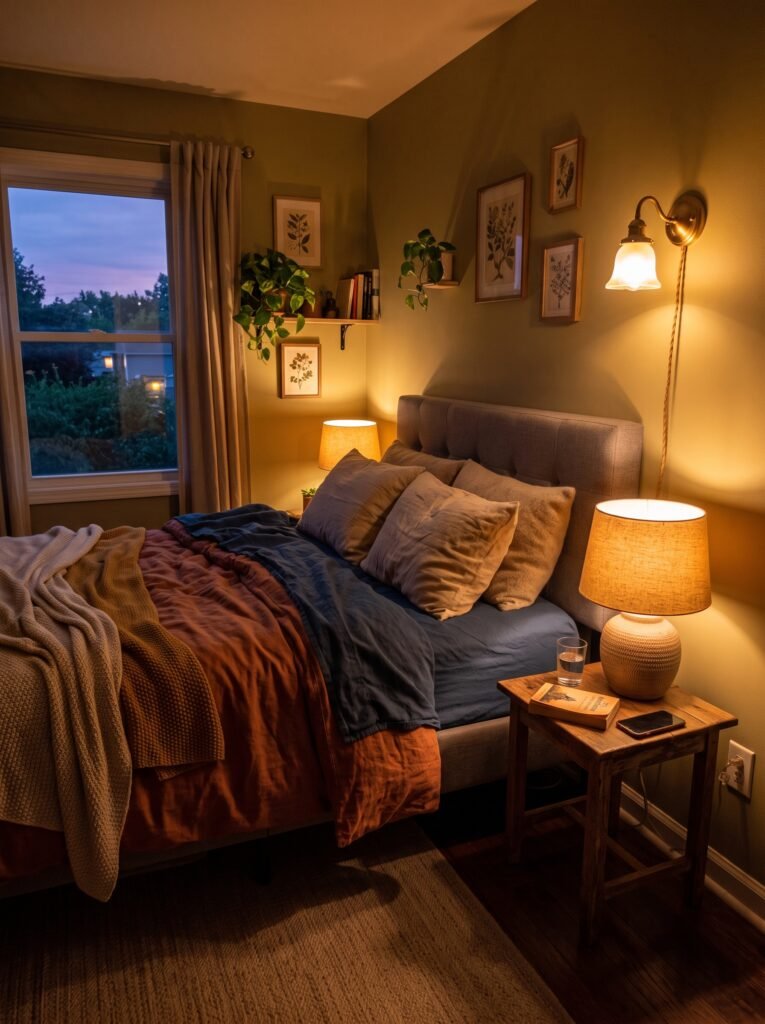
A single overhead light in a small room tends to flatten everything — it lights the whole space evenly and somehow makes it feel smaller and more clinical at the same time. I didn’t understand why my current bedroom felt cold and a little sterile until I added a second light source.
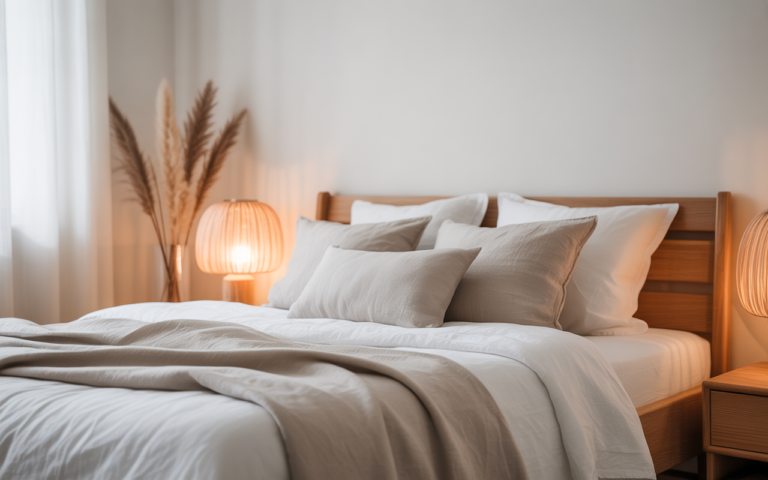
A small table lamp on the nightstand, a plug-in wall sconce near the headboard, or even a floor lamp tucked in a corner does more for the feel of a small bedroom than most people expect. The warmth from a secondary light source at a lower height changes the whole mood of the room. I use a simple ceramic lamp from Target’s Threshold line on my nightstand, and it’s done more for that room than any piece of decor I’ve bought.
Mirrors Work — But Placement Matters More Than People Admit
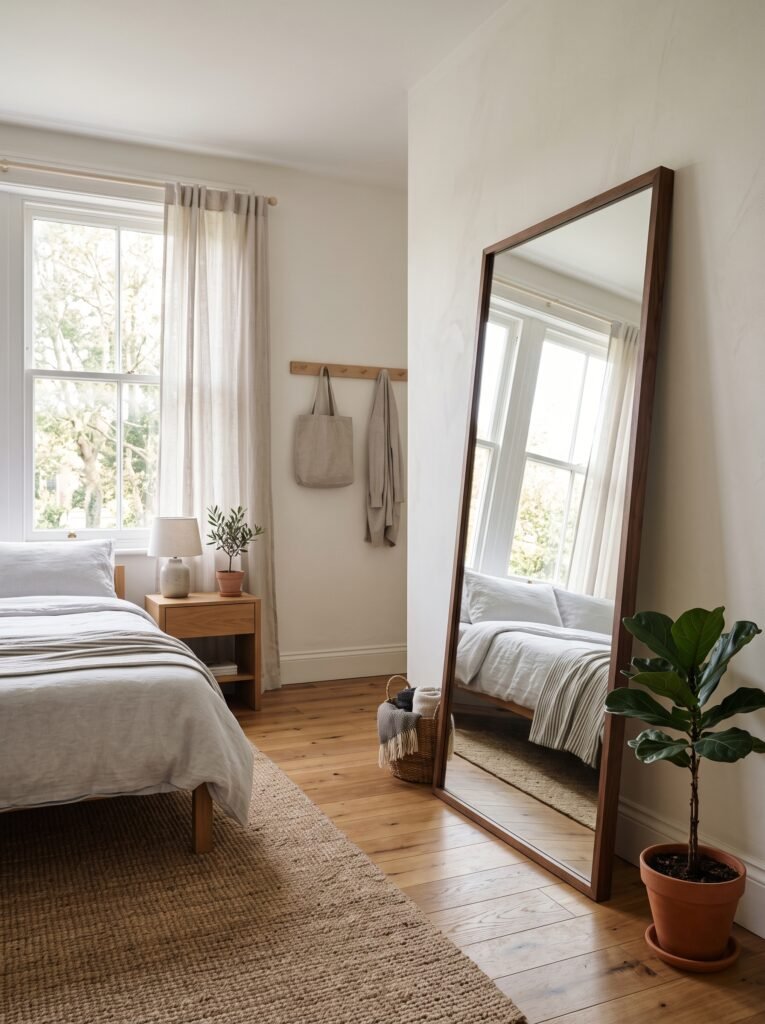
Everyone says “add a mirror to make a small room look bigger,” and it’s not wrong, exactly. It’s just incomplete advice. A mirror facing a blank wall doesn’t do much. A mirror positioned to reflect a window, a light source, or an interesting part of the room is what actually creates the sense of extra space.
I have a full-length mirror leaned against the wall opposite my bedroom window, and on a sunny morning it genuinely makes the room feel like it has an extra window. A leaning floor mirror also skips the hassle of drilling into a rental wall, which — if you’ve ever dealt with a strict landlord like I did in my first rental — matters more than people think.
Choose a Rug That’s Actually Sized for the Room
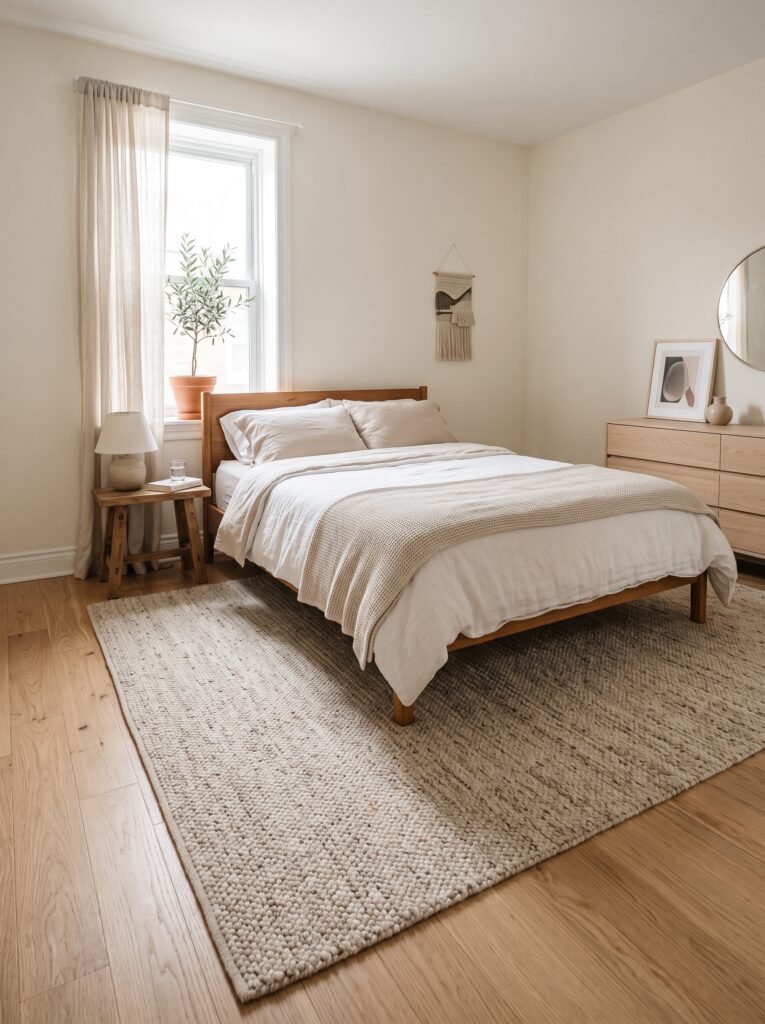
A too-small rug is one of the most common small-bedroom mistakes I see, and it’s an easy one to fix. When a rug only peeks out from under the bed by a few inches on each side, it visually shrinks the whole room instead of anchoring it.
For a small bedroom, you want the rug to extend at least 18 to 24 inches beyond the sides of the bed where possible. A rug that’s too big for a large room is a stretch financially. A rug that’s the right size for a small bedroom is usually more affordable than people assume — Rugs USA regularly has 8x10s in the $100–150 range that work well here.
Use the Space Under the Window, Not Just the Walls
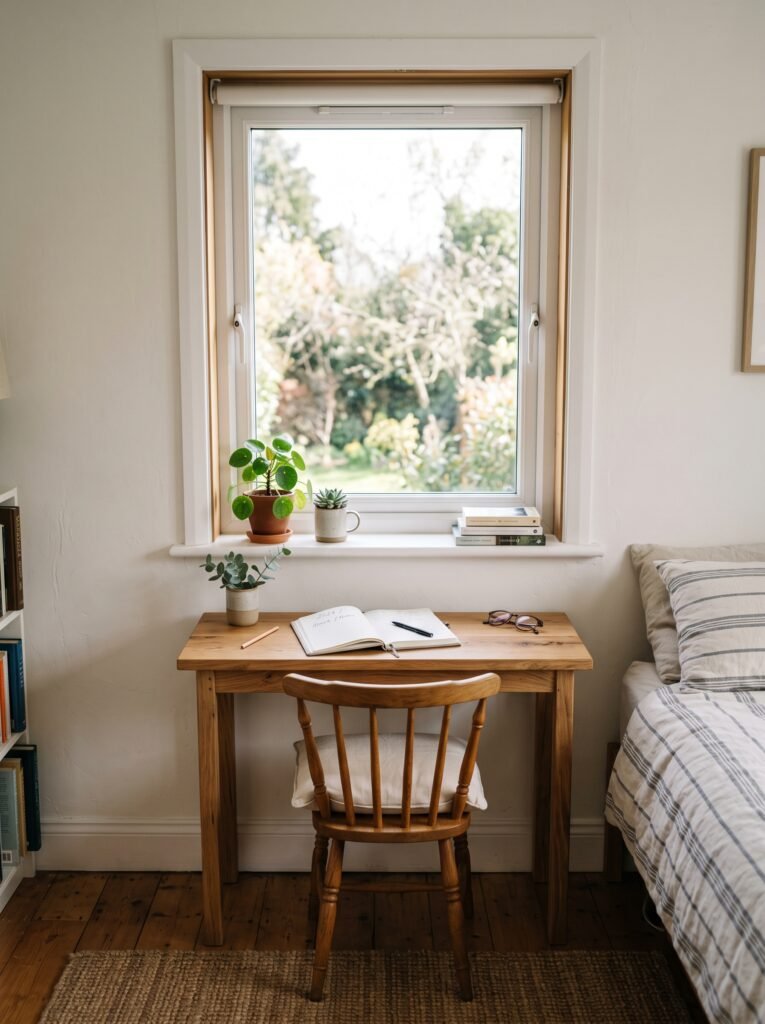
In practice, this means a slim bench, a narrow desk, or even a stack of floating shelves under a window that would otherwise sit empty. Small bedrooms often have one entire wall wasted because it’s “just the window wall,” and nobody thinks to use the space below the sill.
I added a narrow IKEA MICKE desk under my bedroom window in my shared house years ago, purely because there was nowhere else in the house for a desk. It ended up being the best decision in that whole room — it used a dead zone and gave me a workspace I didn’t have before.
Keep the Color Palette Restrained — Not Boring, Restrained
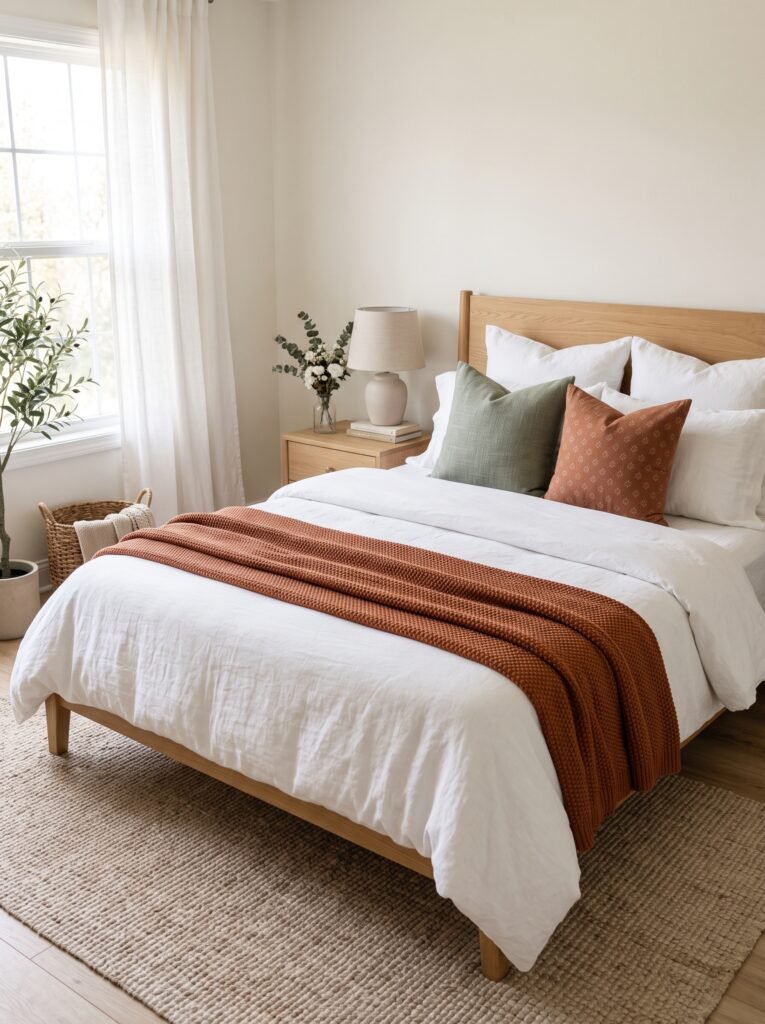
Too much furniture ruined a room of mine once, and I don’t just mean physical clutter. I kept adding pieces because I loved each one individually — a patterned throw here, a bold accent chair there — and the room ended up feeling suffocating instead of personal. I had to sell three pieces before it finally breathed again.
The same thing happens with color in small bedrooms. One or two accent colors, repeated intentionally through pillows, a throw, and maybe one piece of art, reads as put-together. Five different colors competing for attention reads as cluttered, no matter how nice each individual piece is on its own.
Pick Furniture With Legs, Not Furniture That Touches the Floor
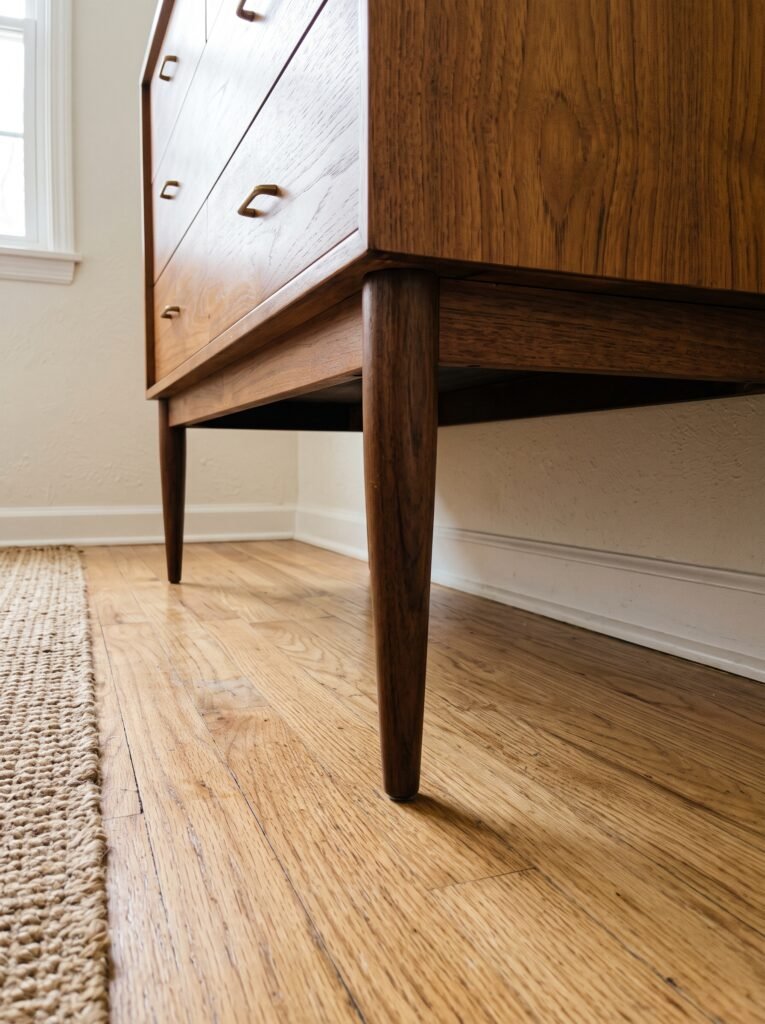
This is a small detail that makes a bigger difference than it should. Furniture that sits directly on the floor — a platform bed with a solid base, a low dresser with no visible legs — blocks your sightline and makes the floor feel like it stops at the furniture.
Furniture with visible legs lets you see floor underneath it, which tricks the eye into reading more square footage than actually exists. It’s a small shift, but it’s one of the cheapest, easiest changes on this entire list, and it doesn’t cost you a single dollar if you already own the furniture — it just affects what you choose to buy next time.
Let the Room Be a Little Unfinished
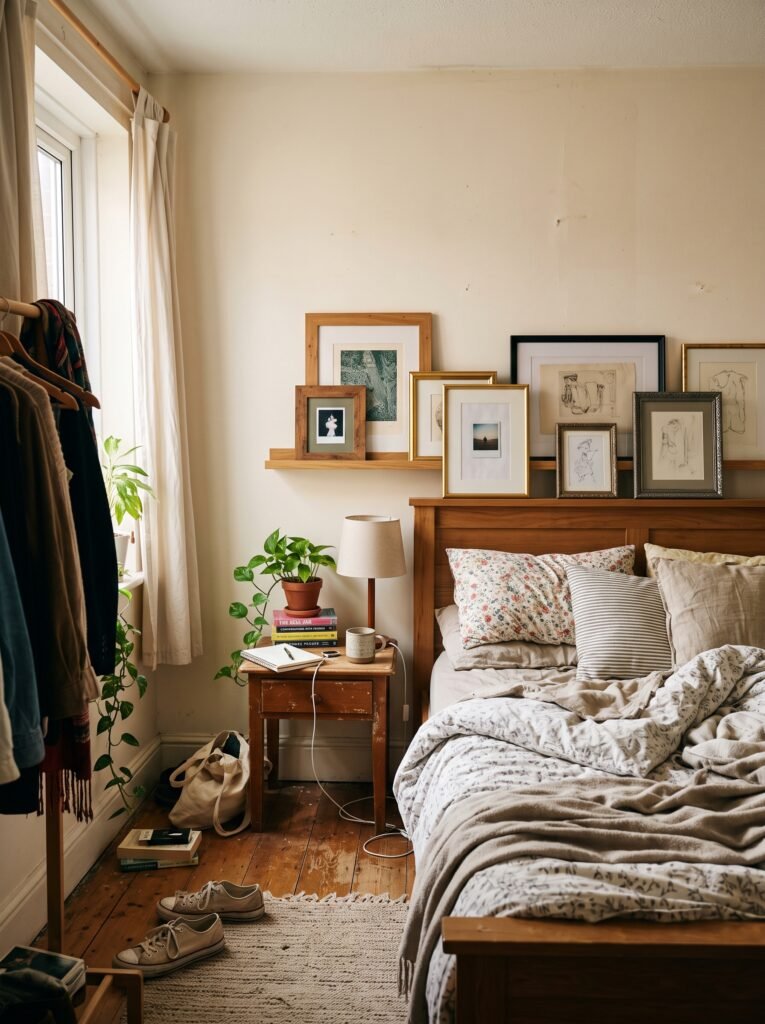
I’ll be honest about this one. My current bedroom still isn’t “done,” and it’s been almost two years. There’s a gallery wall I’ve been meaning to finish since last spring, and a lamp I keep meaning to replace. My husband thought the lamp was “fine.” High praise, coming from him — which is exactly why it’s still there.
A small bedroom doesn’t need to be fully resolved to feel good. It needs to function well and feel calm when you’re in it. The rest can happen slowly, one piece at a time, the way most real rooms actually come together.
Budget Reality: What This Actually Costs
If you’re doing all twelve of these at once, you’re looking at anywhere from $150 on the low end — paint sample, rug, a couple of shelves — to $800 or more if you’re buying a new bed frame and closet system. Most people land somewhere in between, and most people don’t need to do all twelve at once anyway.
My honest advice: start with the free changes first. Moving the bed placement, decluttering the dresser top, rearranging what you already own. Then move to the under-$50 changes — the paint sample, the floating shelves, the lamp. Save the bed frame and closet system for when you’ve got the budget for it, because those are the two expenses that actually matter most and deserve the most thought.
My husband still doesn’t understand why I’ve rearranged our bedroom four times this year. I don’t fully understand it either, if I’m honest. But every single time, the room worked a little better afterward, so I’ve stopped questioning it.
Frequently Asked Questions
Q: What’s the best bed size for a small bedroom? A: A full-size bed usually works better than a queen in anything under 100 square feet. I know queen beds feel like the “adult” choice, but in a genuinely small room, that extra width often costs you more usable floor space than the bed is worth.
Q: Do small bedrooms need dark colors to feel cozy, or should I stick to light colors? A: Light, warm neutrals almost always work better for making a small room feel open rather than cramped. Dark colors can absolutely work, but they need more natural light and more square footage to pull off without feeling closed in.
Q: Is it worth buying a storage bed frame for a small bedroom? A: If you genuinely need the extra storage and don’t mind the weight when it’s time to move it, yes. If you’re in a rental and move often, vacuum storage bags under a regular frame get you most of the benefit without the hassle.
Q: How do I make a small bedroom feel less cluttered without spending money? A: Take three things off every surface in the room — nightstand, dresser, windowsill — and don’t put anything back for a week. You’ll notice which ones you actually missed. Put those back. Donate or store the rest.
I’ll be honest — getting a small bedroom to feel right takes longer than any Pinterest board makes it look. Mine took years, several wrong turns, and one repainted wall to get here. But it’s worth doing slowly and getting right, rather than filling the room fast and undoing it later.