Why Your Small Living Room Still Feels Cluttered (Even When It’s Clean)
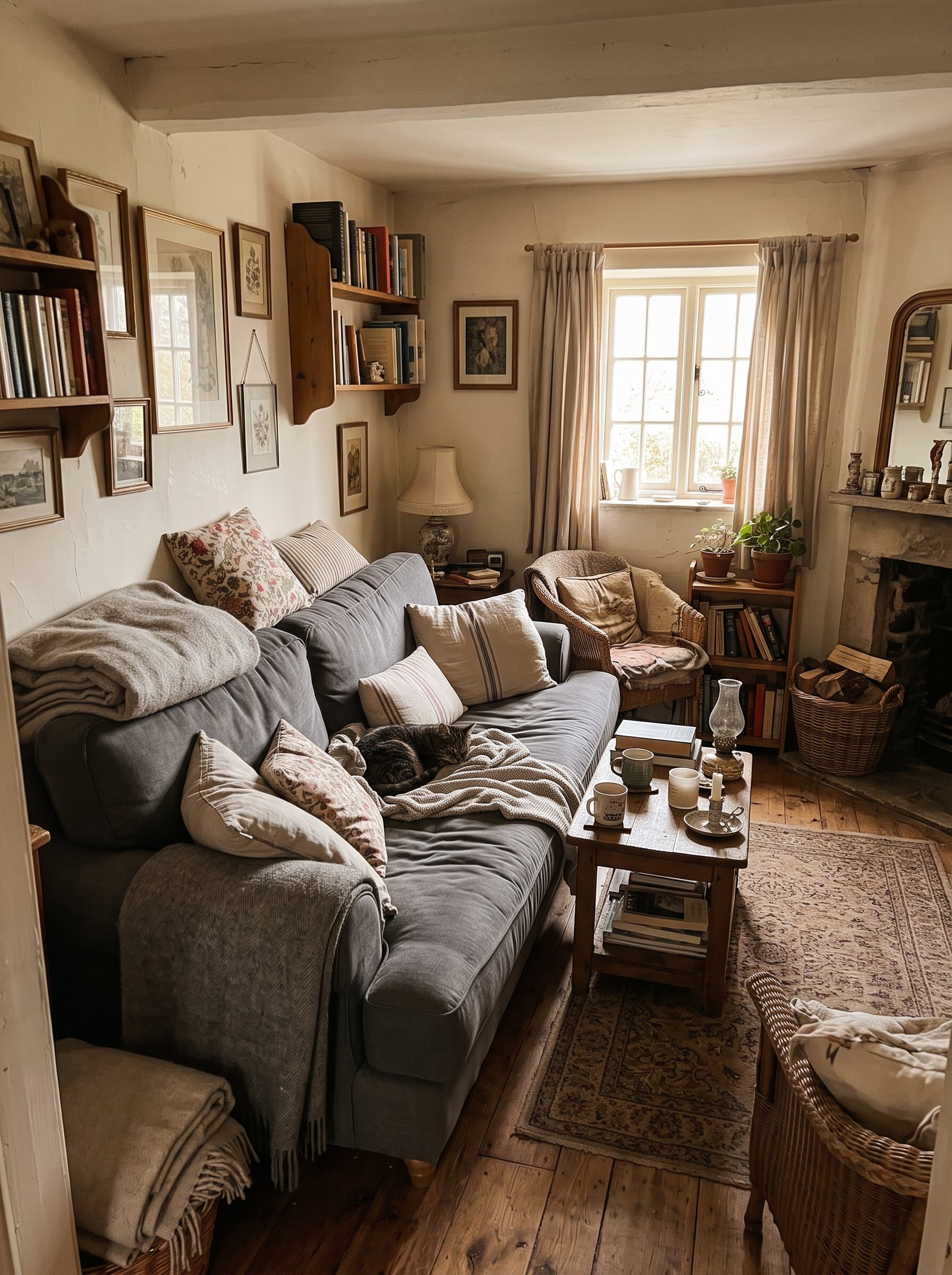
Most small living rooms feel cramped. Not because the room is actually too small — because everything in it is fighting for the same visual space. I learned this the hard way, in a room that was, on paper, fine.
I’m Emily. I’ve decorated five homes now, starting with a 480-square-foot studio where $200 had to last me the rest of the month, and I still make mistakes that make me want to hide in the closet. My current place is a 1,200 square foot cottage outside Nashville — small enough that one wrong sofa can ruin the whole room, which is exactly what happened to me. I ordered a sofa online because it looked perfect in the photo. It was too big for the room. I couldn’t walk around it without turning sideways. I lived with it for eight months before I admitted defeat and sold it at a loss.
This article is what I wish someone had told me before that sofa showed up on my porch. It’s not a list of “10 small space hacks” you’ve already read a hundred times. It’s what actually causes small rooms to feel cluttered, and what actually fixes it.
The Real Reason Small Rooms Feel Small
It’s rarely the square footage. I’ve been in 900-square-foot apartments that felt open and airy, and I’ve seen 400-square-foot rooms that felt like a storage unit. The difference is almost never size. It’s density — how much visual “stuff” your eye has to process at once.
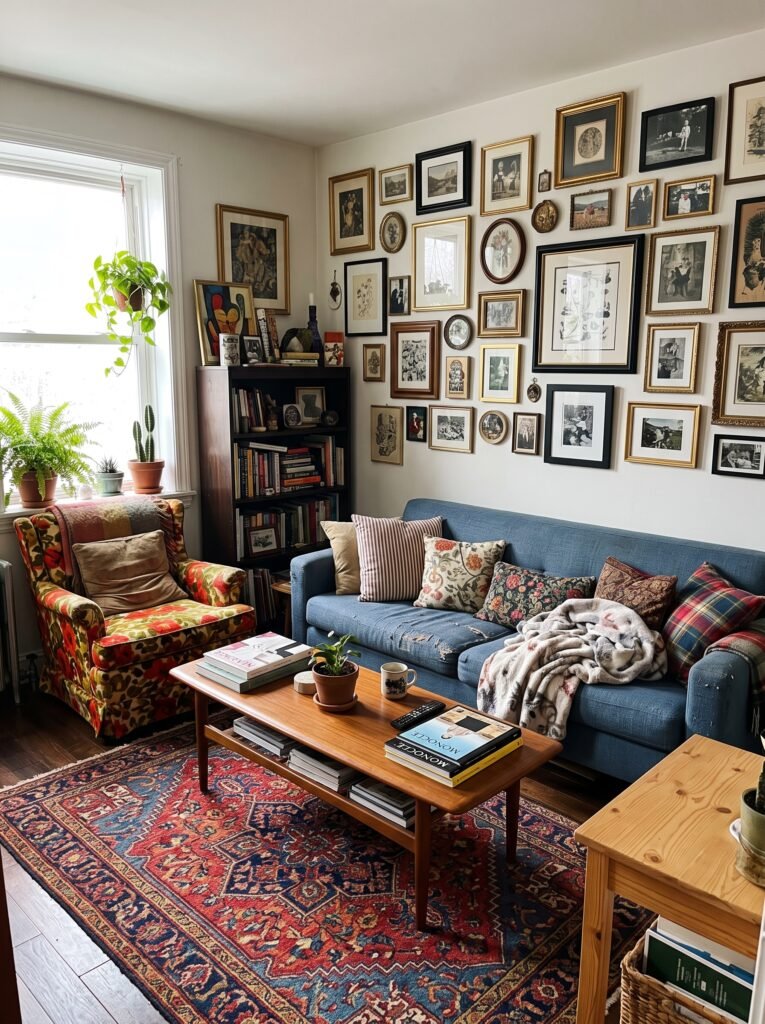
Every piece of furniture, every pattern, every color change adds to that density. A room with six small decisions — a patterned rug, a busy gallery wall, three different wood tones, a bold accent chair, patterned curtains, and a cluttered coffee table — will feel smaller than a room with three bold ones. Your eye needs somewhere to rest. Most small rooms don’t give it one.
The other big culprit is scale. People buy furniture sized for the room they wish they had, not the room they have. That oversized sofa I mentioned? I measured the wall. I never measured the walking path around it. A solid mango wood coffee table that’s beautiful in a 200-square-foot living room can completely block a 120-square-foot one. Scale isn’t about “small furniture for small rooms” — it’s about proportion between the furniture and the actual clearances you need to move through the space.
The Furniture Placement Mistake Almost Everyone Makes
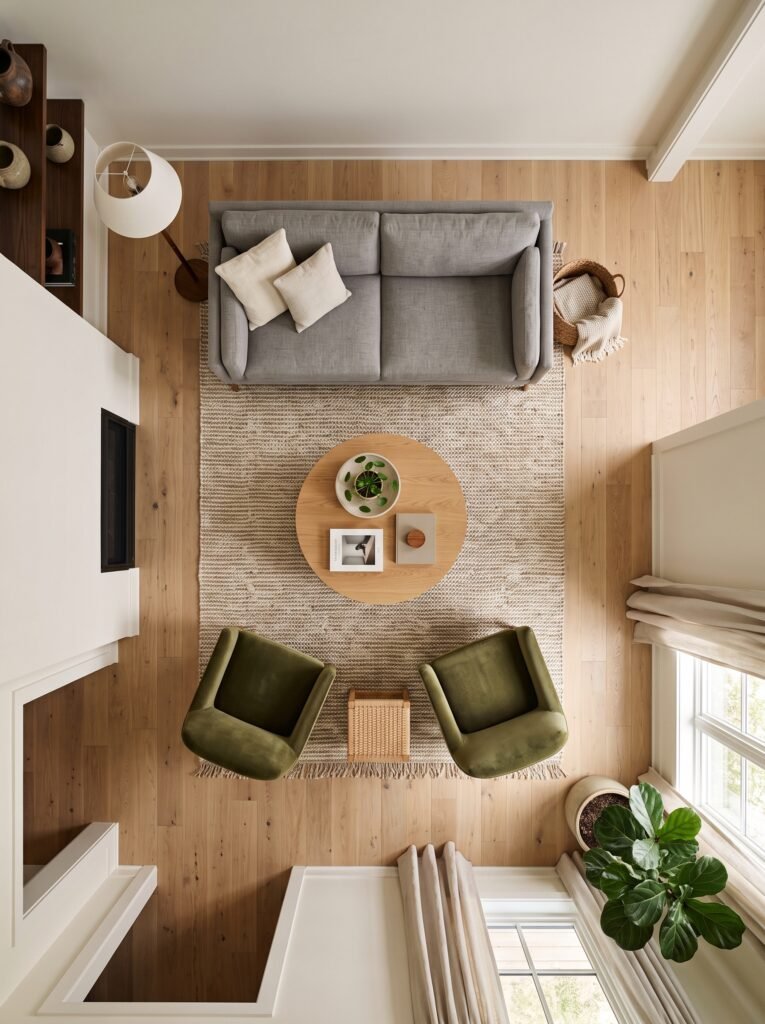
Here’s the mistake I see constantly, including in my own second rental: pushing everything against the walls. It feels logical — more open floor space in the middle, right? In practice, it usually backfires. Furniture against every wall creates a “dead zone” in the center of the room that makes the space feel like an empty waiting room, not a place people actually want to sit and talk.
Floating your seating slightly — even six to eight inches off the wall — creates a sense of intentional zones. A room feels bigger when it’s organized into “this is where we sit and talk” versus “this is where we walk,” rather than one open rectangle with furniture around the edges.
I know this isn’t the popular take, but I don’t think you need a “conversation area” rug rule followed to the letter. The advice everywhere says all four legs of your furniture need to sit on the rug, full stop. In a genuinely small room, that often means buying a rug so large it swallows the whole floor and makes the room feel more cramped, not less. In my current living room, only the front legs of my sofa touch the rug. It still reads as intentional. It still anchors the space. Nobody who’s visited has ever noticed or cared, and I stopped worrying about a rule that was written for rooms twice the size of mine.
What Nobody Tells You About Small Rooms
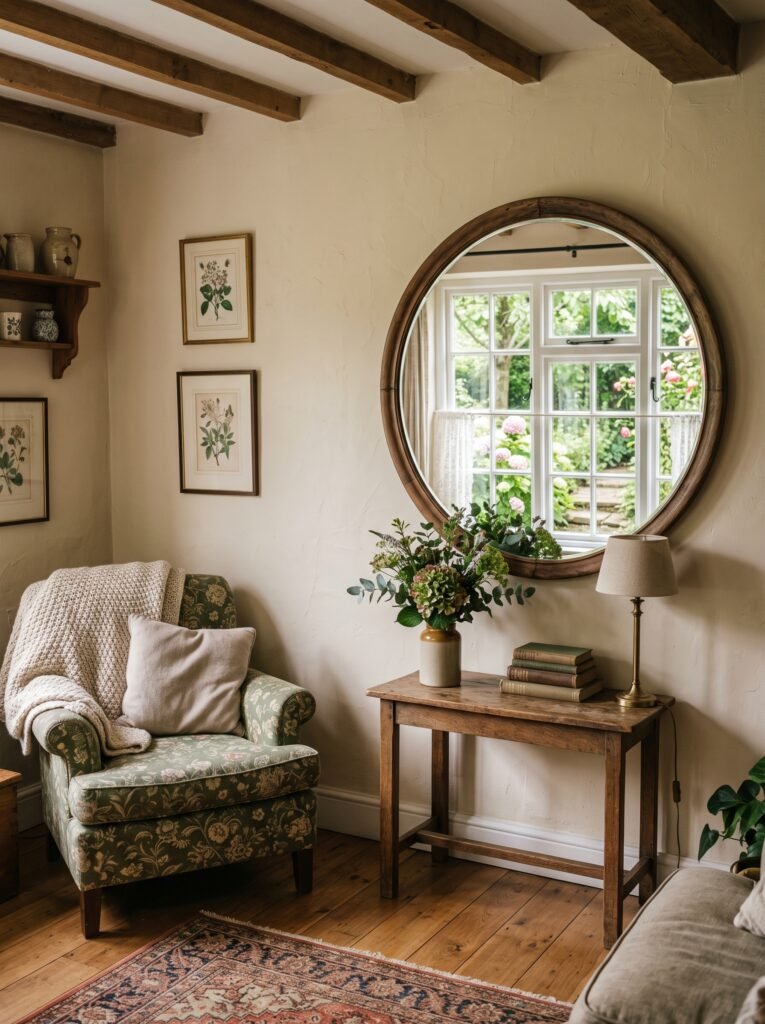
Here’s the part almost no one talks about: mirrors don’t actually make a room feel bigger by reflecting light. That’s the line everywhere, and it’s not wrong, exactly — it’s incomplete. What actually matters is what the mirror is reflecting. A mirror facing a blank wall does very little. A mirror positioned to reflect a window, a piece of art, or an interesting piece of furniture doubles the visually interesting content in the room without adding a single physical object. I moved a $40 mirror from Target from one wall to the wall opposite my window, and the difference was immediate — not because of “more light,” but because it now reflected the one view in the room actually worth seeing twice.
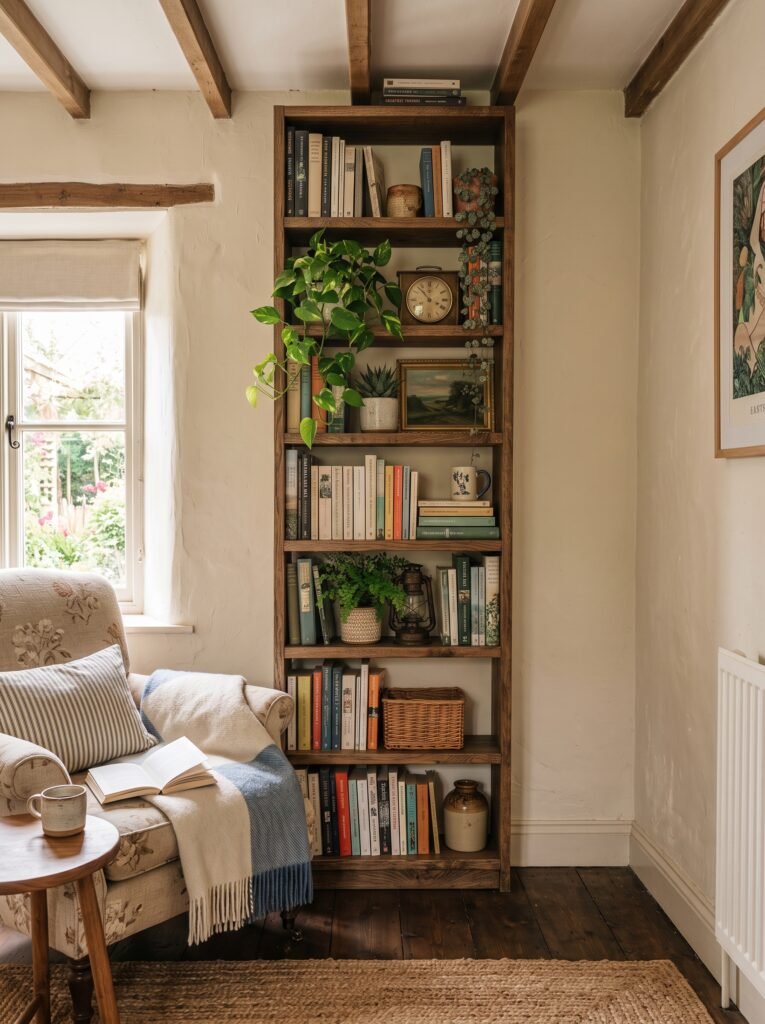
The other thing nobody mentions: vertical space matters more than floor space in a small room, and most people ignore everything above eye level. Tall, narrow furniture — a bookshelf that goes to the ceiling instead of a low, wide one — pulls the eye upward and makes the ceiling feel higher, which reads as “bigger” even though you haven’t gained an inch of floor space. I switched a wide, low media console for a narrower vertical shelving unit and the room felt taller within a day. I wasn’t expecting that.
How to Actually Fix a Cluttered Small Room
Start with what’s actually on the floor, not what’s on the walls. Most people redecorate top-down — new art, new curtains, new throw pillows — before they’ve dealt with the furniture creating the clutter in the first place.
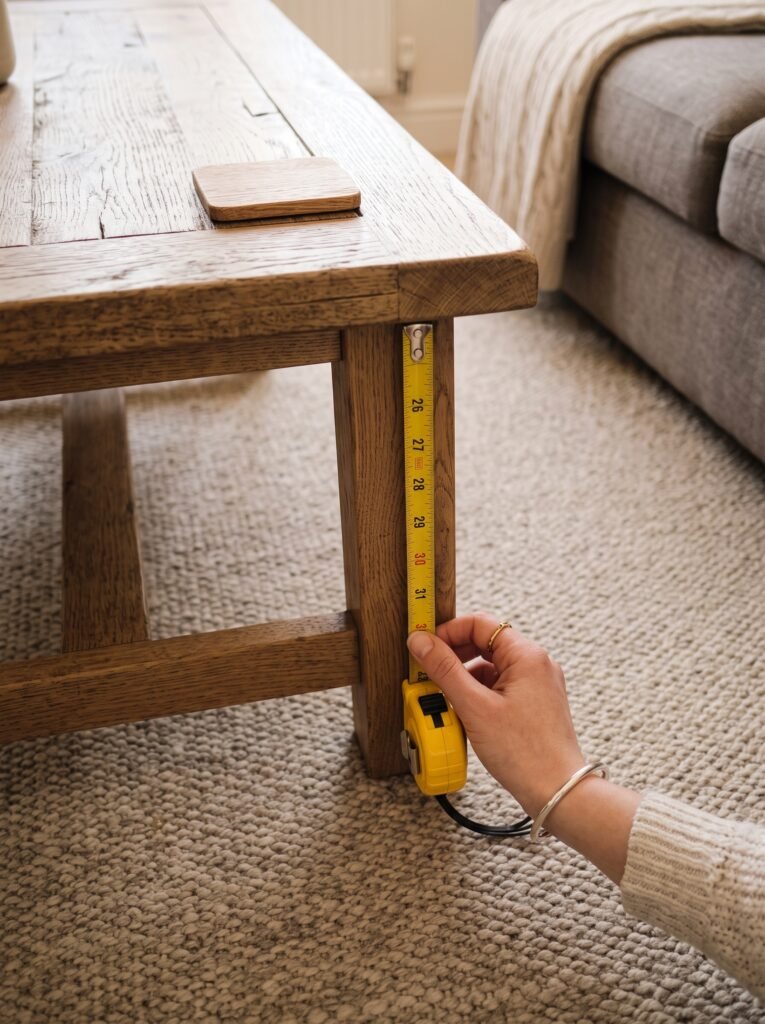
Step one: measure your walking paths, not just your walls. You need at least 30 inches of clearance for a main walkway, and 18 inches minimum between furniture pieces people will squeeze past occasionally. Grab a tape measure before you buy anything. I didn’t do this with my sofa, and it cost me eight months and a resale loss.
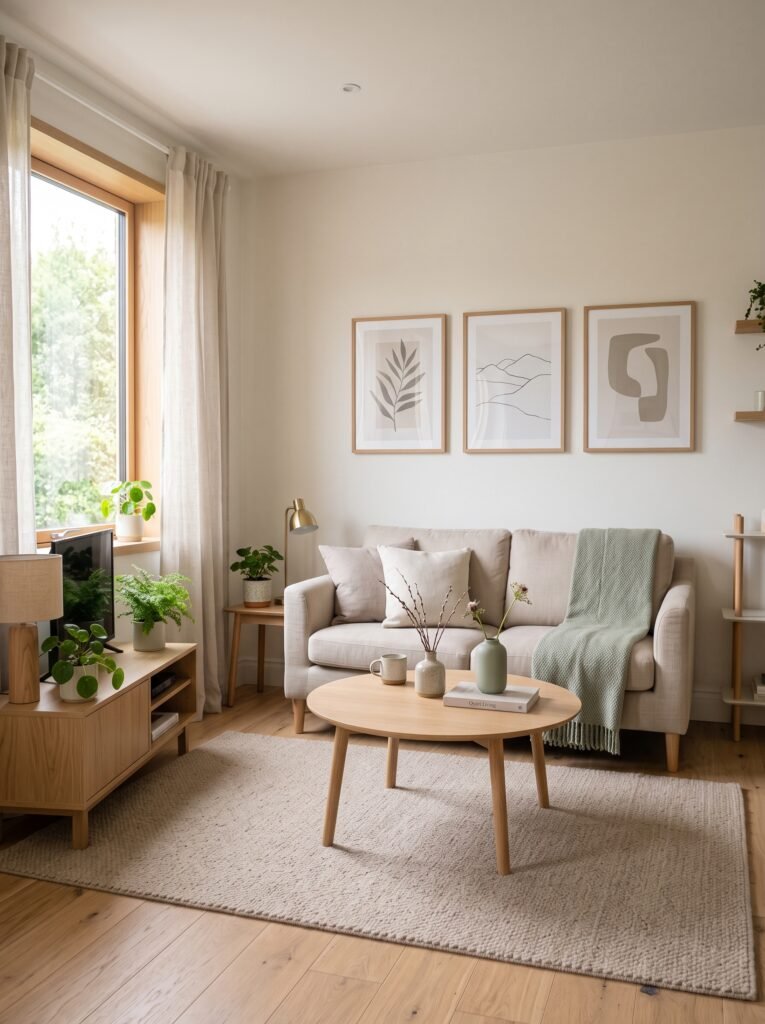
Step two: pick one dominant wood tone. I had my mistake phase here too — I kept adding furniture pieces I loved individually, and ended up with four different wood tones plus a black metal frame, and the room felt chaotic even after I decluttered the surfaces. Pick one dominant tone (light oak, warm walnut, whatever suits your space) and let everything else support it rather than compete with it.
Step three: reduce the pattern count to two. One pattern on upholstery, one pattern in soft goods (pillows, throw, curtains) — max. Every additional pattern adds visual noise your brain has to sort through, and in a small room, there’s no distance for your eye to soften that noise the way there would be in a larger space.
Step four: get rid of anything doing a job nothing else in the room needs done. A side table that just holds a lamp and nothing else is a candidate for a wall-mounted sconce instead, freeing up floor space entirely. I did this in my reading corner — a $60 swing-arm sconce from IKEA replaced a side table and a lamp, and the corner opened up more than any decluttering session ever did.
Budget Reality: What This Actually Costs
You do not need to redo the whole room to fix this. That’s the good news.
A solid, well-proportioned coffee table that actually fits a small living room — something like a 36-inch round option rather than a bulky rectangular one — runs somewhere between $150 and $300 at a store like West Elm or Article. If that’s not in the budget — and honestly, it wasn’t in mine for a long time — the IKEA LACK coffee table in a round profile is genuinely fine if you style it with something textured on top, like a linen tray, instead of leaving the surface bare and plasticky-looking.
A large floor mirror to handle the reflection trick I mentioned costs $200+ at most furniture stores. A perfectly good version shows up secondhand on Facebook Marketplace constantly for $30 to $60 — mirrors are one of the easiest secondhand wins because scratches and minor frame wear barely show once it’s hung.
My husband thought I was being dramatic about the sofa situation for the entire eight months I complained about it. When I finally sold it and replaced it with a properly-scaled loveseat and an accent chair instead, he sat down, looked around, and said the room felt “less annoying.” High praise, coming from him. That’s about as much design commentary as I ever get out of that man, and I’ve learned to take it.
The Layout Trick Most Small Rooms Are Missing
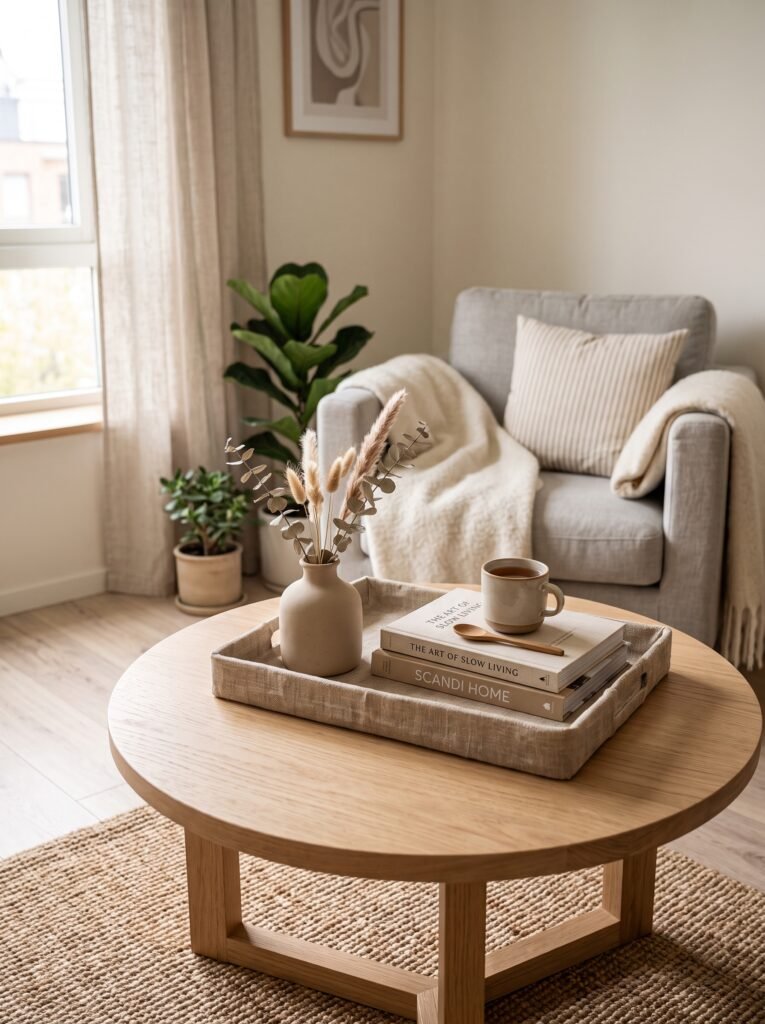
If your room still feels stuck after all of this, try an angled furniture arrangement instead of a purely rectangular one. Placing a sofa or chair at a slight angle — even 10 to 15 degrees off the wall — breaks up the boxy feeling that comes from every piece running parallel to every wall. It sounds like it would eat more space. In practice, it usually reads as more intentional and often creates a better traffic flow around the piece, not worse.
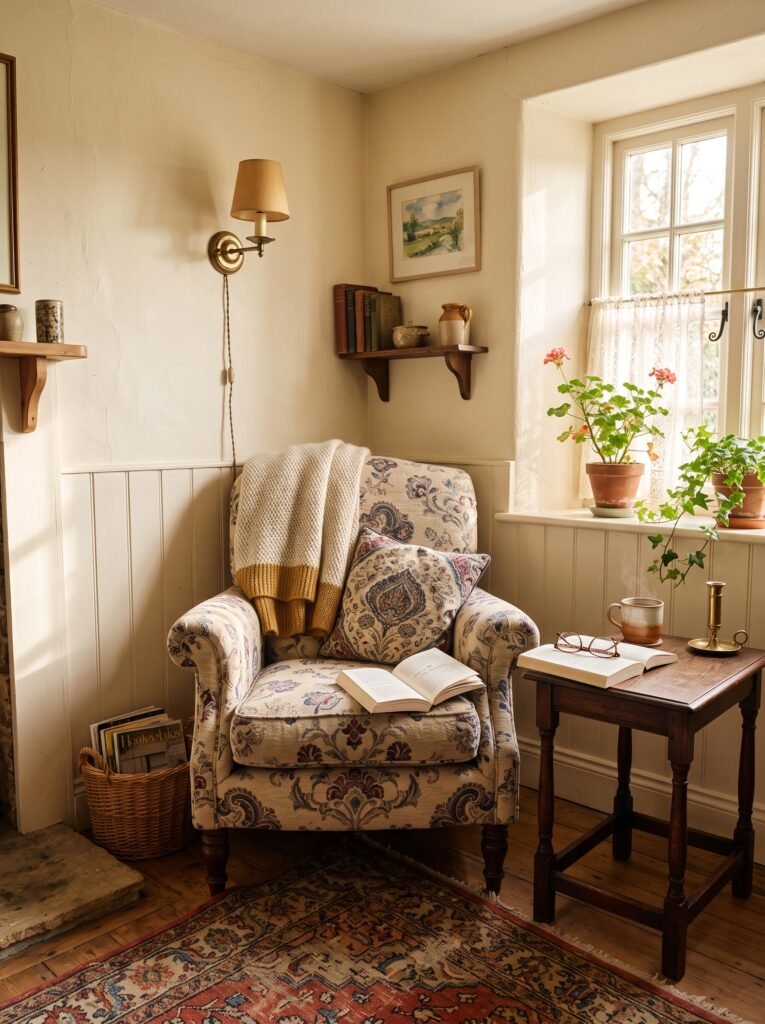
I resisted this for years because it felt “wrong” — like furniture is supposed to line up with the room’s edges. My current reading chair sits at an angle in the corner, and it’s the first thing people comment on when they walk in, in a good way. Not because it’s unusual. Because it doesn’t look like every other rectangular arrangement they’ve seen a hundred times.
Frequently Asked Questions
Q: What’s the biggest mistake people make in small living rooms? A: Buying furniture sized for the room they wish they had. Measure your actual clearances — walking paths, not just wall space — before you buy anything. I skipped this step once and it cost me a sofa and eight months of frustration.
Q: Should I use a small rug or a large rug in a small living room? A: Go slightly smaller than the “all four legs on the rug” rule suggests if a full-size rug would overwhelm the floor. A rug that only the front legs of your seating touch still reads as intentional and won’t swallow the room.
Q: Do light colors actually make small rooms look bigger? A: They help, but they’re not the whole story. A light room with too many patterns and mismatched wood tones will still feel cluttered. Color matters less than density — how many visual decisions are competing for attention at once.
Q: How many pieces of furniture should be in a small living room? A: There’s no magic number, but if you can’t name what job every single piece is doing, it’s probably a candidate to remove. A side table that only holds a lamp can usually be replaced with a wall sconce and freed-up floor space instead.
I’ll be honest — fixing a cluttered small room takes longer than any Pinterest board makes it look, and it usually means admitting one expensive mistake before you get it right. Mine was a sofa. Yours might be something else. Either way, it’s fixable, and it doesn’t require the room to be bigger than it actually is.