10 Cozy Living Room Ideas That Make Your Home Feel Like a Hug
Some rooms just have it — that feeling where you walk in, drop your bag, and immediately feel your whole body relax. You’re not thinking about what’s missing or what needs fixing. You’re just there. Present. Comfortable in a way that’s hard to explain but instantly recognizable when you feel it.
I spent years trying to recreate that feeling in my own home and getting it wrong in really specific ways. Too many throw pillows that were stiff and decorative. Candles that sat on the shelf unlit because I was “saving” them. A rug I loved the look of but that my feet hated stepping on. A sofa that photographed beautifully but that I never actually sank into.
The thing about coziness is that it’s not a visual style — it’s a physical and emotional experience. It comes from warmth, from softness, from lighting that makes everything look a little gentler. And once you understand what actually creates that feeling, making your living room cozy stops being a design project and starts being a series of very simple decisions. Here are the 10 that made the biggest difference in my own home.
1. Layer Your Lighting — And Give the Overhead Switch a Rest
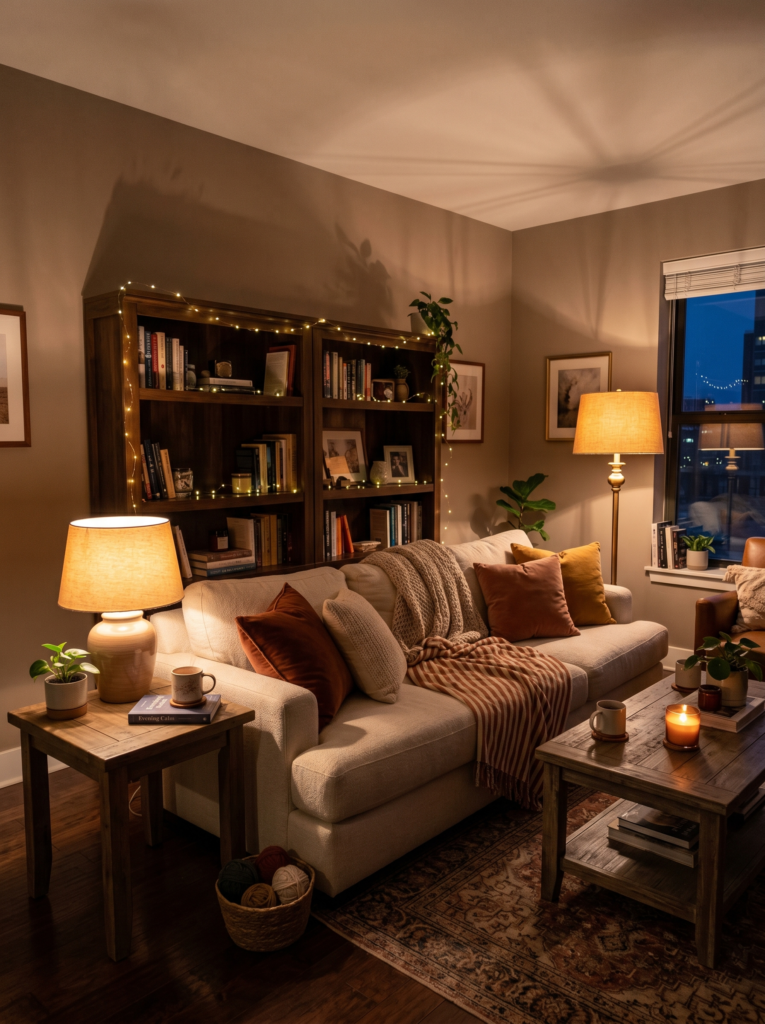
If there’s one change that will immediately make your living room feel cozier, this is it — and it costs less than you think. The problem with overhead lighting isn’t just that it’s harsh. It’s that it flattens everything. A single light source coming from directly above eliminates all the shadows and depth that make a room feel dimensional and warm. It makes your living room look like an office.
The solution is layering. You want multiple light sources at different heights — and ideally, none of them pointing straight down from the ceiling.
Start with a floor lamp beside or behind the sofa. Position it so the bulb is roughly at seated eye level, which throws warm light across the room rather than down onto it. Add a table lamp on whatever surface is beside your sofa — a side table, a small console, even a stacked set of books. If you have shelving, a string of warm Edison bulbs draped along the top shelf gives you that low, ambient glow that makes a room feel like the world outside has slowed down.
Three light sources at different heights, all warm-toned bulbs (2700K is the magic number — not daylight, not cool white), and suddenly the same living room you’ve always had feels like somewhere you genuinely want to spend the evening. I made this exact switch two winters ago, and the difference was so dramatic that my partner came home and asked if I’d repainted the walls. I hadn’t touched a single wall.
2. Invest in One Really Good Throw Blanket
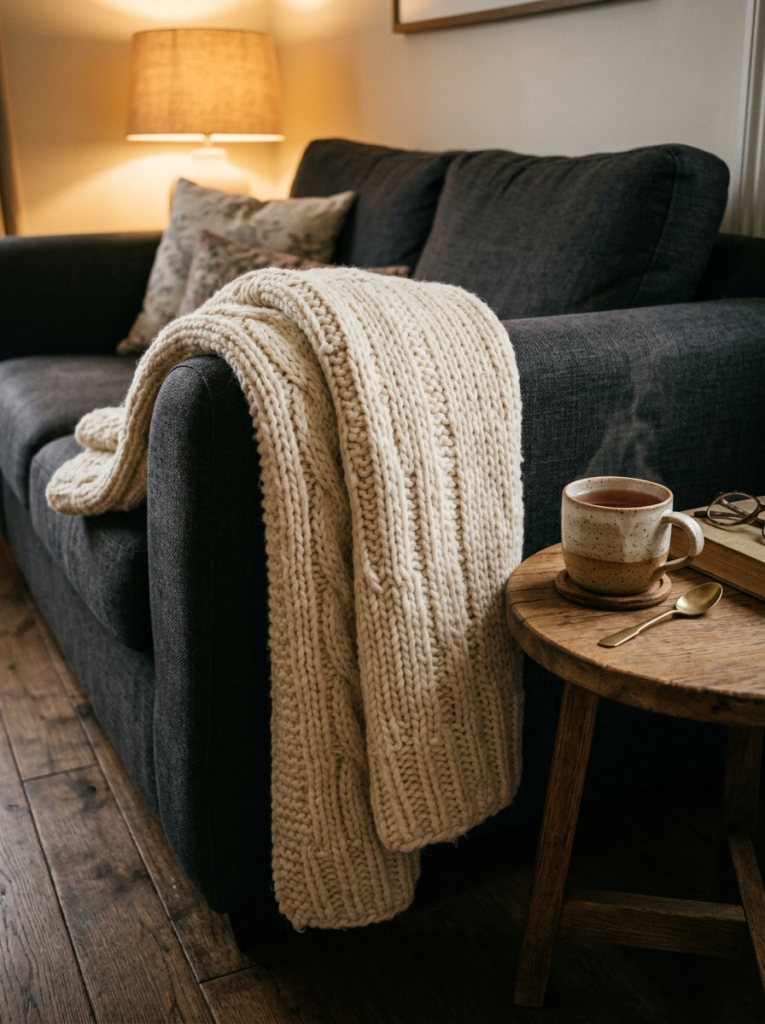
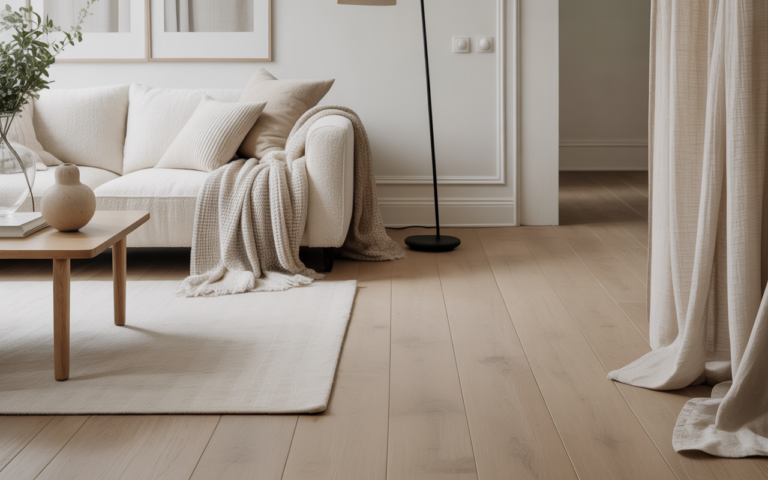
Not a decorative blanket that lives folded in a basket looking pretty. Not three thin ones that stack up but don’t actually keep anyone warm. One genuinely good throw — something with weight, warmth, and texture — draped casually over the arm of your sofa like it’s been used today.
This distinction matters more than it sounds. A room with a beautiful-but-untouchable blanket feels styled. A room with a blanket that looks like someone just threw it over their lap feels lived in. And lived-in is what cozy actually means.
For texture, chunky knit is the classic choice and it earns that status — the visual weight alone makes a room feel warmer even in summer. Bouclé is another one I’ve become obsessed with lately; it has this fluffy, cloud-like quality that photographs beautifully and feels even better than it looks. Waffle-weave linen sits on the lighter end and works well if you run warm but still want that layered look.
Color-wise, go warm. Cream, oatmeal, warm camel, rust, terracotta — anything in the amber-to-earth family adds heat to a room. Cool grey and navy are perfectly nice but they don’t read as cozy the way a warm-toned textile does.
The one practical note: buy a size larger than you think you need. A throw that can actually wrap around you is a comfort object. One that barely covers your lap is just a decoration.
3. Add a Rug That Your Feet Actually Want to Land On
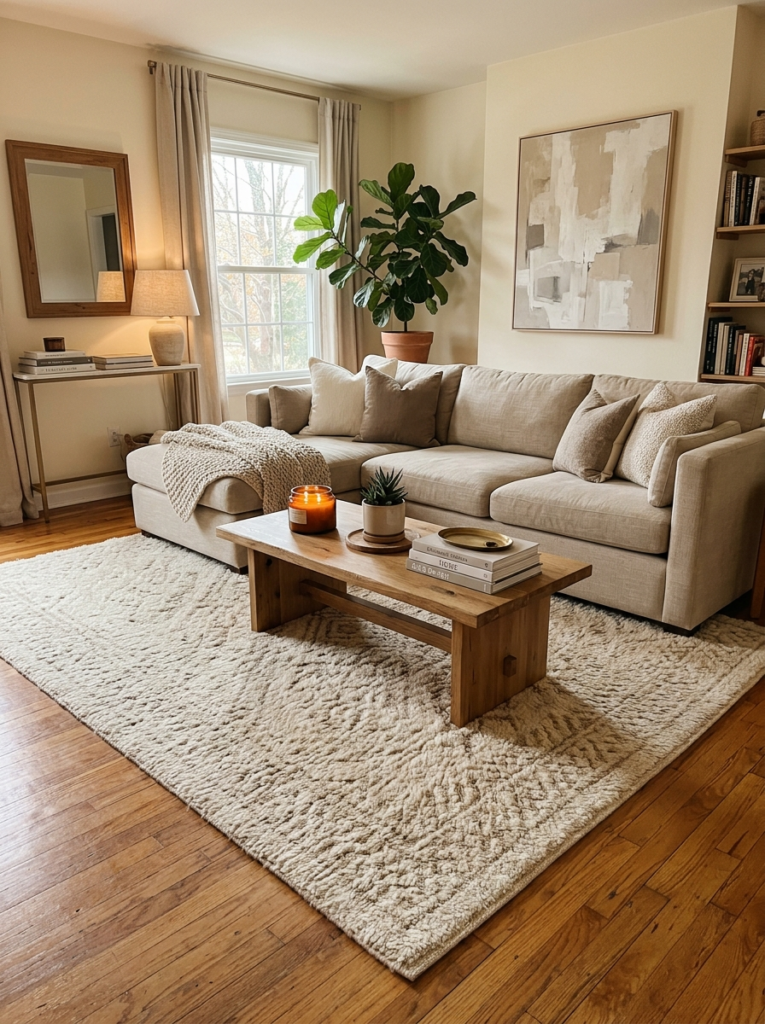
Here’s a mistake I see constantly in living rooms that look good in photos but feel cold in person: the rug is either too small, too flat, or chosen purely for looks with zero consideration for how it feels underfoot.
A cozy living room needs a rug that your bare feet genuinely enjoy. Not one you’re tiptoeing across because it’s scratchy, not one so thin it’s basically a piece of paper between you and the floor. Something plush, soft, and substantial — the kind of rug that makes you want to sit on the floor.
For material, a wool or wool-blend rug gives you the best combination of softness, durability, and natural warmth. Cotton is softer but flattens quickly in high-traffic areas. Jute and sisal are beautiful but scratchy — save those for hallways, not living room seating areas where you’ll be walking barefoot.
For size, the rule is simple and worth repeating because almost everyone gets this wrong: your rug needs to be large enough that the front legs of all your seating sit on it. When you pull a chair or sofa away from the rug to sit in it, the legs should still be on the rug. If your rug is only sitting under your coffee table, it’s too small. Go up a size — almost always, the larger rug looks better and feels better.
And place it right. Center it in the seating arrangement, not pushed against the wall.
4. Bring In Natural Wood Wherever You Can
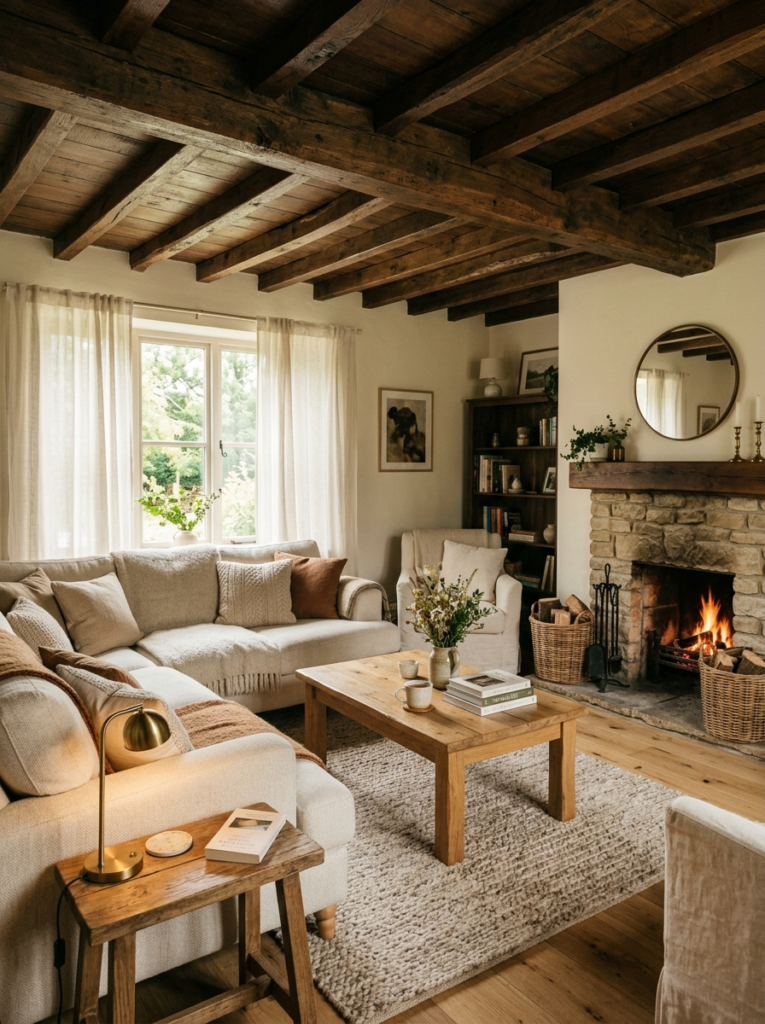
Wood does something to a room that no paint color, no textile, and no furniture set can fully replicate — it adds genuine warmth. Not warm tones, but actual warmth. There’s a reason hygge spaces and cozy mountain cabins are almost always built around wood: it’s a material that signals shelter, permanence, and comfort at a level that bypasses the thinking brain entirely.
You don’t need exposed ceiling beams to bring this energy in (though if you have them or can add them, please do — they’re transformative). A warm oak coffee table, a side table in a honey wood tone, a small wooden tray on the console, a log basket beside a fireplace. These small additions collectively shift the feel of the room in a way that’s disproportionate to their size.
One thing I’d encourage: don’t try to match your wood tones perfectly. A light oak coffee table beside a slightly darker walnut side table, with a painted pine shelf across the room — this looks like a room someone actually collected and lived in over time. Perfectly matched wood looks like a furniture showroom. The variation is what makes it feel warm and real.
If you’re working with a very contemporary or minimalist space, even one wooden element — a single cutting board propped against the kitchen pass-through, a small bowl carved from solid wood on the coffee table — pulls the room toward organic warmth in a way that no synthetic material can.
5. Treat Candles as a Light Source, Not a Decoration
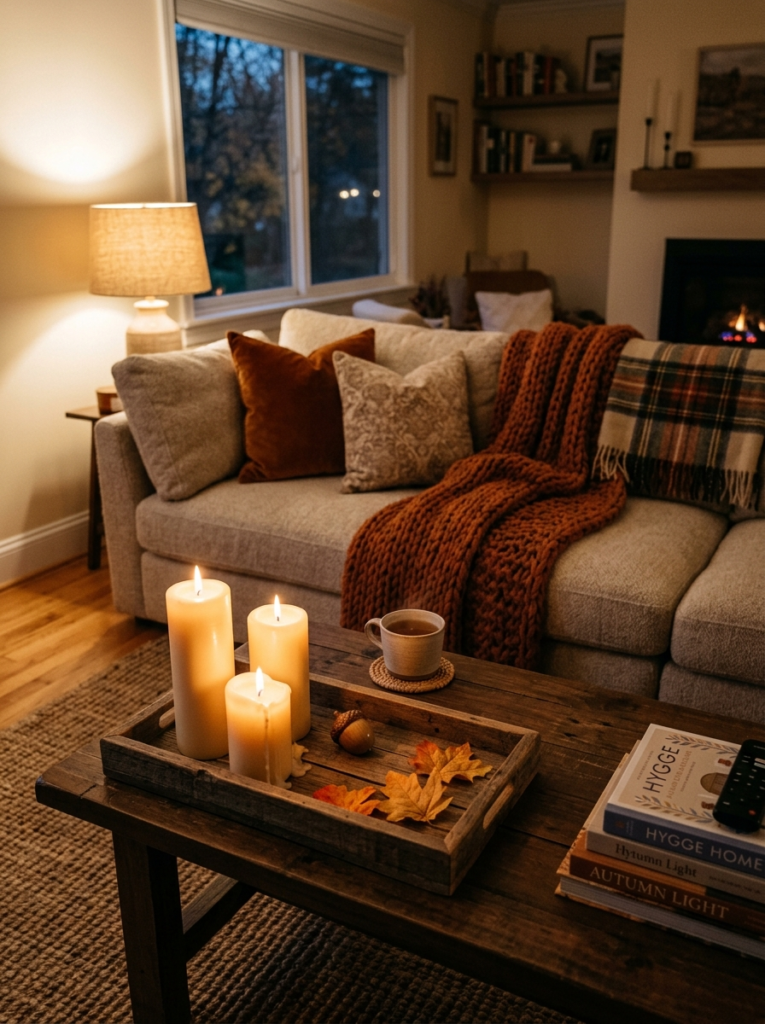
I had candles in my living room for years before I actually used them. They sat on the coffee table looking nice, getting dusty, waiting for a special occasion that never quite arrived. The shift happened when I stopped thinking of them as decorative objects and started thinking of them as the cheapest form of atmosphere available.
Candles are light. That’s the point. A cluster of three pillar candles in varying heights, placed on a simple wooden tray on your coffee table and actually lit on a Tuesday evening while you watch something — that changes the room in a way that feels almost disproportionate to how simple it is. The light flickers. It moves. It throws soft shadows that no lamp can replicate. And it makes everything in the room look better.
The arrangement matters. Three candles at different heights on a tray is the standard because it creates visual rhythm without looking random. One candle alone tends to look accidental. Two looks like a birthday cake. Three looks styled.
Scent is worth thinking about too. A room that smells like warm cedar, amber, clove, or sandalwood feels cozier than one that doesn’t — this is not subtle. Pick one signature scent for your living room and burn it consistently enough that it becomes associated with that space. There’s a reason spas and high-end hotels invest heavily in scent. It works.
And please: burn the candles. Light them on regular evenings. That’s what they’re for.
6. Build a Reading Nook Out of Whatever Corner You Have
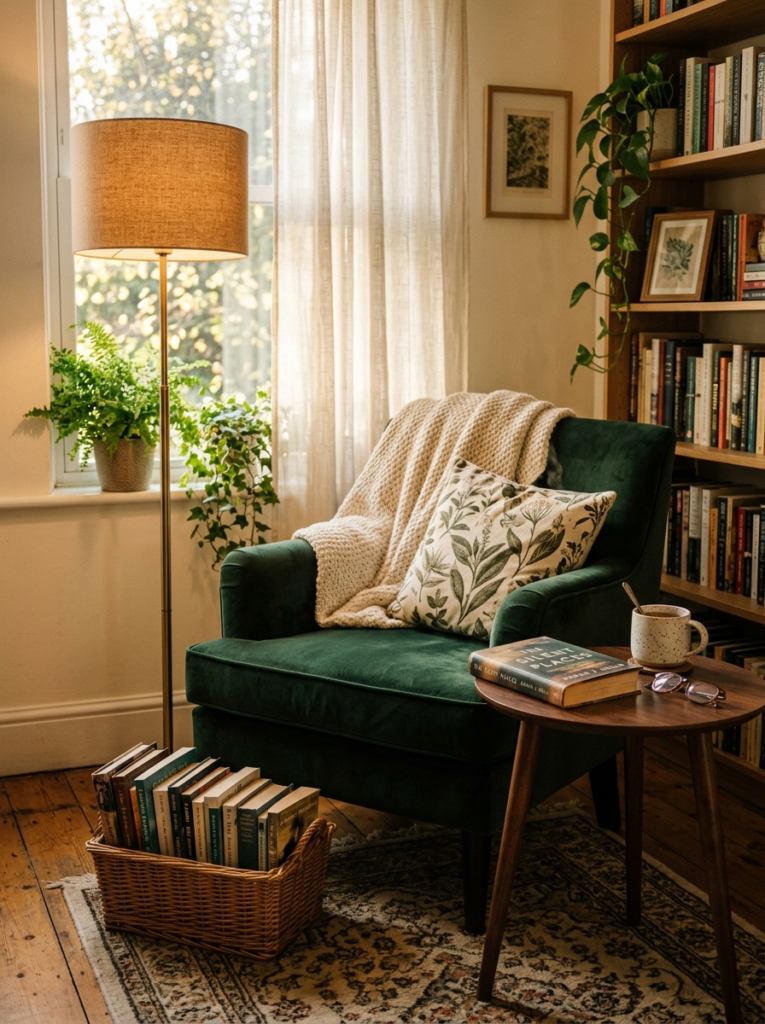
One of the things that makes a living room feel genuinely cozy rather than just well-decorated is the sense that different parts of the room are for different things. A reading nook is the most powerful way to create that feeling — even in a small space, even in a rental, even without any construction.
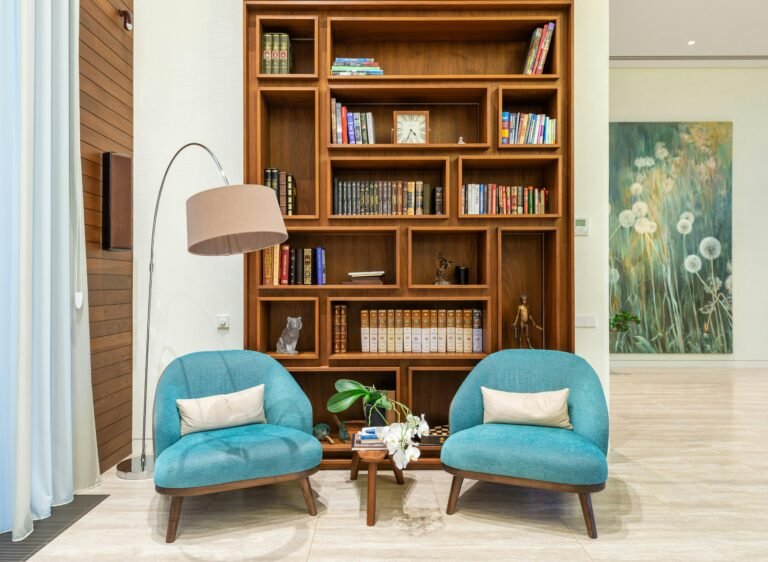
The formula is simple: one good armchair, one floor lamp, one small surface, one container for books. That’s it. The armchair should be deep enough that you can sit in it with your feet up, or at least curl up sideways. The floor lamp needs to be positioned right beside the chair — not across the room, not overhead, but close, angled to fall directly onto the book you’re reading. The small surface (a side table, a wooden stool, a stack of books with a tray on top) is for your mug and your current read. The basket of books on the floor signals that this corner is a place for reading, not just sitting.
What makes this work isn’t any individual element — it’s the fact that all four things are together in one dedicated spot. The chair alone is just a chair. The chair plus the lamp plus the table plus the books is a place. And places feel cozier than furniture.
For the armchair itself, I’d push you toward something with real personality: dark velvet in forest green or deep teal, a worn leather club chair, a bouclé armchair in warm cream. The reading nook is the one spot in a living room where a bold choice pays off the most.
7. Paint One Wall Dark — It Feels More Cozy, Not Less
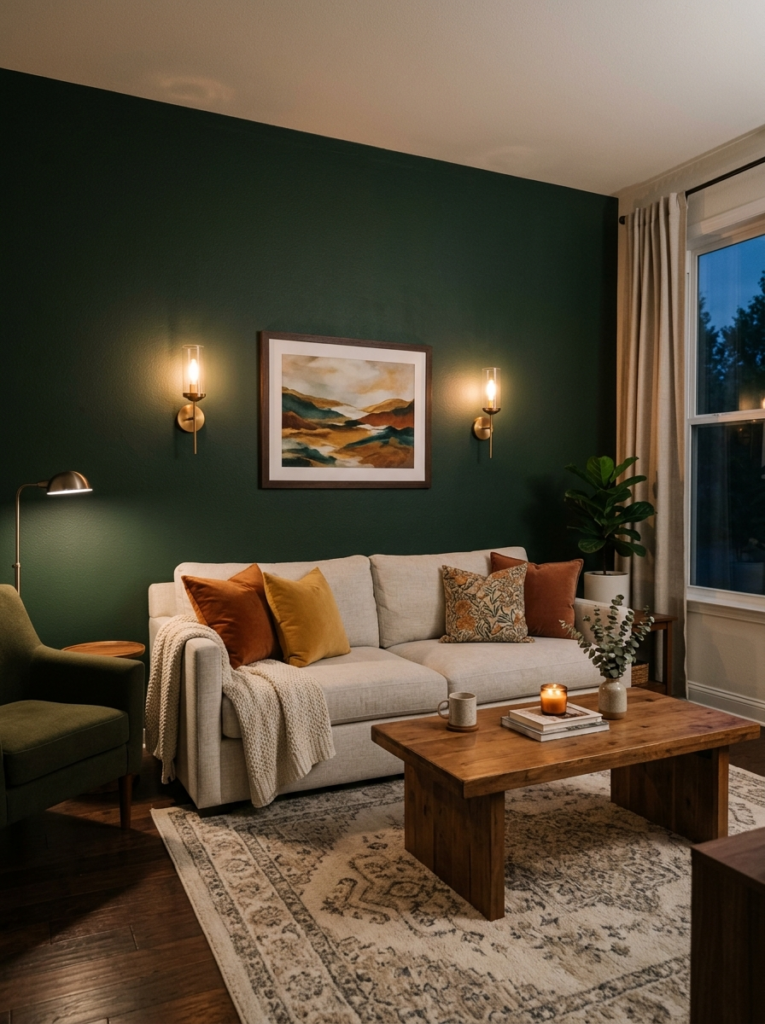
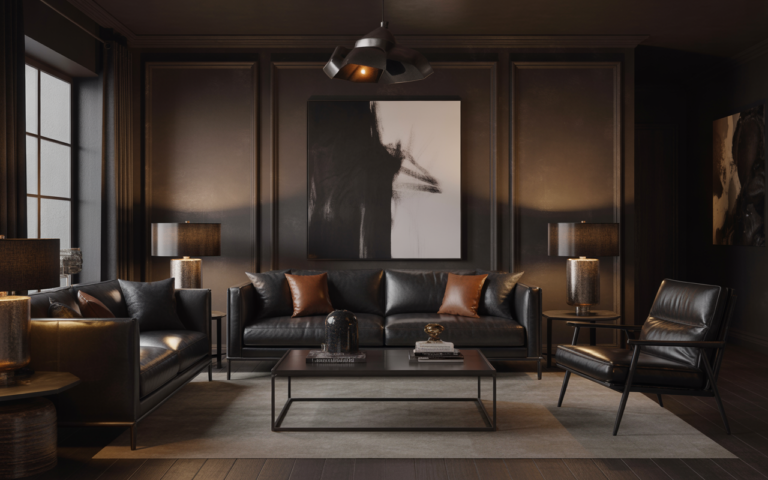
This one is the hardest to convince people of before they try it, and the most obvious in hindsight once they do. Dark walls — deep charcoal, navy, forest green, warm terracotta, almost-black — feel more cozy than light ones. Not claustrophobic, not oppressive. Cozy. Enveloping. Like being inside rather than just in a room.
The reason light rooms feel spacious but not always warm is that they reflect light evenly in all directions, which reads as open but also as exposed. A dark wall absorbs light and creates depth. It makes the furniture and textiles in front of it pop. It makes the warm glow of lamps and candles look richer and more dramatic. And it creates that cave-like sense of shelter that cozy rooms have always relied on.
You don’t have to go all-in. One dark accent wall — the wall directly behind your sofa — is enough to completely shift the atmosphere of the room. Keep everything in front of it lighter: a cream or warm linen sofa, warm wood coffee table, layered throw pillows. Add two wall sconces on either side of a piece of art on that dark wall, and you’ll have a room that looks like it was designed rather than decorated.
If you’re renting and can’t paint, removable peel-and-stick wallpaper in a dark tone is genuinely good now. The textured options especially — a deep green linen texture, a charcoal grasscloth — look real enough that most people don’t realize it’s temporary.
8. Layer Your Pillows With Intention
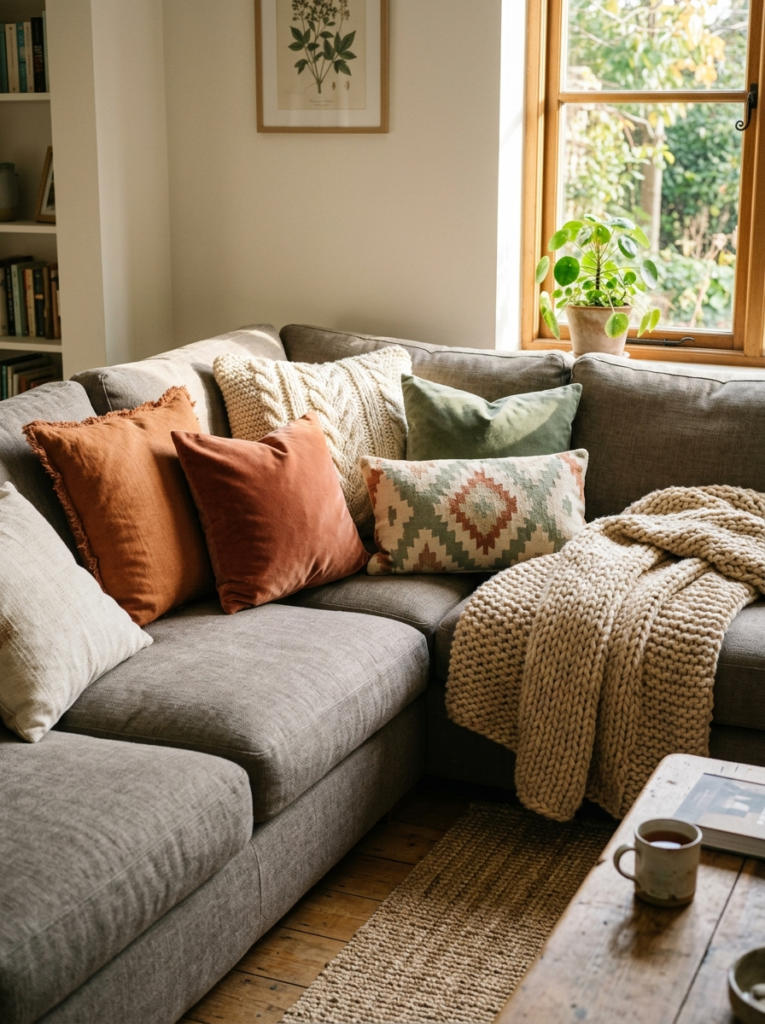
There’s a version of throw pillow styling that looks polished but cold: perfectly matched sets, uniform sizes, everything symmetrical and untouched. It photographs well. It doesn’t feel cozy. Because it’s not for anyone — it’s for looking at.
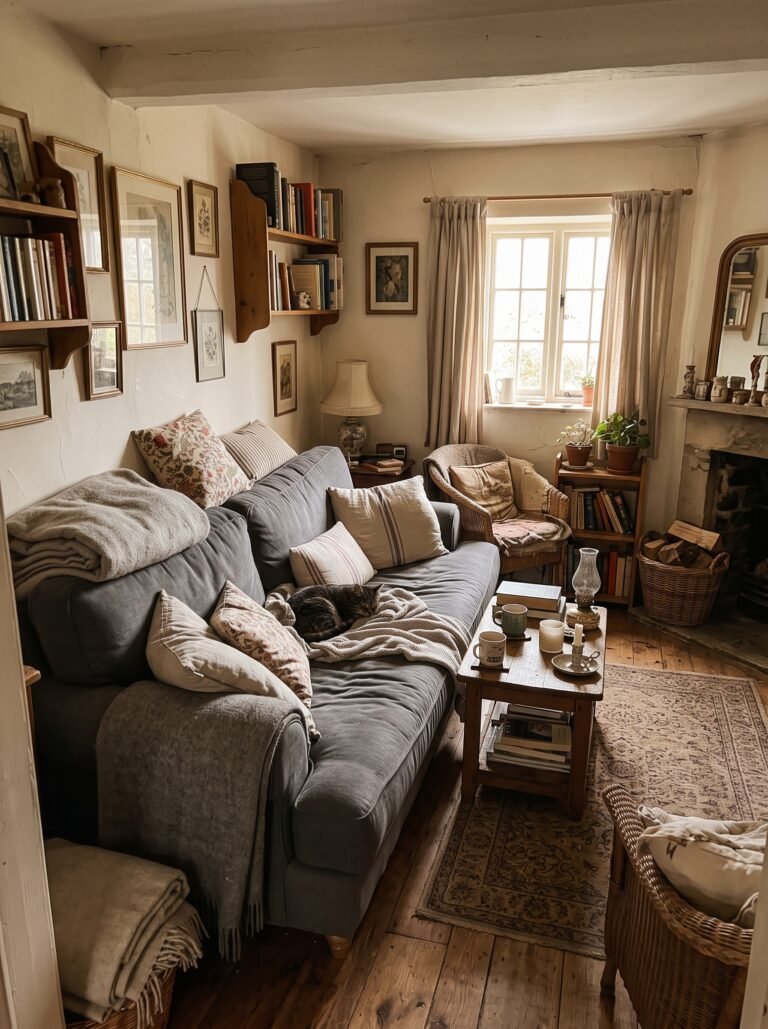
Cozy pillows are a mix. Different sizes — a large square behind, a smaller lumbar in front. Different textures — linen next to velvet next to chunky knit next to something with a subtle stripe. Different shades of the same warm family — rust and terracotta and warm cream and muted sage can all coexist because they share the same underlying warmth.
The arrangement should look lived-in without looking chaotic. A good rule of thumb: start with your largest pillows at the back, work toward smaller ones in front, and let the last pillow sit at a slight angle as if someone just leaned against it. A throw blanket bunched into one corner of the sofa completes the picture — it implies that a person was just here, which is exactly the feeling you’re going for.
And a practical note on number: more pillows does not always mean cozier. Six pillows that need to be removed before anyone can sit down is styling for a magazine. Four pillows that leave room for an actual person to sit and feel comfortable is styling for a home. Always err on the side of leaving room to be used.
9. Make the Fireplace Your Room’s Anchor
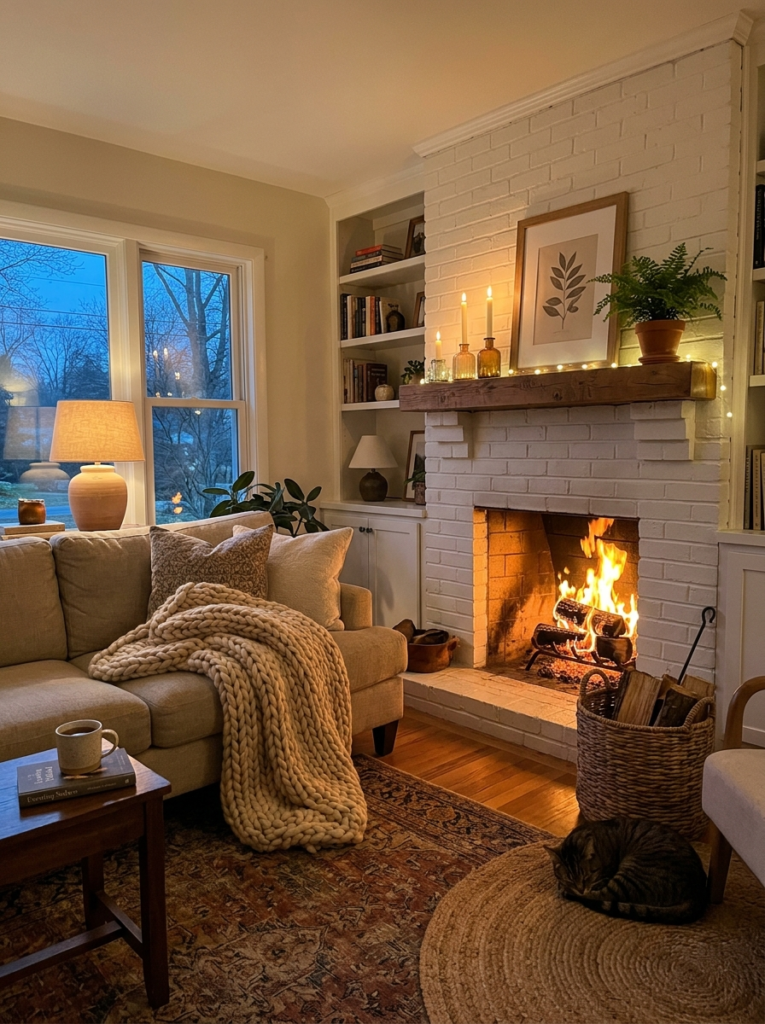
A working fireplace is one of the greatest gifts a living room can have — and it’s also one of the most commonly underused features I see. If you have a fireplace and you’re arranging your furniture so the television is the primary focal point, I’d gently challenge you to reconsider. A fire is not just warmth. It’s movement, sound, and light in a combination that nothing else in a room can compete with.
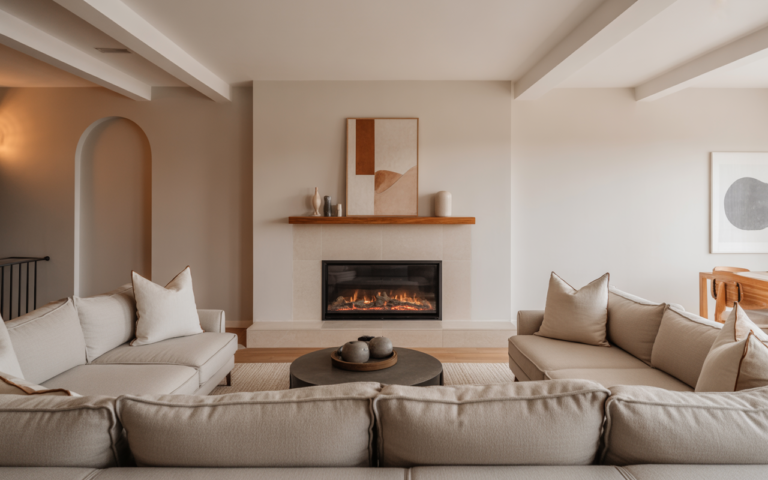
Arrange your seating around the fireplace. Keep the mantel simple — a couple of candles, one small plant, one or two framed pieces of art, and nothing else. Clutter on a mantel competes with the fire for attention, and the fire will always win anyway, so let it. The surrounding simplicity is what makes the fireplace feel like the room’s center of gravity rather than just another surface.
If you don’t have a working fireplace, a realistic electric insert has come a long way in the past few years. The flame effects are genuinely convincing now, and many models offer actual heat output. A freestanding electric fireplace placed in a corner or on a console, surrounded by the same layered lighting and warm textiles, comes closer to the real experience than you might expect.
And if you have a fireplace alcove that’s decorative only — no insert, no function — fill it with a cluster of large pillar candles in varying heights. The glow isn’t the same as a fire, but it’s warm, flickering, and far better than a dark empty hole in the wall.
10. Bring in Something Living
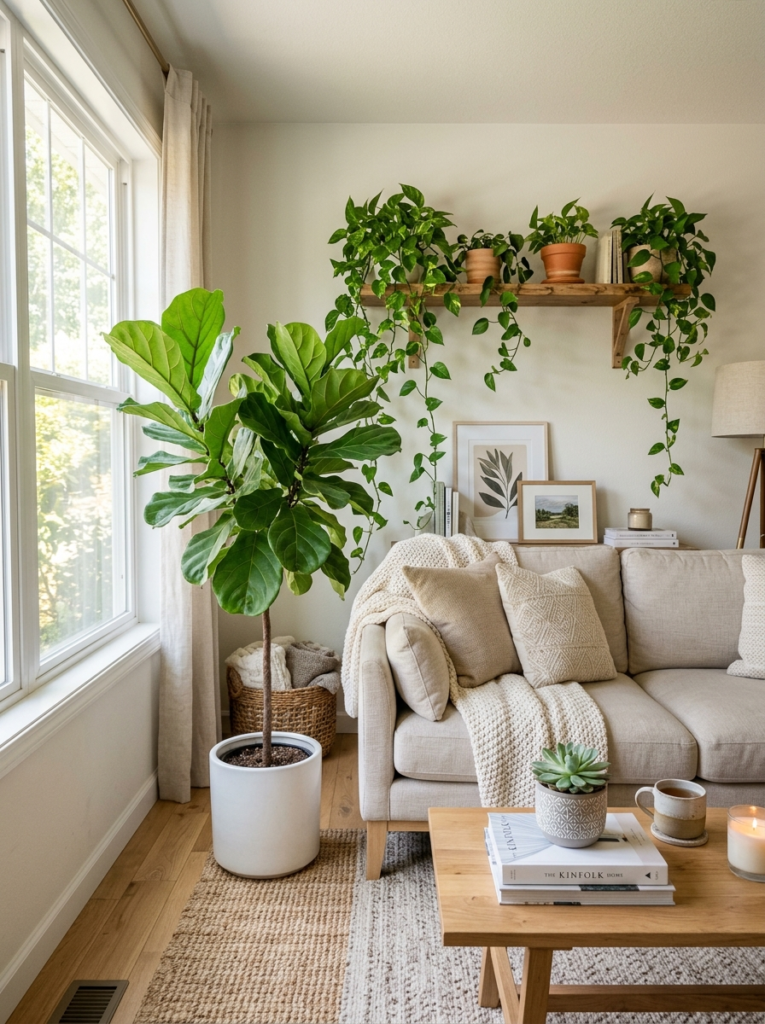
Plants do something to a room that is genuinely difficult to replicate with any other element. They add life — actual, breathing, growing life — and a room with plants feels inhabited in a way that no amount of throw pillows or candles can fully substitute for.
The most impactful way to use plants in a living room is to go large. One big plant — a fiddle leaf fig, a rubber tree, a bird of paradise, a monstera — in a simple pot, placed where it gets the light it needs, transforms a corner from empty to alive. It draws the eye upward, adds organic movement, and softens the hard geometric edges that furniture creates. The pot matters too: white ceramic, terracotta, or woven rattan all work beautifully. Stay away from decorative pots that compete with the plant itself.
Layer in smaller plants at different heights — a trailing pothos on a shelf, spilling down organically; a small succulent or two on the coffee table; a little plant on the window ledge. The variety of scale is what makes it feel abundant rather than intentional.
If you’re worried about maintenance, pothos and snake plants will survive almost anything. Peace lilies and ZZ plants thrive in lower light. A bird of paradise needs a bright spot but grows slowly and dramatically. Pick one large plant you’ll actually keep alive, and the rest is just layering.
The room you want — warm, textured, alive — is already within reach. Plants are usually the last piece that makes it feel complete.
Start Small, Feel the Difference Fast
You don’t need to do all ten of these at once — and honestly, I’d encourage you not to. Pick the two or three that feel most achievable right now and actually do them this week. Buy the throw blanket. Swap your bulbs for warm 2700K ones and dig the floor lamp out of storage. Light the candles you’ve been saving.
The payoff with cozy living room ideas is immediate in a way that bigger renovation projects aren’t. You don’t have to wait for a contractor or save for new furniture. You just have to make the room feel like it’s for you — and that starts with deciding, very deliberately, that it is.
My current project: I’ve finally committed to painting the wall behind my sofa a deep forest green. I’ve been staring at a paint chip taped to the wall for three weeks. This weekend, I’m actually doing it.
— Emily