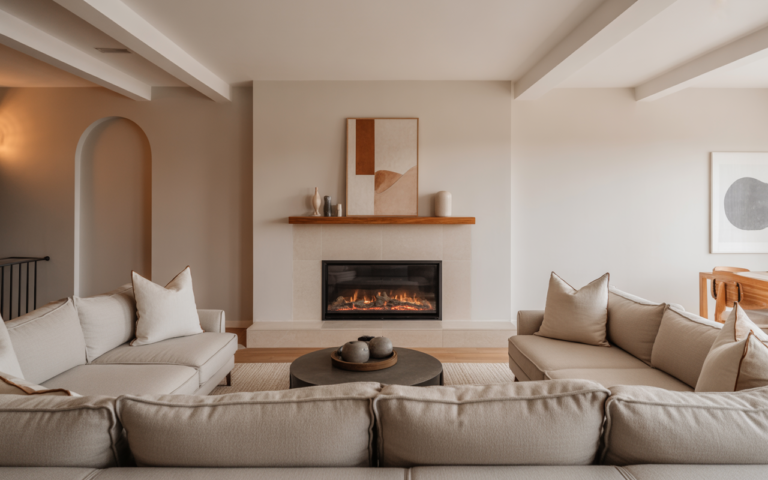
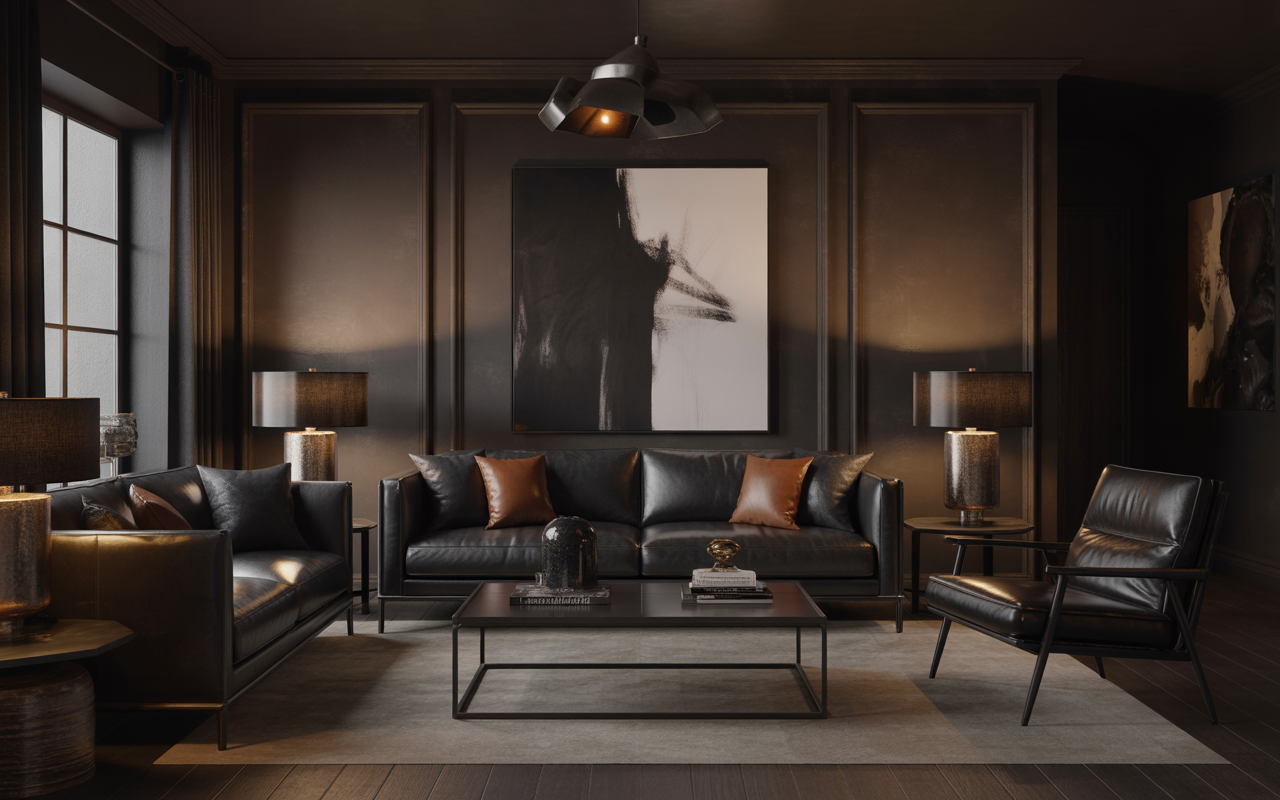
15 Masculine Living Room Ideas That Look Like Someone Actually Lives There
The living rooms I’ve helped men style over the years have almost all started from the same place: a sofa that’s fine, a TV on the wall, and a whole lot of empty space that didn’t know what it was supposed to be. Not bad. Not uncomfortable. Just unfinished — like someone furnished the room and then stopped before the room had a point of view.
A masculine living room isn’t about dark walls and leather furniture as a genre. It’s about making design decisions with conviction. Choosing materials for what they actually feel like. Building a room that has a clear aesthetic rather than a collection of things that are individually acceptable. This is the version of that — fifteen ideas that work in real rooms, styled with real intention.
Dark Wood — Warm, Not Heavy
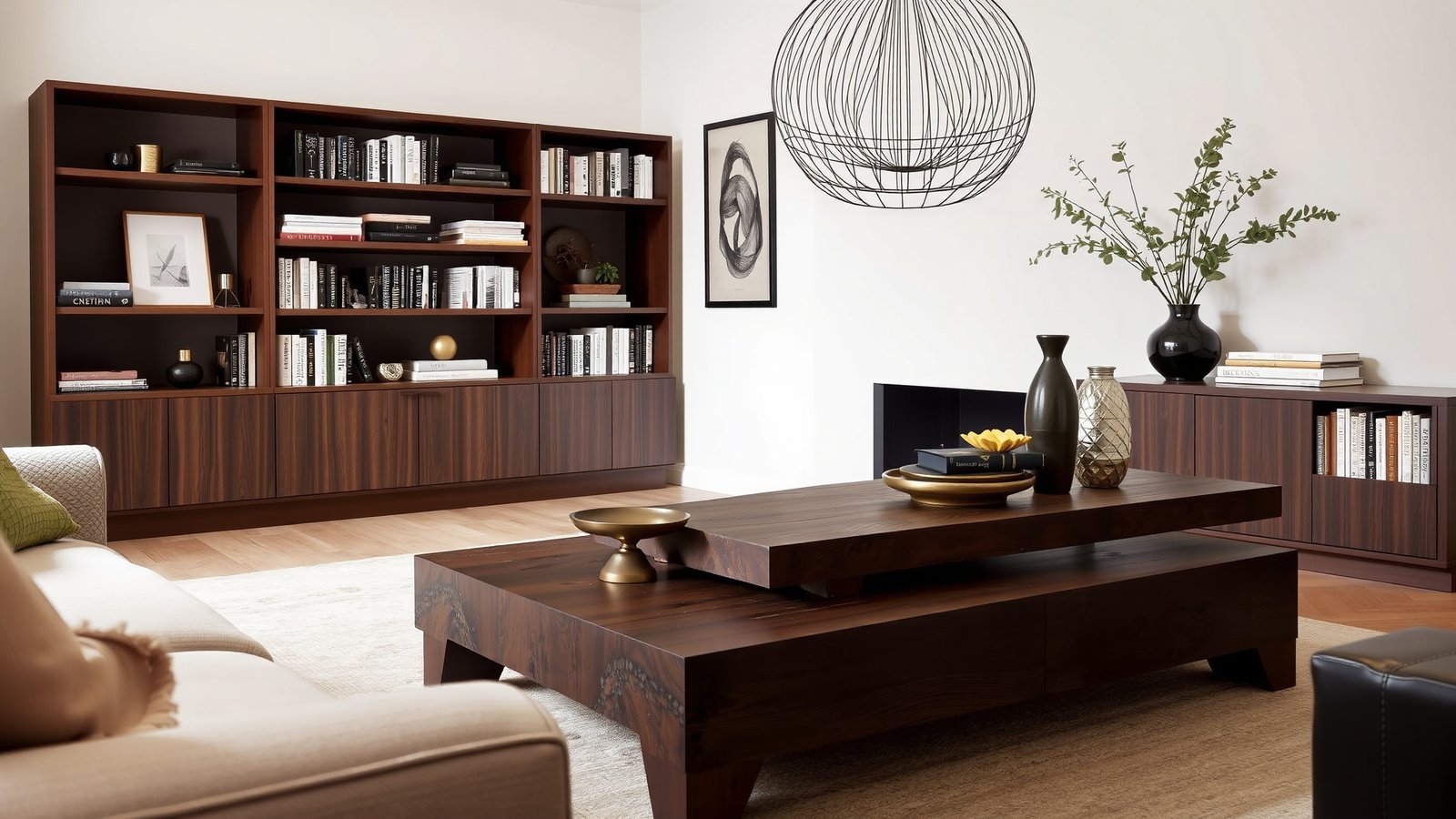
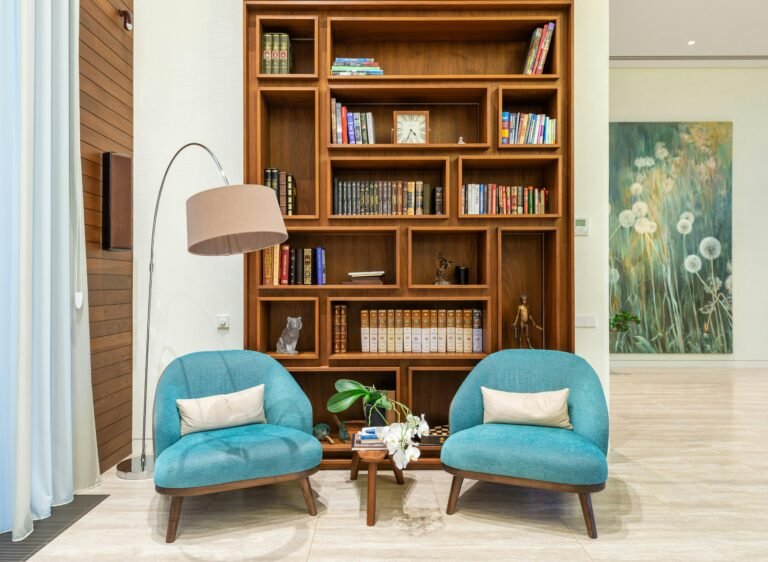
Dark wood in a living room does something that no painted furniture can replicate: it adds warmth through material rather than color. The grain, the depth of tone, the way lamplight moves across a walnut surface — these are qualities that read as genuinely sophisticated without trying.
The dark wood pieces that do the most work in a living room: the coffee table and the shelving. A solid walnut or dark oak coffee table is the room’s center of gravity — everything in the seating area relates to it. It doesn’t need to be expensive to look right. A basic walnut-stained solid wood coffee table from a furniture store or IKEA’s LISTERBY ($149) hits the right tone at an accessible price.
The mix I’d avoid: combining two different dark wood tones without intention. A mahogany coffee table next to a dark espresso bookcase next to a warm walnut TV unit looks like three different rooms tried to share a space. Pick one wood tone and keep it consistent. Everything else — painted pieces, metal accents, upholstered furniture — can vary. The wood should be a thread that runs through the whole room.
Leather Furniture — The Right Piece, Properly Placed
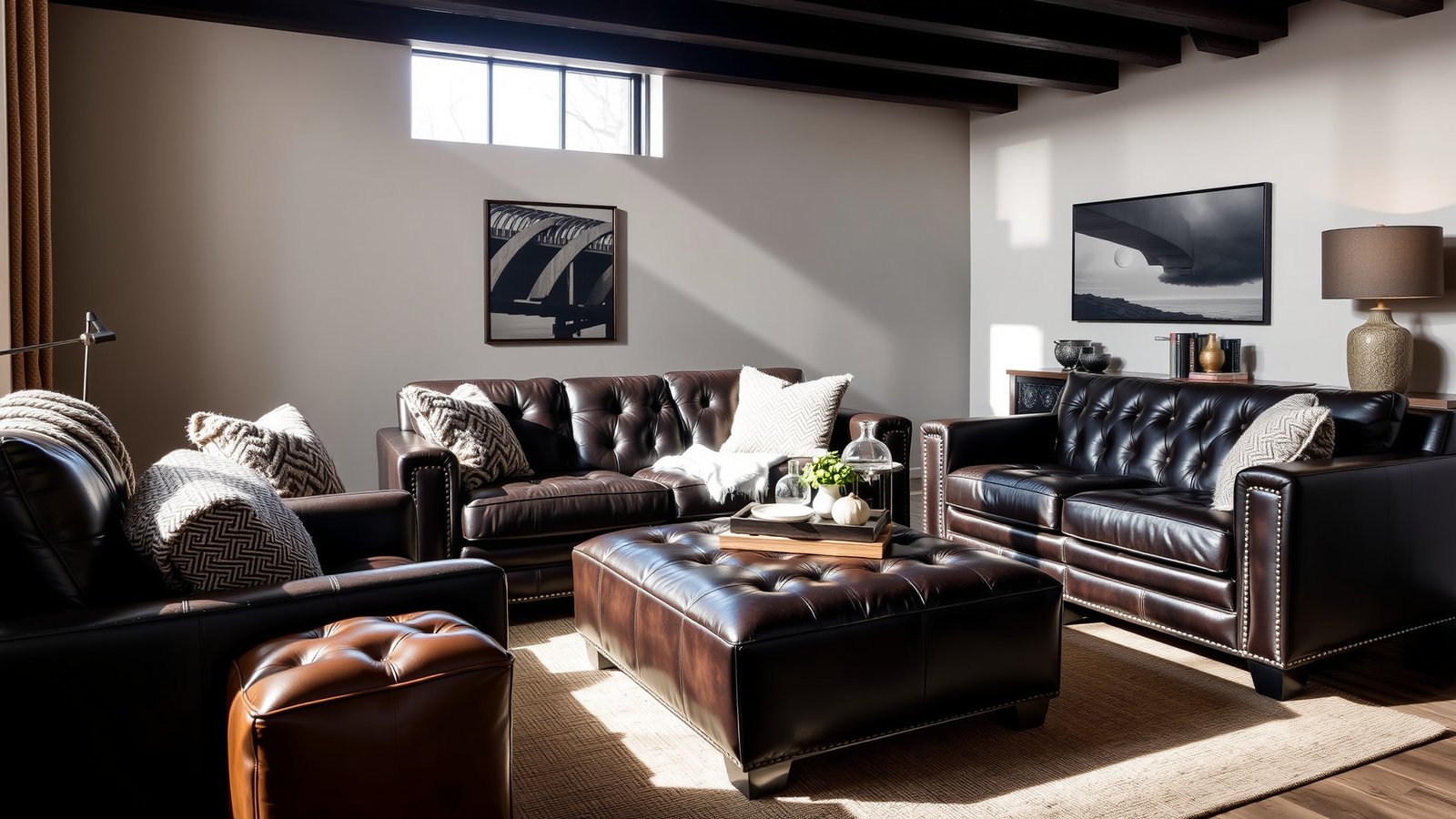
Leather is the material that ages better than any upholstery option available. A good leather sofa develops character over years of use in a way that fabric sofas simply don’t — the slight worn quality of well-used leather is actually an improvement, not a deterioration. That longevity makes leather worth spending on as a living room investment.
The leather colors that work consistently: charcoal (reads contemporary and works with almost any wall color), cognac or saddle tan (warm and versatile, ages beautifully), and oxblood (rich, distinctive, works best in rooms where it can be the statement piece it wants to be). Black leather is the version most people reach for and the version I’d steer away from — it reads cold and corporate in most living rooms and shows every mark.
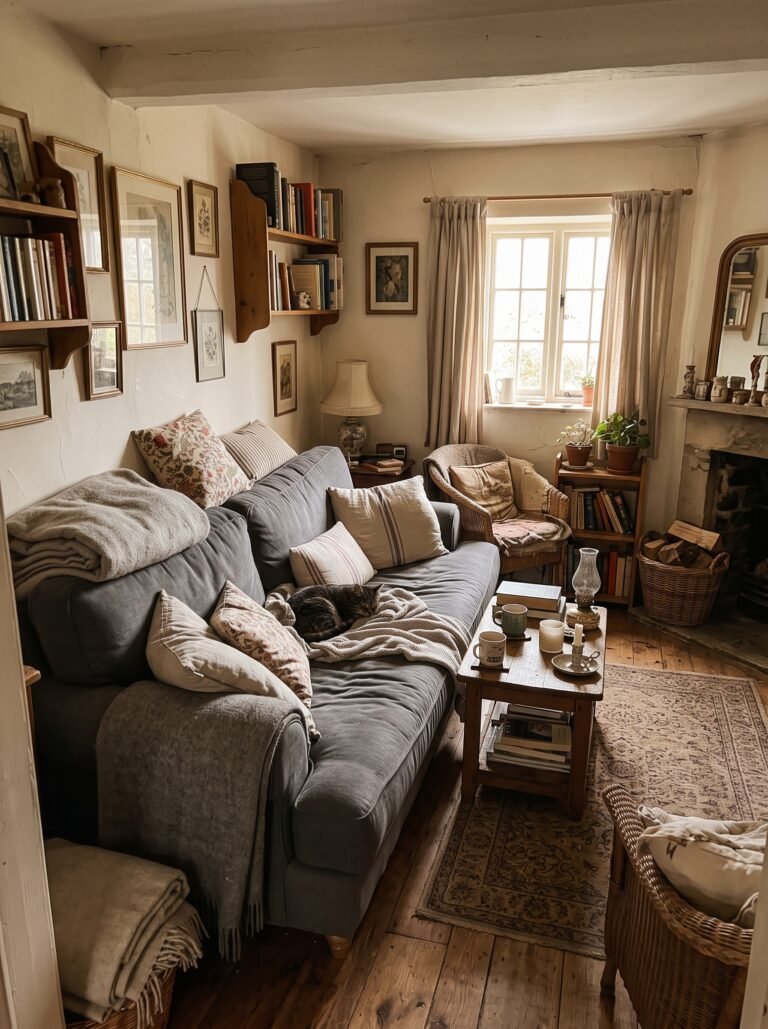
The softening that makes leather work in a full living room: textiles alongside it. A leather sofa with a chunky knit throw in a warm neutral, two linen throw pillows, and a jute rug underneath doesn’t feel like a waiting room. It feels like a room where someone lives. The leather provides the backbone — the textiles make it somewhere you’d actually want to sit for three hours.
Bold Artwork — Specific, Sized Correctly, One or Two Pieces
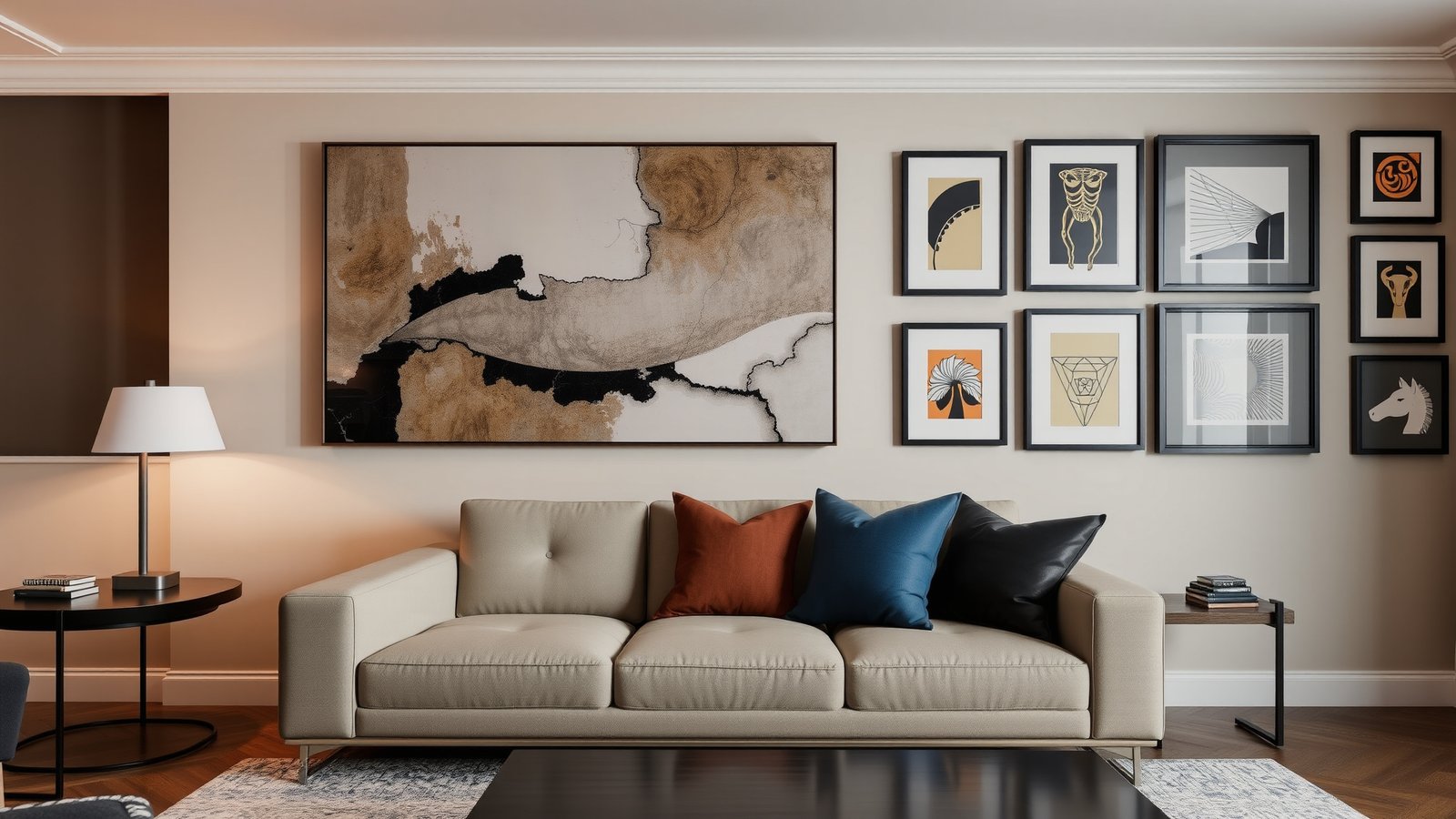
Bold artwork in a living room is the element most people get wrong in two specific ways: they buy pieces that are too small for the wall they’re hung on, and they buy pieces they think they should like rather than pieces they actually respond to.
The size issue first: above a sofa, the artwork should be roughly two-thirds the width of the sofa. A 72-inch sofa needs artwork that runs 45–50 inches wide — a single large piece or a grouping that fills that visual width. Art that’s too small above a sofa looks like a lost stamp, regardless of how much it cost.
The personal taste issue: a living room with bold artwork that the person who lives there genuinely responds to reads completely differently from a room where someone bought “art for a masculine room.” The difference is visible. It’s felt. Shop for art on Artfinder or Saatchi Art for original pieces at accessible price points ($50–300 for something genuine), or print large-format black and white photographs at a print shop ($15–25 for a 20×30 print) and frame them in simple black frames. Both approaches produce something real rather than something generic.
Industrial Elements — Used Selectively, Not Wholesale
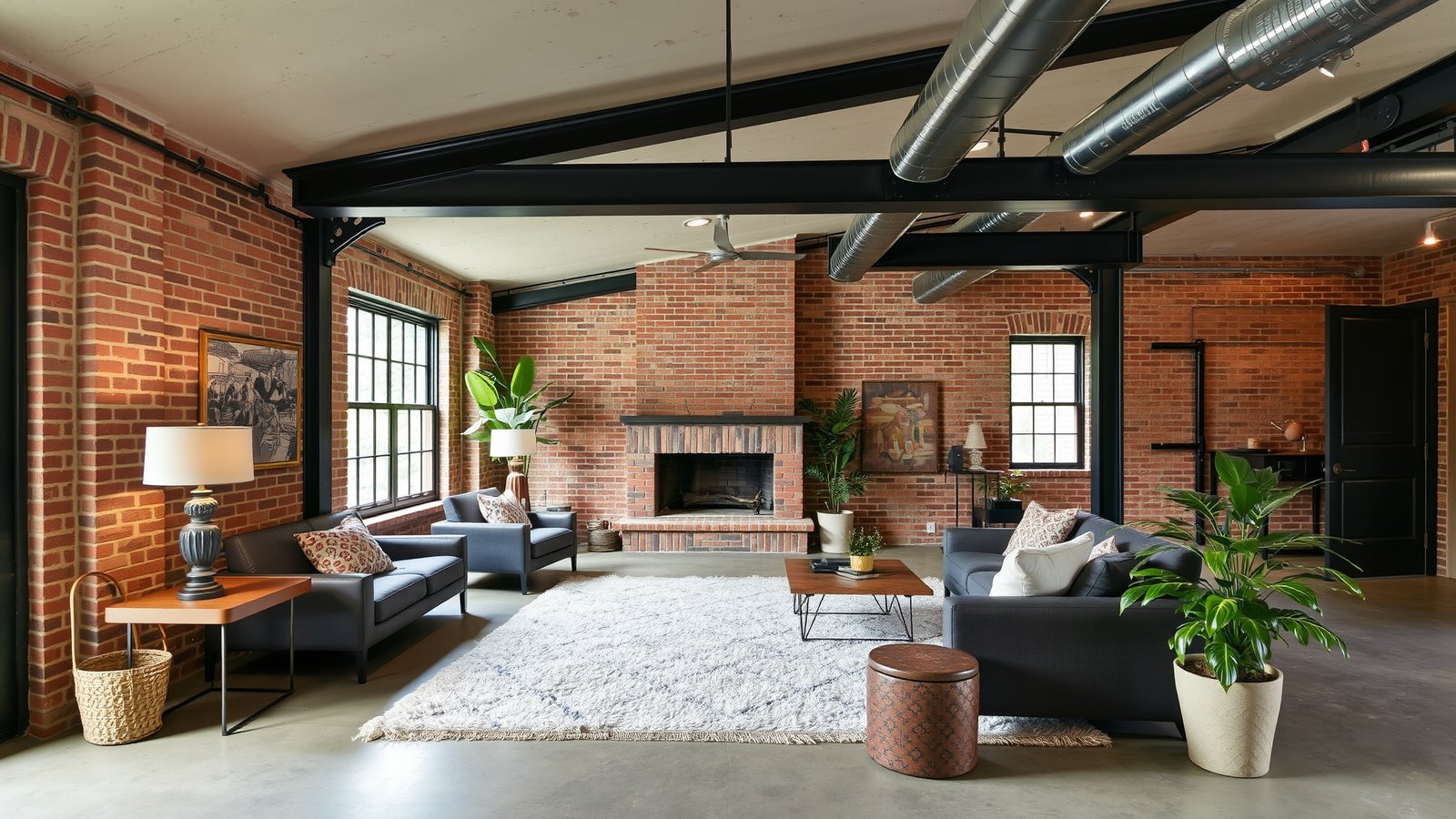
Industrial style works in a living room when the industrial elements are specific and the rest of the room is warmer and softer than you’d expect from the materials. Exposed brick and warm leather. Metal shelving brackets with solid wood shelves. An iron pendant light over a plush sofa. The contrast is the point — industrial materials against soft furnishings creates a tension that’s genuinely interesting.
The industrial living room that doesn’t work is the one where every material is hard: concrete floor, metal shelving, exposed ductwork, wire-frame furniture. That’s a commercial space, not a living room. The warmth has to come from somewhere — a substantial rug, upholstered seating in a warm tone, proper warm lighting.
The single industrial element that makes the most difference in a standard living room: lighting. A matte black metal pendant light or an exposed-bulb floor lamp with a metal frame immediately shifts the room’s aesthetic register without requiring any structural change. IKEA’s HEKTAR floor lamp ($80) and RANARP pendant ($45) both read genuinely industrial at a price that makes them easy to try.
Statement Lighting — Position and Warmth Before Style
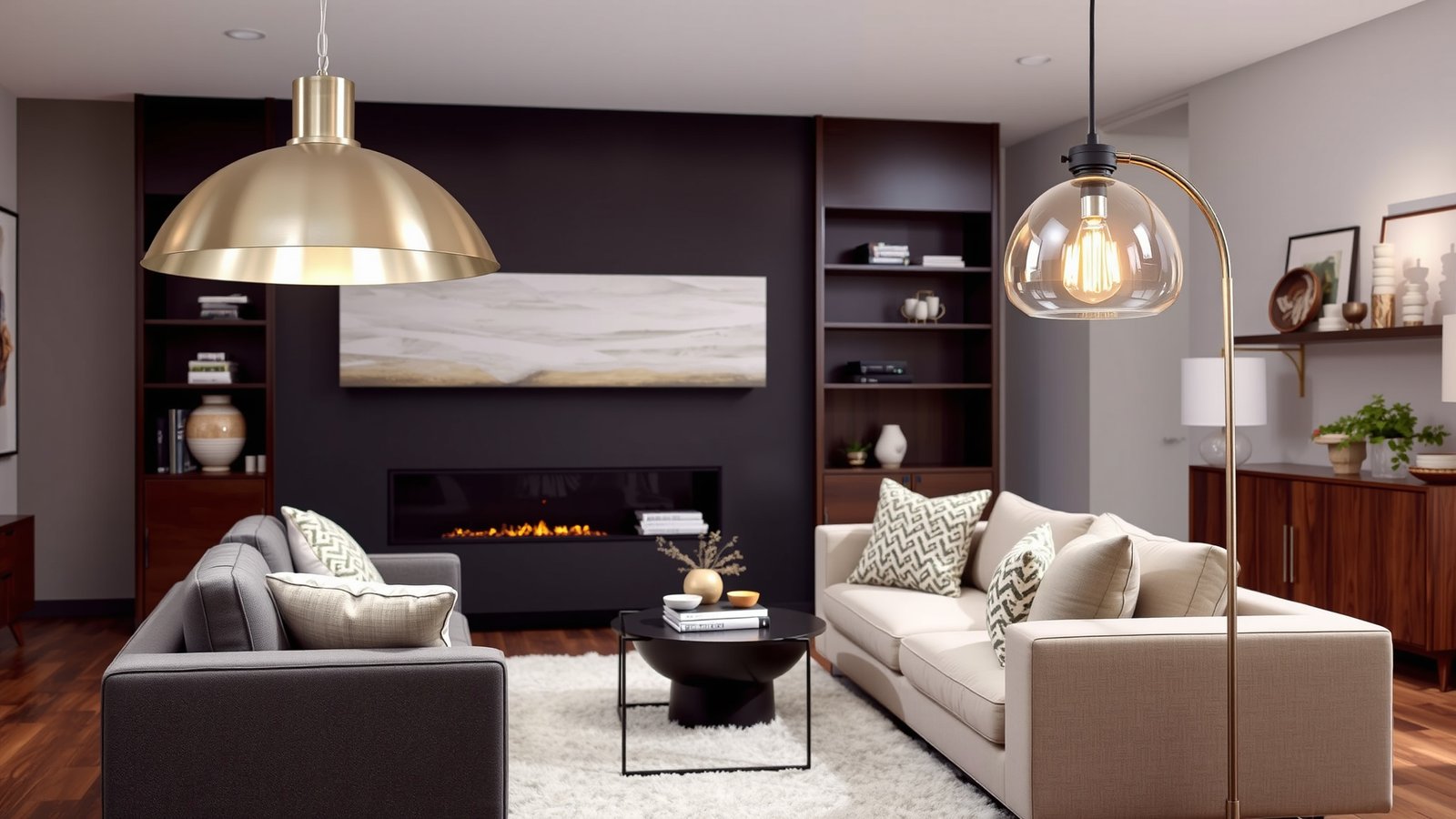
Statement lighting in a living room should be chosen for position and light quality first, visual impact second. A spectacular floor lamp that produces harsh cool light in the wrong corner is worse than a simple lamp in the right position with the right bulb. Get the basics right first.
The basics: at least three light sources in any living room, positioned at different heights. A floor lamp beside the sofa for reading and ambient fill. A table lamp on a side table or console for warmth at eye level. Overhead light used sparingly if at all in the evening — overhead only creates flat, harsh light that makes any room feel like it’s in a doctor’s office.
Once the position and warmth are sorted, the fixture style: matte black is the most versatile finish for a masculine living room — works with warm wood, leather, textiles, industrial elements, and clean contemporary styling. Brushed brass reads warmer and more elevated. Satin nickel is the cooler, more contemporary option. The rule: pick one metal finish and use it consistently across all the hardware in the room. Mixing four different metal finishes creates visual noise that undermines every good choice around it.
Rich Textiles — More Than You Think You Need
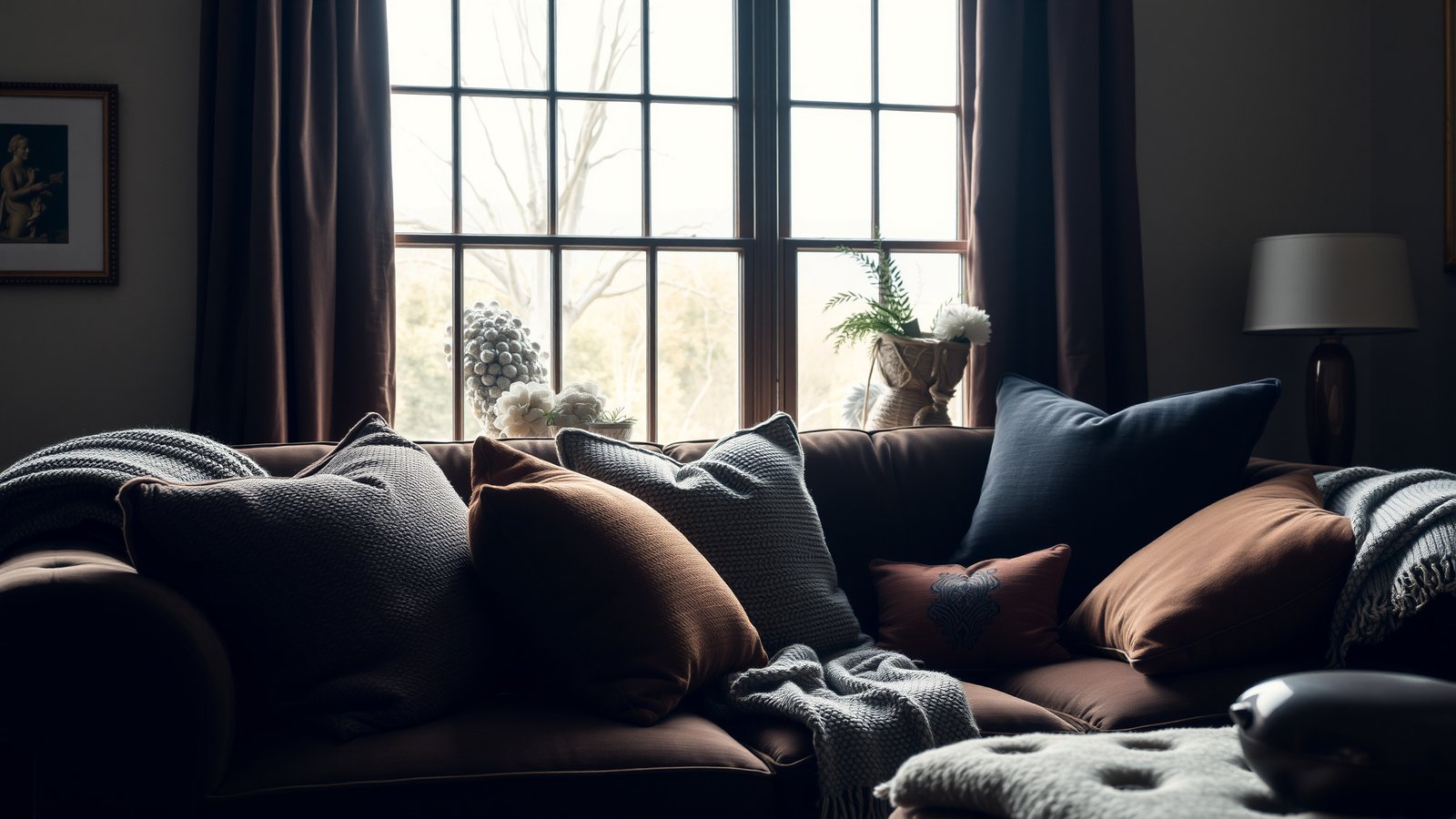
The living rooms that feel most genuinely comfortable and most genuinely designed have more textile layering than you’d notice at first glance. The sofa throw that’s draped rather than folded precisely. The rug that extends beyond the coffee table. The pair of velvet pillows that have actual weight to them. These are the details that make a room feel inhabited rather than displayed.
For a masculine living room specifically: texture over pattern. A chunky wool throw in charcoal or oatmeal, velvet cushions in deep green or burgundy, a jute or wool rug with visible texture. The textiles provide the softness and warmth that dark wood and leather can’t — they’re the counterbalance that makes the room somewhere you’d want to sit for hours rather than something you’d admire from the doorway.
The specific textile combination I come back to: a large jute or wool rug in a warm neutral ($80–150 for an 8×10 at most discount furniture stores), a leather sofa with two to three linen or velvet throw pillows in complementary tones, and a single substantial throw blanket draped over one arm. That’s it. The layering is in the materials themselves, not in the volume of objects.
Monochromatic Palette — Texture Is What Keeps It Interesting
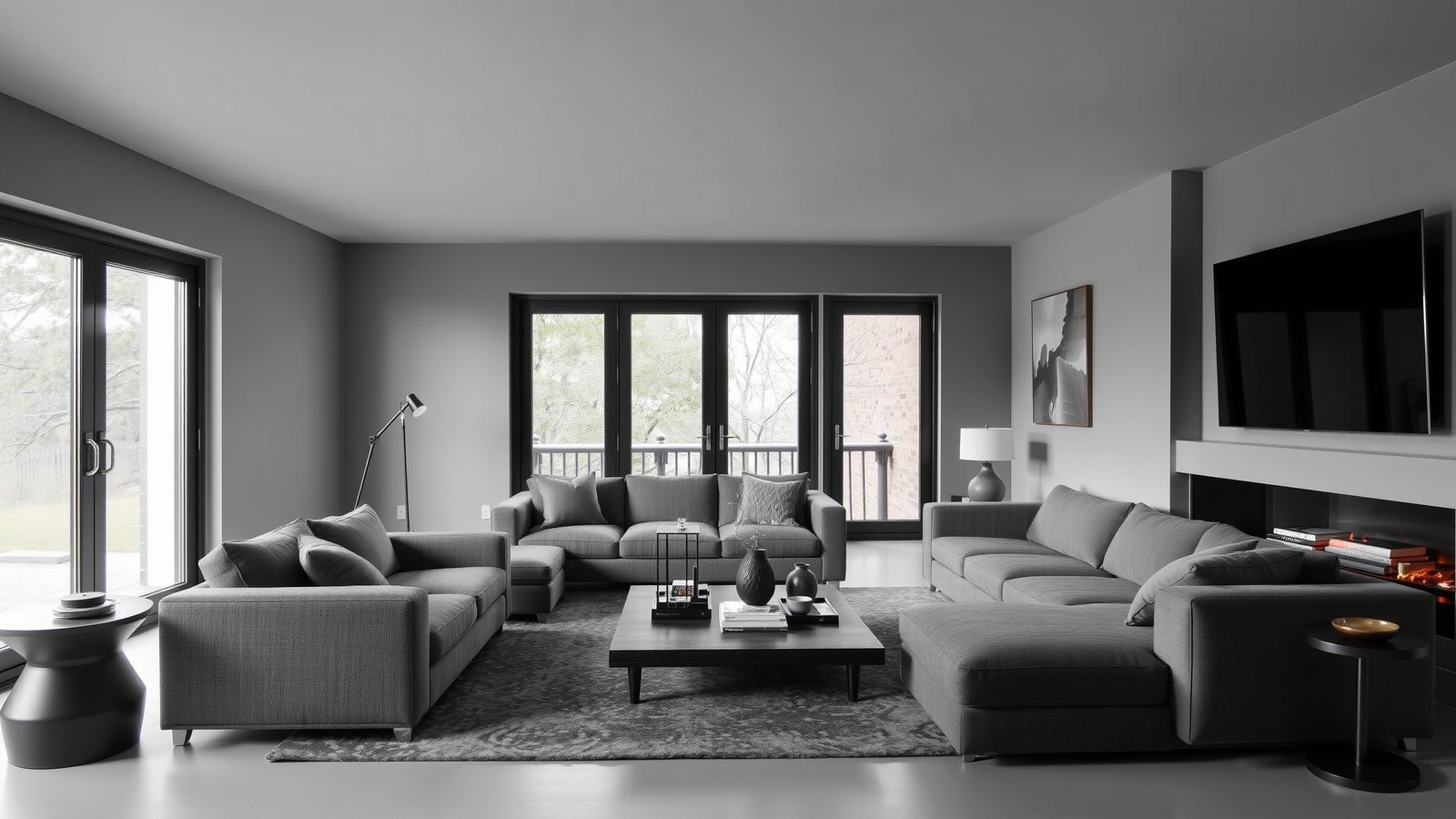
A monochromatic living room — one color in multiple shades and textures throughout — is the approach that reads most effortlessly sophisticated when done well. It requires less styling instinct than a multi-color room because the editing is built in: everything is in the same family, so nothing clashes. The challenge is keeping it from looking flat.
Texture is what keeps a monochromatic room alive. Different shades of charcoal in velvet, linen, matte paint, glossy ceramic, rough concrete, smooth leather — each material reads the color differently and the eye travels around the room reading those differences. That variation is what keeps it from looking like an underwhelming gray box.
The starting point for a monochromatic masculine living room: decide whether you’re going warm (the beige-caramel-warm brown family works beautifully and reads less expected than gray) or cool (the charcoal-navy-slate direction). Then pick five or six materials in that family and let the texture carry the room. More on how specific shades within the warm neutral family are working in 2026 in the 2026 paint color trends guide.
Open Shelving — Edit Ruthlessly, Style With Purpose
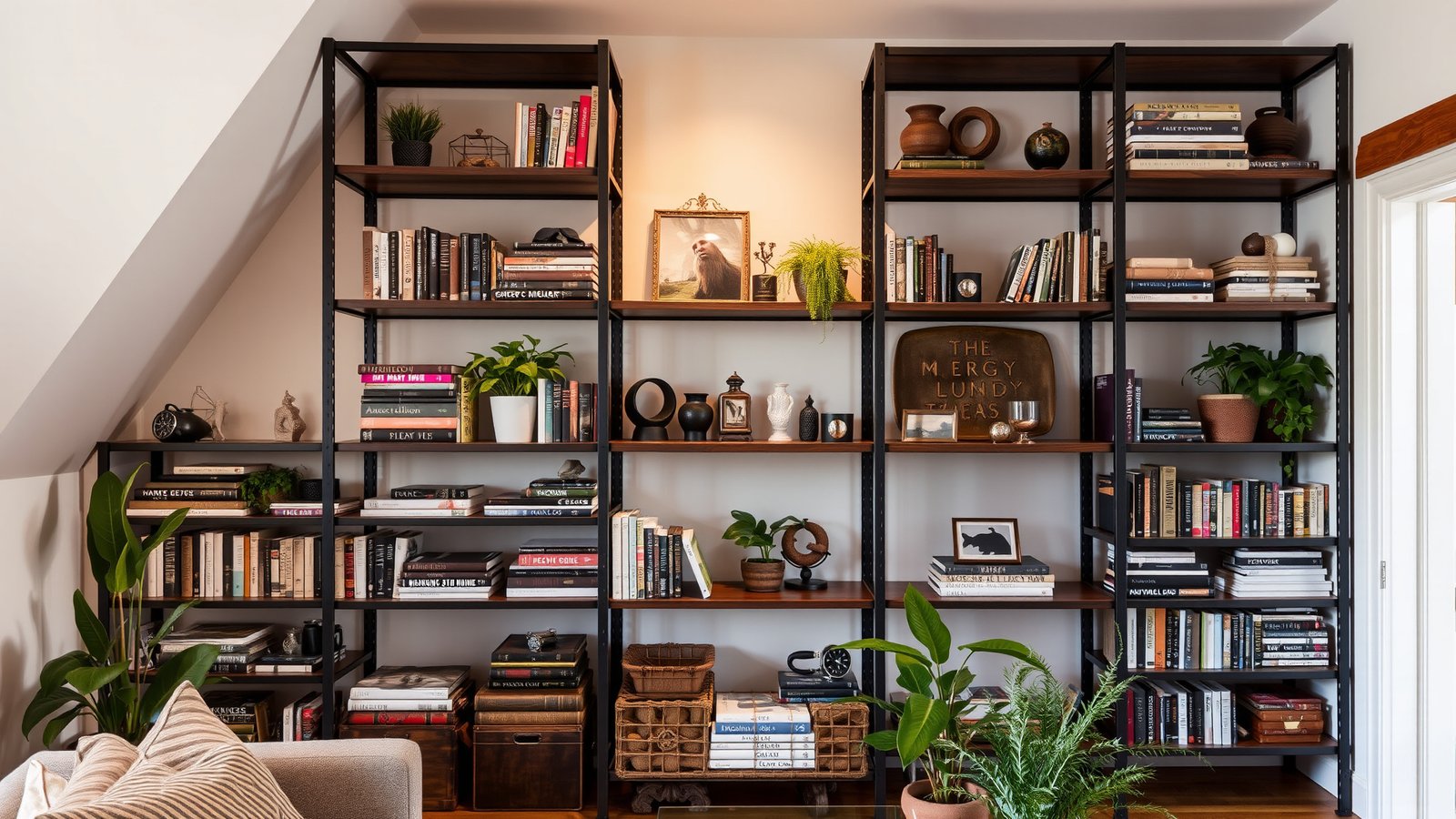
Open shelving in a living room is the element that reveals more about the person who lives there than anything else in the room — and that’s exactly why it tends to go wrong. It accumulates rather than getting edited. Things land on shelves and stay there because removing them would require a decision. Six months later the shelves look like a storage unit rather than a considered display.
The edit rule that works: for every shelf, one-third of the space should be books (spines facing out, grouped by color or height), one-third should be objects worth looking at (a ceramic piece, a plant, a meaningful object), and one-third should be intentional empty space. That ratio keeps shelves looking curated rather than full.
The shelving hardware and material for a masculine living room: solid metal brackets (matte black, $8–15 per bracket) with solid wood shelves (a 1.5-inch thick pine or oak board from a lumber yard, $20–40 per shelf) creates the right industrial-meets-warm-material quality. Floating shelves from IKEA’s BERGSHULT range ($25–35 per shelf) are a good alternative if you want the clean floating look without the bracket showing.
Textured Walls — One Wall, Done Properly
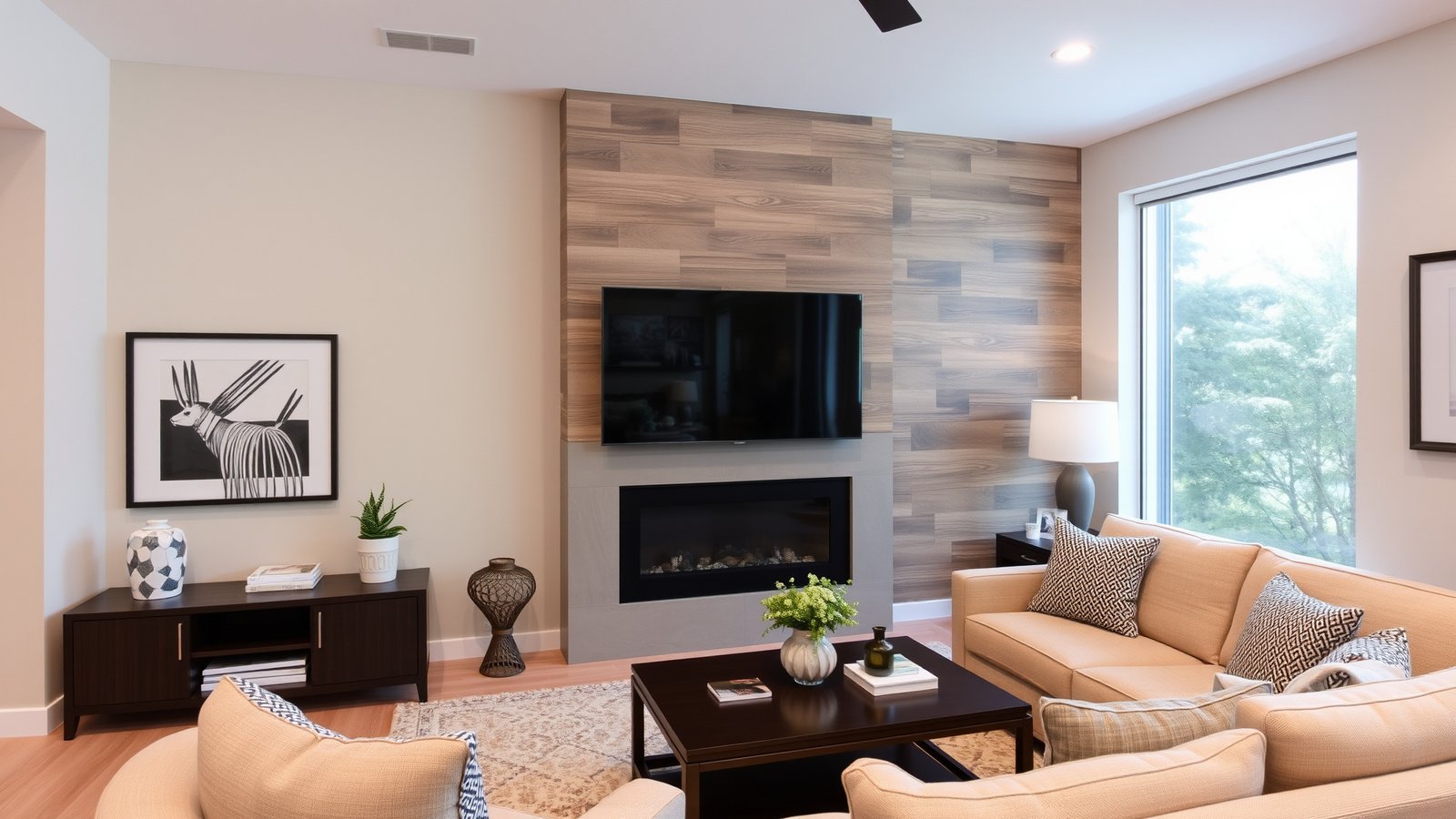
A textured accent wall does more for a masculine living room than an accent color wall because it adds material depth rather than just visual contrast. Wood paneling, limewashed plaster, stone veneer, or a concrete-effect finish — any of these changes how the room feels physically, not just visually.
The version most accessible for renters and DIY-capable homeowners: limewash paint on one wall. Sherwin-Williams and Romabio both make limewash paint that soaks into the wall surface rather than sitting on top of it, preserving the plaster texture and creating the irregular, absorbed-color effect that reads as genuinely old-world rather than paint-applied. A single wall treated this way costs $25–50 in materials and creates an effect that looks like a $2,000 plaster treatment.
For a more structural approach: peel-and-stick wood panel slats (available from multiple suppliers at $30–60 per square meter) can be applied to one wall without professional installation and create genuine shadow lines and depth. They remove cleanly, which makes them appropriate for rentals. A dark walnut tone slat panel behind a sofa is one of the stronger focal-wall statements available in a masculine living room.
Bold Patterns — One at a Time
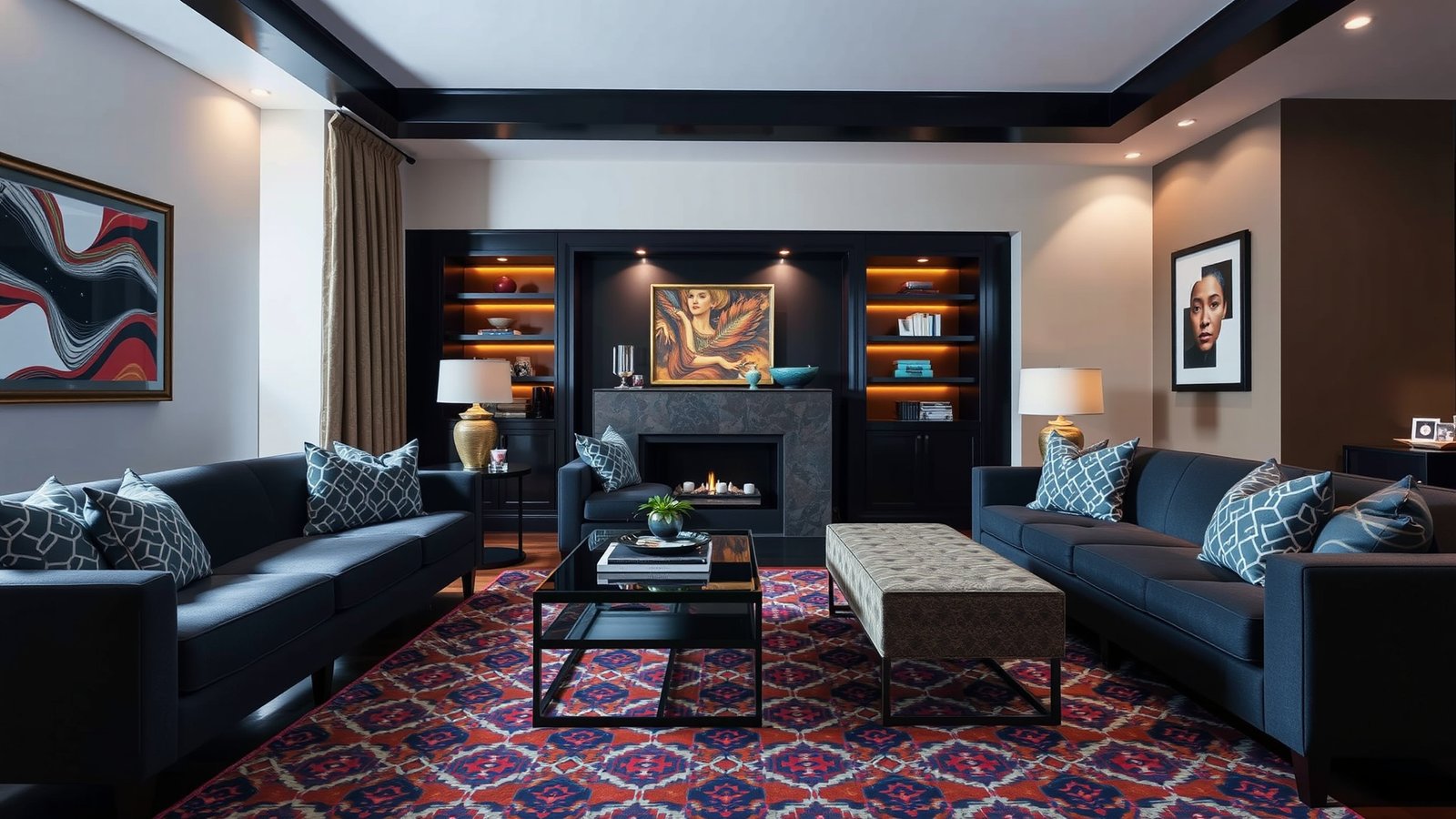
Bold patterns in a living room work by the same principle as statement artwork: one at a time, properly sized for the space, chosen because they genuinely work rather than because they’re bold for the sake of being bold.
The rug is the right place to put bold pattern in a masculine living room. A geometric or abstract rug under the coffee table and seating area anchors the room visually, provides the pattern’s energy, and is surrounded by enough neutral furniture that it can breathe. A bold patterned rug under leather furniture and clean-lined wooden pieces reads sophisticated and considered.
What doesn’t work: bold rug plus bold throw pillows plus bold curtains simultaneously. Pattern needs neutral space around it to read. If the rug has a strong geometric, the pillows should be solid. If the pillows have a strong pattern, the rug should be textured but not patterned. The eye needs somewhere to rest.
Minimalist Approach — Fewer Pieces, Each One Earning Its Place
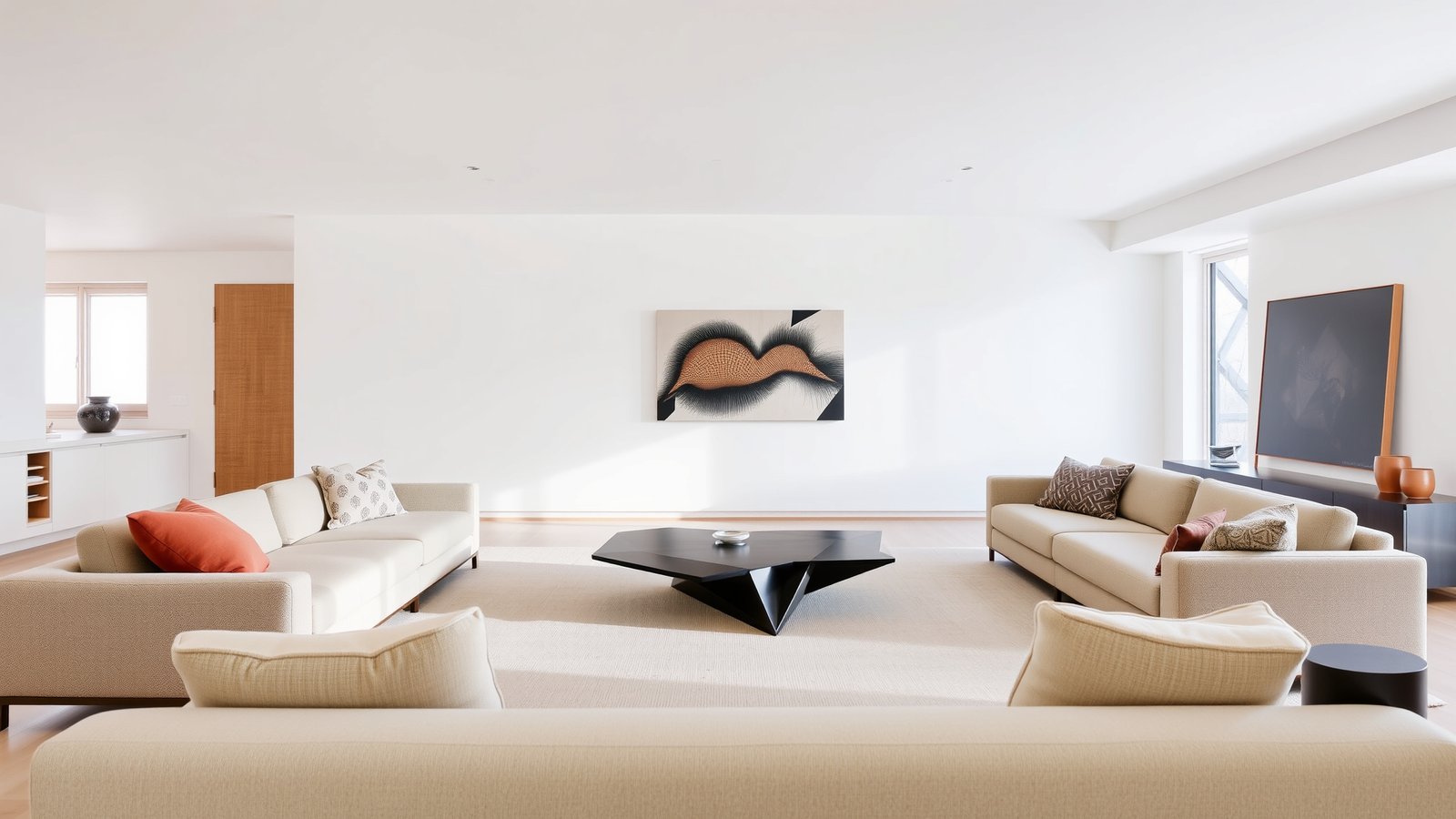
Minimalism in a masculine living room is the direction that produces the rooms that feel most expensive regardless of what was actually spent. A small number of genuinely good pieces in a clean, open space reads as confidence — the design equivalent of not needing to explain yourself.
The minimalist living room fails when it reads as sparse rather than intentional. Sparse means the budget ran out before the room was finished. Intentional means everything present was chosen and everything absent was decided against. The difference is in the quality of what’s there: one genuinely good leather armchair reads as minimalist. One mediocre armchair reads as empty.
For a minimalist masculine living room: start with three anchor pieces — sofa, coffee table, and one accent chair. Style from there. Add the rug, the lighting, and the single piece of art. Stop. Resist the urge to fill gaps with accessories that don’t earn their place. The space itself is part of the design.
Natural Elements — Specific Materials, Not a Theme
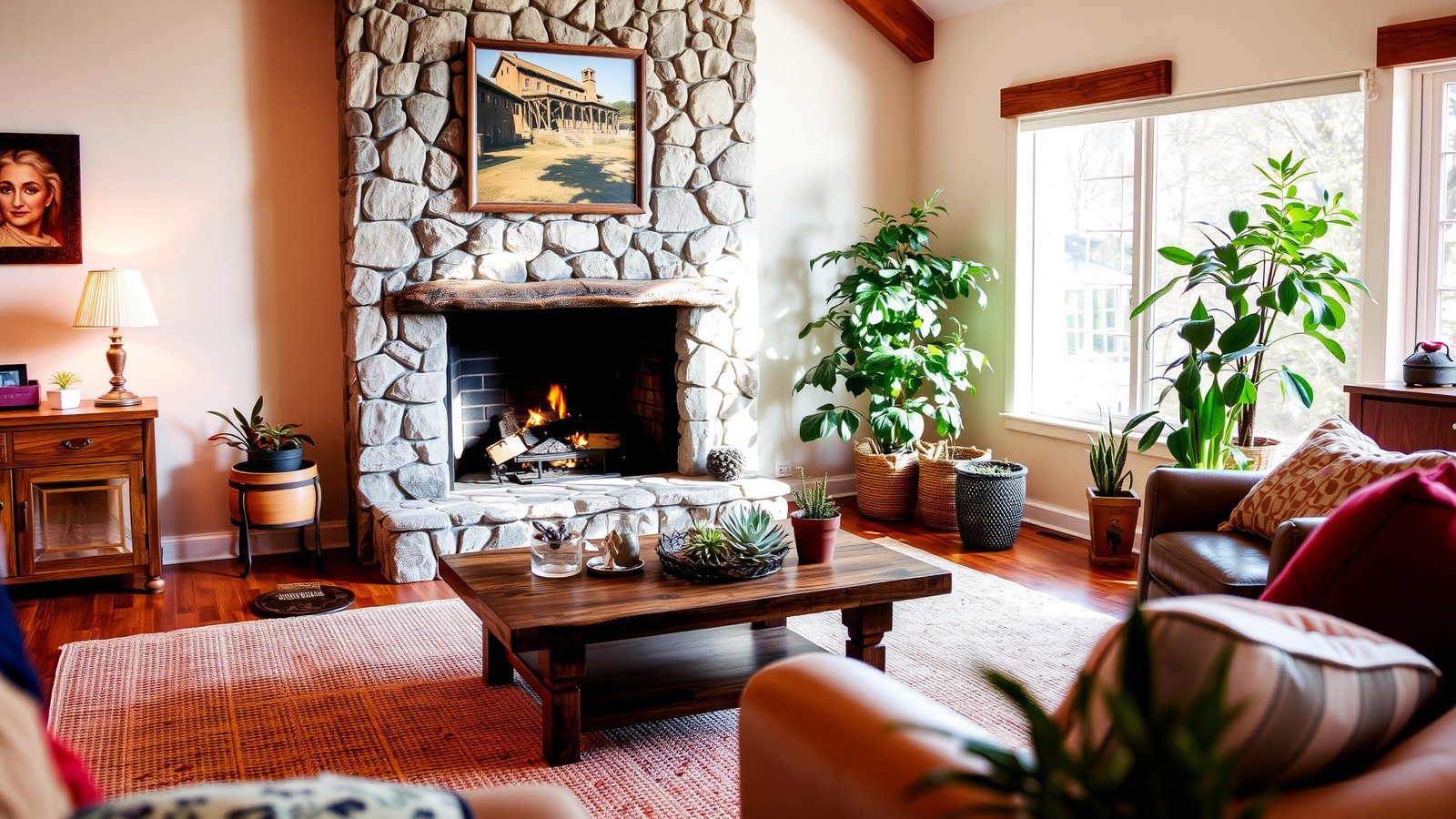
Natural materials in a masculine living room work because they add the quality that manufactured materials can’t provide: the sense that something came from somewhere, that it has a material history. Stone that was quarried. Wood that was milled. Natural fiber woven by hand. These are materials that read as genuine in a way that MDF and polypropylene don’t.
The natural element combination that works consistently: a solid wood coffee table, a stone or ceramic bowl on the shelf (functional as fruit bowl or display piece), a jute or wool rug, and one or two plants in simple ceramic or stone pots. That’s four natural material elements in a room — enough to feel grounded and organic, not enough to feel like a nature showroom.
For the plants specifically in a living room: a large fiddle leaf fig or monstera as a floor plant adds scale that no small plant can match and creates a living architectural element in a corner. They need reasonable light — a spot within eight feet of a window. If your living room doesn’t have that, a snake plant is the alternative that tolerates lower light and still reads as a properly sized indoor plant rather than a desk succulent.
Area Rugs — Size Matters More Than Pattern
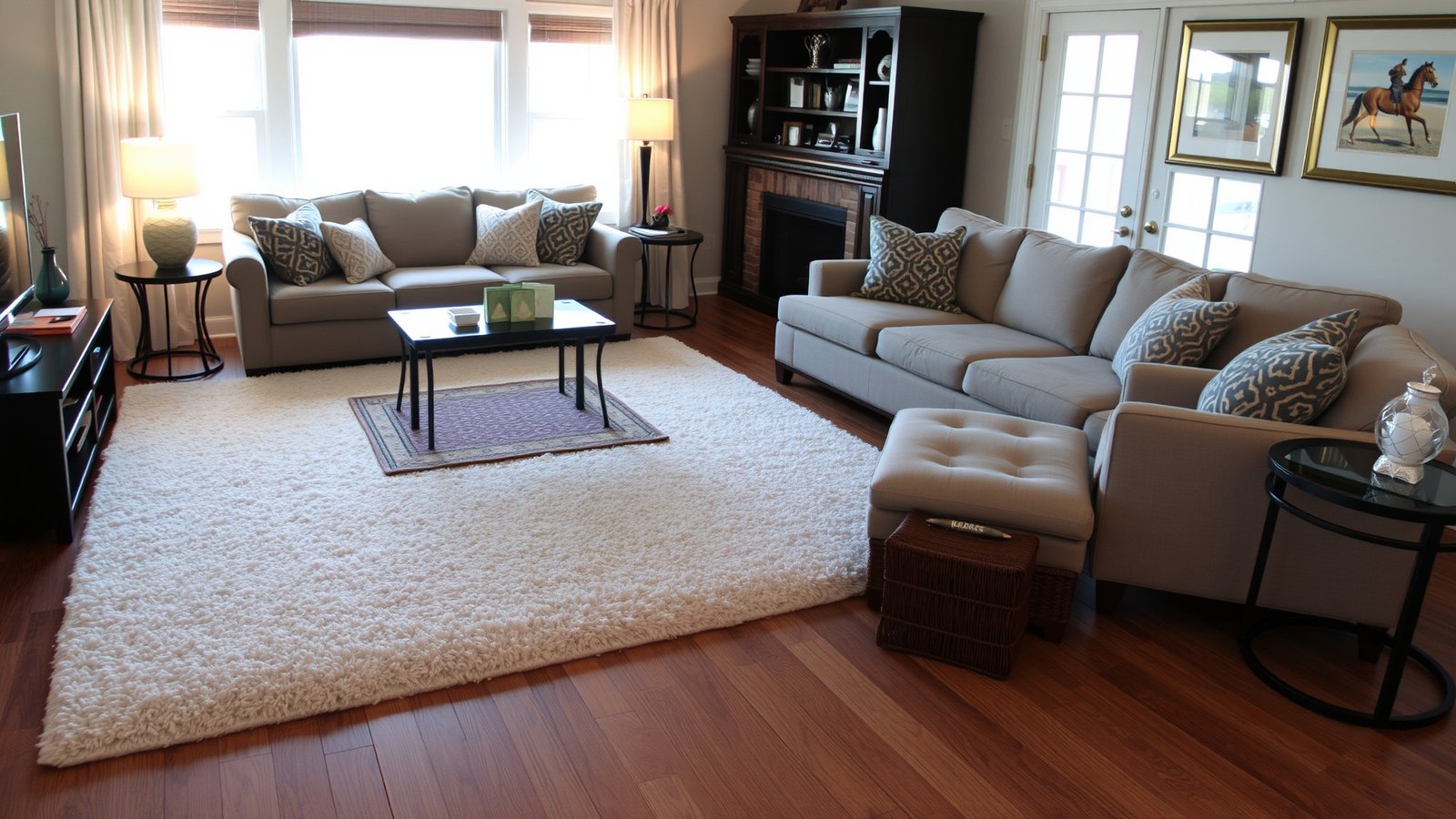
The area rug is where most living rooms fail — not in the pattern or color choice, but in the size. A rug that’s too small makes the seating area look like it’s floating, unanchored, uncertain about where it is in the room. A properly sized rug makes the whole arrangement look designed.
The rule for living room rug sizing: at minimum, the front legs of all seating should sit on the rug. Ideally, all four legs of the sofa and chairs are on the rug, with the rug extending at least 12 inches beyond the furniture on all sides. For most living rooms, that means a 9×12 minimum, and a 10×14 for larger rooms. The rug that looks too big on the shop floor is usually exactly right in the room.
I made the rug sizing mistake once — bought a 6×9 for a living room that needed an 8×10 and convinced myself it would work. The sofa perched on the front edge of the rug, everything looked disconnected, and I ended up returning it and buying the right size two weeks later. Measure the seating arrangement before buying and add 18–24 inches on every exposed side.
Vintage Finds — Character Pieces That Mean Something
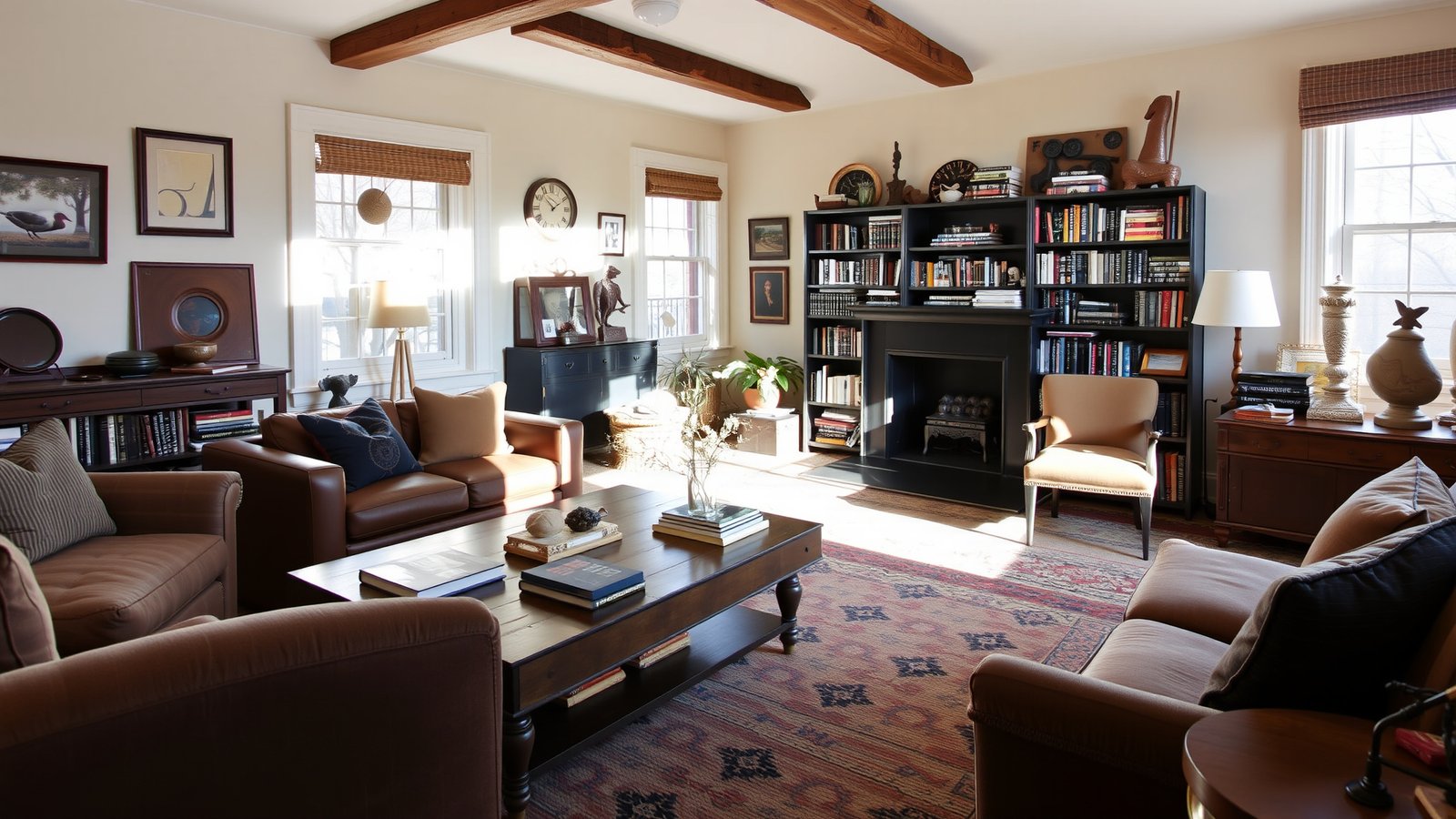
A single vintage piece in a masculine living room — a mid-century armchair in a warm leather, an industrial factory lamp with original patina, a 1960s side table with genuine age on it — changes the room’s quality entirely. It introduces the sense that the room evolved rather than being installed. That quality is difficult to achieve with new furniture and impossible to fake convincingly.
The vintage finds worth seeking in a living room context: anything made from solid materials (solid wood furniture, cast iron lighting, genuine leather) where the age is an improvement rather than a problem. Stay away from upholstered vintage pieces unless you’re confident about the condition — vintage upholstery can harbor smells that don’t resolve with airing.
Facebook Marketplace is consistently the best source for genuinely good vintage furniture at accessible prices. Estate sales for smaller decorative pieces. The specific search terms that surface good results: “mid-century,” “1960s,” “industrial,” “solid wood” — search these as buyer terms rather than looking by category, and you’ll find pieces with real character at a fraction of what a vintage shop would charge.
Personal Touches — Objects With a Story, Arranged With Intent
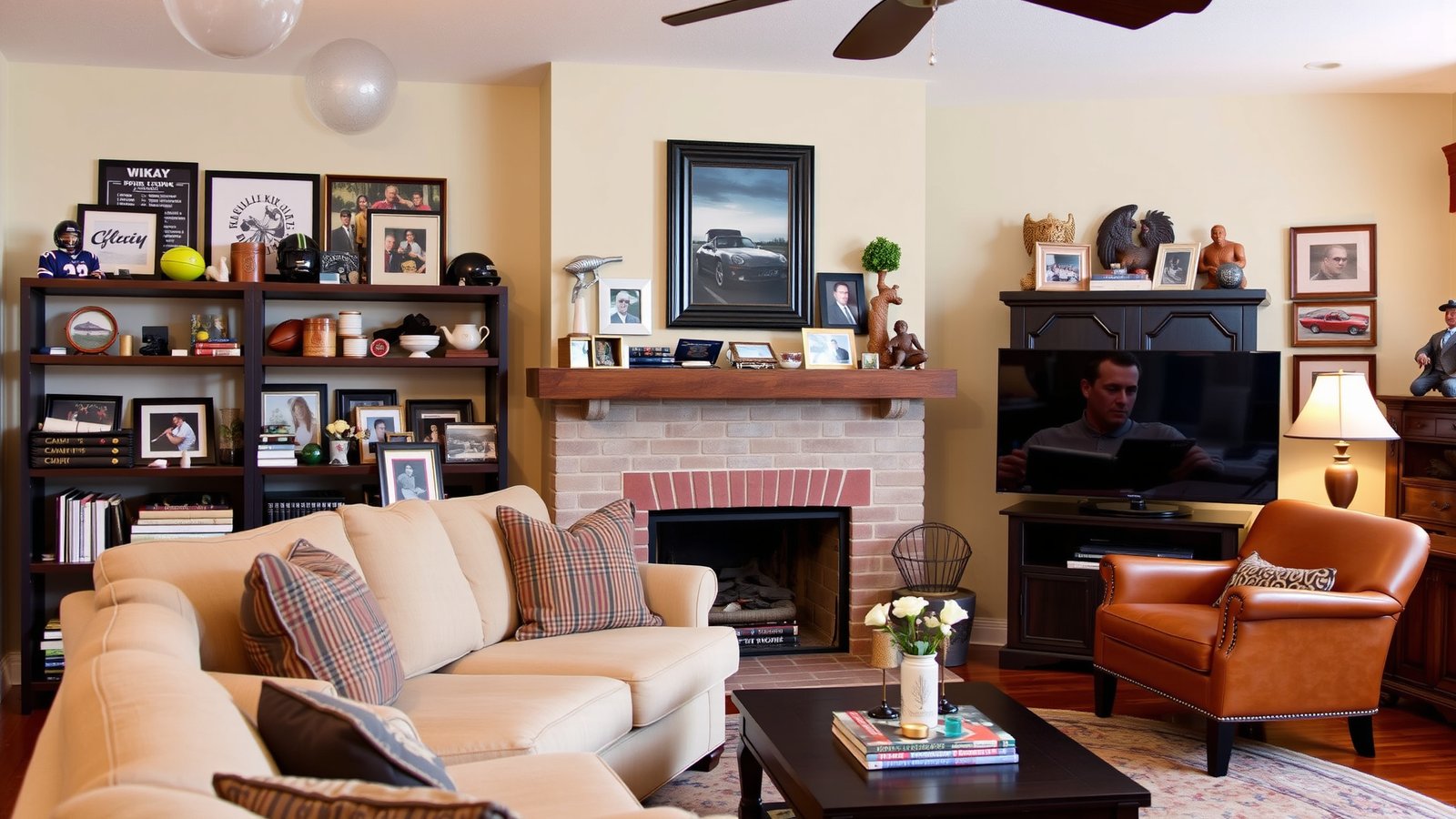
A living room without any personal element looks like a showroom. Beautiful, possibly, but not somewhere that belongs to anyone specific. The personal objects that belong in a masculine living room aren’t necessarily sentimental in a visible way — they’re simply things that reflect a specific person’s specific interests, arranged thoughtfully rather than accumulated randomly.
A shelf with books you’ve actually read, a travel object that means something to you, a piece of equipment from a hobby displayed as it would naturally sit — these things communicate character without requiring any explanation. They’re the reason guests walk into a room and feel like they know something about who lives there before they’ve sat down.
The arrangement matters: objects grouped in odd numbers, at varying heights, with intentional empty space between them. A single meaningful object on a coffee table, properly chosen and properly placed, reads as designed. The same object surrounded by five other things reads as clutter. For more on how personal elements work in specifically masculine spaces, the modern men’s bedroom ideas guide covers the same principle applied room by room.
Questions I Get Asked a Lot About Masculine Living Rooms
What’s the most common mistake in masculine living room design? Underinvesting in the rug and overinvesting in the TV setup. The TV is already the focal point by default — it doesn’t need more attention. The rug is what makes the seating area feel intentional, grounded, and properly designed. A properly sized rug in good quality material transforms the room more than any TV unit or media wall.
Do I need leather furniture to achieve a masculine look? No — leather is one material direction among several. Dark wood furniture with a linen or boucle sofa reads masculine and sophisticated. An industrial metal shelving unit with a warm fabric sofa reads the same. Dark textiles in velvet or wool against a light sofa read the same. “Masculine” in interior design means design confidence and material authenticity — not any specific material category.
How do I make a masculine living room feel comfortable and not cold? Layering. A room that’s styled but cold feels that way because it has the visual elements of design without the tactile warmth of textiles, soft lighting, and organic materials. Add a substantial throw blanket to the sofa, make sure there’s warm lighting at eye level in the evening, put a rug underfoot, and add one plant with scale. Those four additions transform the quality of the room from designed to lived-in.
What’s the best starting point if I’m starting from scratch? The sofa first, because everything else in the seating area relates to it. Choose a sofa in a material you can live with for ten years — leather or a quality textile in a neutral tone. Then choose the rug (sized properly for the sofa). Then the coffee table. Then lighting. The artwork and accessories come last and get edited as the room develops. Starting from the center of the room outward is the approach that produces the most cohesive results.
How much should I spend to get a properly designed masculine living room? The pieces worth spending on: the sofa, the rug, and one statement piece of lighting. These are the elements with the longest life expectancy and the highest visual impact. Everything else — side tables, accessories, artwork — can be sourced at lower price points or found secondhand without it showing in the finished room. A leather sofa ($800–1,500 for something that will last), a good wool or jute rug ($150–300 for a proper size), and a statement floor lamp ($80–150) is the spending priority list.
A Masculine Living Room Is Built on Conviction, Not Category
The rooms that work — the ones that feel genuinely designed rather than assembled from a “masculine living room” checklist — have one thing in common: every decision was made with a clear point of view. The wood tone was chosen deliberately. The sofa was bought because it fit the specific room, not because it was the default option. The art was chosen because the person who lives there actually responds to it.
That’s the work. Not buying the right objects, but making the right decisions about what belongs in the room and what doesn’t. Start with one anchor piece you genuinely love and build outward from there.
My current project: I’m helping a friend completely rethink his living room, which currently has a good sofa, a TV on the wall, and nothing else. We’re starting with the rug and working outward. I’ll share what we land on.
— Emily
What’s the single thing that’s keeping your living room from feeling the way you want it to? Drop it in the comments — I read every one.