15 Corner Fireplace Ideas That Make the Whole Room Worth Walking Into
Corner fireplaces are underestimated. Not because they’re less impressive than a centered fireplace — they can be more impressive — but because most people don’t know what to do with the corner they’re in. The fireplace ends up as a heat source and nothing else, while the rest of the room gets all the styling attention.
I’ve lived with two corner fireplaces. The first one I ignored almost entirely for two years — it was electric, came with the rental, and I thought of it as a piece of furniture rather than a design feature. The second one I finally approached deliberately, and it changed the entire living room. That’s what a well-styled corner fireplace does: it pulls the whole room into focus around a single point.
These fifteen ideas cover every direction you can take a corner fireplace — from a full renovation to a styling refresh that costs almost nothing.
Rustic Stone — When the Fireplace Is the Architecture
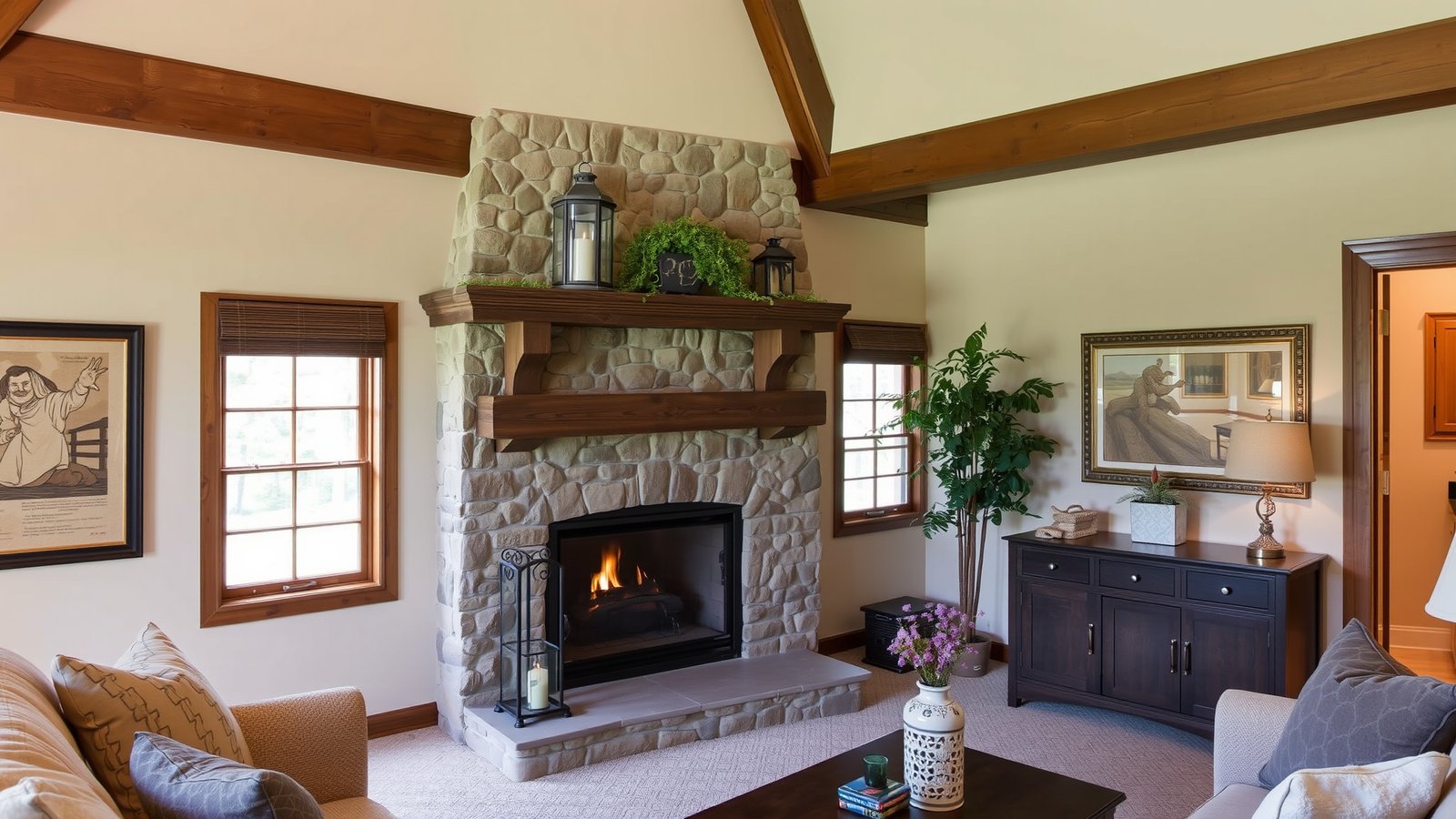
A natural stone corner fireplace is one of those design elements that makes a room feel like it was built around it — because in the best versions, it was. The varying colors and textures of stone create a focal point that no amount of artwork or furniture arrangement can replicate. It draws the eye immediately and holds it.
The key to making a stone fireplace feel deliberate rather than left-over-from-1987: the mantle and the styling on it. A thick solid wood beam as a mantle — reclaimed oak or pine, $80–150 sourced from a salvage yard or Etsy seller — grounds the stone and connects it to the rest of the room. On the mantle: a mix of heights (one tall item, two mid, a few small) in natural materials. A ceramic vase, a small potted plant, a lantern with a candle. No collection of tiny figurines, no seasonal decor that doesn’t earn its place.
Pair the stone fireplace with warm neutral walls — warm white or a creamy off-white rather than a bright or cool white. The stone already has enough color and texture to carry the wall.
Modern Minimalism — Letting the Fire Do Everything
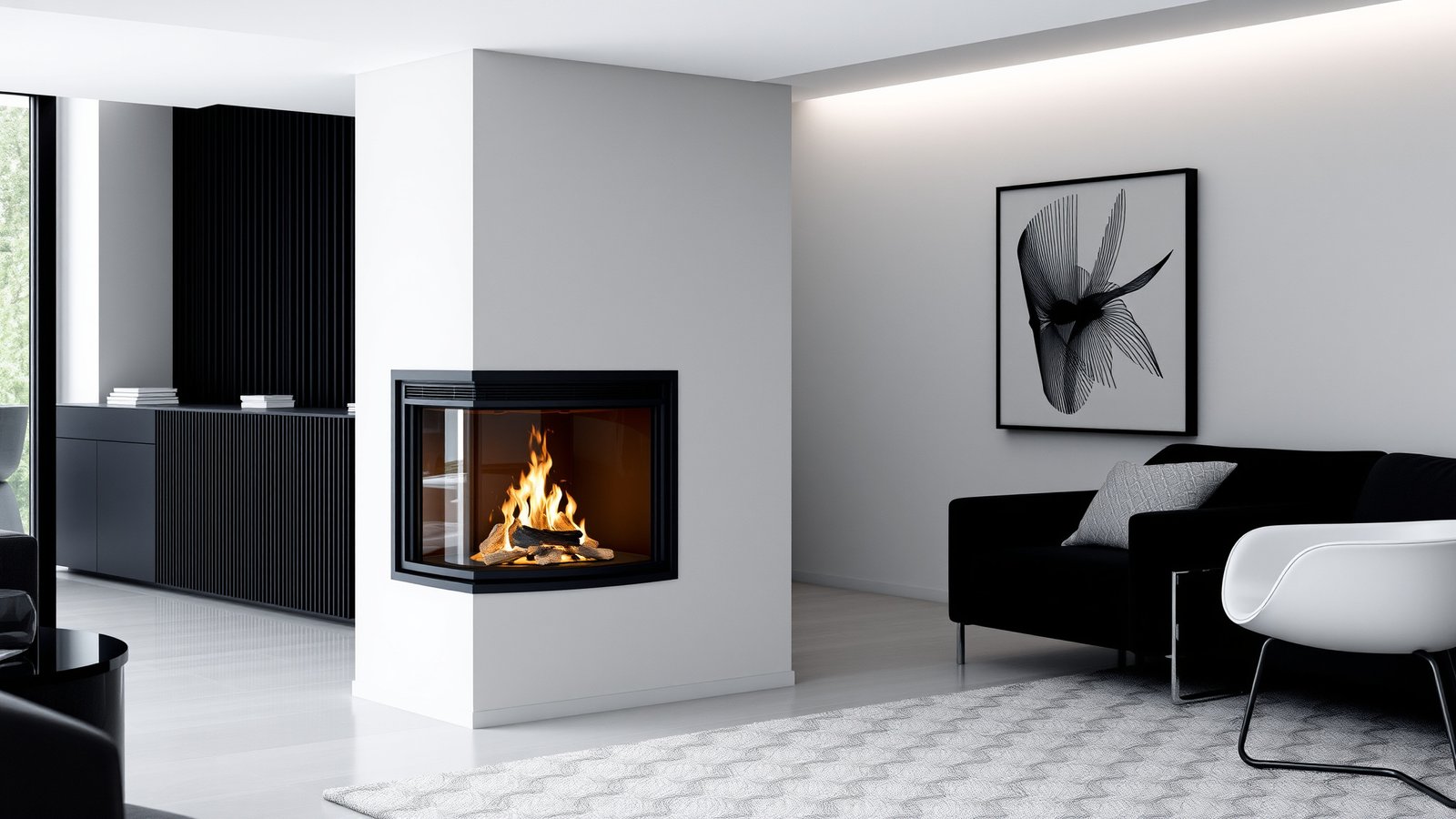
A modern minimalist corner fireplace is almost entirely about what you don’t add. The fireplace itself — typically a clean metal or ceramic surround with a glass front — is the statement. Everything else in the room should step back and let it be.
This is the style that fails when people add too much around it. I tried this approach in a friend’s living room and made the mistake of adding a large textured wall hanging beside the fireplace because the wall felt bare. It competed with the fireplace instead of supporting it. We took it down and the room immediately improved — the fireplace read more clearly as the focal point when nothing else was competing.
For a modern corner fireplace: matte black or dark gray surround against a light wall, with a single low console or media unit beneath if the fireplace sits at height. The wall above stays clear or holds one piece of large-format art — nothing small, nothing cluster-arranged. The room color palette: warm whites, soft grays, charcoal accents. The fire provides all the warmth and movement the room needs.
Vintage Elegance — Character You Can’t Fake
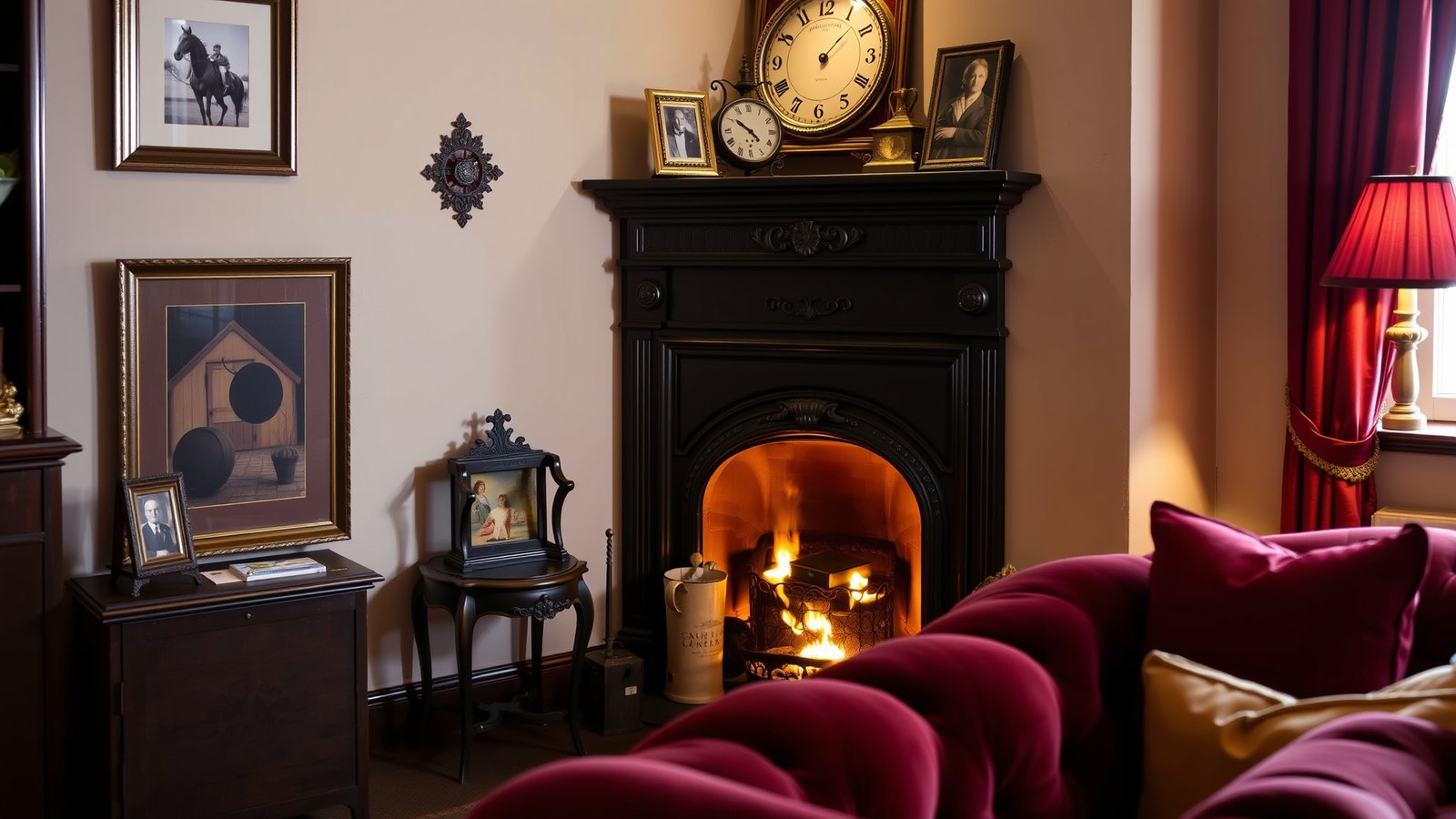
A vintage fireplace surround — cast iron with ornate detailing, antique brass accents, ceramic tiles with a pattern — brings a quality of character to a room that no new piece of furniture can replicate. It’s the difference between a room that looks designed and a room that looks like it has a history.
If your corner fireplace is already vintage or original to an older home, the main job is restoration rather than replacement. Cast iron surrounds can be cleaned and re-blacked with Rust-Oleum High Heat paint in matte black ($8–12 a can), which restores the original look without expensive professional work. Ceramic tile surrounds that are dated in color can be repainted with specialist tile paint ($15–25) for a complete transformation.
For the mantle styling on a vintage fireplace: resist the urge to go matching and coordinated. Vintage fireplaces look best with things that look like they arrived at different times — an old mantle clock, a framed mirror with a worn gilded frame, a ceramic piece you found at an estate sale. It should look collected, not styled.
Sleek Black Frame — The Statement That Works in Almost Any Room
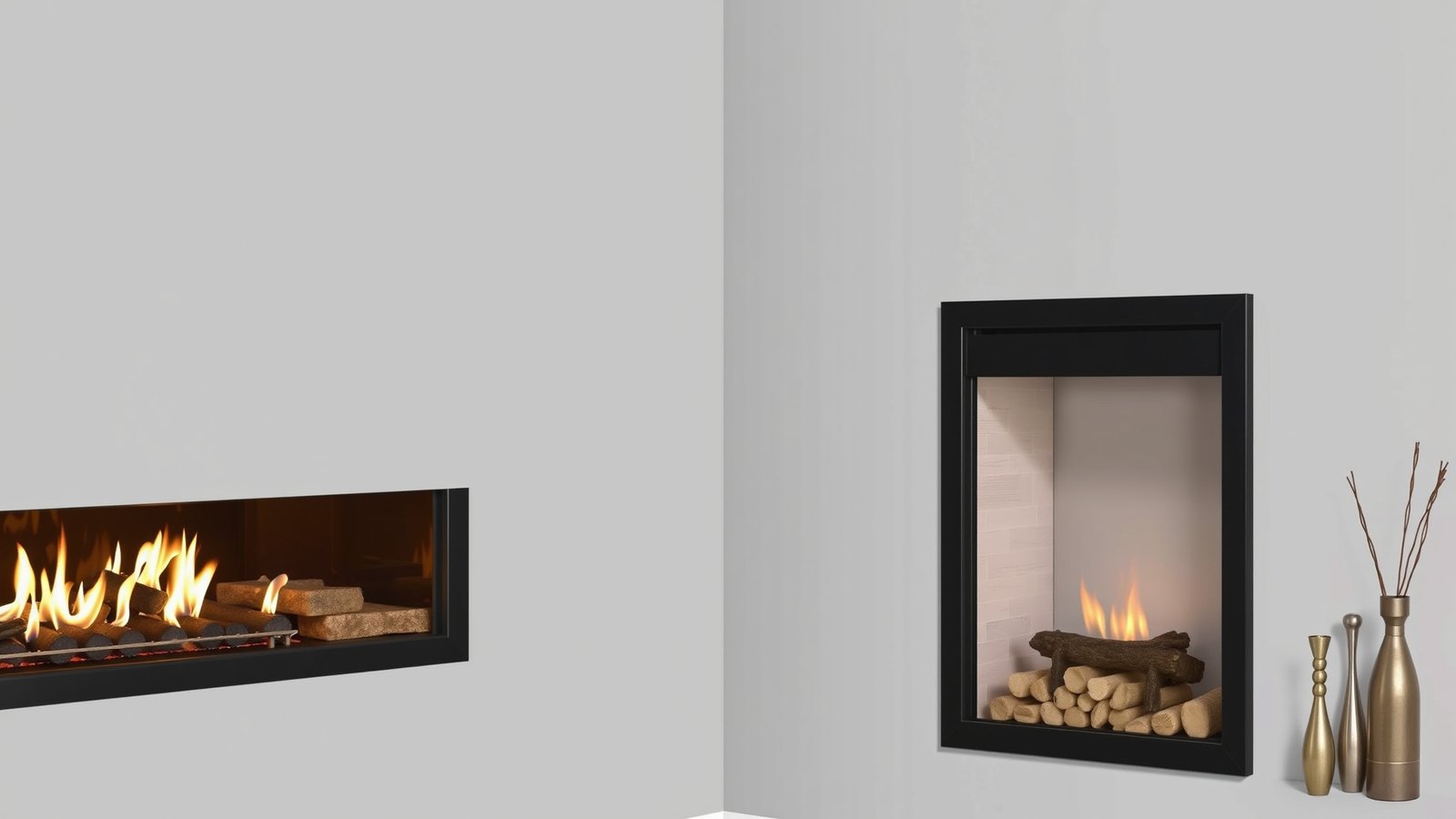
A sleek black frame is probably the most versatile fireplace finish available — it reads modern in a contemporary room, slightly industrial in a more eclectic space, and sophisticated against almost every wall color. The contrast between a matte black surround and a light wall is one of those combinations that works every time.
The wall behind and around a black-framed fireplace is where the magic is made or lost. Light walls — warm white, cream, very pale gray — let the black frame pop without the room feeling heavy. A dark wall color behind a black frame loses the contrast that makes the whole thing work.
The detail that most people miss with a black-framed fireplace: the accessories on and around it need to be simple. The black frame is doing bold work. A cluster of decorative objects competes with it. One good piece on the mantle — a single sculptural vase, or a leaning mirror — and the fireplace reads as the statement it is.
Farmhouse Style — Warm, Real, and Not Overdone
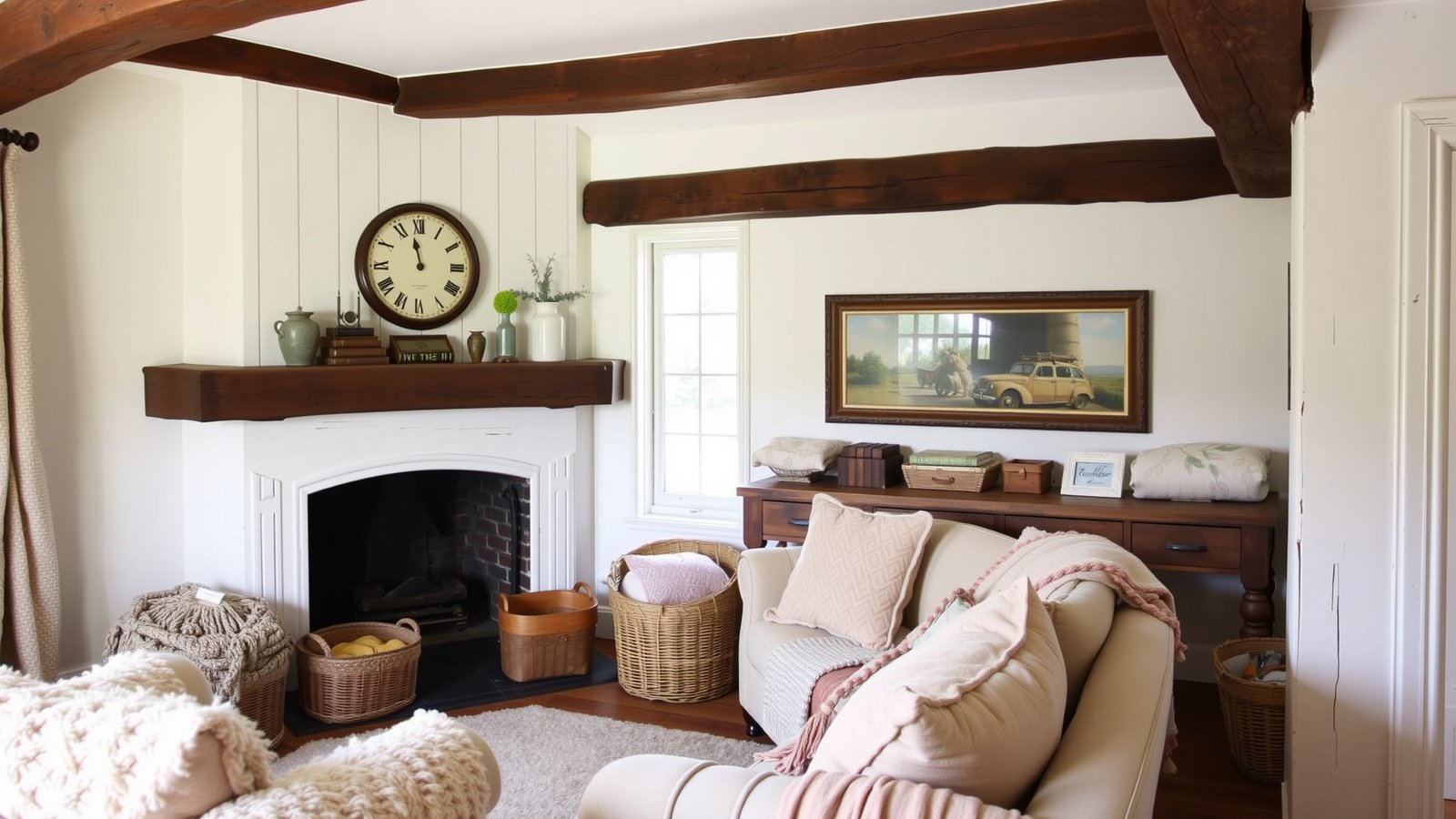
The farmhouse fireplace has been in trend long enough to develop a very recognizable and very specific over-done version: shiplap on every surface, “gather” sign above the mantle, mason jars with candles, three identical lanterns. That version is finished.
What’s not finished is the genuine warmth of a well-done farmhouse fireplace — whitewashed or painted brick, a thick wood mantle, honest natural materials. The version that still looks good in 2026 is more restrained: one or two natural elements on the mantle instead of a full collection, linen or cotton textiles in the seating area rather than plaid-everything, baskets for storage that earn their place functionally.
The shiplap accent wall behind a corner fireplace — if you’re open to it — is one of the more transformative weekend projects available. Peel-and-stick shiplap panels (available at most home improvement stores, $50–100 for a standard wall) or actual pine boards cut and installed horizontally ($1.50–3 per linear foot) change the entire reading of the fireplace. Paint it all white — walls, boards, mantle — and the fireplace goes from ordinary to architecturally significant.
Artistic and Tiled — When the Surround Is the Art
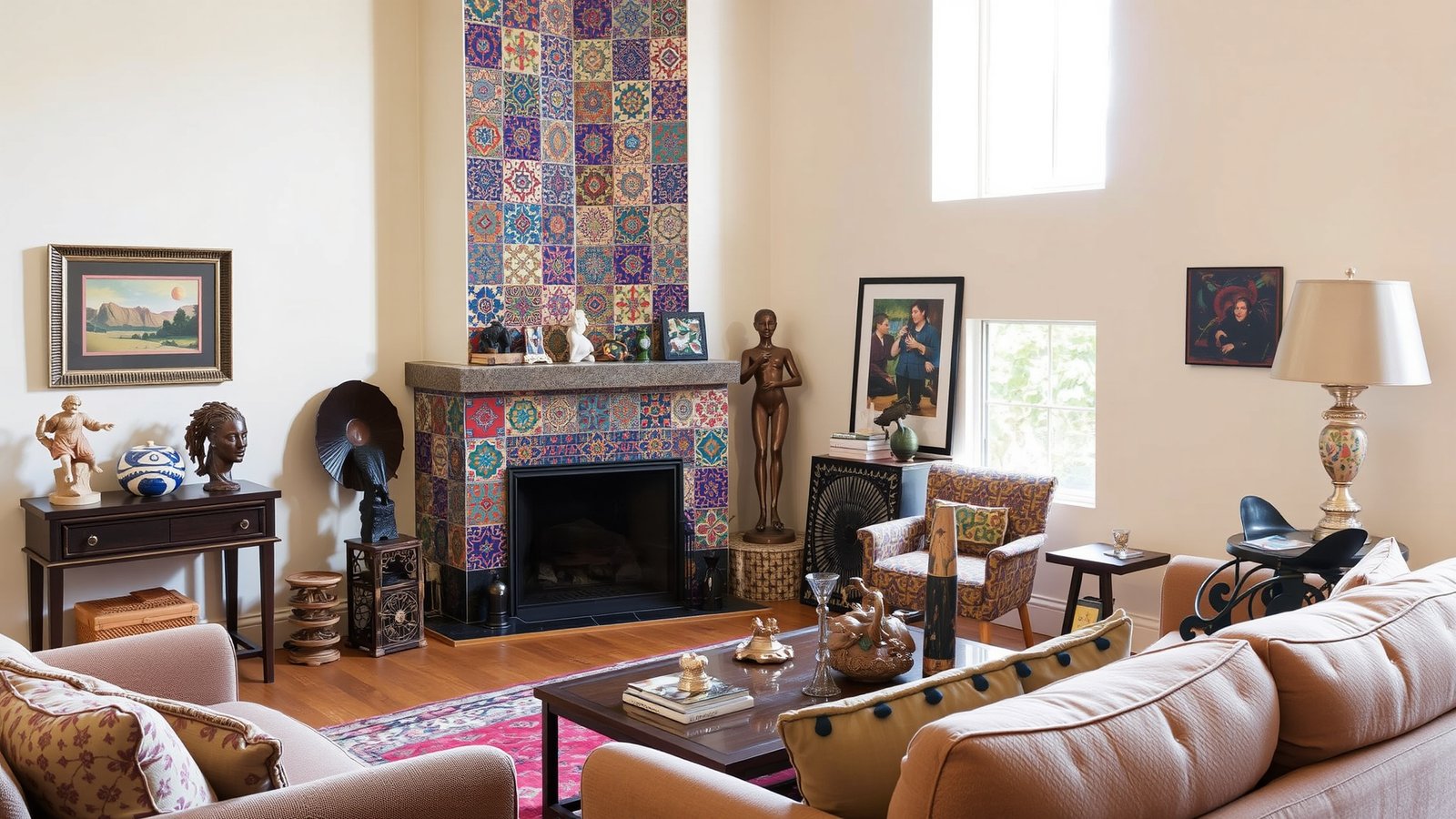
A tiled corner fireplace surround — particularly Moroccan zellige, hand-painted Spanish tile, or geometric cement tile — is the version that people remember. It’s the room’s personality in physical form, the detail that makes guests stop and ask about it.
The tile surround works best in rooms that can carry the visual weight. A very minimal room with one tiled fireplace is extraordinary. A busy room with patterned furniture, gallery walls, and a tiled fireplace is chaotic. Give the tile room to breathe.
For a rental or budget situation: removable tile stickers applied over an existing plain surround ($30–60 for a standard fireplace surround coverage) have improved significantly in quality and can transform a builder-basic fireplace into something with genuine visual interest. They’re not permanent — they come off cleanly — which makes them worth trying even if you’re not certain about committing to a pattern.
Cozy Reading Nook — Design the Whole Corner, Not Just the Fire
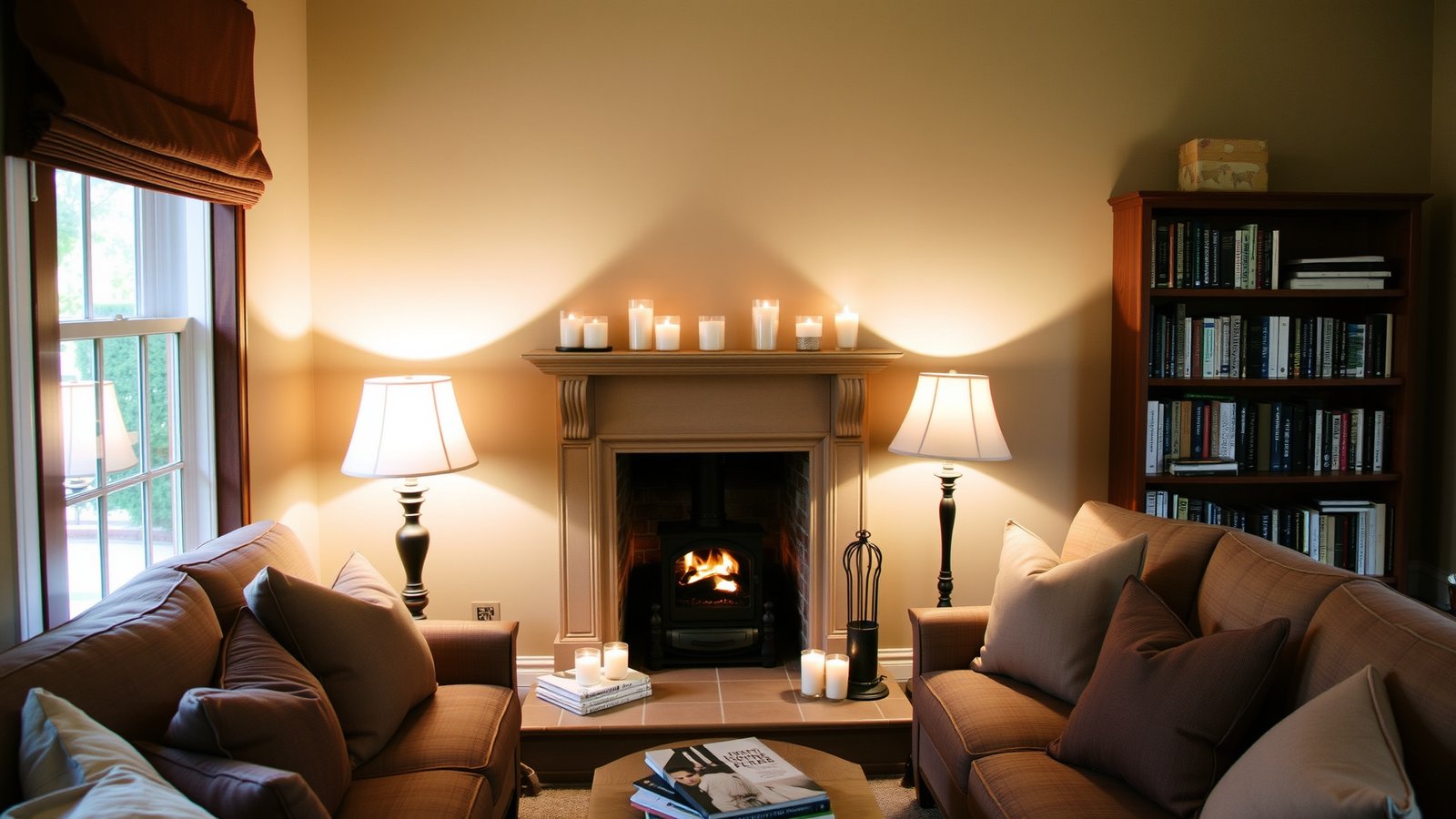
The corner fireplace has a geographic advantage that a centered fireplace doesn’t: the corner around it can become a fully enclosed, intimate space. Two walls meeting at the fireplace create a natural alcove that, with the right seating and lighting, becomes the best spot in the room.
A comfortable armchair placed at an angle facing the fireplace — not directly in front, but at 45 degrees so both the fire and the room are visible — is the foundation of a fireplace reading nook. Add a small side table at the right height for a drink and a book, a floor lamp positioned above and behind the chair for reading light, and a throw blanket on the arm of the chair.
The lighting layering matters enormously here. The fireplace itself provides warm, flickering light at low height. The floor lamp adds task-level light for reading. Both together, with the overhead light switched off, creates an atmosphere that makes the corner feel like a room within a room — which is exactly what a reading nook should feel like. More on creating genuinely cozy spaces in the cozy moody bedroom ideas guide.
Floating Shelves — Making the Corner Work Harder
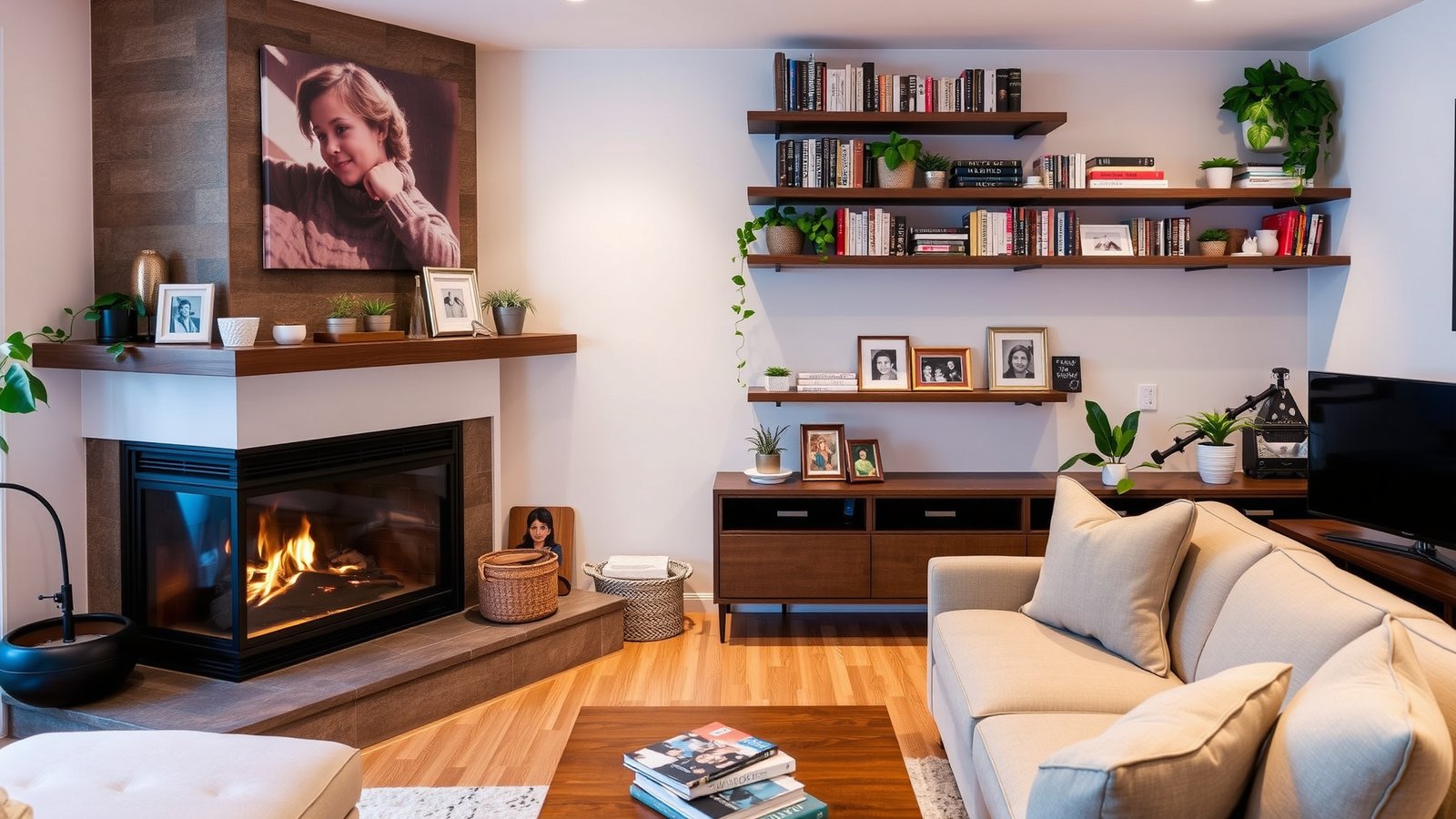
A corner fireplace with empty wall space above and beside it is a missed opportunity. Floating shelves — flanking the fireplace on both sides or arranged above it in a staggered pattern — turn that empty wall into the most visually interesting section of the room.
The styling rule for fireplace shelves: each shelf should have one living element (plant or fresh greenery), one functional element (books, a small object you actually use), and one breathing space moment — an intentional gap where nothing sits. Shelves that are completely full look chaotic. Shelves that are completely empty look staged and unused.
IKEA BILLY bookcases ($69 for the standard 79-inch height) flanking a corner fireplace, painted the same color as the wall, create the built-in bookcase effect for under $200 including paint. It’s one of the most commonly used tricks in professional interior design and it works because the eye reads the continuous color as architecture rather than furniture.
Elegant Mantle Display — The Styling Formula That Works
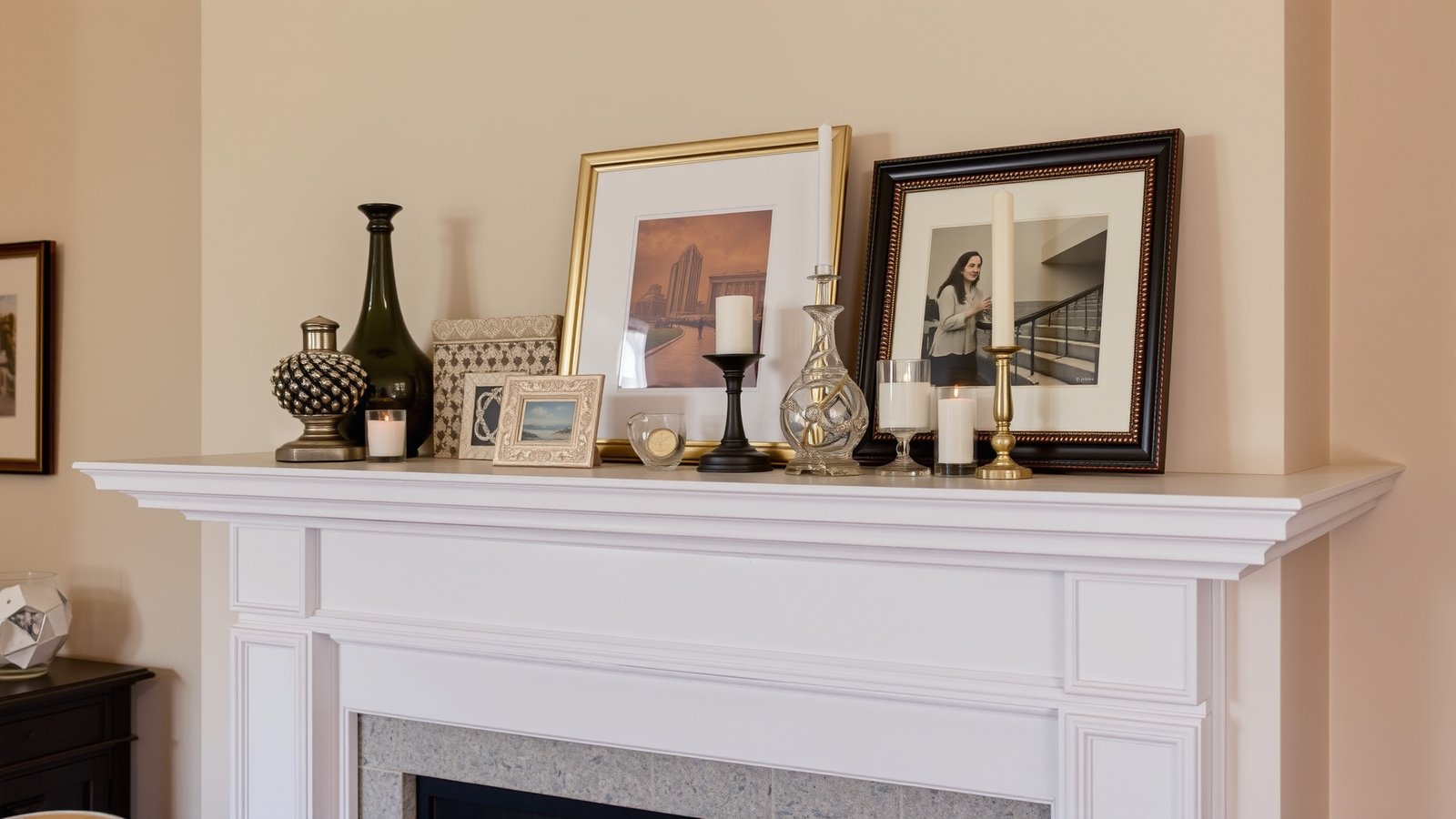
The mantle is the part of the corner fireplace most people get wrong. Common mistakes: too many small objects at the same height, seasonal decor that stays up past its season, things placed symmetrically when asymmetry would be more interesting, and — the one I see most often — the mantle treated as a shelf for things without a better home rather than as a curated display.
The formula I use every time: one tall element (a large candle stick, a tall vase, a leaning mirror or artwork), one medium element on the opposite side (a plant, a smaller framed piece), and a few small elements distributed between them. An odd number of objects almost always reads better than an even number. Heights should vary across the full width of the mantle.
The leaning mirror above a fireplace mantle is the single most transformative styling move available — it bounces light from the fire back into the room, doubles the visual impact of whatever’s on the mantle, and makes the ceiling feel taller. A 24×36 or 30×40 leaning mirror costs $50–120 at most furniture retailers. It’s the best money you can spend on a fireplace.
Integrated Media Center — Function and Form Together
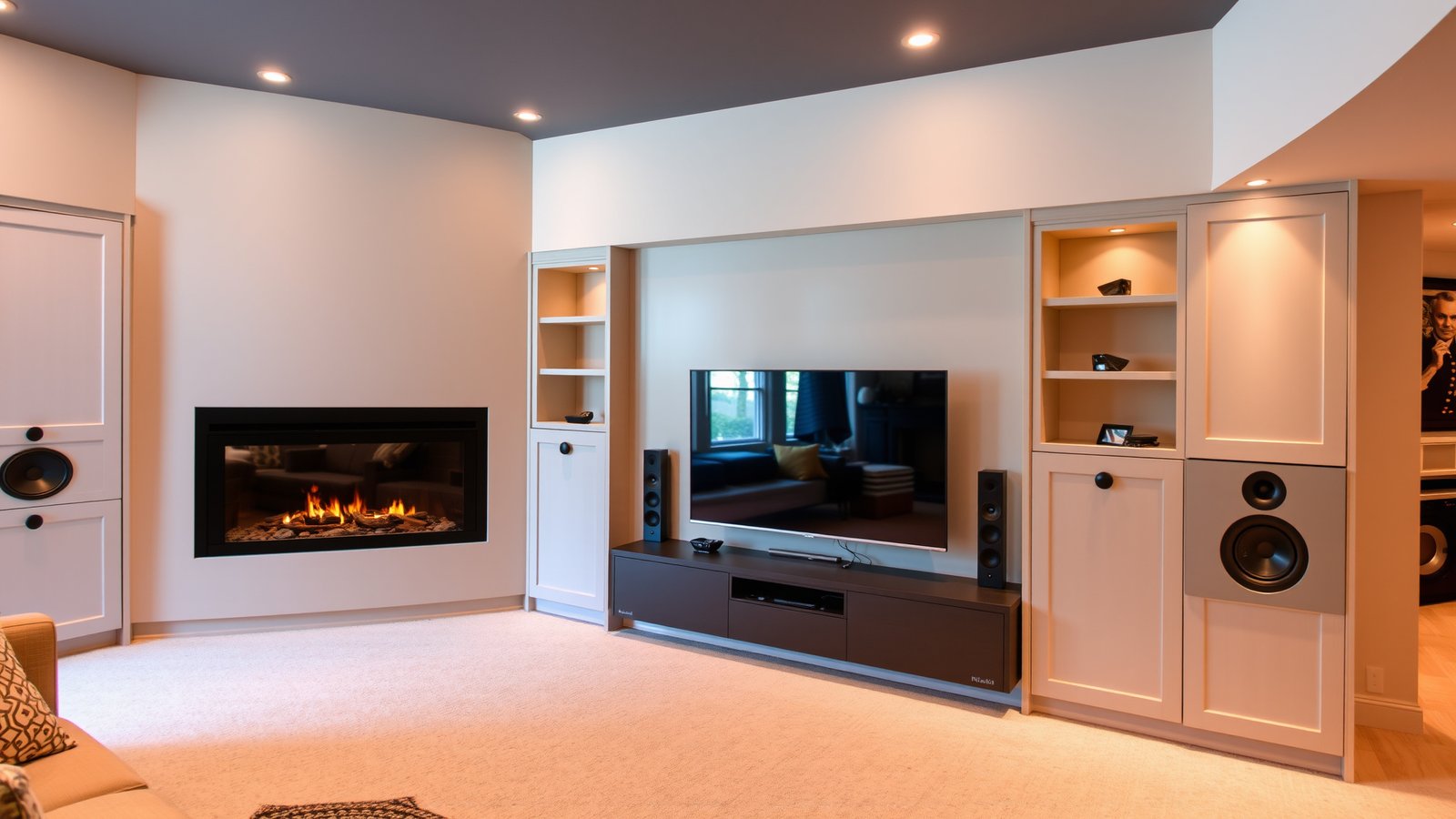
The fireplace-and-television combination is the living room design question that never fully resolves: people want both, in the same general direction, without one overpowering the other. A corner fireplace actually solves this better than a centered one — the TV can go on the adjacent wall at a comfortable viewing angle while the fireplace remains the visual focal point.
For a built-in media integration around a corner fireplace: flanking cabinetry in the same finish as the fireplace surround (painted MDF works well, $8–15 per sheet at a home improvement store if you’re DIY-comfortable) creates a unified wall of built-ins that houses both the media equipment and the fire. Cable management is everything here — visible cables undo the intentional quality of built-ins immediately. In-wall cable management kits run $15–30 and eliminate the problem permanently.
If built-ins aren’t possible, a floating media console positioned beside rather than in front of the fireplace, with the TV mounted on the wall at an angle, achieves the same dual-function result without any construction.
Beachy and Coastal — Light, Airy, and Genuinely Relaxed
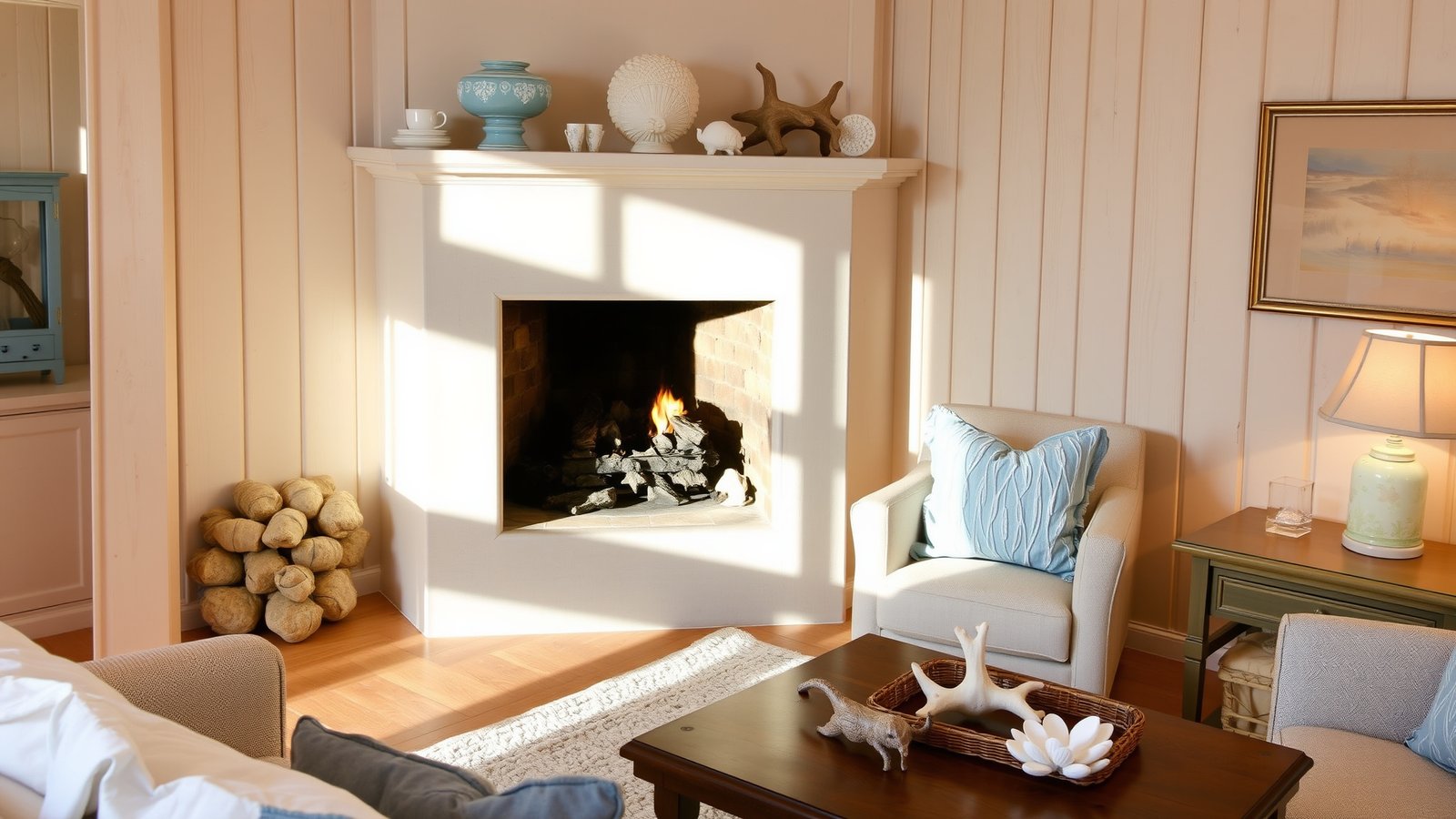
A coastal corner fireplace is light everything: light wood tones, light fabrics, light colors, light touch on the accessories. The risk is tipping into nautical theme rather than coastal feeling — the difference being that nautical has anchors and rope everywhere, while coastal feels like a room where the windows might all open onto the sea.
Light wood or white-painted surround. Sandy neutral palette on the walls — any warm off-white or the very palest warm beige works. On the mantle: a piece of driftwood, a few smooth stones, a simple ceramic piece in a warm tone. The accessories should feel gathered rather than purchased — things you might bring back from a walk on the beach, not a set from a coastal decor shop.
Linen fabrics in the seating near the fireplace — a linen slipcover on an armchair, linen throw pillows, a cotton throw — reinforce the light and airy quality without requiring anything thematic. The whole room should feel like you could be comfortable there even if the fireplace wasn’t on.
Industrial Chic — When Raw Materials Do the Work
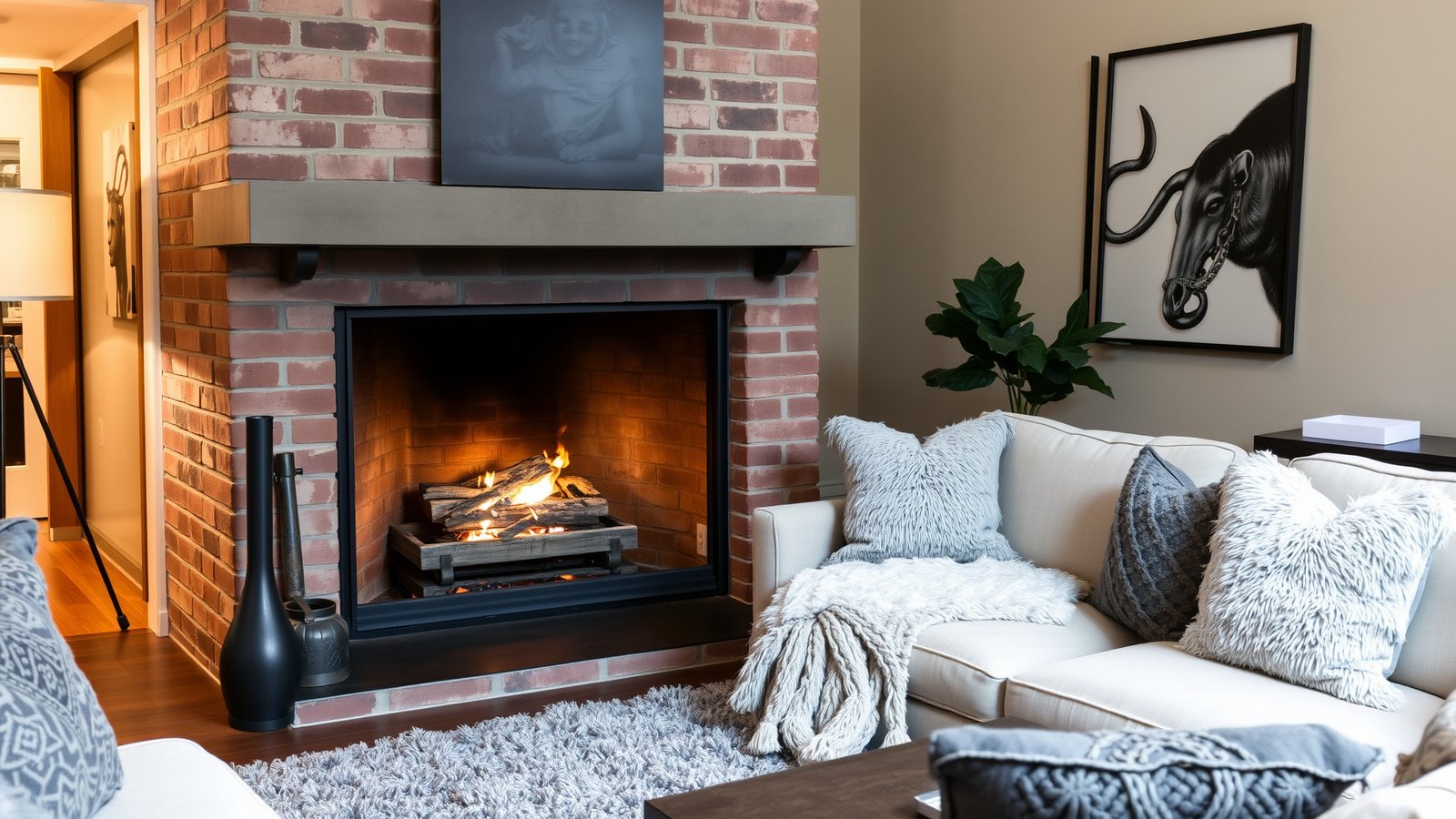
Industrial style works in a living room when the materials are genuinely raw rather than decorative-raw. Exposed brick that’s actually original to the building reads completely differently from a stick-on brick veneer. Concrete that’s been poured and polished looks different from a concrete-effect tile. If you have the real thing, show it. If you don’t, the best industrial approach uses metal and warm wood rather than faking masonry.
A corner fireplace with a flat steel or matte iron surround, flanked by dark metal shelving brackets holding solid wood shelves, reads properly industrial without requiring any structural material. The warm wood against the dark metal against a white or light gray wall creates the contrast that makes industrial interiors feel intentional rather than unfinished.
Balance is critical: every industrial element needs a softening counterpart. A plush rug in front of the fireplace. A linen throw draped on the nearby chair. Plants — specifically trailing ones that soften the hard edges. Without these counterbalances, an industrial room feels cold rather than cool.
Zen and Calm — The Fireplace as Meditation Point
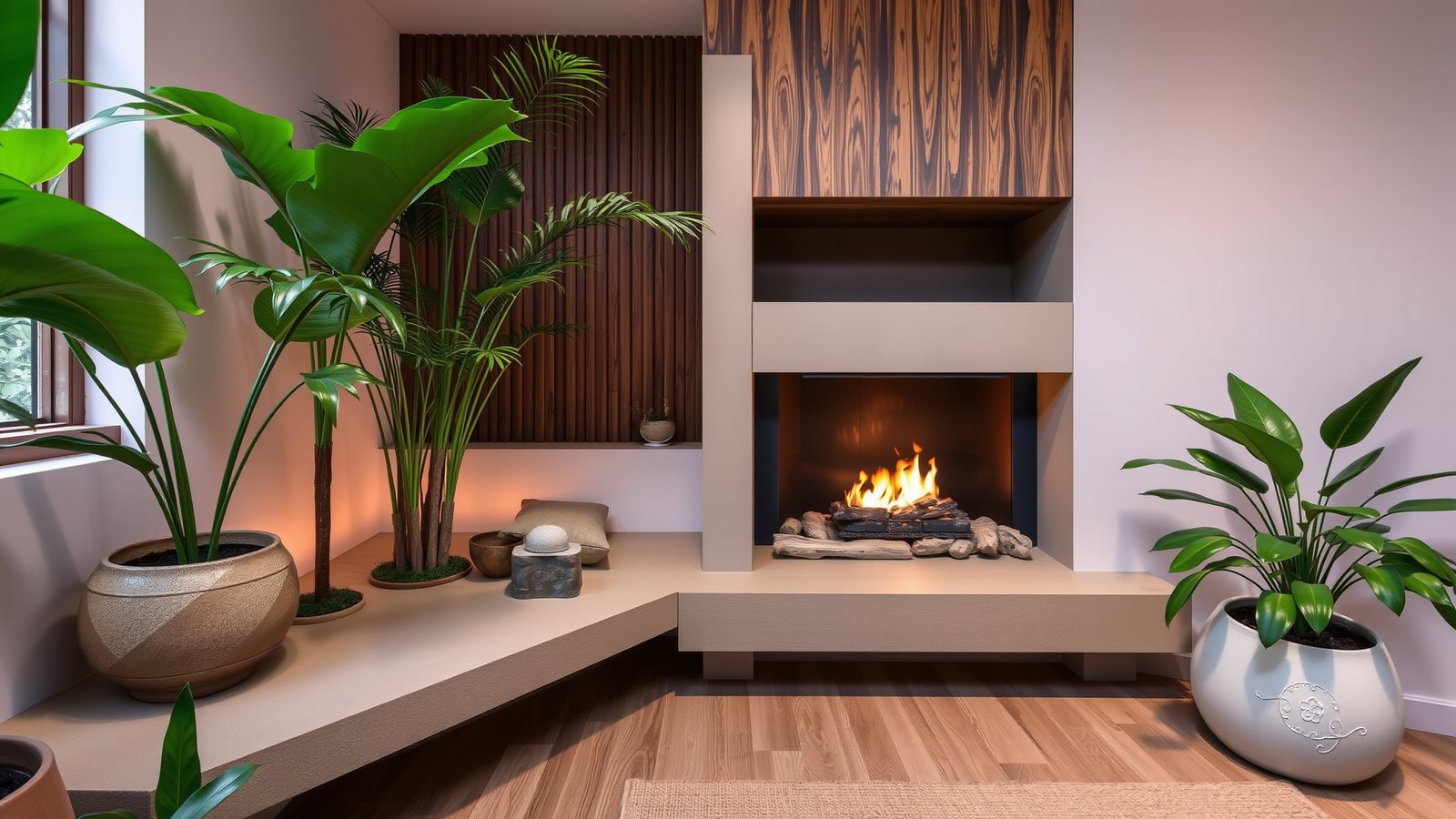
A Zen approach to corner fireplace styling is about removing almost everything except what serves the purpose of the space: warmth, calm, and something beautiful to look at. The fire itself is the focal point. Everything else exists to support the quality of being in that room without distraction.
Natural materials only — wood, stone, ceramic. A single plant, tended properly. Nothing on the mantle that isn’t genuinely beautiful or genuinely meaningful. No technology visible. Warm, low lighting from a floor lamp or wall sconce rather than overhead. A simple woven rug in a warm neutral on the floor in front of the fire.
The seating near a Zen fireplace corner should be low to the ground and inviting — a floor cushion, a low platform chair, a simple pouf. The posture of sitting lower and closer to the fire changes how the room feels. It’s harder to be distracted when you’re sitting at that level. That’s the point.
Modern Farmhouse — Where Contemporary Meets Comfortable
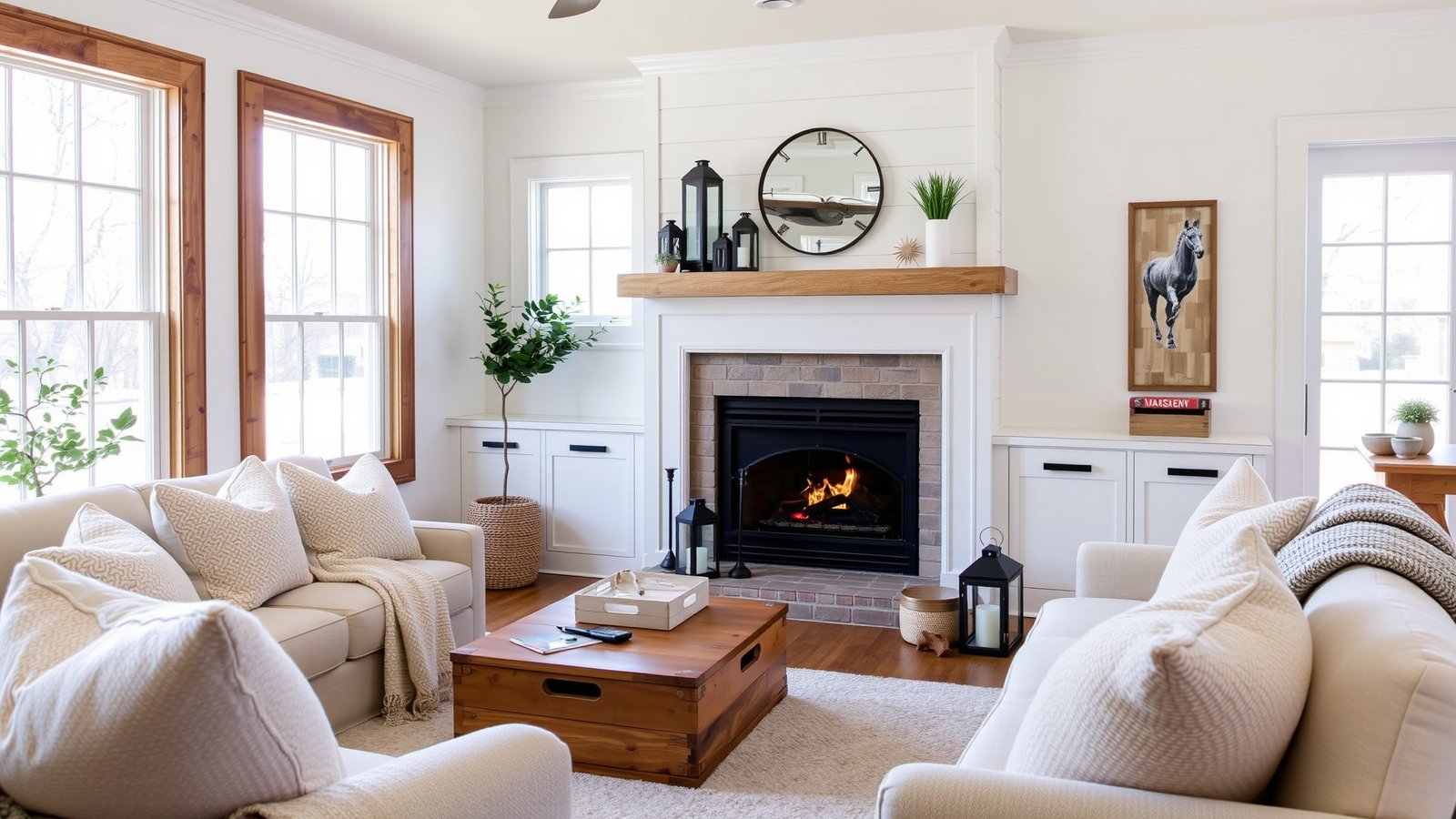
The modern farmhouse fireplace is the evolution of the classic farmhouse style — it keeps the warmth and natural materials but trades the rustic roughness for cleaner lines and a more edited sensibility. Shiplap, yes — but painted in a sophisticated warm white rather than left raw. Wood accents, yes — but in a honey or amber tone rather than a distressed gray. Textiles, yes — but linen and cotton rather than plaid and burlap.
The combination that works consistently: a shiplap surround painted Benjamin Moore White Dove or Sherwin-Williams Alabaster, a solid wood mantle in a warm tone, matte black hardware and accessories as the accent. The black provides the modern sharpness. The white and wood provide the farmhouse warmth. The ratio should be about 80% white and wood, 20% black accents — enough contrast to feel contemporary without losing the comfort.
For more on how the modern farmhouse palette is evolving in 2026, the 2026 paint color trends guide covers the specific whites and warm neutrals doing the best work in rooms like this.
Smart Technology — When Convenience Disappears Into Design
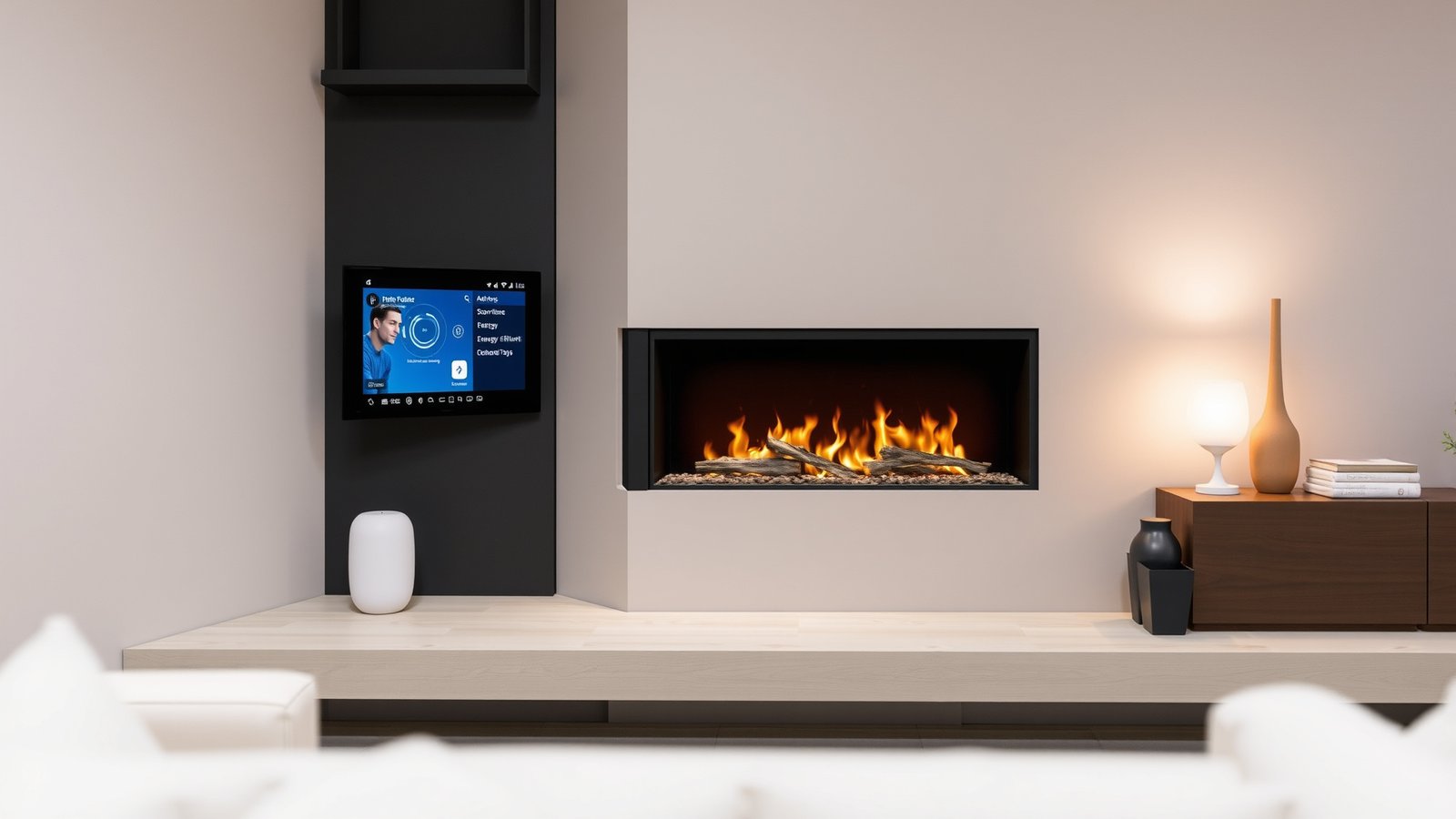
A smart corner fireplace — electric or gas with remote control, app integration, adjustable flame color and intensity — offers something a wood-burning fireplace can’t: complete control over the ambiance without any of the maintenance. No wood to store, no ash to clean, no chimney to service. Just warmth and light on demand.
The best smart fireplaces disappear into the room when they’re off and become the focal point when they’re on. Touchstone and Dimplex both make electric fireplace inserts ($400–900 depending on size) that fit into existing fireplace openings or custom built-in surrounds, with realistic flame effects and full app control. The installation is typically DIY-manageable — plug in, set into the surround, done.
What makes the technology successful as a design choice is what you do around it. The surround, the mantle styling, the room arrangement — all of that matters as much as the fireplace unit itself. A beautiful smart fireplace in a poorly styled room is still a poorly styled room. The technology is the mechanism. The design is the result.
Questions I Get Asked a Lot About Corner Fireplaces
How do I make a corner fireplace feel like an intentional design feature rather than something that just happened to be there? Style around it deliberately rather than in spite of it. Angle your furniture toward the fireplace so it becomes the room’s focal point — most people have furniture facing the television and the fireplace sitting ignored in the corner. Even if you don’t change a single thing about the fireplace itself, changing the furniture arrangement to acknowledge it transforms how the corner reads in the room.
What should I put on my corner fireplace mantle? The formula: one tall element, one medium element on the opposite side, a few small objects distributed between them in varying heights. A leaning mirror makes an excellent anchor — it bounces light and makes the mantle display feel larger than it is. Keep the total number of objects odd (three, five, seven) and leave intentional empty space rather than filling every inch.
Can I update a corner fireplace without a full renovation? Yes — and often dramatically. Repainting the surround (high-heat spray paint for metal surrounds, specialist masonry paint for brick or stone) is the highest-impact low-cost change available. New mantle styling costs nothing if you shop your own home for better-suited objects. A leaning mirror, a new rug in front of the fire, and rearranged furniture cost under $150 combined and can make the fireplace feel completely new.
What rug size works in front of a corner fireplace? A rug that extends at least 18–24 inches beyond the sides of the fireplace opening on both exposed sides, and reaches far enough into the room to sit under the front legs of the nearest seating. In most living rooms, this means a 6×9 minimum and an 8×10 for proper anchoring. A rug that’s too small in front of a fireplace makes the whole corner look uncertain.
Is an electric corner fireplace worth it as a design feature? Genuinely, yes — particularly for renters or for rooms where a wood-burning fireplace isn’t possible. The realistic flame effects on current models are significantly better than they were five years ago, and the ability to have the visual warmth of a fire without the heat output is useful in warmer climates. The design potential is identical to a gas or wood fireplace — a well-styled electric fireplace in a well-styled room is indistinguishable from the real thing in photographs and nearly so in person.
Your Corner Fireplace Deserves to Be the Best Thing in the Room
The corner is already doing something unusual — it’s asking the eye to turn. A well-styled fireplace rewards that turn. It becomes the reason the whole room feels pulled together, the explanation for why the furniture is arranged the way it is, the first thing a guest notices and the thing they remember.
Most of the ideas here don’t require a renovation. They require a decision about what the corner is going to do and then consistent choices that support that decision. Start with the mantle. Get that right first and everything else becomes easier.
I’m currently thinking about putting floating shelves on the wall beside my corner fireplace — I have a blank wall to the left that’s doing nothing. I’ll share what I do with it.
— Emily
What does your corner fireplace situation look like — are you working with something great that just needs styling, or something that needs more help? Tell me in the comments.