15 Stone Fireplace Ideas That Make a Room Feel Like It Was Always Supposed to Look This Way
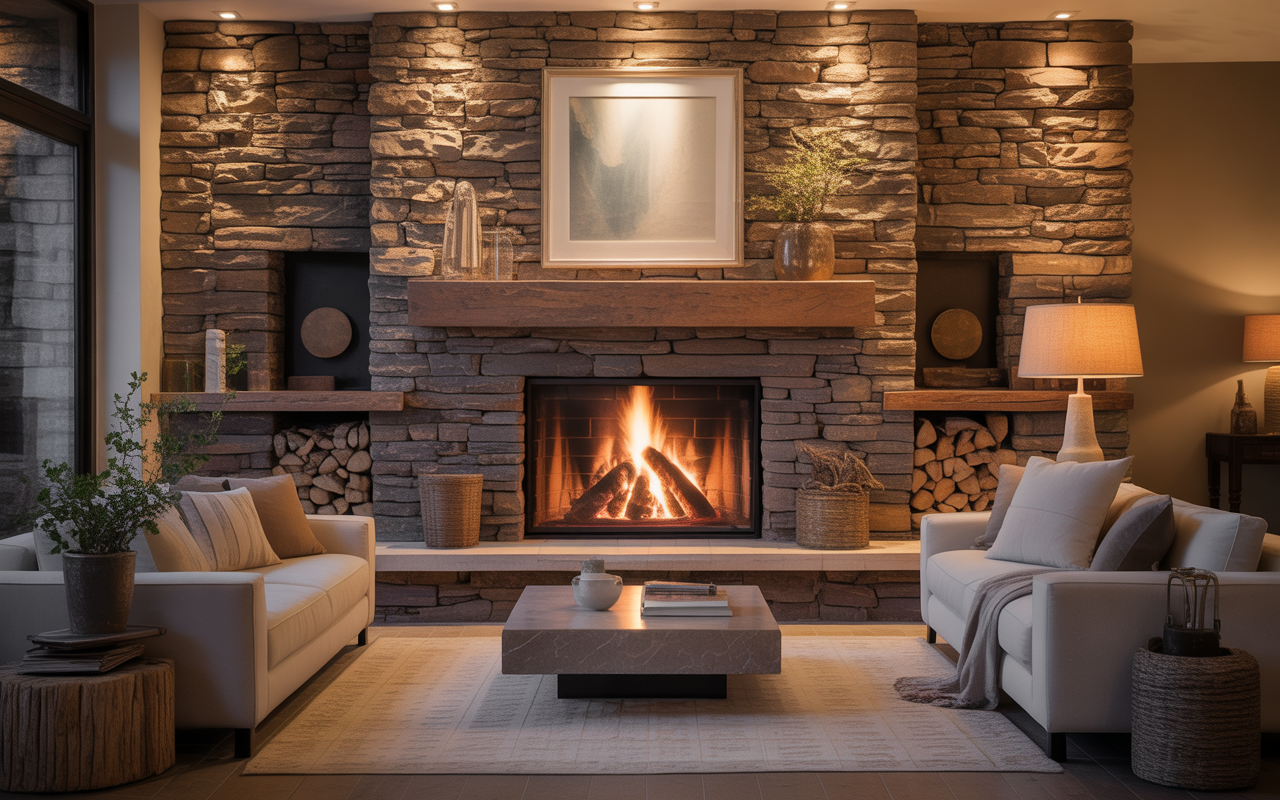
There’s a specific feeling a stone fireplace gives a room that no other single design element comes close to replicating. It’s not just warmth — it’s the sense that the room has been there for a while, that it has a history, that someone made a considered choice about how the most important wall in the space was going to look. Even a modest stone fireplace, styled well, anchors a room in a way that makes everything around it look more intentional.
I’ve styled rooms around stone fireplaces in three different houses now, and the one thing I’ve learned consistently: the fireplace is never the problem. The problem is almost always what’s around it and on it. The stone can be beautiful and completely undermined by a cluttered mantle, the wrong rug, or furniture arranged as if the fireplace isn’t there.
These fifteen ideas cover the full range of stone fireplace styles — from genuinely rustic to properly contemporary — and more importantly, how to make each one work in a real room.
Rustic Mountain Style — When Roughness Is the Point
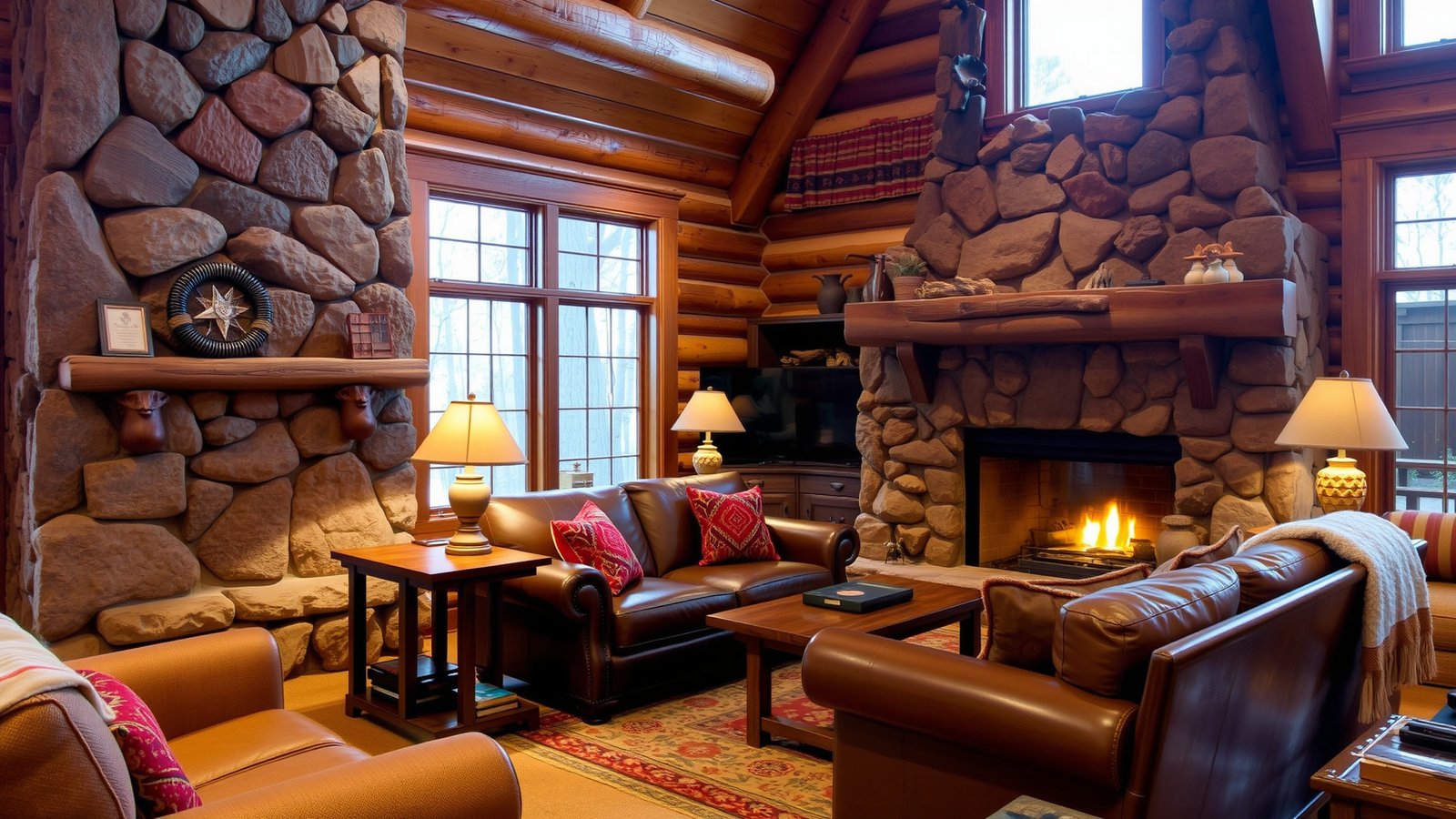
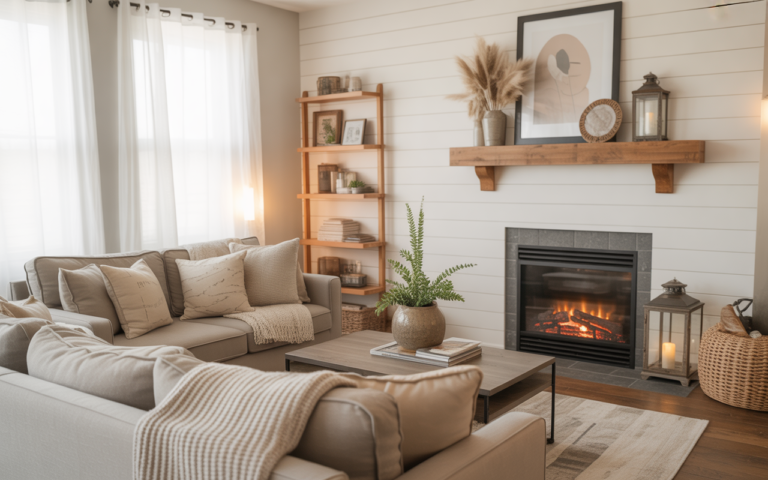
A rustic stone fireplace is the one that rewards going bigger and rougher than feels comfortable. The stones should have genuine variation — different sizes, different shapes, visible texture. A perfectly uniform stone fireplace loses the quality that makes rustic work, which is the sense that those stones came from somewhere real.
The wooden mantle is the critical companion piece to a rustic stone fireplace. A proper thick beam — not a thin shelf, a genuine 4–6 inch depth beam in solid wood — looks like part of the architecture. Reclaimed oak or pine beams from a salvage yard or architectural reclaim shop run $80–200 depending on length and species, and they read completely differently from the manufactured “rustic” mantles sold at home improvement stores, which tend to look exactly like what they are.
On the mantle of a rustic stone fireplace: resist the temptation to over-accessorize. The stone is already doing significant visual work. One or two items — a ceramic piece, a single lantern, a plant in a terracotta pot — and the rest is empty beam. The restraint is what makes the stone the star.
Modern Minimalist — The Fireplace That Disappears Until It Doesn’t
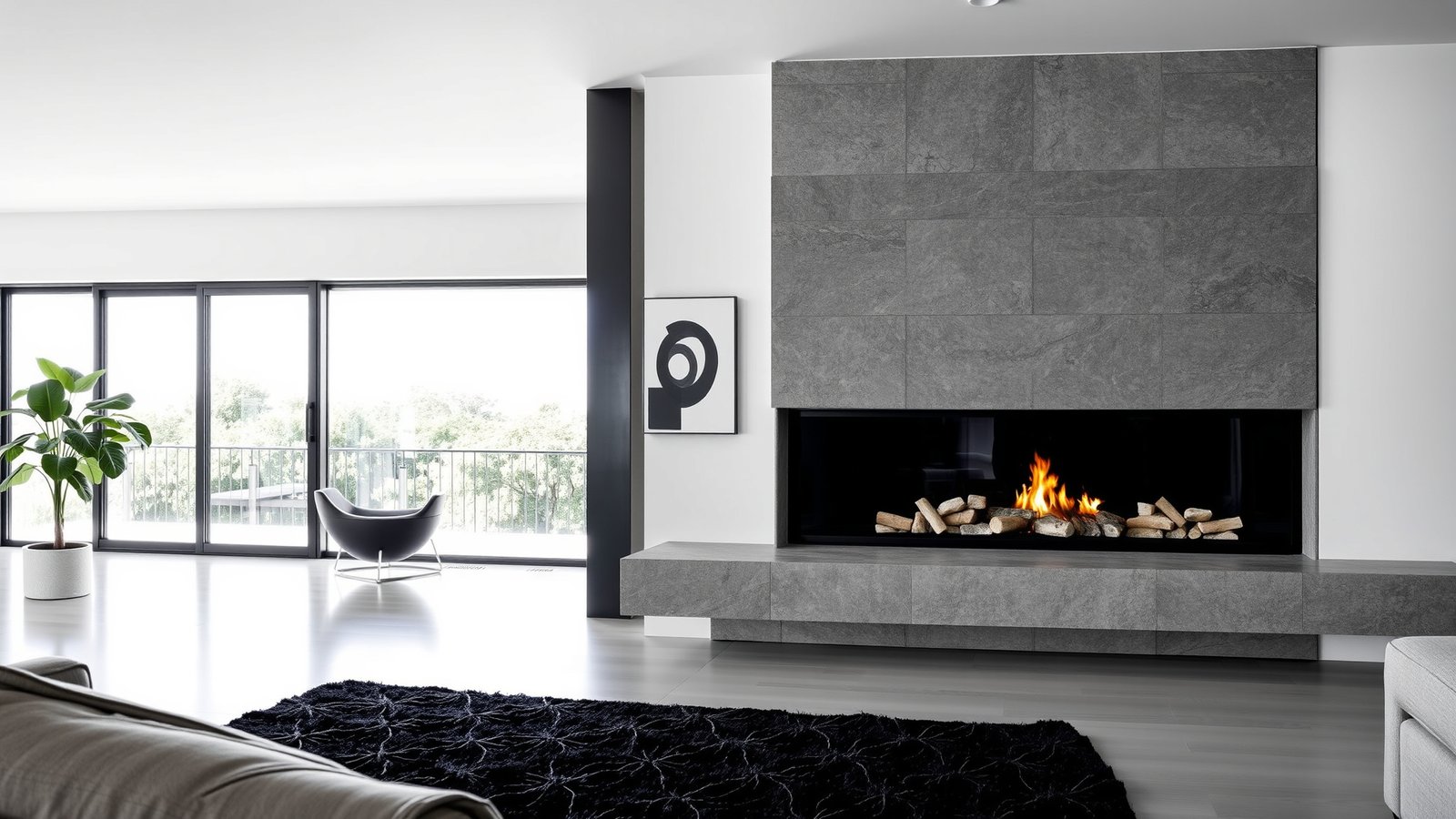
A modern minimalist stone fireplace is an exercise in restraint that pays off dramatically. The stone here is smooth and uniform — polished granite, honed limestone, or a flat slate — creating a surface that reads as architecture rather than material. The lines are clean, the profile is low, and the whole thing looks like the wall made a deliberate decision.
This is the style where the surrounding room matters most. A minimalist stone fireplace in a cluttered room looks like a mistake. In a properly edited room — furniture with clean lines, surfaces kept clear, a consistent color palette of warm whites and soft grays — it looks intentional and expensive.
The one failure I’ve seen repeatedly with this style: the monochrome room that goes too cold. All cool grays and bright whites, no warmth anywhere, and the room feels like a very nice hospital waiting room. The fix is simple: warm the neutrals. Warm white walls (Benjamin Moore White Dove, not a bright cool white), a warm gray rather than a blue-gray stone, a single warm-toned textile — a linen throw, a jute rug. The cold version of minimalism is easy to slide into. The warm version is what actually feels like a home.
Brick and Stone Combined — The Combination That Ages Beautifully
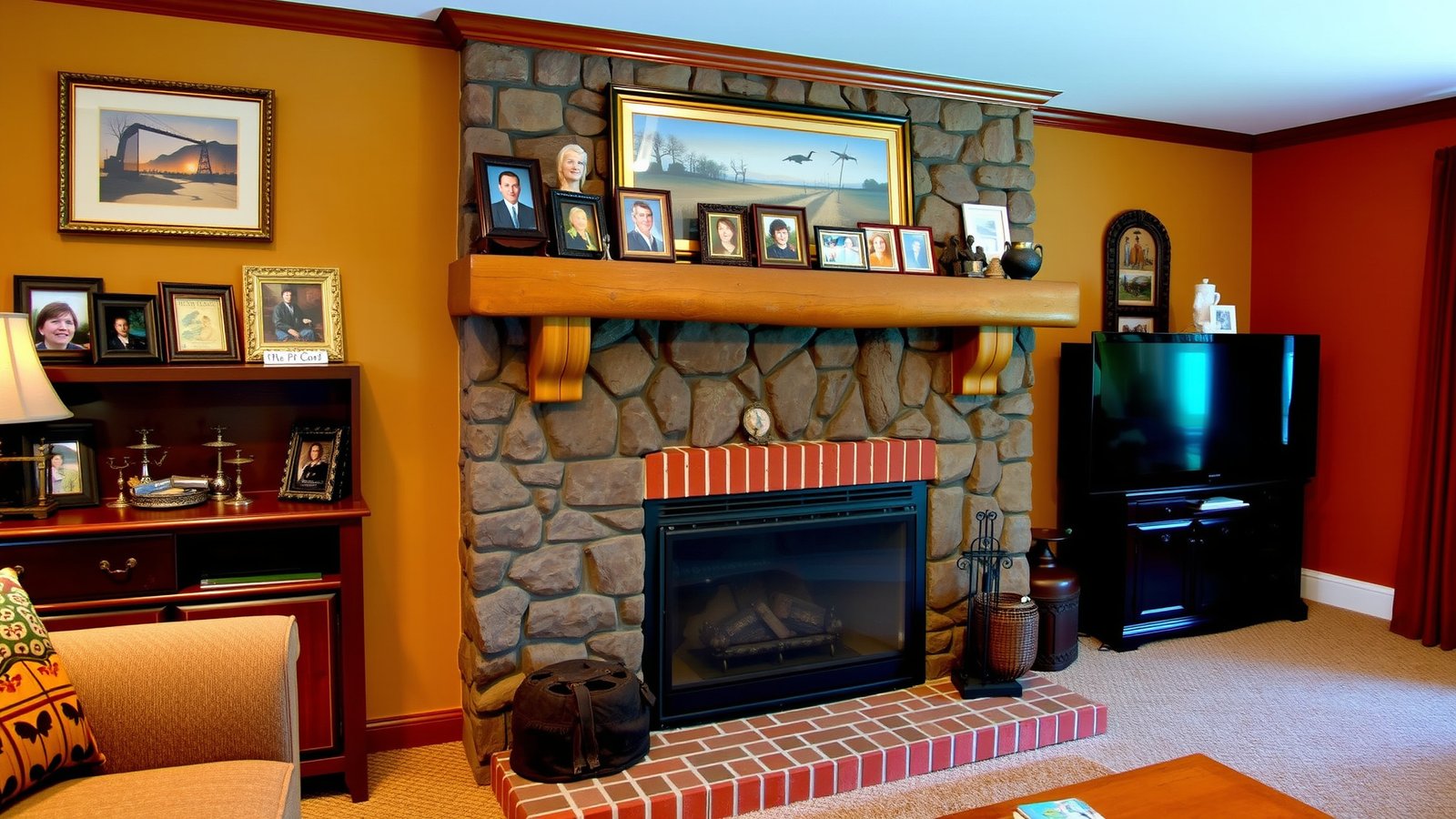
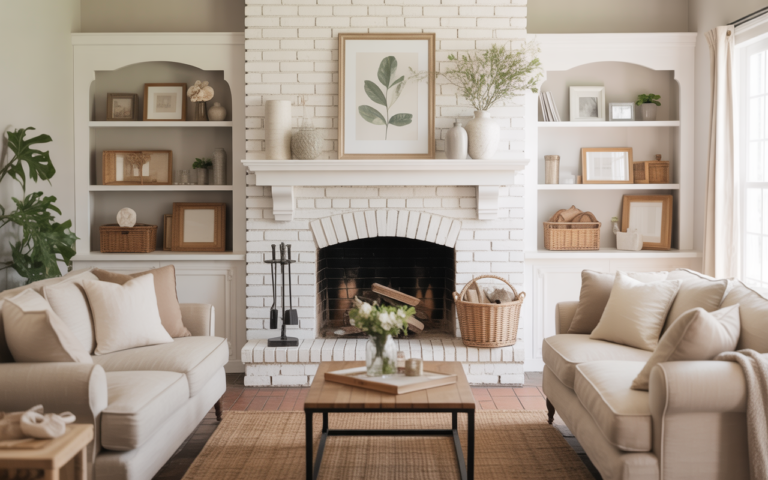
The brick-and-stone fireplace combination is one of the most historically honest approaches to a traditional fireplace — these were the materials available, used together because they each served a different structural purpose. A stone surround with a brick hearth, or brick backing with a stone frame, reads as genuinely old in a way that any single-material fireplace can’t quite achieve.
The version that works in contemporary homes: the brick painted or limewashed rather than left in its original red. Limewash over original brick ($15–25 for a quart of limewash paint) keeps the texture and variation while softening the color into something that reads less ‘1980s den’ and more considered. Sherwin-Williams Limewash paint and Romabio Classico are both widely available and give genuine results.
For the mantle styling on a traditional combined fireplace: family photos and artwork are genuinely appropriate here in a way they aren’t on sleeker styles. This is the fireplace that was designed to have things on it — a mirror, a clock, framed pictures, a vase. The key is intentional arrangement rather than accumulation.
Coastal Beach Stone — Soft, Rounded, and Genuinely Relaxed
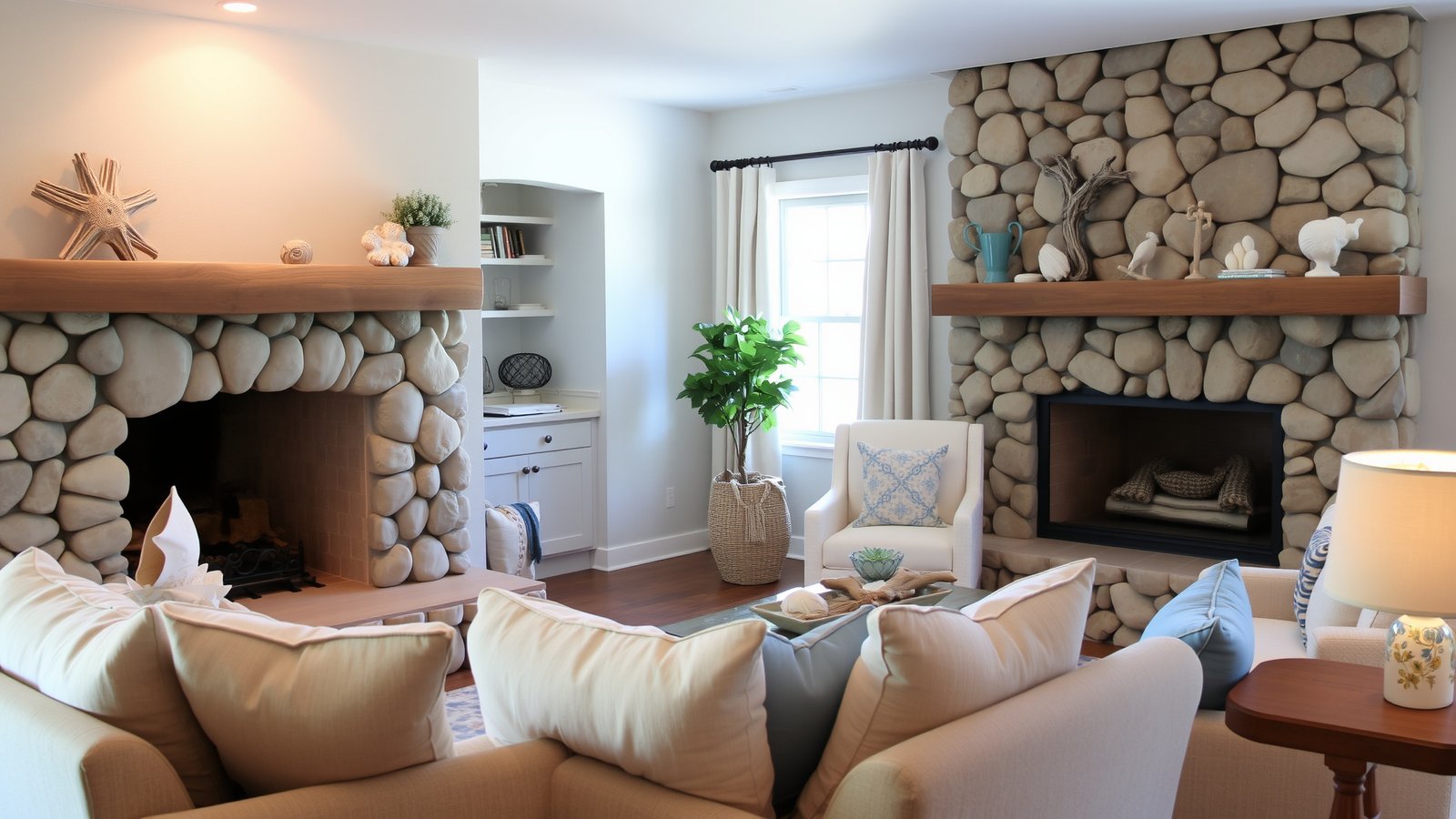
The coastal stone fireplace is built from the same stones the beach builds from — smooth, rounded, softened by water into shapes that feel gentle rather than rugged. Light sandy tones, pale gray, soft white. The effect is a fireplace that feels like a memory of somewhere good.
The materials that complement a coastal stone fireplace need to be as light and unfussy as the stones themselves. Linen curtains that move in a breeze, cotton slipcovers in warm white or sandy beige, a sisal or jute rug on the floor rather than a heavy wool pile. Nothing heavy, nothing dark, nothing that would feel out of place in a room that opened directly onto a porch.
The styling mistake I see most often with coastal fireplaces: going too literal with the accessories. A full collection of shells, rope-wrapped frames, actual anchors — it tips from coastal feeling into coastal theme, which are very different things. One piece of driftwood on the mantle. A few smooth stones from an actual beach mixed in with the accessories. A single blue ceramic vase. That’s the coastal reference that reads as design choice rather than theme park.
Farmhouse River Rock — Organic and Impossible to Replicate
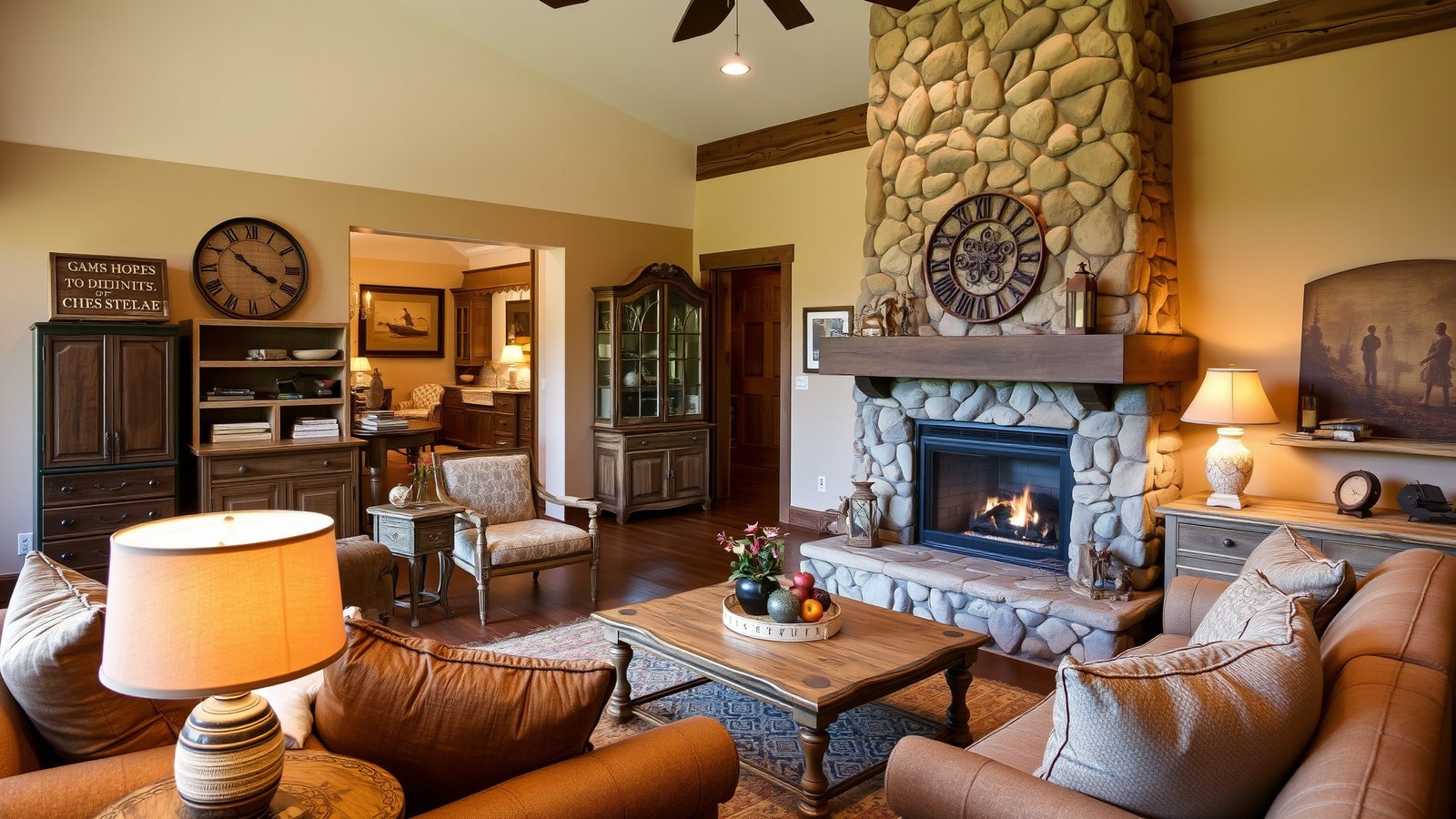
River rock fireplaces are unique in the most literal sense — no two are identical, because no two collections of river stones are identical. The smooth, rounded stones in varying sizes and the organic way they fit together is the result of a process no manufactured material can fake. This is a fireplace that genuinely earns the word “handmade.”
The farmhouse context suits river rock perfectly because both are fundamentally about honest materials used without pretension. Distressed wood furniture, cotton and linen textiles, a simple iron pot rack visible from the living room — all of these share the same quality of materials chosen for how they work rather than how they look.
A practical note: if you’re considering a river rock fireplace for a renovation, the labor cost is the significant variable. River rock fireplaces require more hand-fitting time than cut-stone fireplaces, and that’s reflected in mason quotes. For a DIY-capable person, however, river rock is one of the more approachable fireplace materials to work with — the forgiving nature of the irregular shapes makes the fitting process less technically precise than cut stone.
Marble Surround — When the Fireplace Is the Luxury
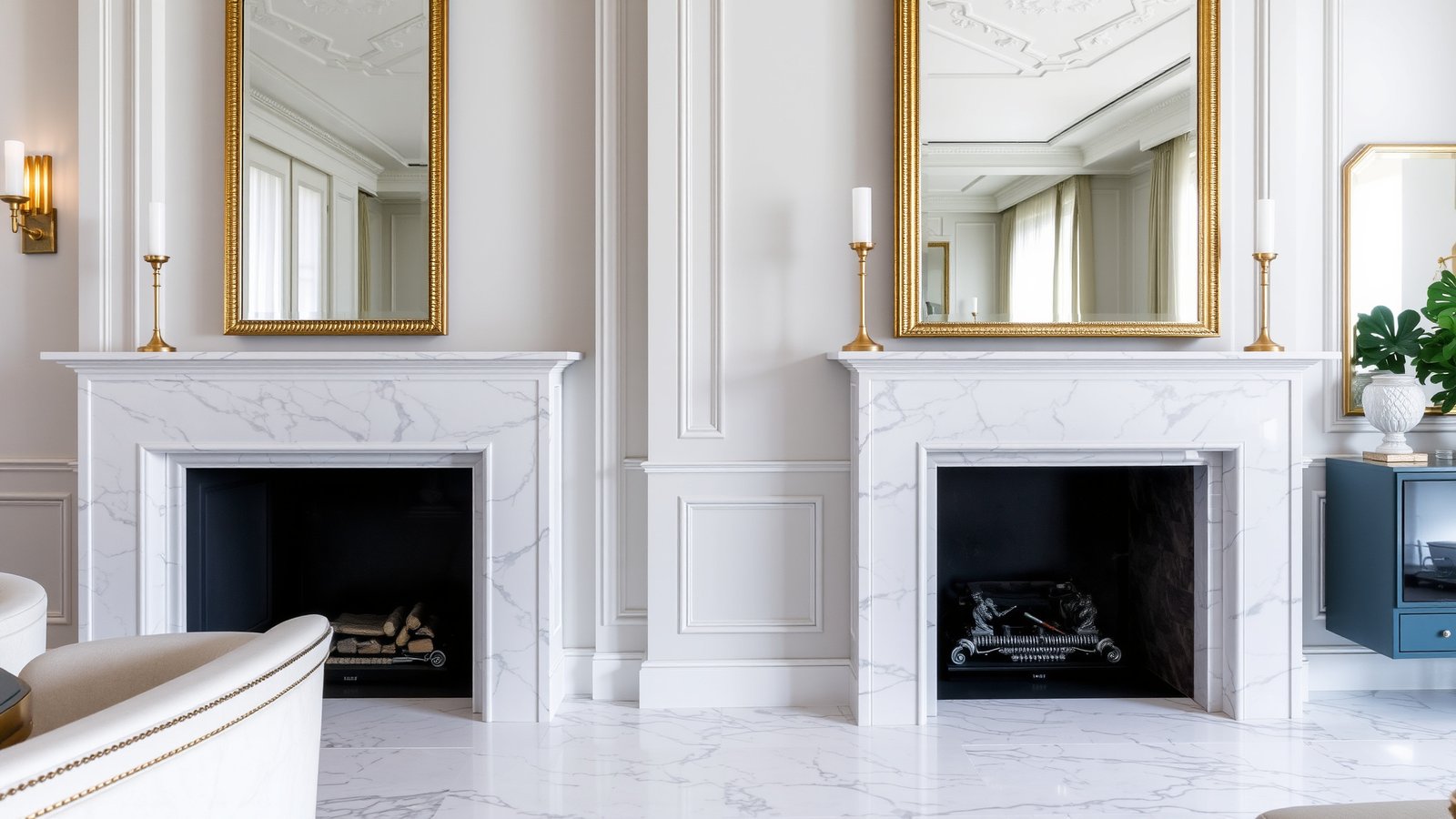
White marble with gray veining is the fireplace material that looks expensive because it is expensive — but it pays back that investment every time you walk into the room. A marble fireplace surround makes even a modest living room read as properly designed rather than assembled from whatever was available.
Calacatta and Carrara marble are the two most commonly used for fireplace surrounds. Calacatta has more dramatic veining and more variation; Carrara is softer and more consistent. Both work. The choice comes down to whether you want the marble to be a statement (Calacatta) or a refined backdrop (Carrara). For a marble fireplace that isn’t meant to dominate the room, Carrara is usually the right call.
The styling above a marble fireplace mantle: a large mirror, ideally with a thin gold or brass frame, leaned or hung above the mantle and reflecting the room back on itself. A few candles in gold candlestick holders. One simple vase with white or cream flowers. Nothing competing with the marble. The marble already said everything worth saying — the accessories are just punctuation.
Industrial Exposed Stone — Raw Material, Considered Context
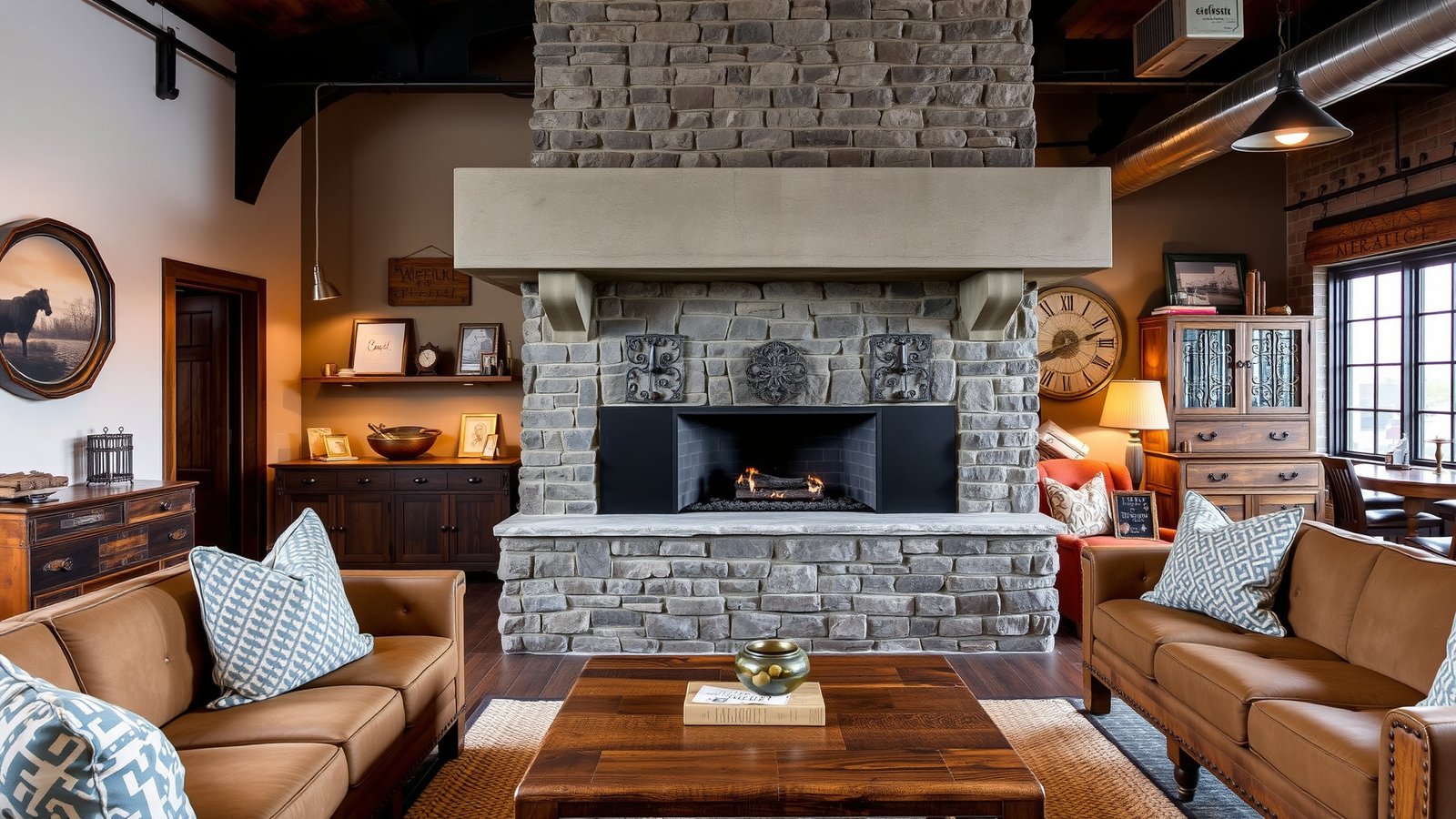
An industrial stone fireplace uses stone in its least processed form — rough, unpolished, almost geological in quality. It’s a material choice that signals something about the whole room: this space values authenticity over finish. When done well, it’s one of the most compelling interior design choices available. When done carelessly, it looks like a construction site someone forgot to finish.
The key to making raw stone work in an industrial context is the deliberate softening that happens around it. A plush rug in a warm neutral tone directly in front of the fireplace. A leather sofa in caramel or cognac rather than black. Warm incandescent or Edison-style lighting rather than anything with a cool temperature. The stone does the hard, raw work. Everything else creates comfort.
Metal accents that work with rough stone: matte black, dark iron, aged bronze. Polished chrome reads wrong next to raw stone — too finished, too smooth, no visual logic. The accents should feel like they came from the same vocabulary as the stone itself. For more on how industrial style works as a complete room approach, the corner fireplace ideas guide covers the industrial fireplace direction in the context of the whole room.
Scandinavian Simplicity — Stone as Calm Architecture
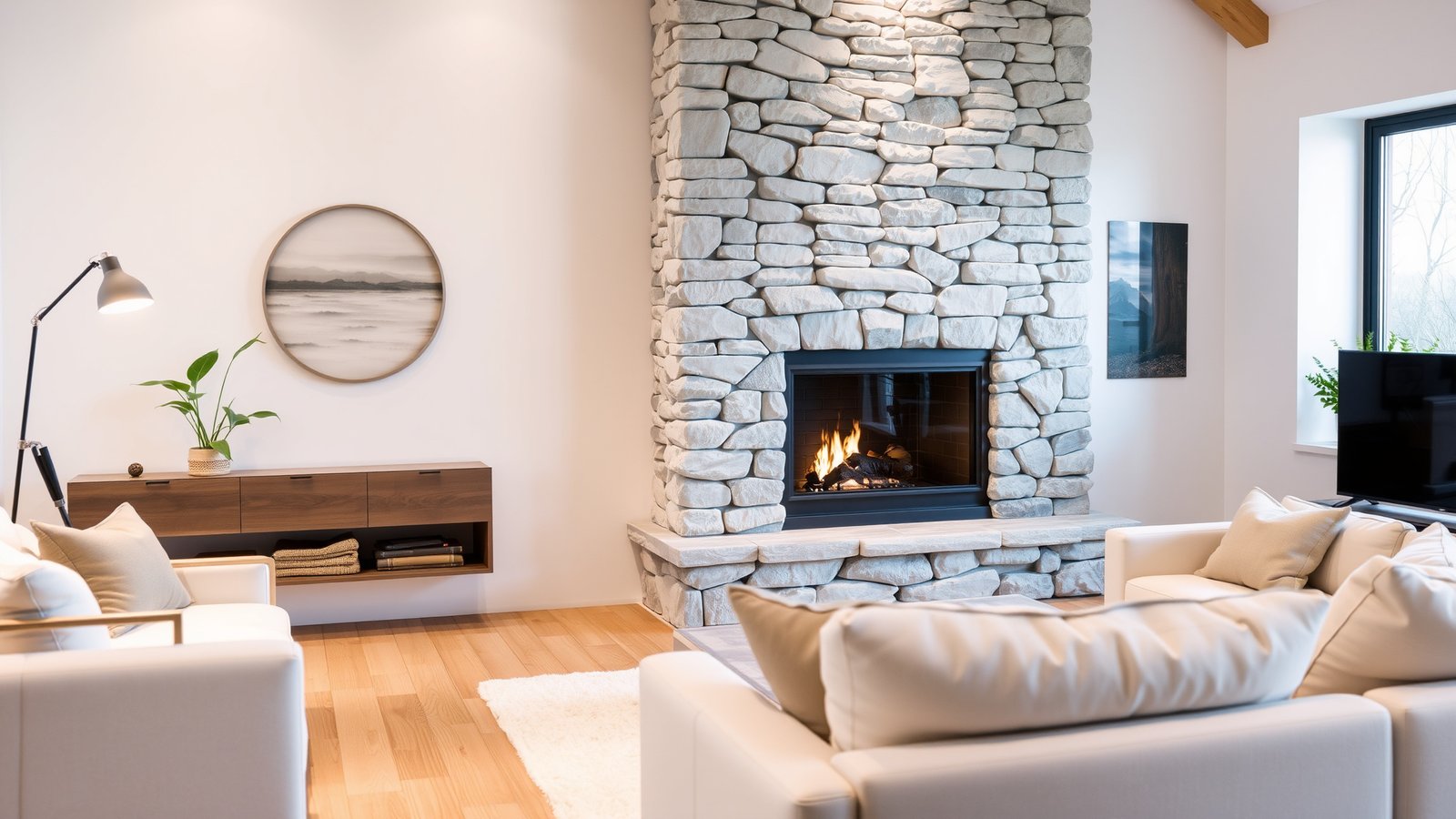
Scandinavian design uses stone in a specific way: smooth, light-colored, integrated into the wall rather than projecting from it. The fireplace in a Scandinavian room is not the dramatic focal point it might be in a rustic or traditional room — it’s one element in a carefully balanced whole, doing its job without demanding attention.
Light limestone, pale granite, or honed white stone in simple geometric profiles work for this style. The surround should have minimal projection from the wall — flush or nearly flush is the ideal, creating the impression that the wall itself became a fireplace rather than a fireplace being attached to the wall.
The palette around a Scandinavian stone fireplace: warm whites, natural oak or ash wood tones, soft linen and wool in undyed or natural tones. One or two green plants — a fiddle leaf fig in a clean white pot, or a simple potted eucalyptus. The room should feel like somewhere you could exhale the moment you walked in. For more on how Scandinavian design principles translate to the full room, the Scandinavian bedroom ideas guide covers the same principles applied to a different space.
Mosaic and Mixed Stone — When the Fireplace Is Art
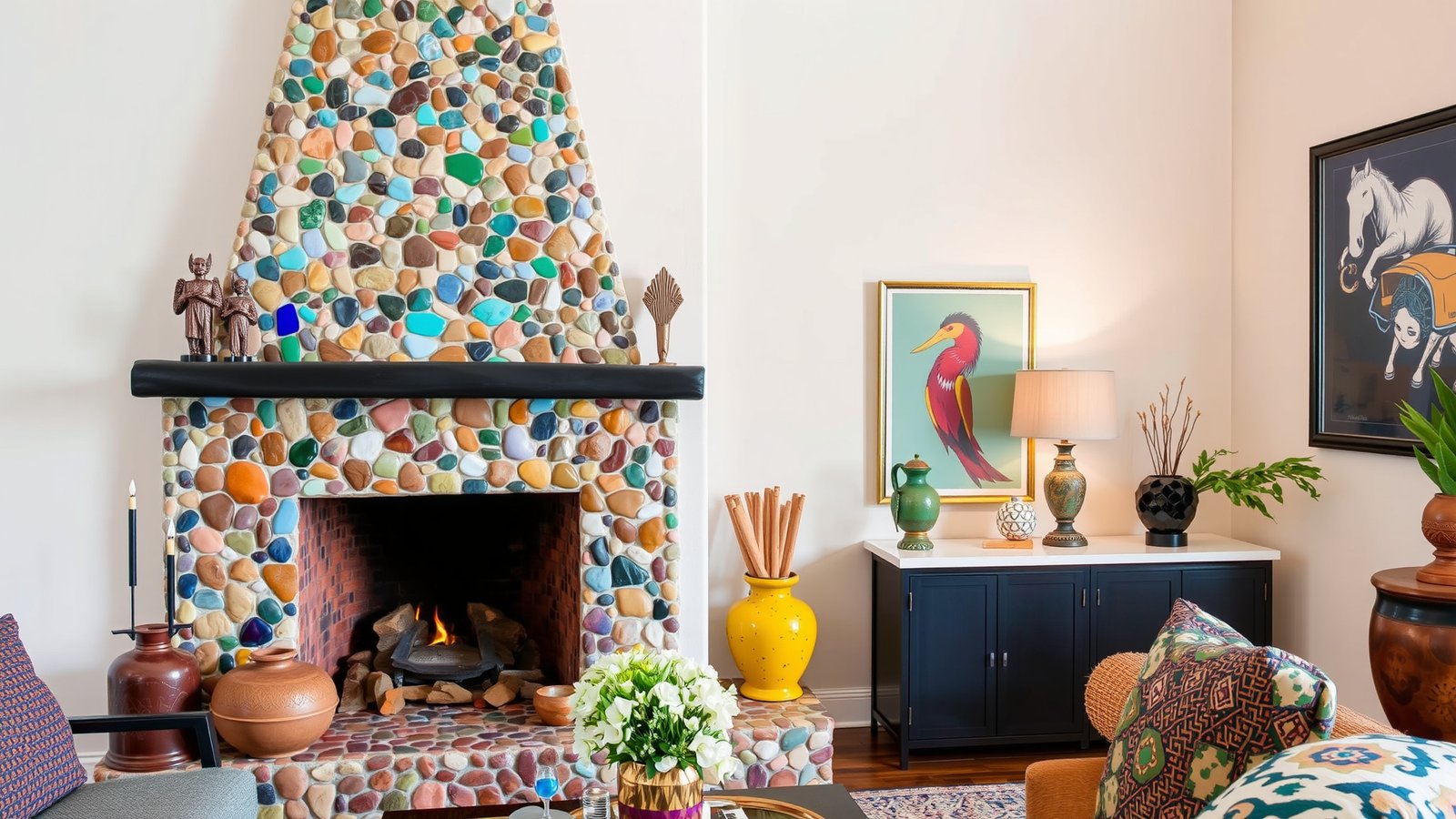
A mosaic stone fireplace is the version that takes the longest to build and the longest to stop looking at. Different stones in different sizes fitted together in a pattern — or deliberately without one — create a surface with the visual complexity of a painting and the permanence of masonry. It’s a commitment, and a beautiful one.
This style works in eclectic rooms that have already committed to personality over uniformity. It doesn’t belong in a minimalist room, a Scandinavian room, or anywhere that’s built around restraint. It belongs in a room where the art is bold, the textiles are layered, and the aesthetic is maximalist in the best sense — more is more, and every piece was chosen because someone loved it.
The mantle styling for a mosaic fireplace should be simple to the point of austerity. The fireplace itself is the art. A single object on the mantle — one vase, one candle, nothing else — or even a completely clear mantle, lets the mosaic read without competition.
Zen-Inspired — The Fireplace as Meditation Point
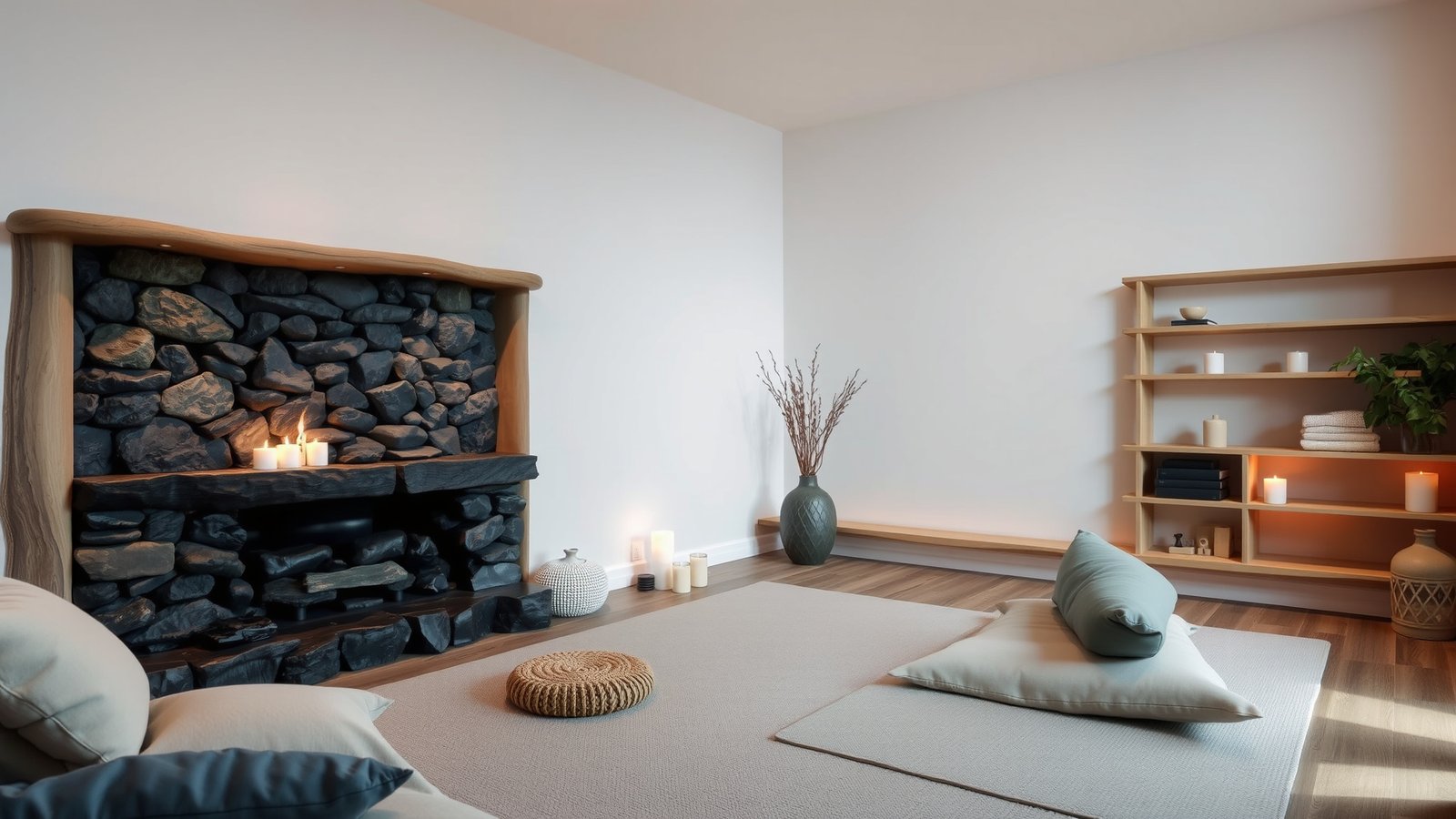
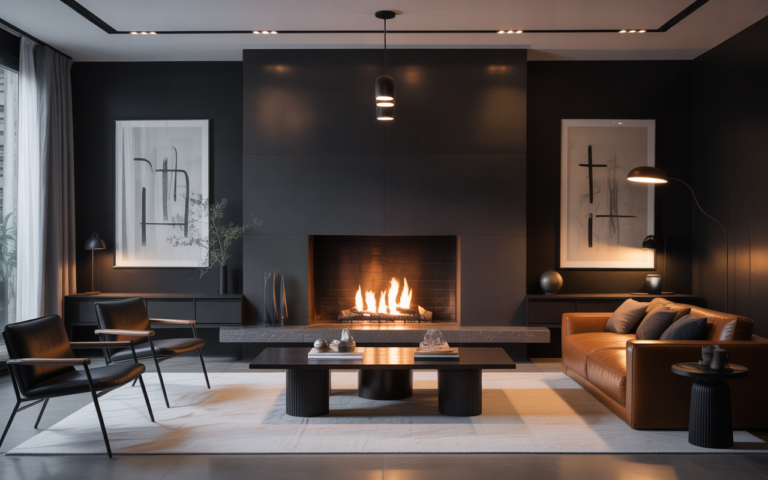
A Zen stone fireplace is about reduction. The lowest possible profile, the smoothest possible stone, the most integrated possible design — the fireplace that barely interrupts the wall it’s in, but creates a point of warmth and focus that organizes the whole room around it.
Dark, smooth stones — black granite, charcoal slate, dark basalt — work best for this approach. The darkness gives the fireplace weight without size, presence without drama. Pair this with natural wood at the same level (a low wood platform, a reclaimed wood floor, wood furniture with clean horizontal lines) and the combination feels grounded in a way that’s difficult to achieve with lighter materials.
The surrounding room needs to earn the Zen fireplace. This means genuinely edited — not just tidy, but thoughtfully sparse. A single low sofa or platform seating. One area rug, appropriately sized. Plants that are healthy and properly tended, because a struggling plant in a Zen room undermines the entire premise. Lighting at eye level or below, never overhead only.
Vintage Revival — Age and Character You Can’t Buy New
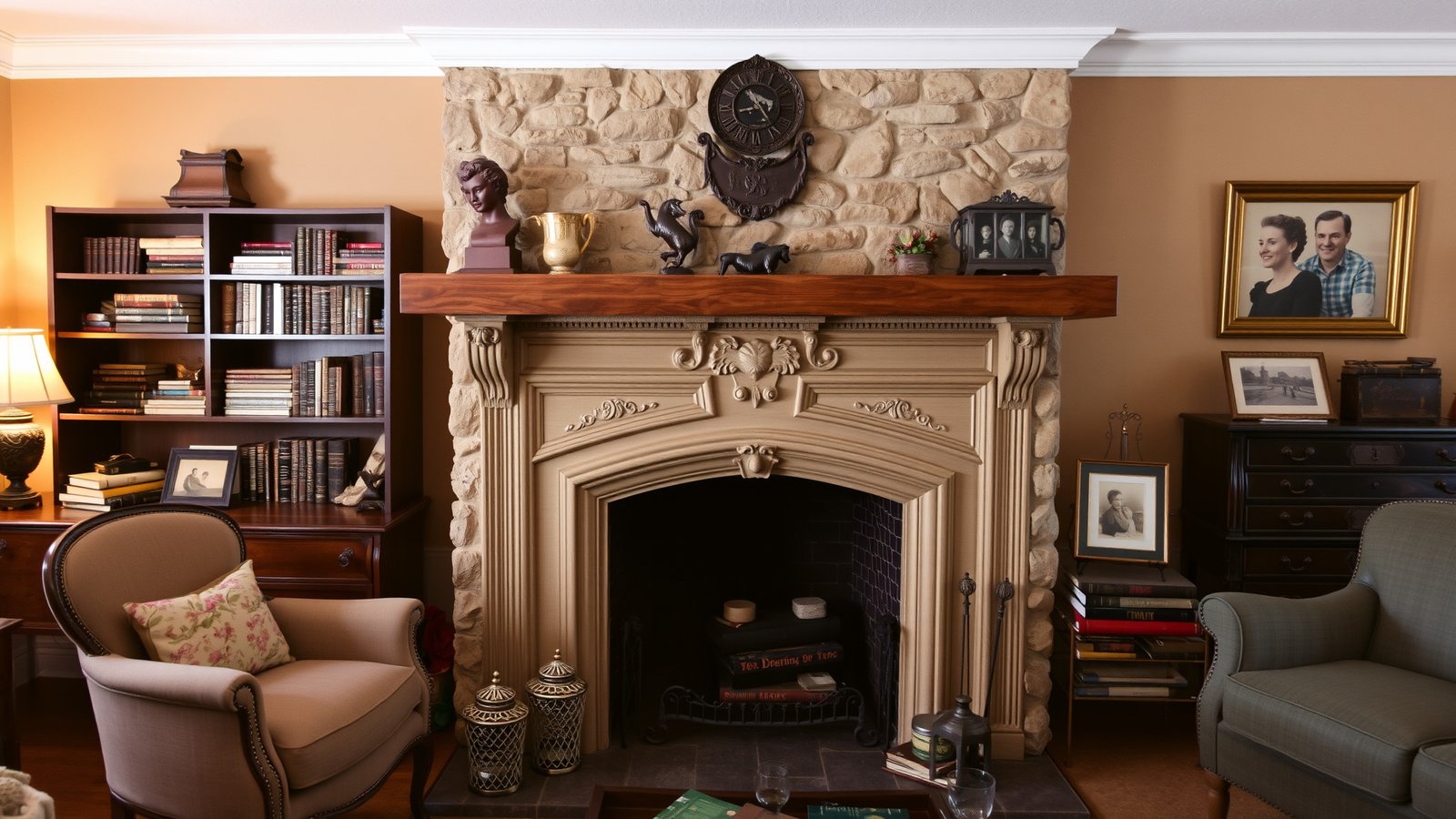
A vintage stone fireplace — or one that’s been made to read as vintage through the choice of stone and detail — brings a quality of accumulated history that no new build can replicate. The ornate details of a Victorian-era stone surround, the patina on aged limestone, the worn edges of a Georgian fireplace — these read as genuine because they are genuine.
If you’re working with an original vintage fireplace: restore rather than replace wherever possible. Original stone surrounds from historic periods have a quality of material and craftsmanship that modern reproductions don’t match. Even heavily stained or discolored stone can be cleaned with a specialist stone cleaner ($15–30 for a quality product) that removes decades of soot and buildup without damaging the surface.
For the mantle: antique objects are the right companions for a vintage fireplace, but they should be chosen individually rather than bought as a “vintage look” set. An old mantle clock, a pair of candlesticks with genuine age on them, a framed mirror with a worn gilt frame. Things that arrived at different times from different places and happen to share a quality of age.
Whitewashed Stone — Bright, Light, and Completely Transformative
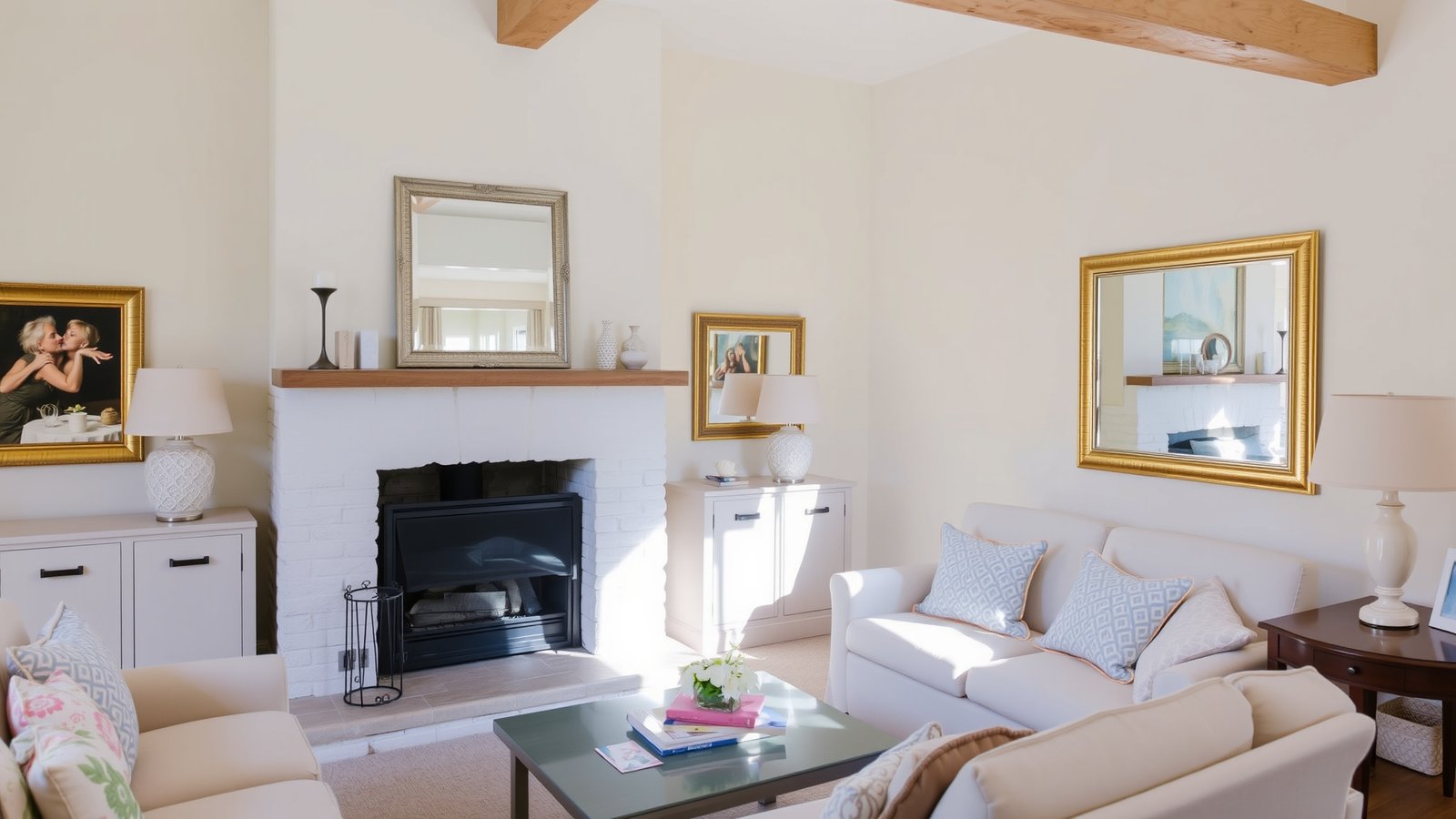
Whitewashing a stone fireplace is the renovation that takes a weekend and changes the room permanently. A stone fireplace that reads dark, heavy, or dated in its natural color — particularly the warm-orange Tennessee stone that was popular in the 1980s and 90s — becomes something entirely different under a coat of whitewash.
Limewash paint applied to stone (unlike regular paint, limewash soaks into the stone rather than sitting on top of it, which preserves the texture while transforming the color) is the proper method. Romabio Classico Limewash in a warm white shade, mixed thinner than the directions suggest for a more translucent effect, applied with a chip brush in irregular strokes — the result is a fireplace that looks like it’s always been white and always will be. A quart covers a standard fireplace surround for $20–30.
The room around a whitewashed fireplace benefits from the same light palette: warm whites, pale wood tones, light linen and cotton fabrics. The fireplace is no longer pulling the eye down and inward — it’s reflecting light outward, which changes how the whole room breathes.
Statement Tile Surround — Pattern Where You’d Least Expect It
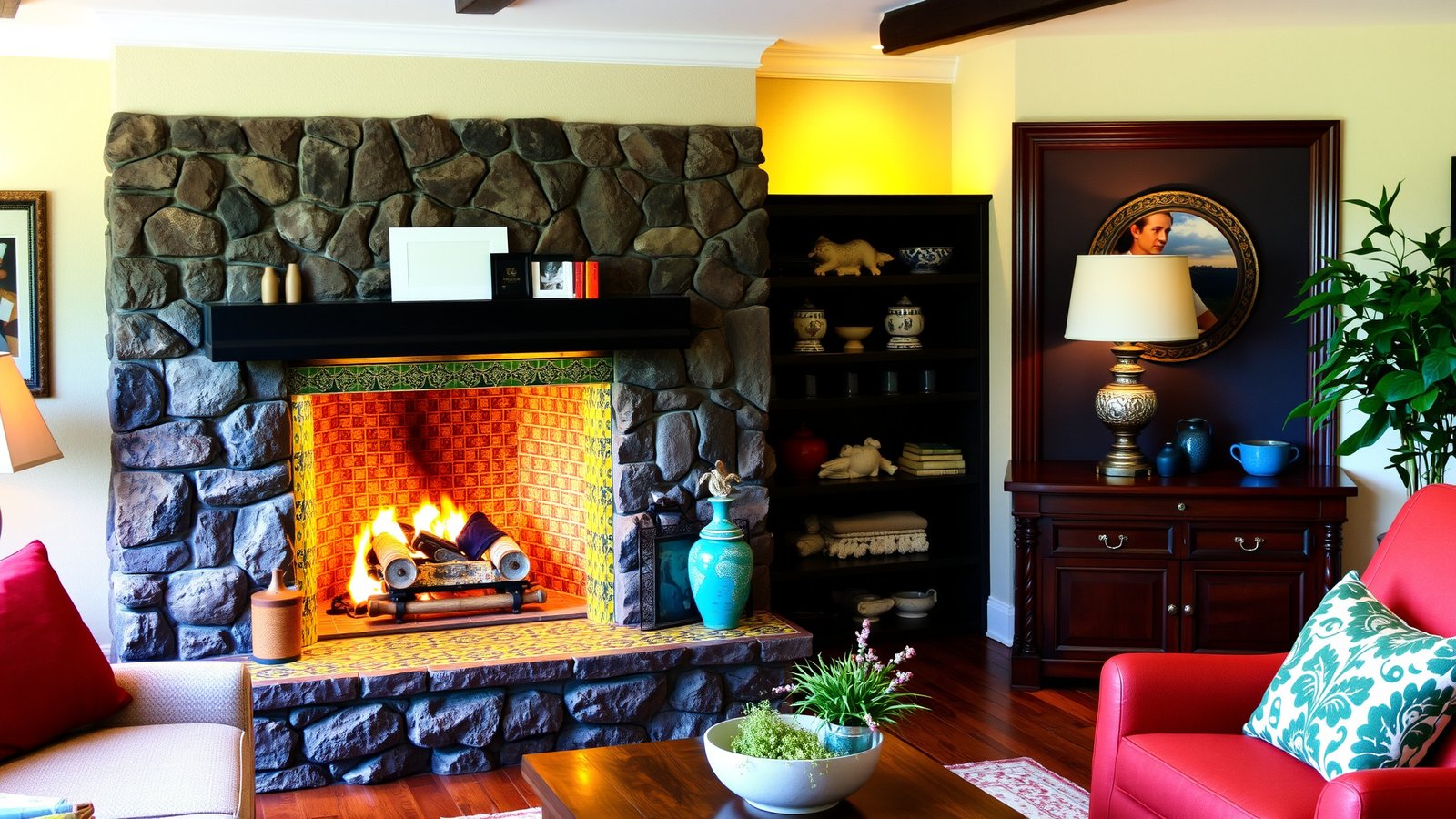
A stone fireplace with a patterned tile surround — the stone providing the mass and the tile providing the personality — is the version that references two different material traditions simultaneously and makes them agree. The stone says solid, permanent, elemental. The tile says chosen, specific, this particular person’s taste.
Moroccan zellige tile, hand-painted Spanish tile, or geometric cement tile all work as fireplace surround inserts within a stone frame. The scale should be considered relative to the fireplace opening — small intricate tiles get lost on a large fireplace, large format tiles can overwhelm a modest one. For a standard 36×36 inch opening, tiles in the 3×3 to 6×6 inch range read properly.
The styling above this kind of fireplace should be deliberately simple. The tile is the pattern in the room. Everything else should provide either contrast (solid colors, simple forms) or quiet support (neutral textures, natural materials). A single large piece of art above in a solid color, or a simple wooden framed mirror. The tile does not need company.
Contemporary Firebox — Architecture Dressed as Furniture
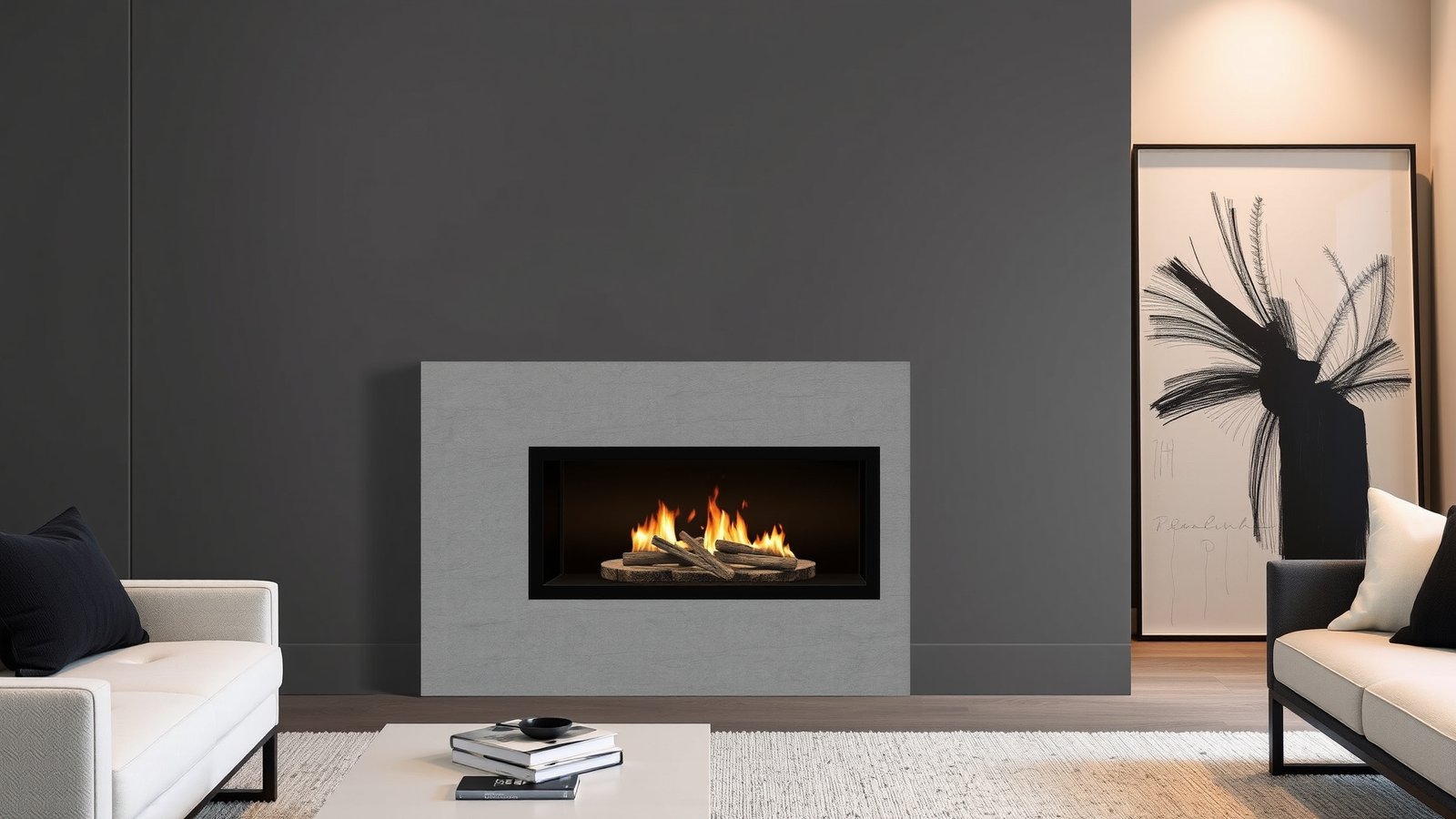
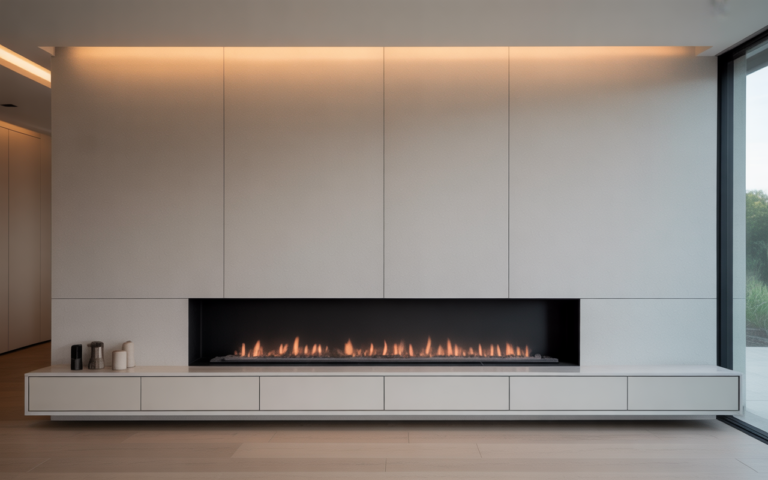
The contemporary firebox is the version that makes even people who say they don’t care about fireplaces stop and look. A square or rectangular opening in a smooth stone-clad wall — no mantle, no surround in the traditional sense, just a precise geometric opening from which fire emerges — is as close as interior design gets to a design object.
This approach requires commitment to the whole room. A contemporary firebox in a room full of traditional furniture and decor looks confused. In a room with clean-lined contemporary furniture, a restrained color palette, and careful lighting — it looks like the room was designed by someone who knew exactly what they were doing.
The stone for a contemporary firebox: honed black granite, polished dark basalt, or smooth concrete-look porcelain. The surface should be flawless and uniform. Any variation in color or texture needs to be intentional (like the movement in marble) rather than random. The precision of the firebox opening demands the same precision in the material surrounding it.
Nature-Inspired Stone — Bringing the Outside In
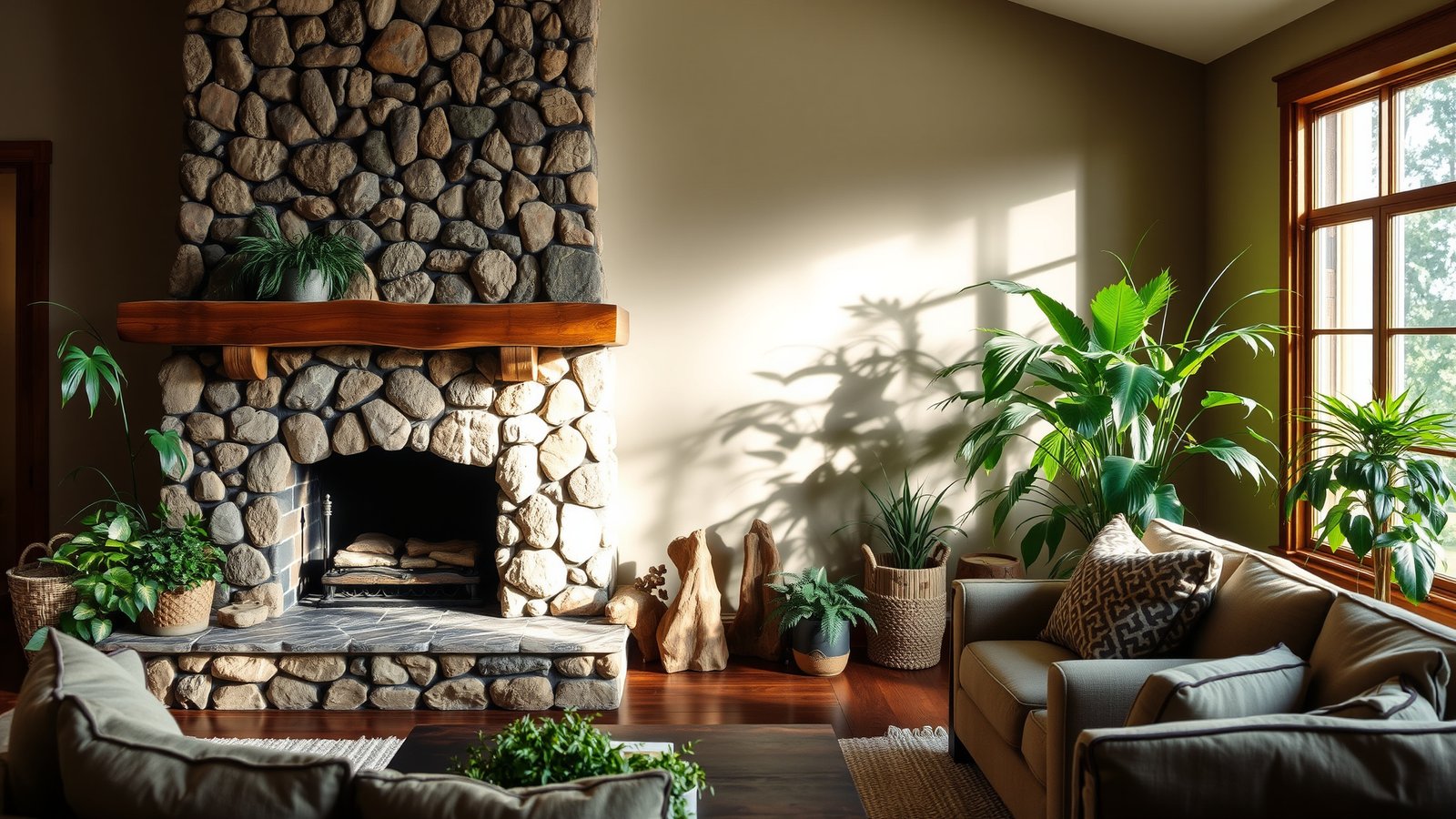
A nature-inspired stone fireplace uses stone specifically because it comes from the ground — and the design around it makes that origin explicit. Plants, wood, natural fiber textiles, earthy colors. The fireplace as a piece of geology that was invited inside.
The plants around a stone fireplace need to be genuinely healthy and properly sized. A single large fiddle leaf fig or a monstera in a natural clay or stone pot beside the fireplace does more for the nature-connected feel than a dozen small plants in plastic nursery containers. The plant should look like it belongs in the room, not like it arrived recently from a garden center.
For the colors that support this style: the 2026 paint color trends guide covers the earthy greens, warm terracottas, and natural ochres that are working best in rooms oriented around natural materials. Any of the warm earthy tones in that guide pair beautifully with natural stone — the stone already speaks the same language.
Questions I Get Asked a Lot About Stone Fireplaces
Can I update a stone fireplace without replacing it entirely? Yes — and often dramatically. Limewashing or painting changes a dated stone fireplace into something current for $20–50 in materials and a weekend of work. Replacing just the mantle (leaving the stone surround intact) is another high-impact, lower-cost update — a new solid wood beam costs $80–200 and transforms the whole fireplace. New styling on the mantle costs nothing if you already own the right objects and can completely change how the fireplace reads.
What should I put on a stone fireplace mantle? Less than you think you need. One tall element (a leaning mirror, a tall vase, a large piece of art), one medium element on the opposite side, and a few small objects creating rhythm between them. The stone surround is already providing significant visual weight — the mantle styling should be edited, not accumulated. If in doubt, remove one thing. The mantle almost always looks better with less.
Does the stone fireplace style need to match the rest of my room? It needs to belong in the room, which is different from matching. A rustic stone fireplace in an otherwise contemporary room can work if there’s a clear reason for it — if the house has some age to it, if the stone was original, if the rest of the room has enough warmth to bridge the gap. What doesn’t work is a stone fireplace that contradicts the room’s entire logic — a rough-hewn mountain stone fireplace in an otherwise sleek minimalist space, or a polished marble surround in a room that’s entirely casual and rustic.
What rug works best in front of a stone fireplace? Natural fibers — jute, sisal, wool — read the most harmoniously with stone because they share the same material vocabulary. The rug should be large enough to sit under the front legs of the nearest seating (an 8×10 anchors most living room arrangements) and extend beyond the fireplace hearth on both sides. A rug that’s too small makes the fireplace look like it’s floating rather than rooted in the room.
How do I style the wall space above my stone fireplace if I don’t want a mirror? One large piece of artwork — not a gallery wall arrangement, one single piece that’s properly scaled to the wall above the mantle. The scale should be wider than the fireplace opening itself but not wider than the mantle. A piece that’s too small above a stone fireplace looks lost; a piece that’s too large competes with the stone rather than complementing it. A 24×36 to 30×40 inch piece works for most standard fireplaces.
The Stone Fireplace Is the Room’s Best Argument for Itself
Every room that has a stone fireplace and doesn’t use it as the focal point is leaving its best asset unused. The furniture arrangement, the lighting, the styling of the mantle, the rug on the floor — all of it should acknowledge the fireplace as the thing the room is built around. When that’s working, you walk into the space and immediately understand it. When it’s not working, the room feels like a collection of things that happen to be in the same place.
The changes that make the biggest difference are almost never about the stone itself. They’re about what’s on the mantle, how the furniture is arranged, and whether the lighting makes the fire the warmest point in the room.
Start with the mantle. Edit it down to fewer things than feel comfortable. Then sit in the room and see what else needs to change.
I’m currently planning a mantle restyle for spring — I’ve had the same arrangement for almost a year and it’s time to refresh it. I’ll share what I land on.
— Emily
What’s the thing you most want to change about your fireplace situation right now? Drop it in the comments — I love a good fireplace problem.