15 Kitchen Trends Worth Actually Trying (And a Few to Skip)
My first real kitchen — not a dorm hot plate, an actual kitchen with four burners and counter space — was in an apartment I rented at 26. It was ugly in the specific way that rental kitchens are ugly: cream cabinets with brass handles from 1994, fluorescent lighting, and a backsplash that looked like someone had covered it in contact paper and then given up halfway through. I couldn’t repaint, couldn’t replace the cabinets, couldn’t do anything structural. So I learned, by necessity, how much you can change in a kitchen without touching a single permanent surface.
That kitchen taught me which trends are actually worth the effort and which ones are better in a magazine than in real life. These are the ones I’d actually do — and a few where I’d tell you to think twice.
Open Shelving — Only If You’re the Organized Type
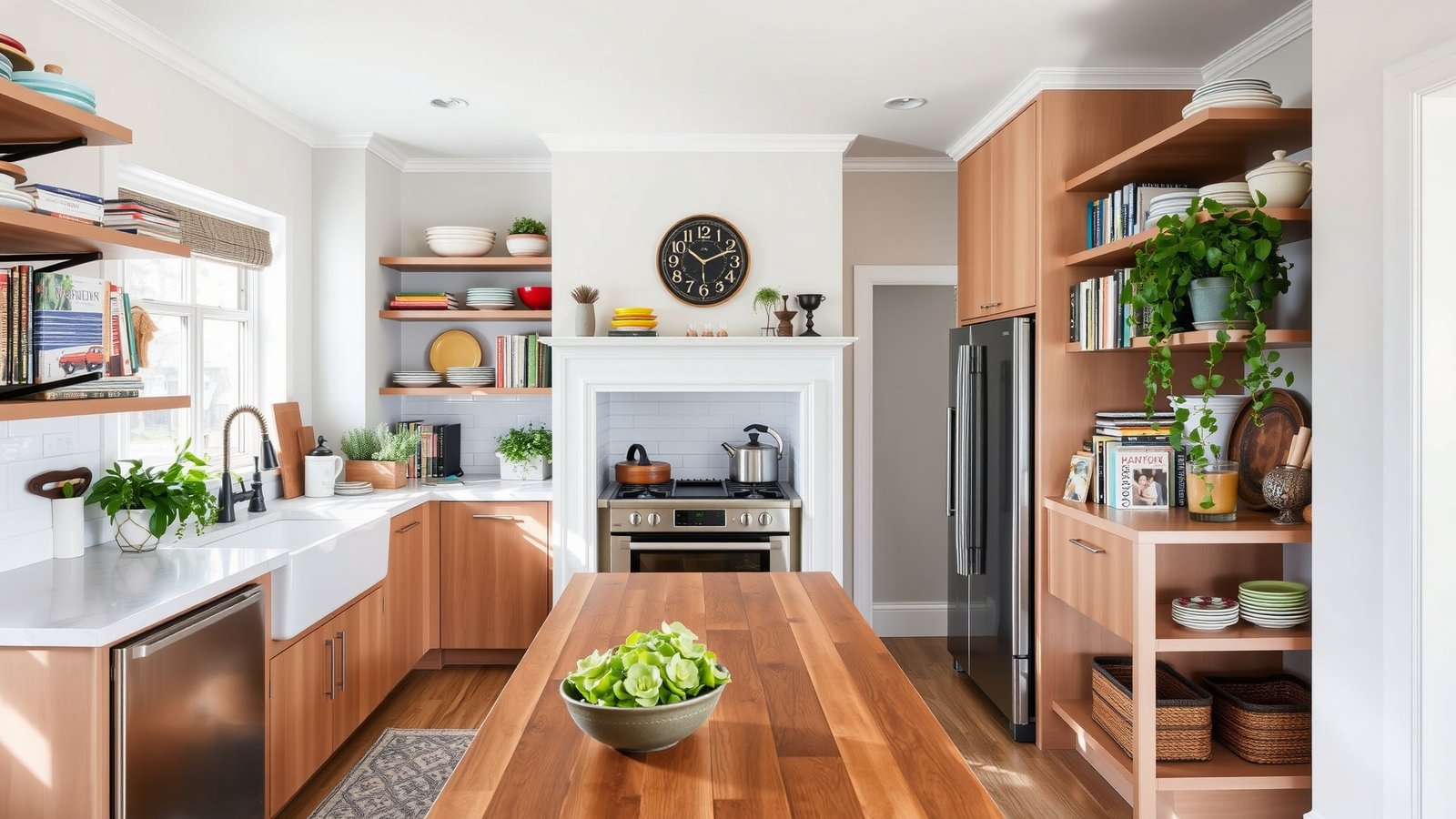
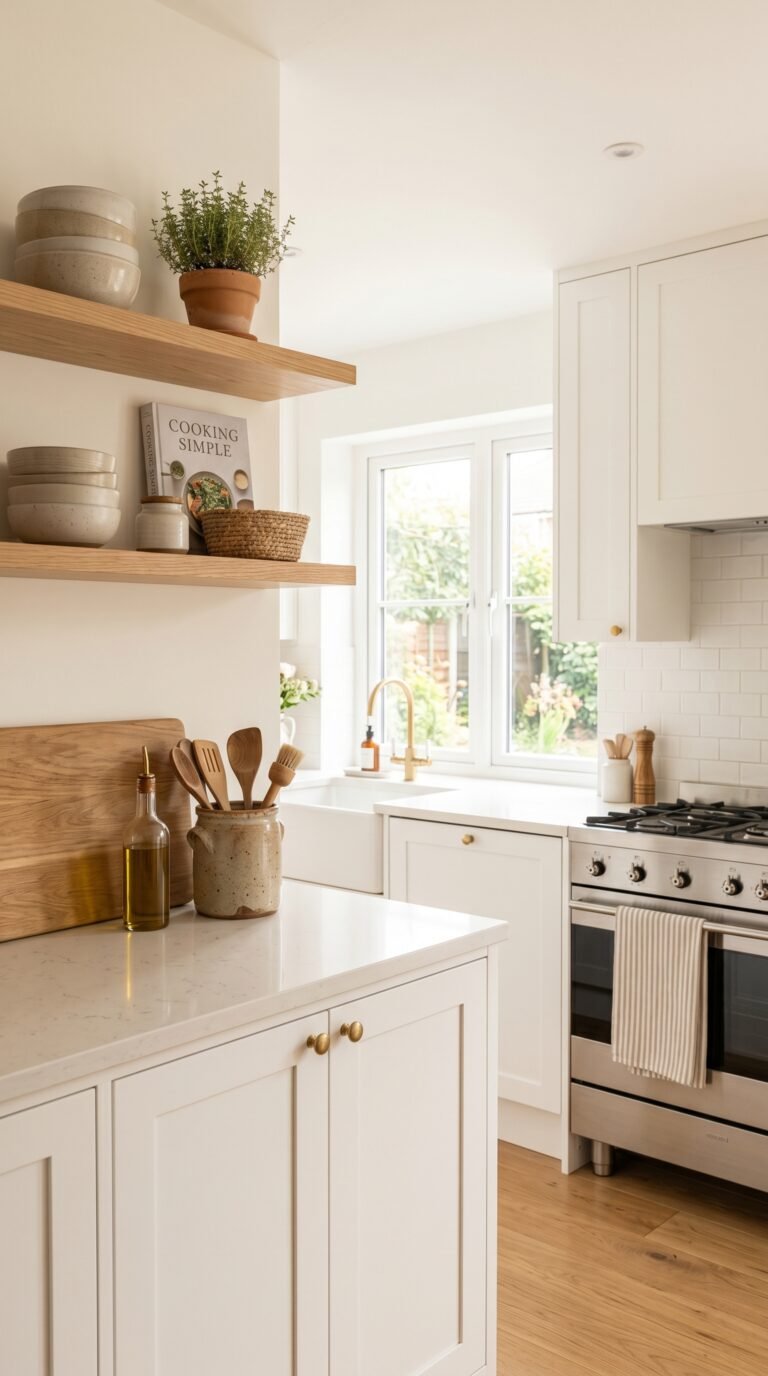
Open shelving looks incredible in photos. In real life, it requires a level of ongoing organization that not everyone maintains — and I say that as someone who styled an open shelf kitchen in my second apartment and watched it become a disaster within six weeks.
The principle is right: removing upper cabinets makes a kitchen feel more open, adds display space, and gives you a chance to make everyday objects part of the design. The execution is where most people underestimate the commitment. Open shelves don’t hide anything. Every mismatched container, every random appliance you don’t have a home for, every cereal box — all of it is on display, all the time.
What actually makes open shelving work: edit ruthlessly before you style. You need fewer items than you think on each shelf, and everything visible needs to be worth looking at. Matching white dishes (IKEA FLITIGHET dinner plates, $4.99 each, are genuinely beautiful), a row of cookbooks in a similar color family, a couple of plants. The shelf is the frame — the objects are the art. If you’re not the type to stay on top of that, keep the cabinets.
Bold Cabinet Colors — One Section at a Time
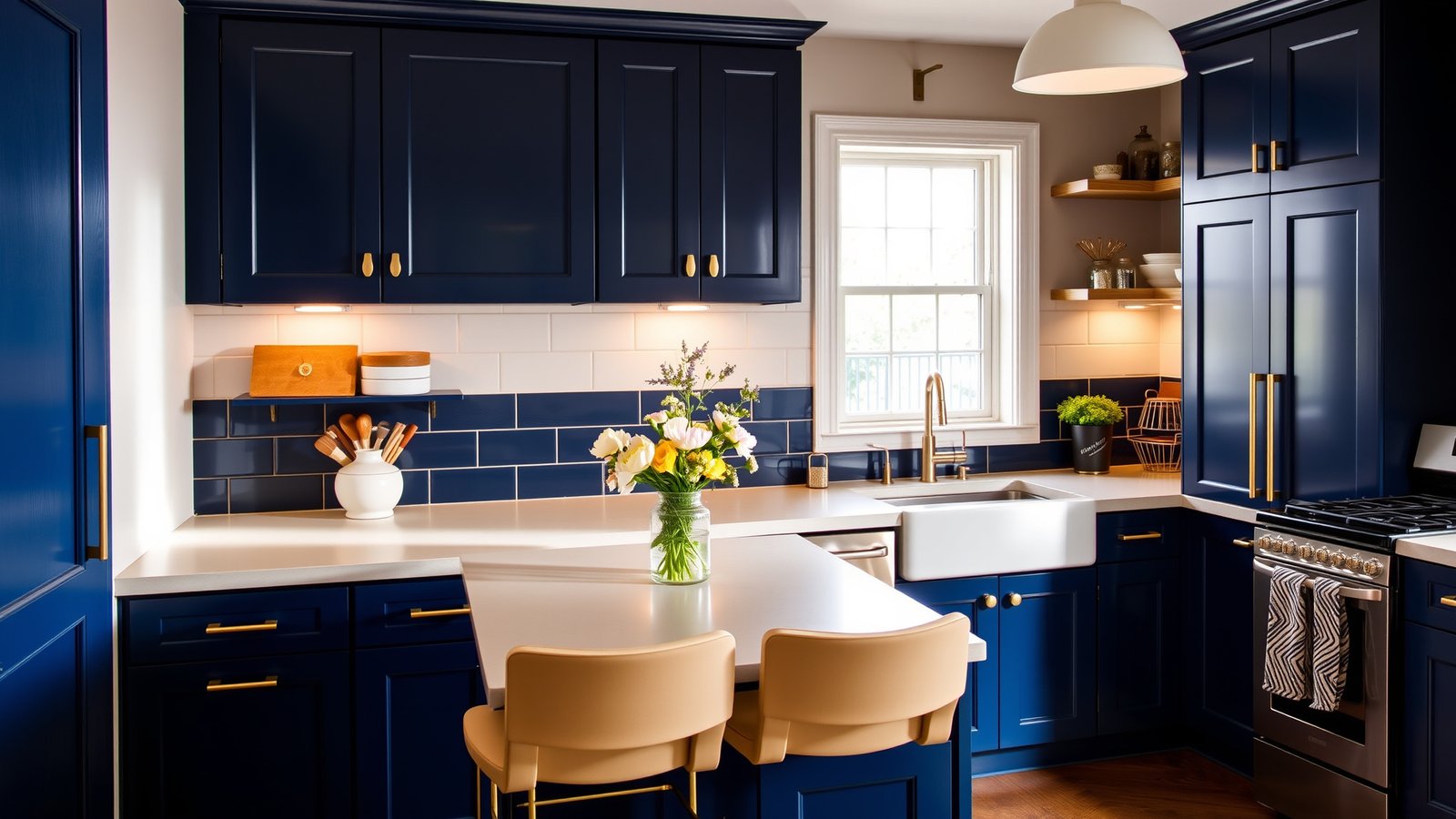
Cream and white cabinets have had a very long run. Bold cabinet colors — navy, forest green, deep burgundy, warm charcoal — are genuinely one of the more impactful kitchen changes you can make without touching the layout.
Here’s my honest experience with this: I helped a friend paint her kitchen island forest green while keeping the perimeter cabinets white. She agonized over it for two months. We did it in a weekend. She messages me about it at least once a month to say she still loves it. That’s the two-tone approach — one bold section, one neutral — and it’s the most foolproof way to try a dramatic color without committing your entire kitchen to it.
For cabinet paint, I always recommend Benjamin Moore Advance — it’s formulated for furniture and cabinets specifically, goes on smoothly, and hardens to a finish that holds up to daily use. A quart runs about $35–45. Pair bold cabinets with brass or unlacquered gold hardware and the whole thing looks like it came out of an expensive renovation.
For which bold colors are gaining ground in kitchens right now, the 2026 paint color trends guide is worth reading before you commit to anything.
Smart Kitchen Technology — Start Small
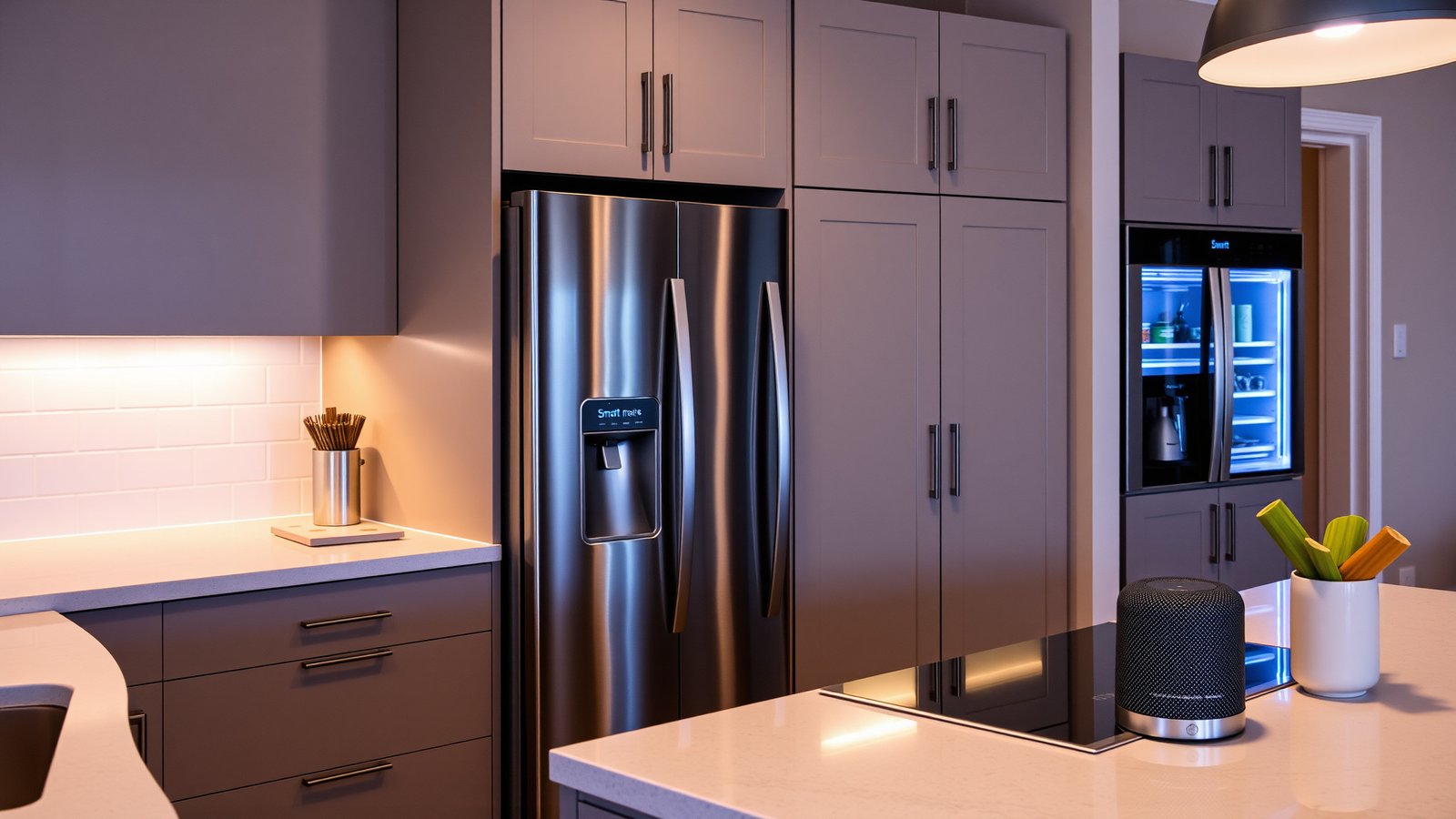
Smart kitchen technology ranges from genuinely useful to very expensive and confusing. I’m firmly in the camp that says start with one thing and see if you actually use it before buying the whole ecosystem.
The smart speaker is the entry point worth making. An Amazon Echo or Google Nest Mini ($35–50) sitting on the counter handles timers, unit conversions while your hands are covered in flour, recipe steps read aloud while you cook, and music without touching your phone. I’ve used mine in every kitchen I’ve had for the last four years. It’s the first thing I plug in when I move.
From there: smart bulbs under cabinets (Philips Hue White, $15–20 per bulb) let you shift from bright task lighting while cooking to warm ambient light for eating. That’s the change that makes the most difference in how a kitchen feels in the evening. Beyond that, the smart refrigerators and internet-connected ovens are impressive in theory and less useful in practice for most people. The basics done well beat complicated tech done halfway.
Eco-Friendly Materials — Specifically Reclaimed Wood
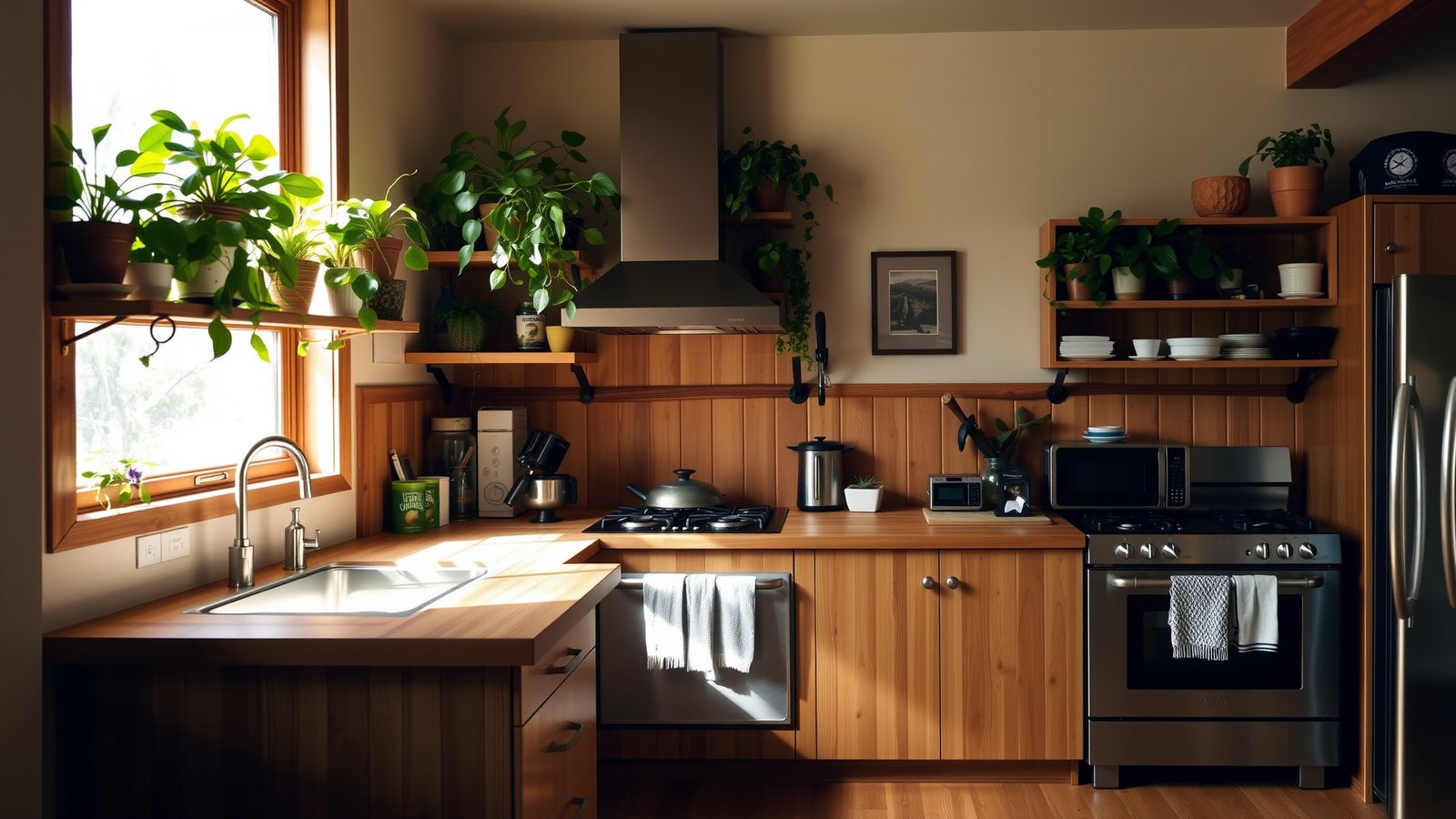
Sustainable kitchen materials cover a wide range — bamboo cutting boards to full reclaimed wood countertops to recycled glass tile backsplashes. Not all of it is practical at every budget, but some of it is more accessible than people think.
Reclaimed wood floating shelves are the version I keep coming back to. They add warmth and texture that no manufactured material replicates, and reclaimed wood pieces are often cheaper than new wood because you’re sourcing them from salvage yards or Etsy sellers rather than furniture retailers. A pair of solid reclaimed wood shelves, 30–36 inches wide, runs $60–150 depending on where you find them and whether you bracket them yourself.
For countertops, butcher block is the sustainable option that’s also genuinely affordable — IKEA’s BADELUNDA butcher block countertop starts at around $129 for a 6-foot section. It requires oiling every few months with food-safe mineral oil ($8–12 a bottle) and it develops character marks over time, which I think looks better than a sterile laminate that stays perfect forever.
Multi-Functional Islands — Size Before Style
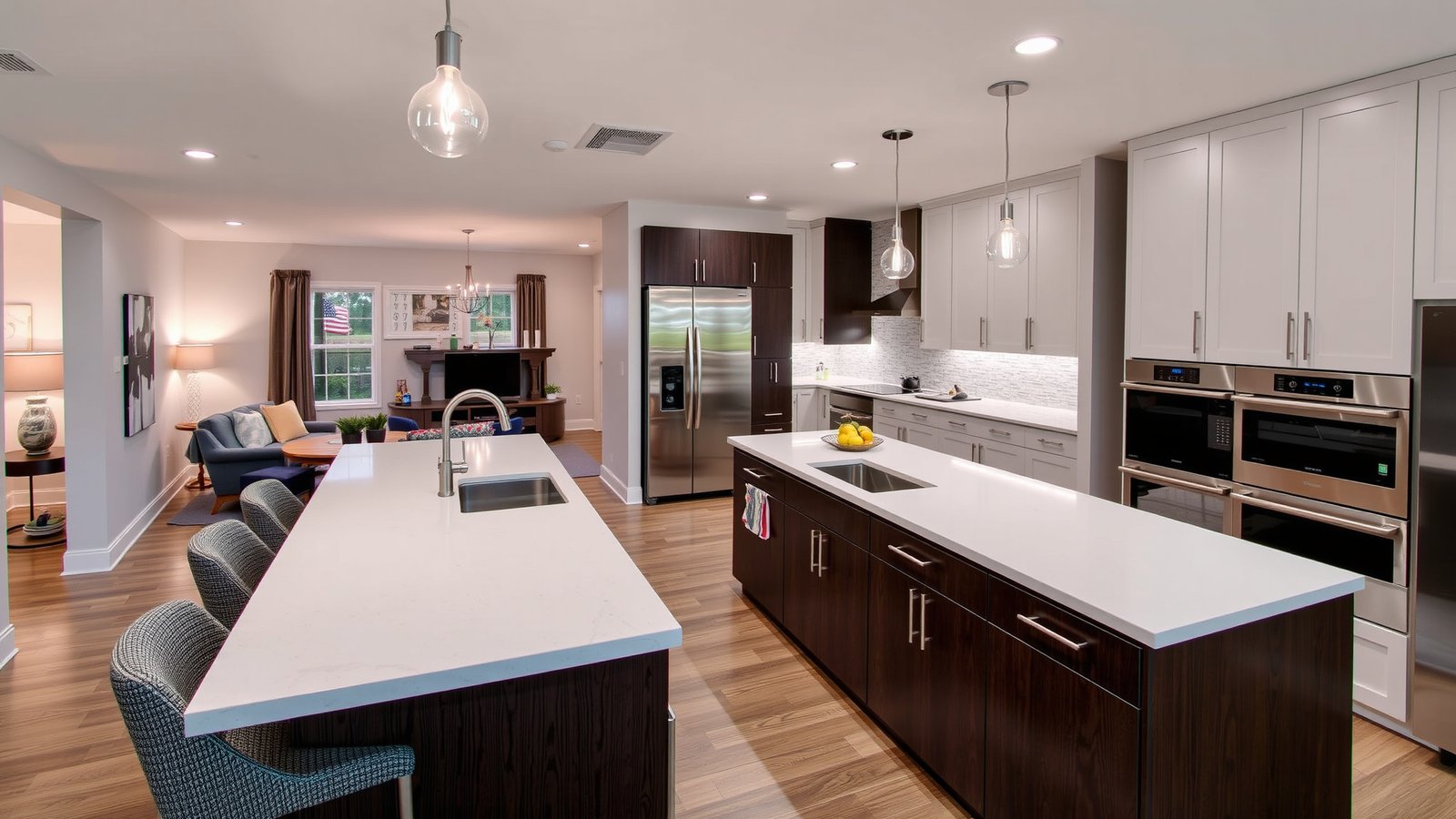
A kitchen island is one of those additions that can transform how a kitchen works — or clutter it permanently, depending on how well-sized it is. The most common mistake I see: an island that’s too large for the kitchen it’s in, leaving less than 36 inches of clearance on each side and making the whole space harder to use than before.
The rule I follow: minimum 36 inches of walkway around all sides of the island. Ideally 42–48 inches if there’s a second person regularly cooking at the same time. Measure before you buy or build anything. A 30×60 inch island is enough work surface for most home cooking without eating the kitchen alive.
For the island itself: a butcher block top on a simple base with shelves or drawers beneath it — IKEA’s VADHOLMA kitchen island ($349) is a solid starting point — pendant lights hanging above at 28–34 inches from the surface, and bar stools at the right height (counter height stools for 36-inch counters, bar height for 42-inch). The pendant lights are the detail most people underinvest in and they’re the thing that makes an island feel finished rather than like furniture you just pushed into the middle of the room.
Vintage Accents — One, Not Five
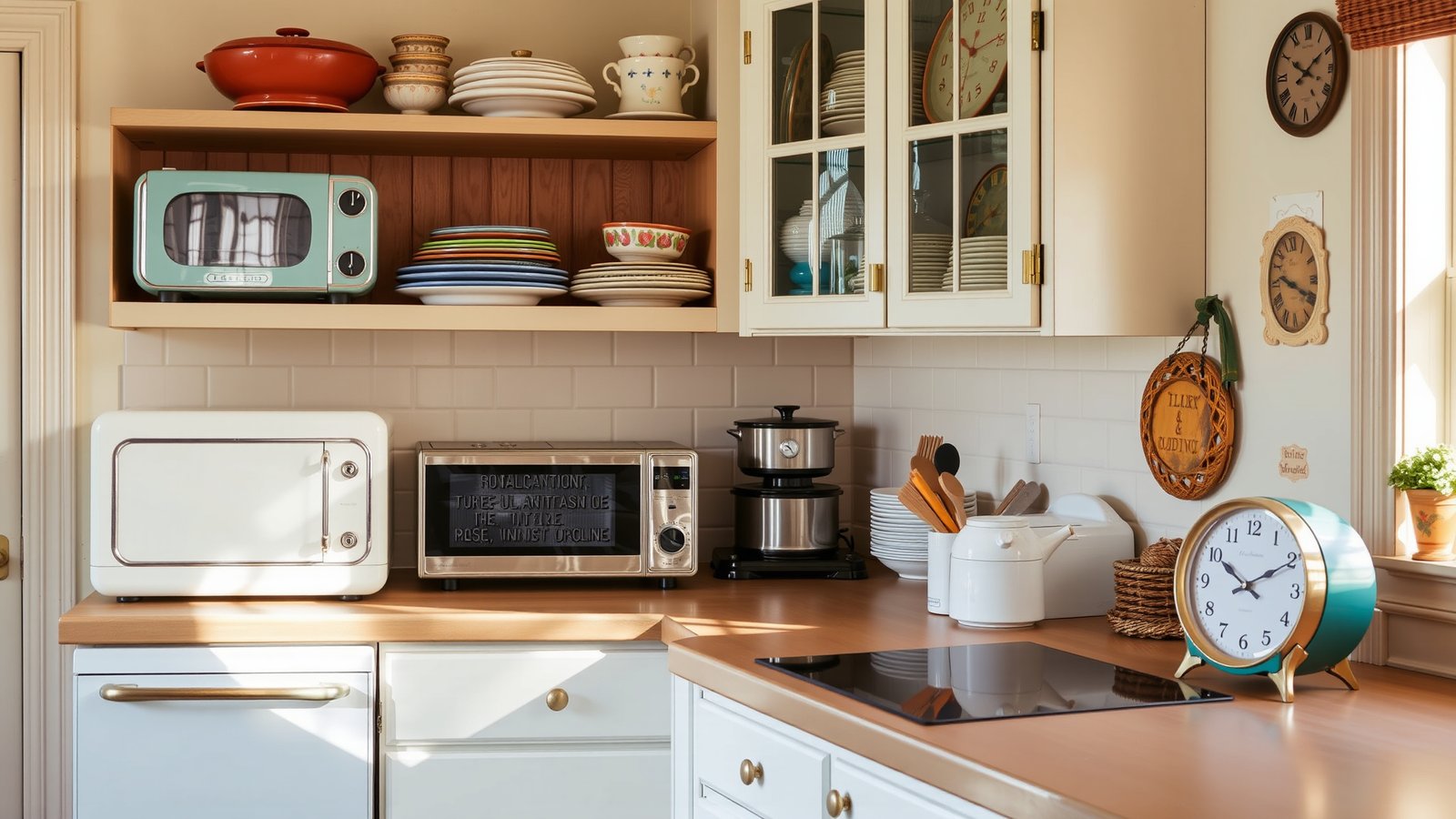
Vintage elements in a kitchen add the kind of warmth that no amount of new accessories can replicate. An old ceramic canister set, a 1970s enamel colander, a retro-style kettle, vintage jars repurposed for dry goods — all of these tell a story that a uniform set of matching containers doesn’t.
The same principle I apply to vintage pieces in bedrooms applies here: one or two pieces that stand out, not an entire collection competing for attention. A classic Smeg kettle ($150–180) or a vintage-styled KitchenAid in a bold color as a statement appliance on the counter. Vintage glass jars sourced from a thrift store for $3–6 each, holding pasta, lentils, and flour on the open shelf. A cast iron skillet hanging from a pot rack. Pieces that have a life to them.
Open Floor Plans — Work With What You Have
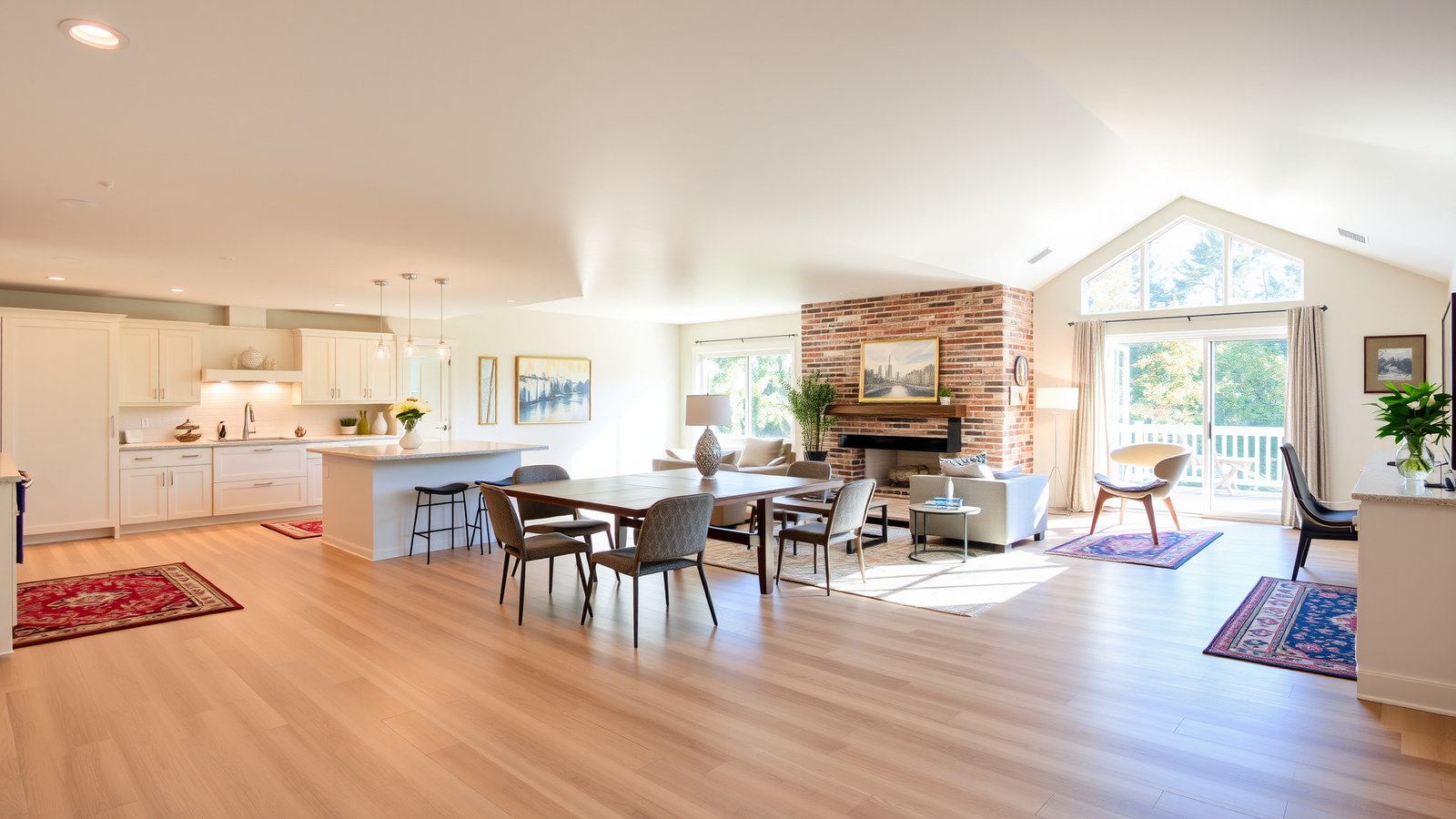
Open floor plans are difficult to create from scratch in an existing home without significant structural work — but if you’re already in an open-concept space or considering a renovation, the kitchen-to-living flow is worth prioritizing.
The practical consideration most people miss: a kitchen that’s visually open to a living room needs to look good at all times. Not just when guests come over — all the time. The dishes in the drying rack, the meal prep in progress, the random box of cereal on the counter — all of it is visible from the sofa. That changes how you organize the kitchen more than any design decision does.
For cohesion across the open space: keep the flooring consistent throughout or transition deliberately (hardwood in the living room, tile in the kitchen, with a clear delineation at the boundary). Use a color palette that links the spaces — pull one accent color from the kitchen into the living room, or carry the same hardware finish through both areas.
Textured Surfaces — Mix Them Thoughtfully
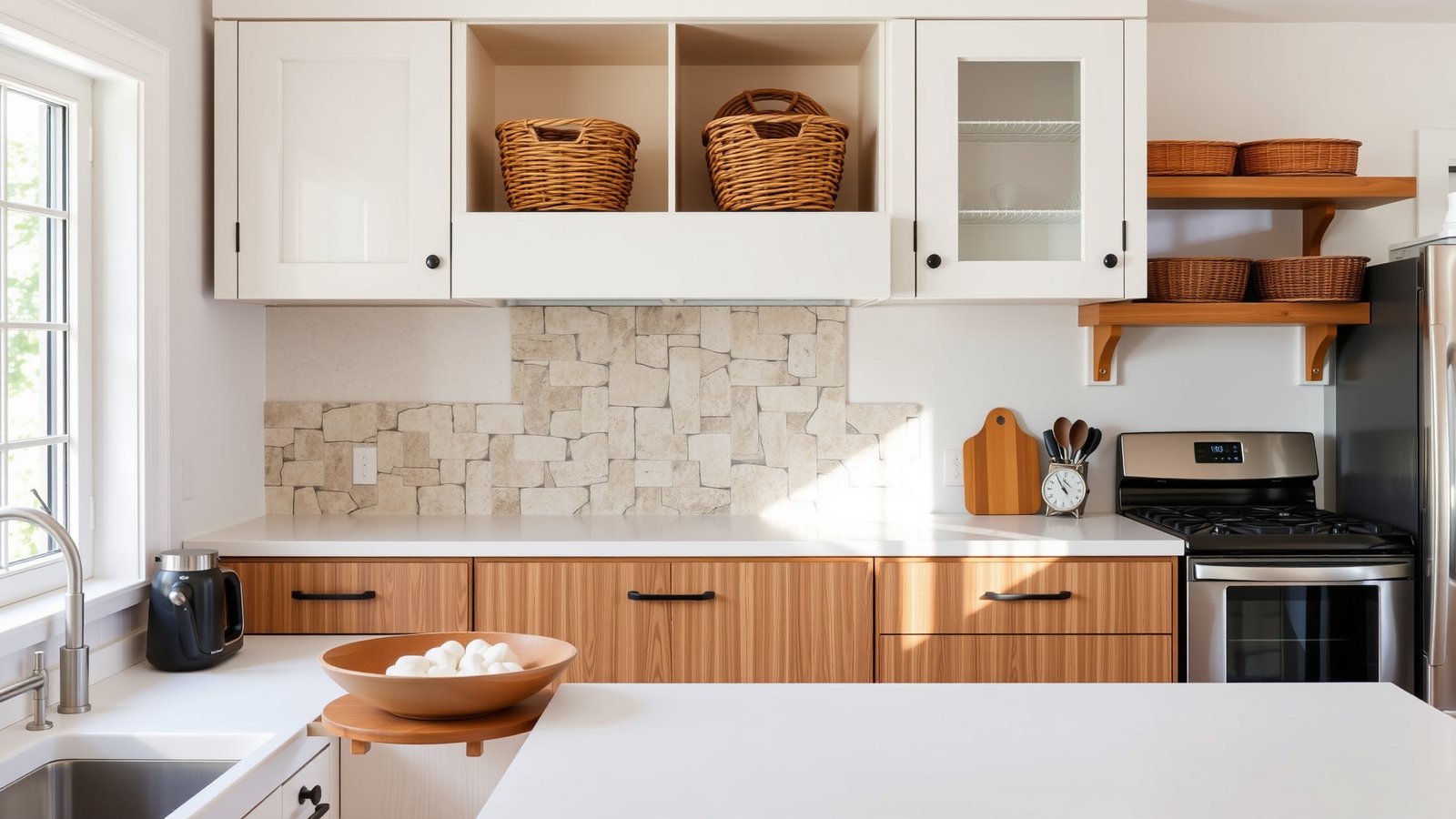
Texture is what keeps a kitchen from feeling flat. A completely smooth kitchen — all laminate, all matte paint, all uniform surfaces — looks fine in photos and slightly sterile in person. The combination of different surface textures is what creates depth and warmth.
The combinations that work: a rough stone or matte tile backsplash against smooth quartz countertops. Warm wood open shelves against painted cabinet faces. A woven jute rug at the kitchen sink (the one spot a soft surface makes the most practical difference — standing on it while washing dishes is genuinely more comfortable). Mixing matte and glossy finishes in the same kitchen — matte cabinet fronts with glossy subway tile, for example — adds visual interest without complexity.
The combination that doesn’t work, learned the hard way: too many wood tones that don’t match. Light oak floors, medium walnut shelves, and dark espresso cabinets all in the same kitchen look like different pieces of furniture trying to coexist rather than a designed space. Pick one wood tone and stay within that family.
Minimalist Design — Countertop Rules First
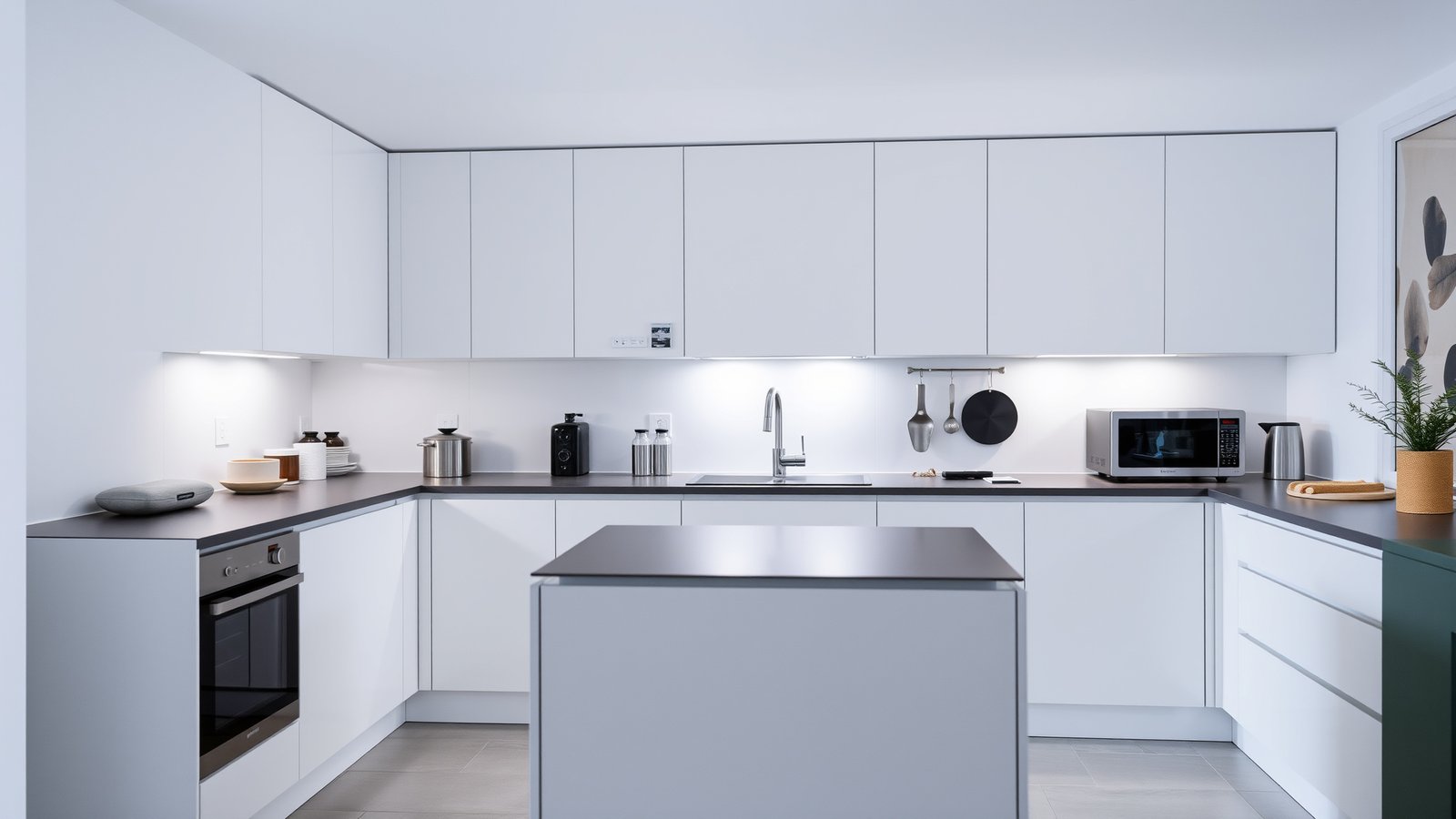
A minimalist kitchen is built on countertop discipline more than anything else. The design can be perfectly executed — great cabinets, beautiful hardware, nice lighting — and still look chaotic if the countertops are covered in appliances, mail, random jars, and things waiting to be put away.
The starting point I give everyone: put everything off the countertop and into a cabinet or drawer. Everything. Then add back only what you use every single day. For most people that’s a coffee maker, a kettle, and maybe a knife block. Everything else that seems essential probably gets used three times a month and doesn’t need to live on prime real estate.
For a small kitchen specifically, the minimalist approach isn’t just aesthetic — it makes the space work better. Every appliance on the counter is taking space that could be prep surface. The small bedroom ideas principle of getting things off the floor applies directly to kitchens: get things off the counters, and the room immediately feels twice the size.
Statement Backsplashes — Commit to One Thing
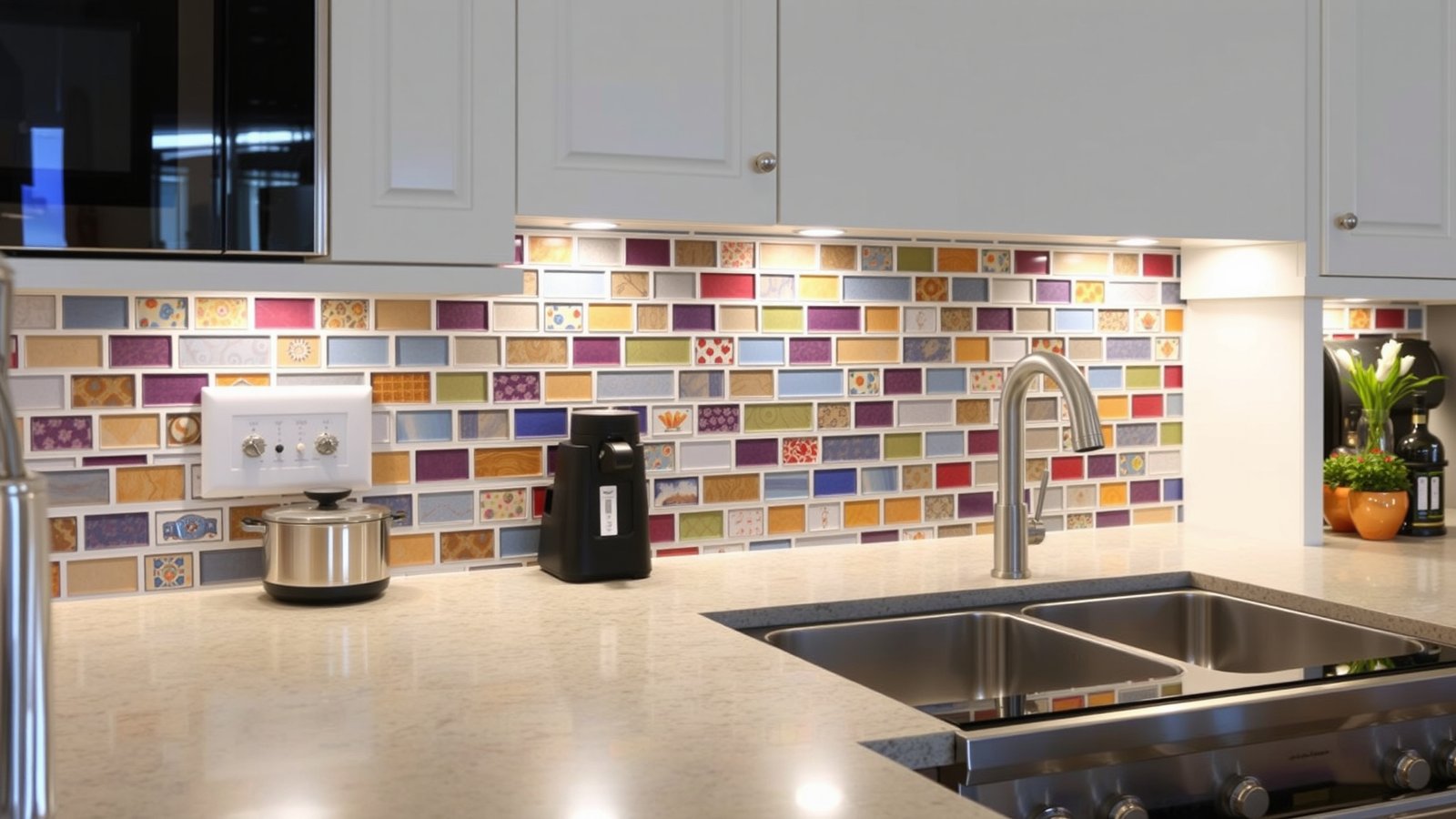
A statement backsplash is one of the highest-impact changes you can make in a kitchen because it covers a large surface area and draws the eye immediately. Done well, it makes simple cabinets look intentional. Done poorly, it competes with everything else in the kitchen and the whole space feels unsettled.
The rule: if the backsplash is the statement, everything else should step back. Simple cabinet color (white, cream, light gray), minimal hardware, clean countertop. The backsplash gets to talk. Everything else listens.
Zellige tile — the slightly irregular, handmade Moroccan tile that has a subtle shimmer — is probably the most beautiful backsplash option available right now. It runs $15–25 per square foot and the installation cost is the bigger expense, but the result is genuinely stunning even in a rental-basic kitchen. For a more affordable take, zellige-effect ceramic tiles start at $4–8 per square foot and read similarly from a few feet away.
Natural Light — And What to Do When You Don’t Have It
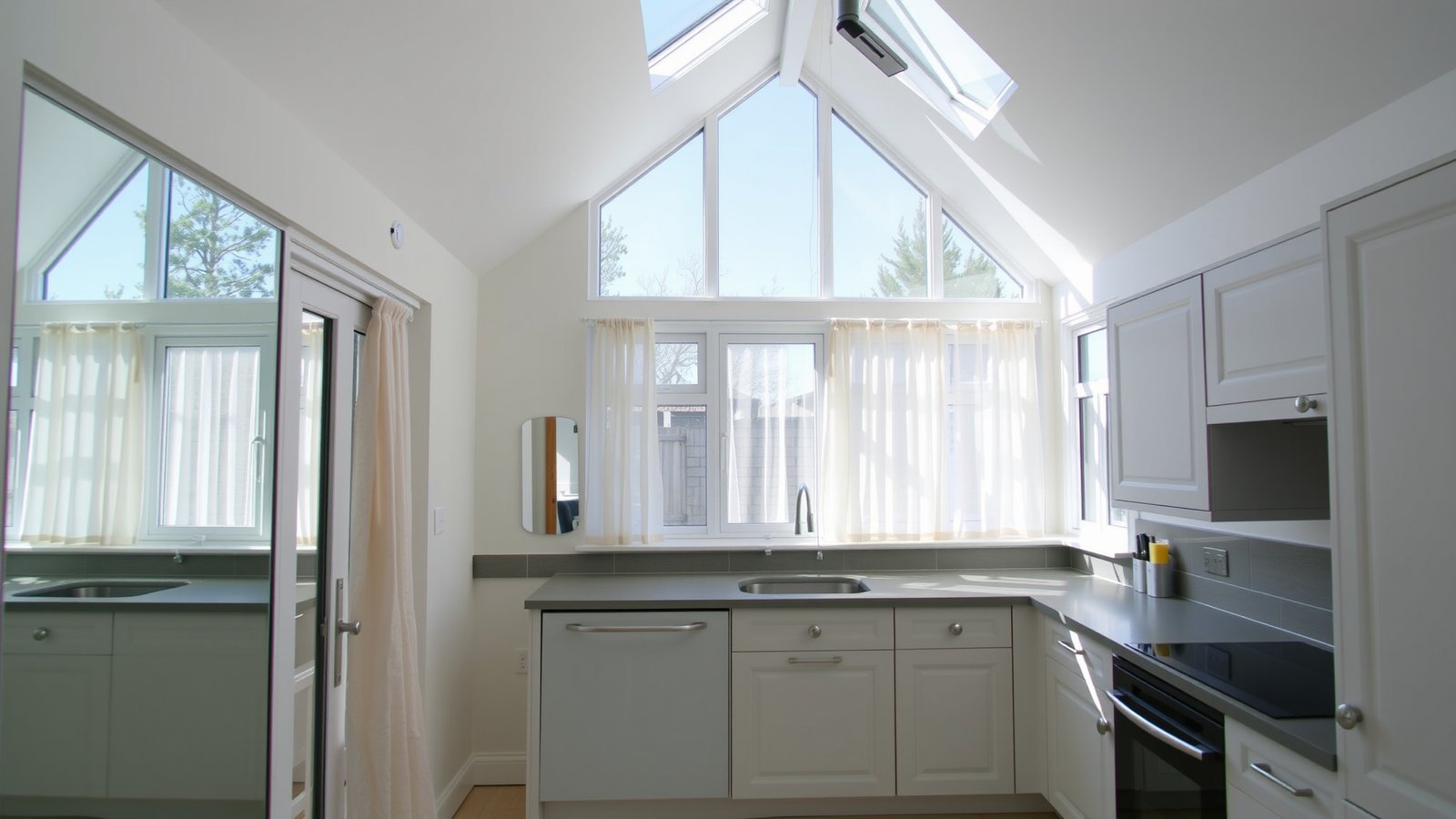
Natural light in a kitchen changes everything. It makes food look better, makes the space feel larger, and makes cooking feel less like a task you’re doing in a closet. If your kitchen has good windows, the one thing I’d beg you not to do is cover them with heavy curtains that block half the light.
Sheer linen panels hung from ceiling height, not window frame height — this is the same rule that applies in bedrooms. They soften the window without blocking light, and hanging them high makes the window look taller than it is.
If your kitchen has poor natural light (mine for three out of six apartments has been nearly windowless), the solution is layered artificial light that mimics what natural light does. Undercabinet LED strips at 3000K (warm but still clear enough to see what you’re chopping) plus a warm pendant overhead plus a brighter can light directly over the sink. None of these is expensive on its own — LED strip lights run $20–40 for a full kitchen installation — but combined they eliminate the dungeon feeling entirely.
Unique Lighting Fixtures — Don’t Undersize
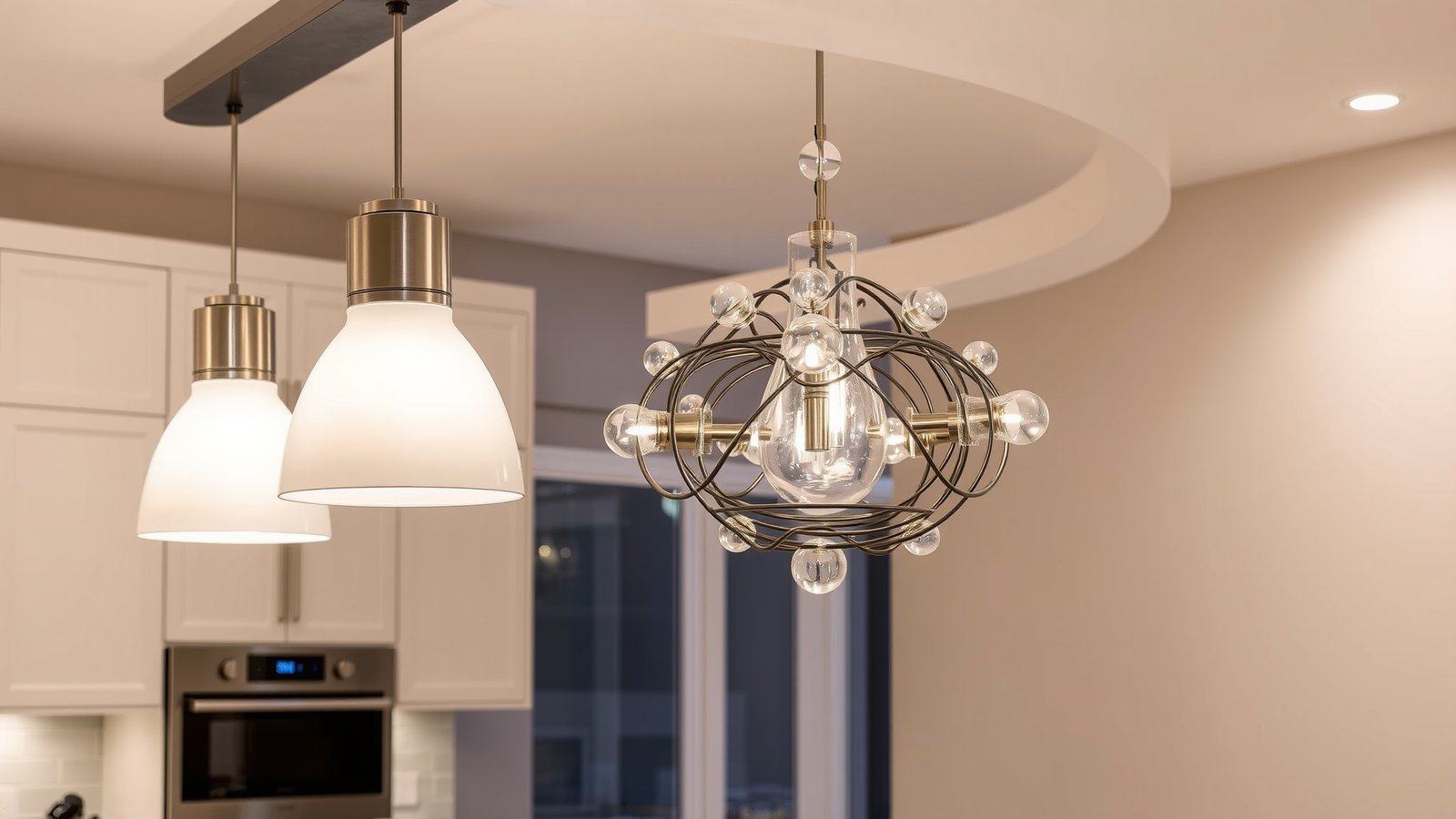
Pendant lights over a kitchen island are one of those details where the most common mistake is going too small. A pendant that’s too small for the space looks like it got lost on its way to a different room. For a standard 30×60-inch island, two pendants at 8–12 inches in diameter hung 30–34 inches above the surface is the formula that works consistently.
For fixture style: matte black is the most versatile finish and works in everything from modern to farmhouse to transitional kitchens. Brushed brass reads warmer and more elevated. Woven rattan or bamboo pendants add texture and warmth — and they’re often considerably cheaper than metal fixtures. A rattan pendant from Amazon or a home goods store runs $40–80 and looks like it cost three times that.
The thing nobody says enough: the light bulb matters as much as the fixture. A beautiful pendant with a harsh cool-white bulb looks wrong. Put a 2200–2700K Edison-style LED in it and the whole thing transforms.
Creative Storage Solutions — Think Vertical
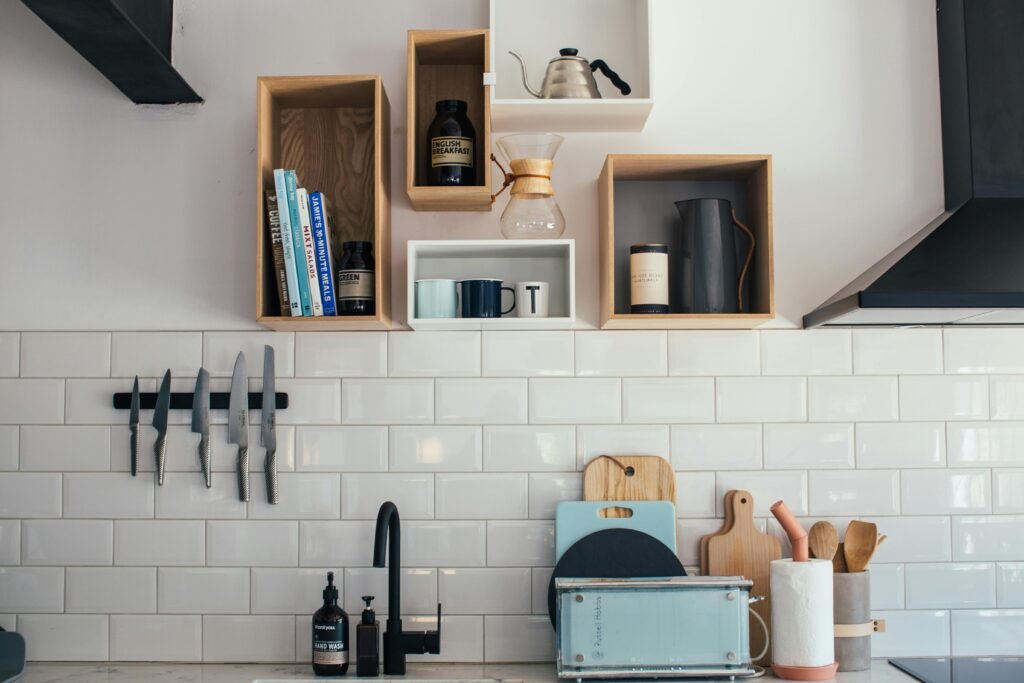
Most kitchens have more storage potential than their owners realize — it’s just vertical rather than horizontal. The walls above the counter but below the cabinets, the inside of cabinet doors, the space above the refrigerator, the narrow gap between the refrigerator and the wall.
The magnetic knife strip ($20–35 mounted on the wall above the counter) frees an entire drawer and makes your knives look like a professional kitchen. A pot rack hung from the ceiling or mounted to the wall eliminates the cabinet where pots and lids go to become unsolvable puzzles. Pull-out shelf organizers inside existing cabinets ($15–30 each) turn dead back-of-cabinet space into accessible storage.
Clear containers for dry goods — pasta, rice, lentils, flour, coffee — make pantry cabinets look organized without additional effort. OXO POP containers are the gold standard at $10–25 each. IKEA’s 365+ containers are $2–4 each and work perfectly well. The label goes on the container, not the shelf, so it can be seen when the cabinet opens.
Personal Touches — Curated, Not Collected
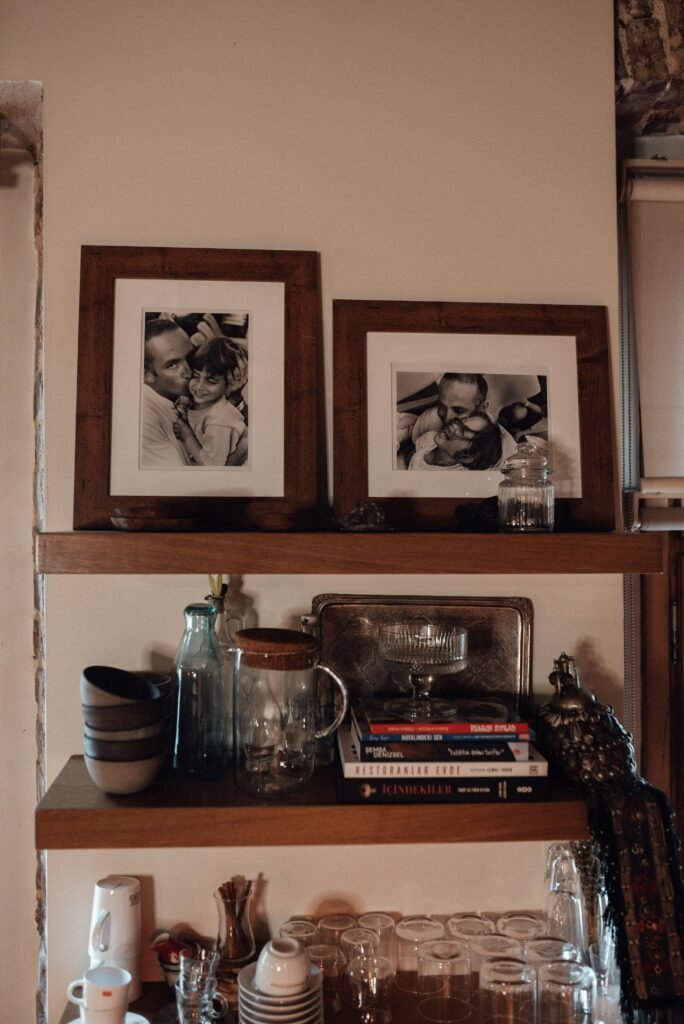
A kitchen with no personal element feels like a showroom. A kitchen with too many personal elements feels like a garage sale. The balance is two or three things that mean something to you, placed intentionally rather than accumulated gradually.
A framed print above the kitchen table. A small collection of market finds in a ceramic bowl on the counter — a wooden spoon with a story, a ceramic tile from a trip. A chalkboard wall or a small framed chalkboard where you can write the week’s menu or a note to yourself.
What I’d avoid: too many magnets on the refrigerator (it’s either none or a very curated few), decorative items that have to be moved every time you use the counter, and anything that collects grease or dust and is difficult to clean. The kitchen is a working room — personal touches need to coexist with the fact that things get splashed and wiped down regularly.
Indoor Herb Gardens — The Right Setup Matters
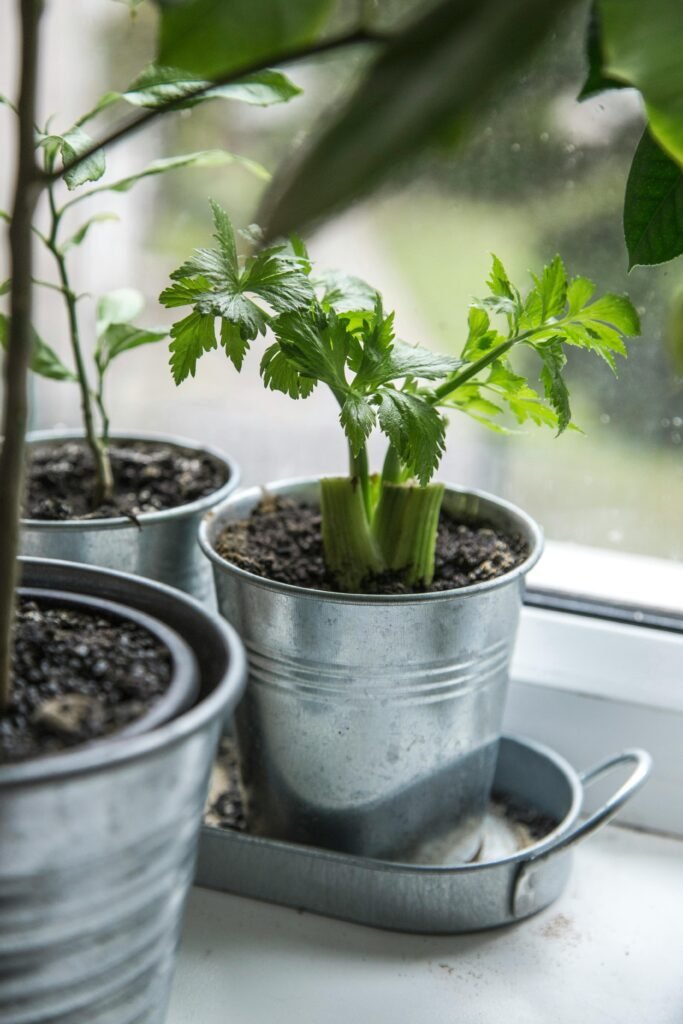
I’ve killed more indoor herb gardens than I care to admit. The first problem was succulents — in a kitchen with a north-facing window, they lasted about six weeks before giving up entirely. The second problem was overcrowding: too many herbs in too small a pot, competing for soil and water until everything looked sad and leggy.
What actually works: start with herbs that genuinely want to be indoors in a kitchen environment. Basil, mint, and chives are the easiest. Rosemary and thyme need more direct light than most kitchens provide. Put them in individual pots with drainage holes — never in a planter without drainage — and water only when the top inch of soil feels dry.
For the display: a simple wooden herb planter box on the windowsill, individual terracotta pots ($1–3 each at garden centers) with handwritten labels, or a small wall-mounted planter rack at $25–40 if you want them off the windowsill entirely. Fresh herbs in a kitchen change the smell of the room before they’ve been touched. That alone makes the effort worth it.
Questions I Get Asked a Lot About Kitchen Trends
Which kitchen trend gives the biggest impact for the least money? Undercabinet lighting and cabinet hardware changes. New hardware on existing cabinets — pull handles swapped for cup pulls, or brass knobs in place of chrome ones — costs $3–8 per handle and takes about 20 minutes with a screwdriver. Combined with warm LED strips under the cabinets ($25–40 for the whole kitchen), these two changes transform how a kitchen feels without touching a single surface permanently.
Are open shelves practical for everyday use? Yes — if you’re organized, don’t have young children grabbing things, and cook in a way that keeps your kitchen reasonably tidy between uses. No — if your kitchen tends toward lived-in clutter, you’re renting and can’t make permanent changes, or you hate having to think about what’s visible. Open shelving requires styling maintenance that closed cabinets don’t. Be honest with yourself before committing.
How do I make a small kitchen feel bigger without renovating? Clear the countertops down to essentials only, add undercabinet lighting to eliminate shadows, use light colors on any surfaces you can change, and maximize vertical storage so the floor stays clear. A mirror or reflective backsplash tile also bounces light around a small kitchen in a way that feels genuinely bigger.
What’s the best kitchen color trend for a rental where I can’t repaint? Focus on what you can change: cabinet hardware, a removable peel-and-stick backsplash tile, open shelving brackets you can install with damage-free hooks, curtains, lighting, and accessories. A warm-toned removable backsplash in a subway or zellige pattern can be applied and removed without damage and changes the kitchen’s entire visual identity. For color trends worth knowing regardless of what you can change, the 2026 paint color trends guide is a good starting point.
Is a kitchen island worth adding if the kitchen is already small? Almost never. The clearance requirement — 36 inches minimum on all sides — rules it out in most kitchens under about 150 square feet. A rolling kitchen cart ($80–150) gives you additional prep surface that can be moved when you need the floor space. That’s the better solution for a small kitchen.
Your Kitchen Doesn’t Need All Fifteen — Just the Right Two or Three
The best kitchen upgrades I’ve seen weren’t renovations. They were the result of someone spending $200 thoughtfully: new hardware, undercabinet lighting, and a styled open shelf where there used to be a random stack of stuff. That’s often all it takes to make a kitchen feel intentional instead of accidental.
Start with the thing that bothers you most about your current kitchen. Fix that first. Then reassess. The whole-room transformation usually happens incrementally, not all at once.
I’m currently in a kitchen with no window above the sink and I’m working out the lighting situation — three different light sources and zero natural light. I’ll share what I figure out when it’s done.
— Emily
What’s the one thing in your kitchen you most want to change right now? Tell me in the comments — the most common answers usually become their own posts.