Cozy Scandinavian Living Room Ideas: How to Actually Do Hygge (Without Buying a Viking Candle)
The thing that most people get wrong about Scandinavian living rooms is thinking the point is minimalism. It isn’t. Minimalism is the method. Warmth is the point.
There’s a reason Scandinavian design developed the way it did — the winters in Denmark, Norway, and Sweden are long and dark, and the interior needed to compensate. The stripping away of clutter and visual noise wasn’t an aesthetic choice made by people who loved restraint. It was practical: a candle glows more warmly against a white wall than against a wall of stuff. A good wool blanket registers as comfort in a room that isn’t competing with it. A wooden bowl on a clear table is something you actually notice and appreciate.
The Danish concept of hygge — pronounced something like “hoo-gah,” not “hi-gee” — is the whole philosophy in one word. It means coziness as a deliberate practice: the warmth of gathered people, the glow of low light, the texture of something soft in your hands. Hygge isn’t a decorating style. It’s the outcome you’re decorating toward.
A Scandinavian living room done right isn’t sparse or cold. It’s warm, specific, and very human. Here’s how to build one.
The Palette — Warm White, Not Cold White
The Scandinavian palette gets misread as “white and gray” — a clinical, Ikea-showroom neutrality that looks great in photos and feels sterile to live in. The real thing is warmer than that: warm whites (not pure white, not stark cool white), soft warm grays, and the golden tone of natural wood doing a lot of the work.
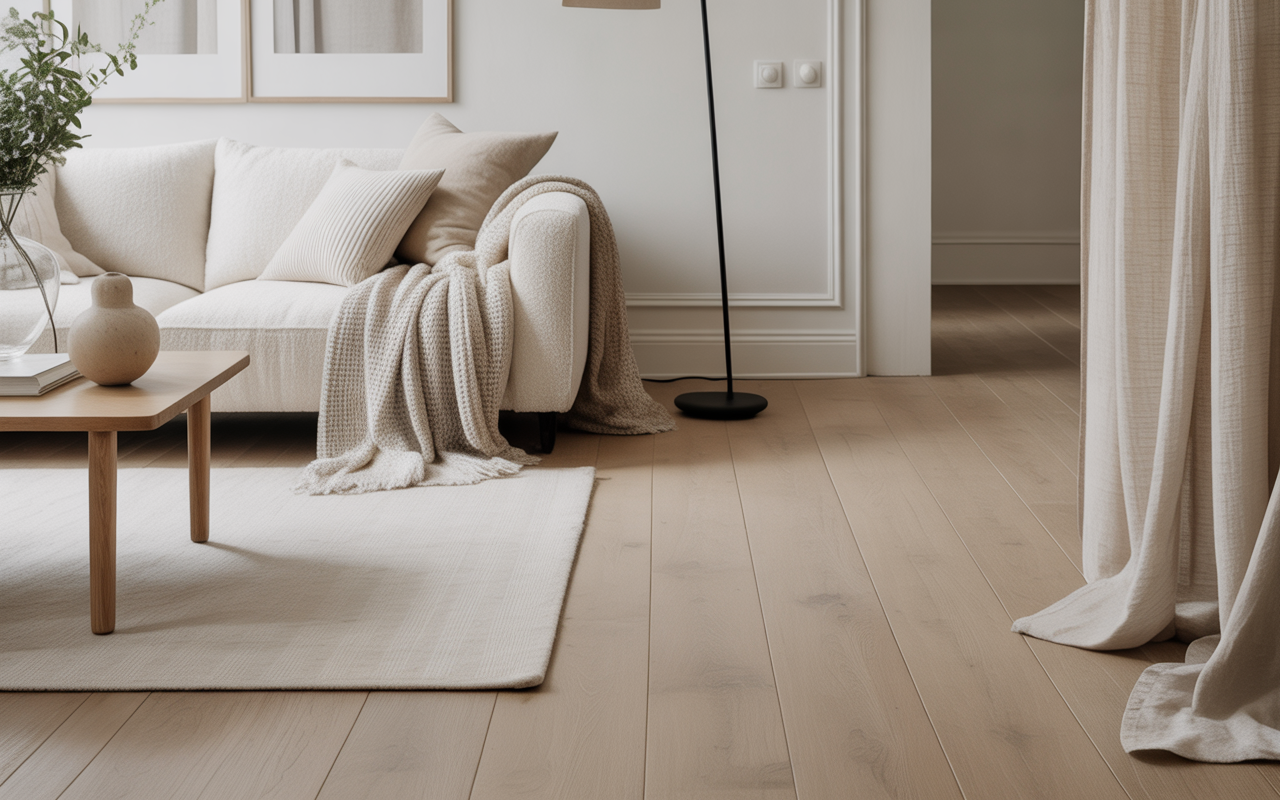
The distinction matters more than it sounds. A room painted in pure white with cold-gray accessories reads as a tech company lobby. The same room in Benjamin Moore’s White Dove or Sherwin-Williams’ Alabaster, with a honey-oak coffee table and a chunky knit throw in oatmeal, reads as somewhere you’d genuinely want to spend a winter evening.
The Scandi palette accent colors — when there are any — tend to be muted: dusty sage, warm terracotta, a soft rust, a deep forest green. One or two, introduced through a throw pillow or a ceramic vase. The palette doesn’t stay all-neutral because it’s trying to be boring; it stays all-neutral because the warm light sources and the natural materials do the color work. When the room is lit by candles and a warm-toned lamp at dusk, the cream walls glow and the wood looks like something precious. That effect is lost if the walls are fighting with a pattern or competing with a bright accent.
Natural Materials — The Warmth You Actually Feel
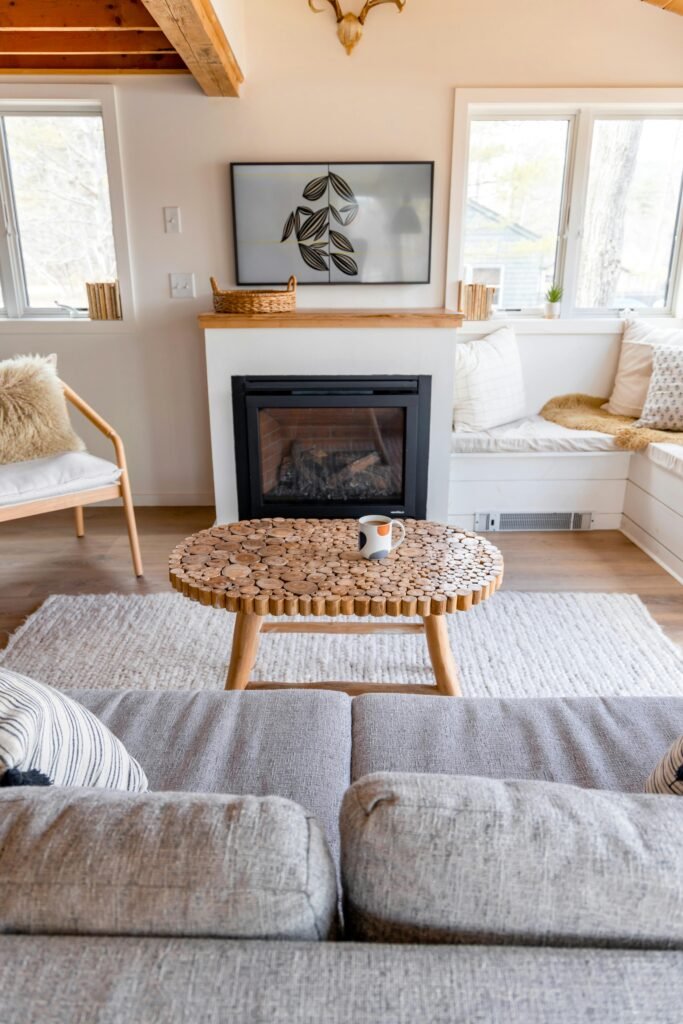
Wood is the central material in Scandinavian design, and it carries more visual warmth than any other single element in the room. An oak or birch coffee table in the middle of a pale room is a warm anchor — your eye goes to it, registers it as natural and alive, and the room’s temperature (emotionally speaking) rises. A glass or metal or painted-wood coffee table in the same room doesn’t do that.
Light-finish woods — oak, birch, pine, ash — are the Scandinavian standards. Not the orange-stained oak of 1990s furniture, and not the very dark tones that absorb light in a room that’s already competing with long winters. The mid-tone, light, natural-grain wood that looks like it came from a tree is the goal.
Beyond wood: wool rugs, sheepskin throws (the genuine article, or a convincing faux version — both work), linen and cotton upholstery, ceramic objects, unbleached textiles. These are materials that feel good to touch and look organic in a room. Synthetic fabrics in a Scandi room — polyester velvet, faux leather in the wrong color, anything plasticky — break the atmosphere in a way that’s hard to put your finger on but immediately noticeable.
One specific material worth investing in: a real wool or wool-blend rug. Wool rugs are more expensive than polypropylene alternatives ($150–400 for a quality 8×10 versus $80–150), but they feel completely different underfoot, they last significantly longer, and they look right in a way that synthetic rugs don’t quite manage. The IKEA STOENSE and the Ruggable wool options are good mid-range choices; the West Elm and Serena & Lily offerings are beautiful at a higher price point.
Lighting — This Is the Whole Heart of It
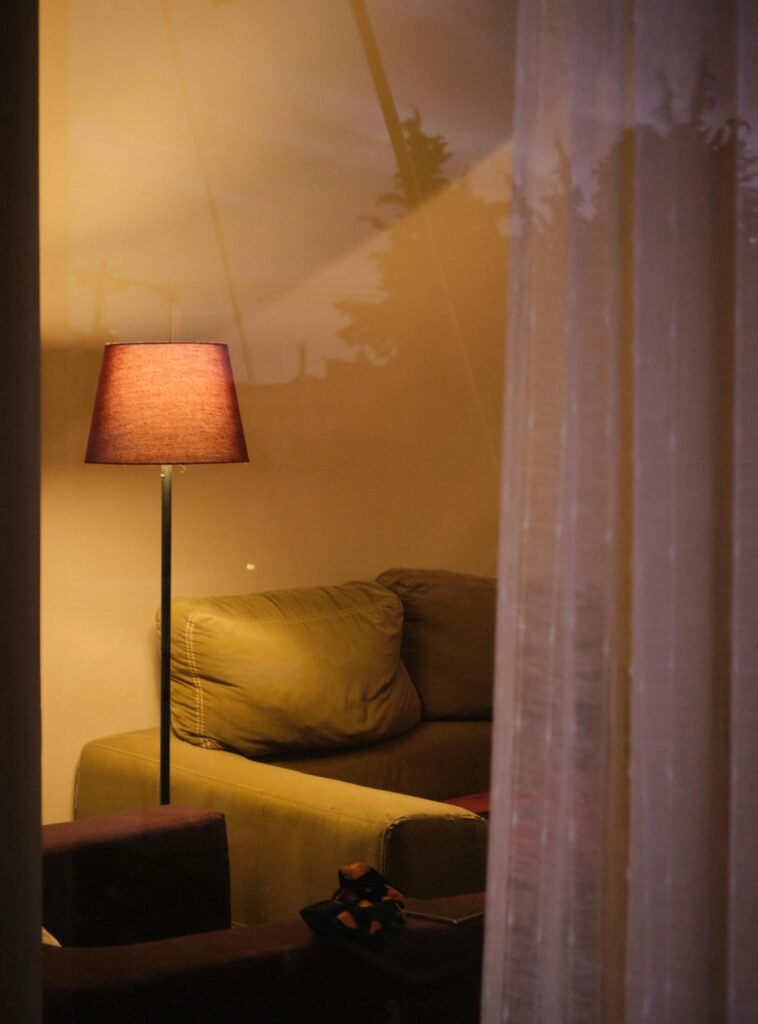
If Scandinavian design has one non-negotiable, it’s the lighting. The overhead light stays off in the evening. Multiple warm light sources at different heights come on instead. Candles go on the coffee table, the windowsill, the bookshelf. The room becomes something different — not a room you’re in but a room that wraps around you.
This isn’t decorating advice. In Scandinavia, this is just what you do when it gets dark. The overhead light is for practical tasks — cleaning, finding things you dropped. It’s not for living in the room. The ambient light of a good floor lamp, a table lamp beside the sofa, and a cluster of candles on the coffee table creates something the overhead fixture physically cannot: a room that feels like it’s evening and you’re somewhere good.
The specific purchases worth making: a floor lamp with a warm shade in the corner opposite the sofa ($60–120 for a quality one — IKEA’s HOLMÖ and HEKTAR are classics, and they’re classics for a reason). A table lamp on each side of the sofa or on a console table nearby. Candles — the inexpensive unscented pillar candles from IKEA in clusters of three or five create the same effect as expensive candles at about 5% of the cost. The scented candles, if you want them, go on a side table or shelf where they’re noticed when someone sits near them, not in the center of every surface.
The bulb temperature: 2700K is warm and right. 3000K is slightly cooler and still workable. Anything above that — the daylight bulbs that approximate noon sunlight — is wrong for a room that’s trying to feel like hygge. Pull them out and replace them. It makes an immediate, noticeable difference.
Textiles — Layer Them Like You Mean It
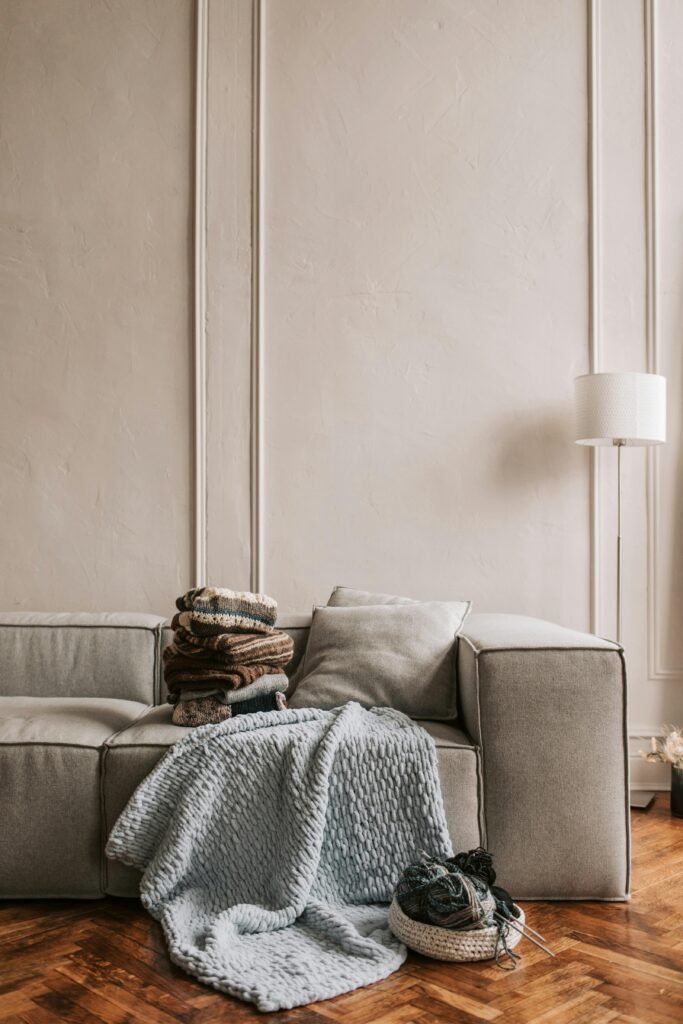
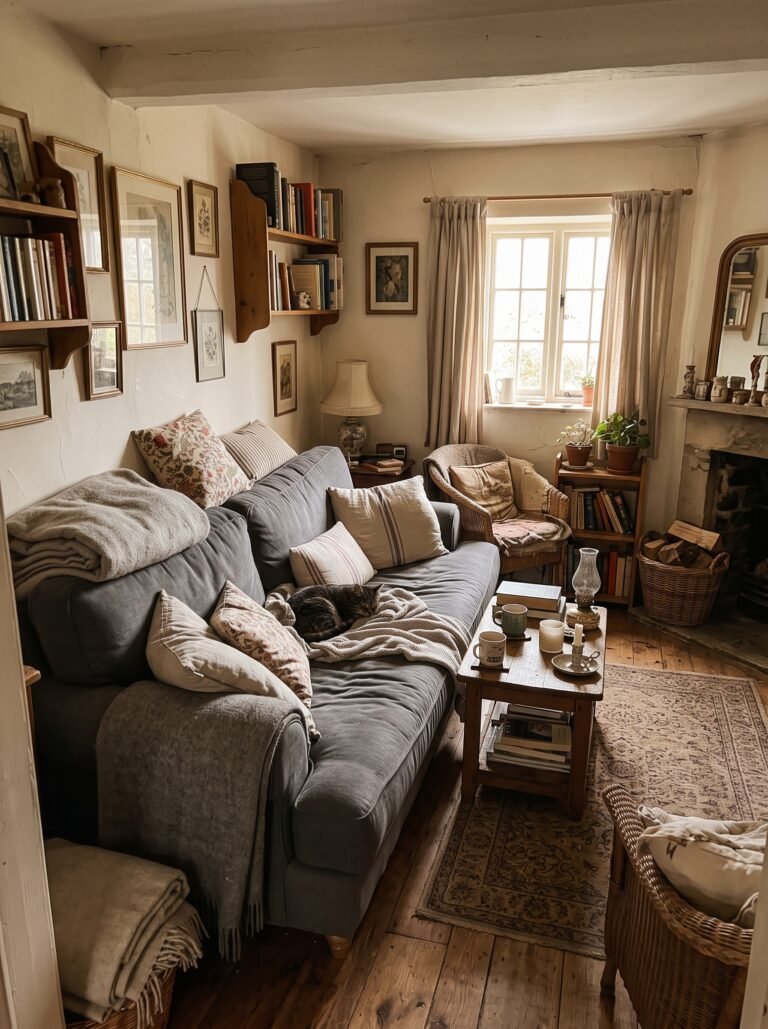
The textiles in a Scandi living room are doing the coziness work that the minimal furniture can’t do alone. The sofa might be simple and low-profile. The cushions should be numerous and genuinely comfortable. The throws should be thick enough that you actually want to pull them over yourself when you sit down.
The layering formula that works: a wool or cotton area rug as the base layer, linen or cotton cushions in the sofa’s main color family, one or two cushions in a warm accent color (the rust or sage or forest green that anchors the palette), a chunky knit throw draped over the back of the sofa ($25–45 at most home stores, or the IKEA INGABRITTA which is genuinely good), and a sheepskin or faux sheepskin thrown over the reading chair.
Textures to include: chunky knit, smooth linen, waffle weave, sheepskin or sherpa. Each one feels different, and in a room that’s relatively simple in its furniture and palette, that variation in texture is what the room lives in. A Scandi living room with all-smooth textiles in neutral colors looks like a display room. The same room with a chunky throw and a sheepskin on the chair and a wool rug underfoot looks like someone lives warmly in it.
A practical note: light-colored textiles in a high-traffic living room get dirty. Get cushion covers with zippers (nearly all IKEA cushions have them — this is one of the genuinely great things about IKEA) and wash them occasionally. A sheepskin on a chair can be shaken out or hung in fresh air to refresh between proper cleans. The hygge ideal is a room that looks like it’s been lived in warmly, not a room that looks pristine because no one touches anything.
Furniture — Low, Clean, and Comfortable Without Apology
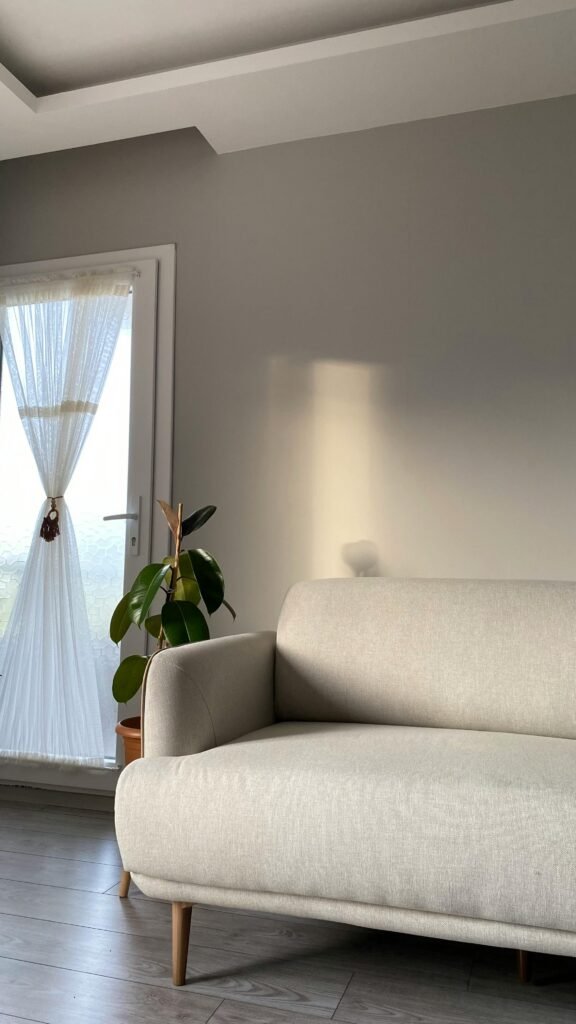
Scandinavian furniture gets reduced in conversation to “minimalist,” which doesn’t capture what actually makes it work. The right word is probably “honest” — furniture that looks like what it is, does what it’s supposed to do, doesn’t have ornament for the sake of ornament, and is comfortable to actually be in.
A good Scandi sofa is low-profile, has visible legs (which create the illusion of more floor space and make the room feel lighter), is upholstered in a natural fabric, and looks like something you’d want to spend a long Sunday afternoon in. The IKEA SÖDERHAMN is a well-designed example at the accessible end. The Article SVEN and the West Elm Andes Sofa are well-regarded at the mid-range. The profile is low, the cushions are generous, the legs are visible, the fabric is natural.
The coffee table: wood, low, simple, large enough to be genuinely useful. If the sofa is the room’s comfort centerpiece, the coffee table is the activity center — drinks, books, candles, the snack situation. It should be substantial enough to hold all of that without looking cluttered. Round or rectangular both work; what doesn’t work is a glass-top table, which feels too formal and sleek for the warmth a Scandi room is going for.
One chair: the reading chair, the accent chair, the one piece of furniture in the room that’s obviously for sitting in by yourself and being content. Scandi rooms tend to have one, and it tends to be where the sheepskin lives. A round, soft armchair in a warm fabric or a clean-lined wooden frame with a padded seat — both work. The IKEA POÄNG remains genuinely good furniture after all these years.
Resist filling every corner. Empty space in a Scandinavian room is not wasted — it’s part of the design. The room should feel like it has room to breathe.
The Rug — The Warmth Layer the Floor Needs
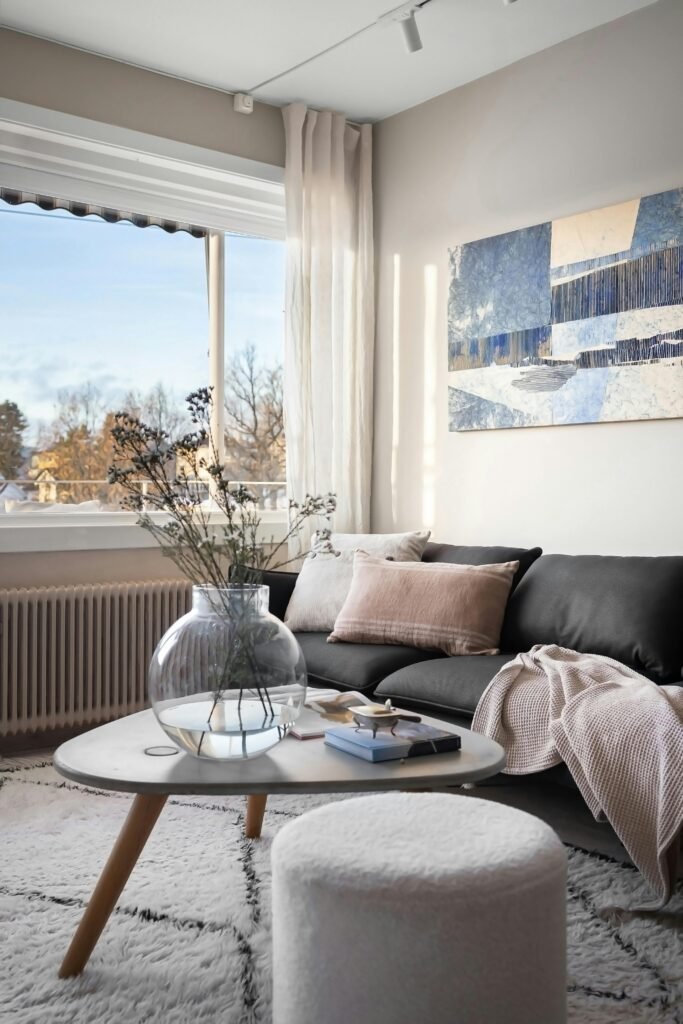
In a Scandi living room with light walls and low, simple furniture, the rug is often the warmest thing in the room — visually and physically. It defines the seating area, adds the texture that the furniture alone can’t provide, and makes walking in the room feel like arriving somewhere rather than crossing a hard floor.
The same sizing rule applies here as in any living room: all front legs on the rug, or go larger. A rug that’s too small looks like an afterthought. The right rug makes the seating area feel coherent and intentional.
Scandi-appropriate rug styles: a simple flat-weave or low-pile wool rug in a warm off-white, oatmeal, or warm gray; a traditional Nordic pattern in two colors (usually black and white, or white and a warm accent); a solid-color high-pile rug in a muted tone. What doesn’t work: very bold graphic rugs with high-contrast color, large-scale floral or botanical prints, or anything that competes with the furniture rather than grounding it.
The IKEA STOENSE is the go-to accessible option — a thick, low-pile wool rug in neutral tones at a price that’s genuinely hard to beat. For a larger budget, the H&M Home and Zara Home rug collections have good Scandi-appropriate options. For something more heirloom, a vintage Scandinavian or Turkish Oushak rug in a warm neutral works beautifully and can often be found on eBay or through local estate sales.
Candles — Not Optional, Actually
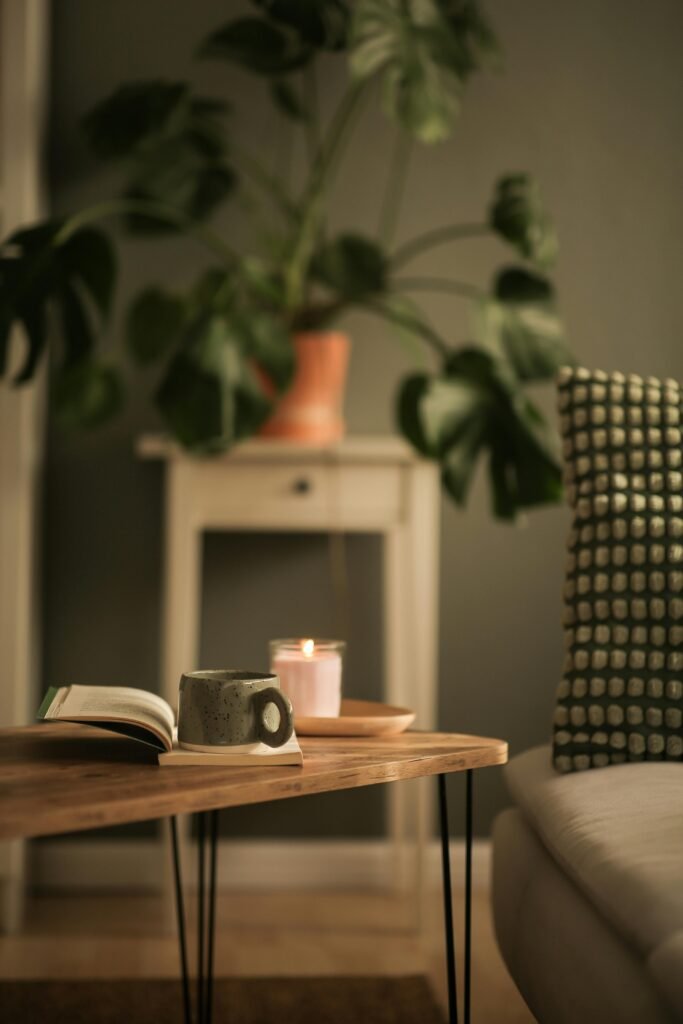
In Denmark, the average household uses more candles per capita than anywhere else in the world. This is not a coincidence. Candle light does something to a room that warm LED light, for all its improvements, hasn’t fully replicated — the movement of it, the warmth of the color, the way it makes everything near it look slightly better. In a Scandi living room, candles aren’t decoration. They’re infrastructure.
The approach: clusters of three to five pillar candles in varying heights on the coffee table. One or two tall candles on the dining table or a sideboard. A few tea lights on the windowsill in simple glass holders. Nothing has to match perfectly, but a consistent height and color range (all cream or all white, or all the same earthen tone) looks more intentional than a scattered collection of different candle colors.
IKEA’s unscented pillar candles are excellent and very inexpensive — a pack of three for $3–5. The point isn’t scent here; it’s light. If you want scent in the room, a reed diffuser or a separate scented candle on a side surface is better than scenting the main candle arrangement, where five different scents would compete.
An electric or wood wick candle alternative: battery-operated flicker candles have gotten good enough in the last few years that they’re worth considering in households with young children or pets. They’re not exactly the same — the flicker algorithm is slightly mechanical and the warmth of the light is less precise — but at their best, they’re a reasonable substitute that removes the fire risk.
The Reading Nook — Designate It Properly
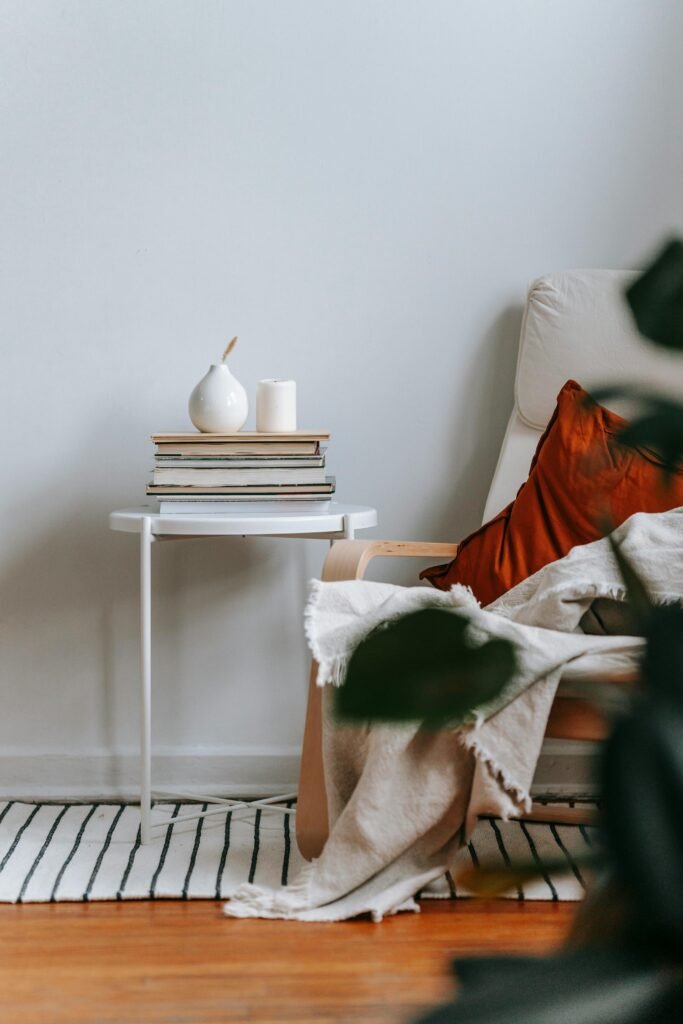
Every Scandinavian living room has a designated slow corner. A spot that’s clearly for unhurried activity — reading, thinking, talking one-on-one, sitting with a cup of tea while the room does nothing particularly dramatic. This is the reading nook, and the reason it deserves deliberate attention is that in a simple room, the spots that are clearly designated for something feel more like a room than spots that could be for anything.
The components: a chair that’s genuinely comfortable (the POÄNG, a round upholstered armchair, a wingback in a natural fabric — anything that says “sit in me for a while”). A small side table at exactly the right height to hold a mug and a book without requiring any reaching. A floor lamp or a plug-in wall sconce positioned behind and slightly to the side of the chair, at a height that provides actual reading light. A sheepskin or throw blanket draped over or folded on the chair.
The lamp positioning is worth getting right. A lamp that’s too far away means you’re always reading in shadow; one that’s directly above creates glare; the right position — behind the shoulder, slightly higher than head height when seated — produces comfortable reading light without any of that. An adjustable arm lamp ($40–80) is the flexible option that lets you dial it in precisely.
The stack of books or the small low shelf nearby: this signals that the corner is for reading, not just for sitting. Even a small stack on the side table is enough. It makes the corner feel like it knows what it is.
Artwork — Quieter Than You Think
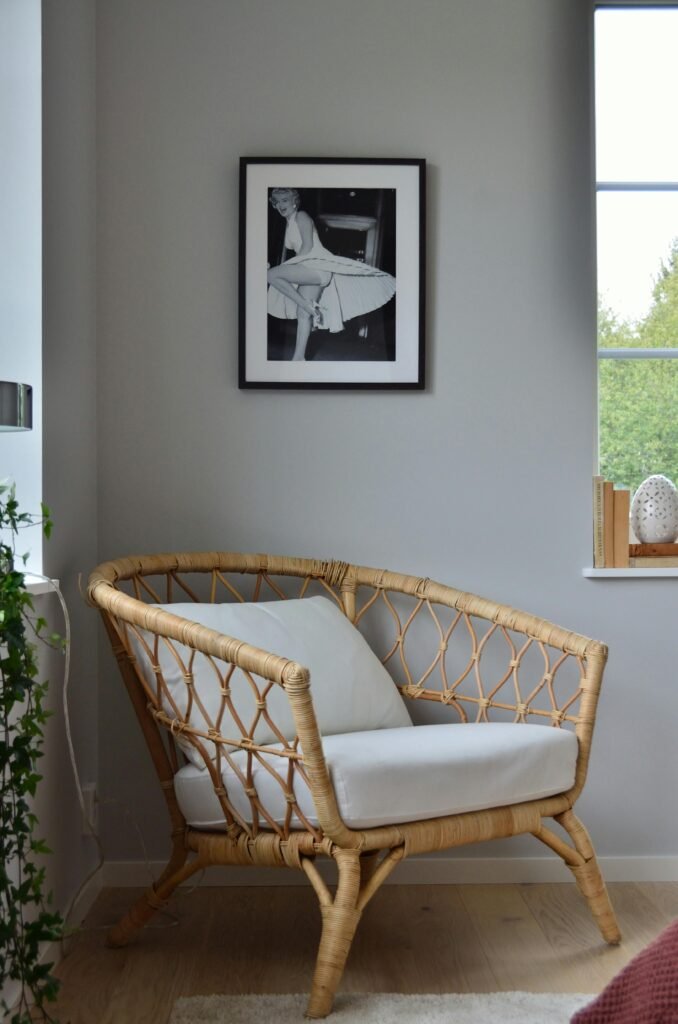
Scandinavian living rooms don’t usually have gallery walls. The aesthetic doesn’t call for it — the layered eclectic gallery-wall look belongs more to maximalist or bohemian interiors. What works in a Scandi room: one or two pieces of art, large in format, quiet in subject matter, well-framed and placed with intention.
Subjects that fit: simple botanical illustrations in black and white or muted tones; abstract pieces that suggest landscape or nature without depicting it; minimalist graphic prints (a simple line drawing, a single strong image); black and white photography of natural environments. What doesn’t fit: busy, colorful pieces with complex visual content, or anything that shouts for attention in a room that’s specifically trying to feel calm.
The frame matters as much as the art. A natural wood frame in a light finish, or a simple black metal frame, is right for the aesthetic. Ornate gold frames belong elsewhere. The IKEA RIBBA frames are the standard for a reason — they come in multiple sizes, they’re simple and right, and they’re inexpensive enough that it doesn’t feel precious to put art in them.
Print size: go larger than your instinct. A 12×16 print in a room with high ceilings and long walls disappears. A 24×36 or larger becomes a presence. The scale of art in a quiet room should be confident, not apologetic.
The Hygge Edit — Clear Surfaces, Warm Life
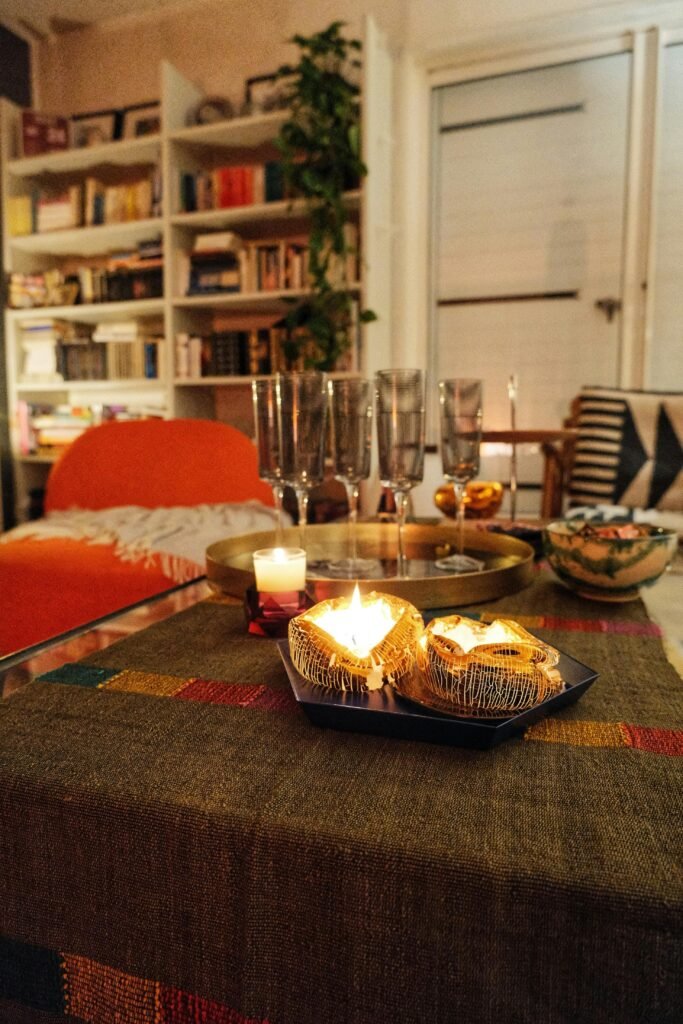
The clutter-free quality of Scandinavian rooms isn’t minimalism for its own sake — it’s what allows the warmth to register. When a coffee table has fifteen objects on it, the candle in the middle is competing. When the table has a candle, a small plant, and a book, the candle is the thing you notice, and the warmth it provides actually reaches you.
The practical approach: designate a storage place for everything that doesn’t have strong visual value — remotes in a small tray or basket, chargers managed and hidden, magazines stacked rather than scattered, children’s toys in a basket by the door rather than distributed across the floor. None of this needs to be invisible or perfectly hidden. A beautiful woven basket with the blankets in it is not clutter; it’s storage that’s doing visual work.
The functional pieces that earn their place in a Scandi room: a storage ottoman that serves as a footrest, extra seating, and blanket storage simultaneously; a low sideboard or credenza that houses everything that would otherwise be on surfaces; open shelving that’s been edited to show only books and one or two chosen objects, with empty space between them.
The IKEA philosophy — affordable, functional, well-designed — is genuinely aligned with Scandinavian values, and it shows. The PS cabinets, the KALLAX shelving units, and the HEMNES series all fit the aesthetic naturally. They’re not designer pieces, but they’re honest furniture: they look like what they are, they do what they’re supposed to do, and they don’t apologize for being affordable.
Vintage Mid-Century Pieces — The One Thing That Elevates Everything
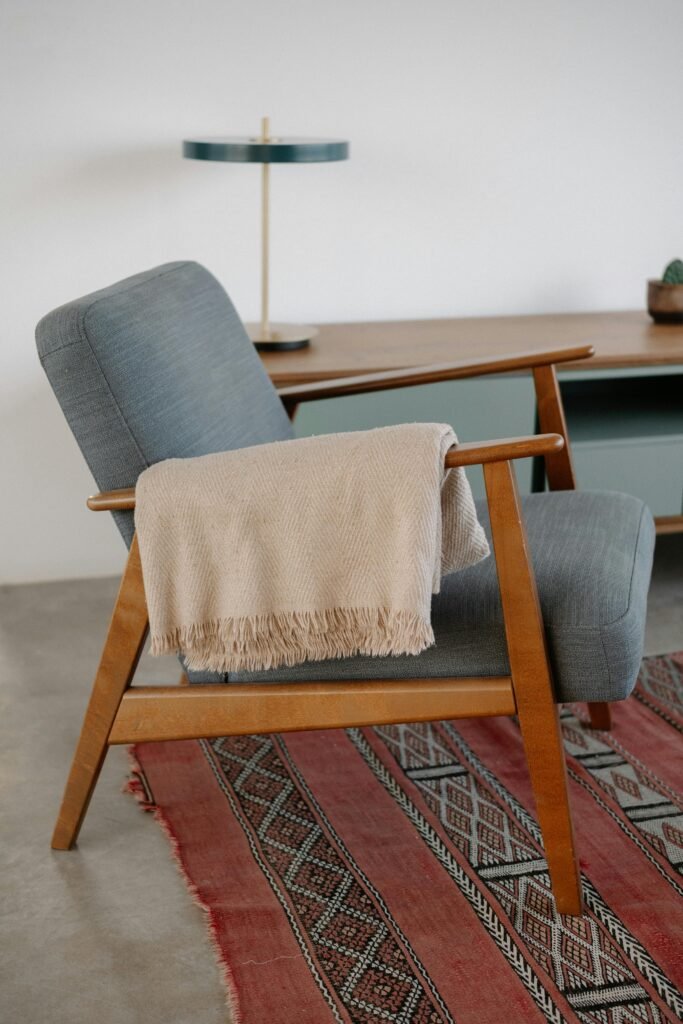
One genuinely old or vintage piece in a Scandinavian living room changes the room’s quality in a way that’s difficult to explain but immediately visible. A mid-century Danish side table found at an estate sale. A vintage Eames-era wooden chair with a sheepskin thrown over it. An old ceramic lamp in a warm earth tone. These objects have a settled presence that new furniture, however well designed, doesn’t quite replicate.
The reason to seek out mid-century Scandinavian design specifically: the Danes, Swedes, and Finns were producing genuinely exceptional furniture in the 1950s and 1960s, and much of it has aged beautifully. Hans Wegner’s chairs, Arne Jacobsen’s designs, Alvar Aalto’s bent wood pieces — these are the canonical examples, expensive now but occasionally findable through estate sales, Facebook Marketplace, and vintage dealers. The broader category of mid-century Scandinavian and Danish modern furniture is easier to find and more accessible in price.
One piece is enough. One genuine vintage item, well chosen and well placed, gives the room something no amount of new furniture can provide: a sense that the room has history, that it didn’t arrive fully formed from a catalog but was put together over time by someone who cared.
Common Questions About Scandinavian Living Rooms
Is Scandinavian design the same as minimalism? Related, but not the same. Minimalism is about removing things as an end in itself. Scandinavian design removes things in service of warmth — you keep less so that what you keep registers more fully. The goal is never an empty room; it’s a room where a lit candle and a good blanket and the people in it feel like enough.
What’s the difference between Scandinavian and Japandi? Japandi is a hybrid of Scandinavian and Japanese design principles. Both value simplicity and natural materials, but Japanese design tends toward darker tones and a more austere quality. Scandinavian design specifically pursues warmth and coziness — it lives in lighter colors and softer textures. Japandi is often the colder, more precise version of the same impulse.
How do you make a Scandi room feel cozy rather than cold? Three things: warm the light (2700K bulbs, multiple sources, overhead off in the evening), layer the textiles (wool rug, linen cushions, chunky throw, sheepskin on the chair), and add candles. A Scandi room that feels cold is almost always a room with the overhead light on and no warm light sources below eye level. Fix the lighting first; the rest follows.
What’s the most common mistake in Scandinavian living rooms? Too cold, too perfect, too afraid of warmth. The aesthetic looks so clean in photographs that people try to preserve that quality in real life and end up with a room that looks like no one uses it. Scandinavian rooms are supposed to be used, sat in, lit with candles, covered in blankets. Hygge is a practice, not a display.
The Room You Actually Want to Come Home To
The winters in Scandinavia are an explanation for a design philosophy, but they’re not a prerequisite for wanting what that philosophy produces: a room that’s warm when it’s dark outside, that has somewhere comfortable to sit with a good book, that smells like a candle and feels like enough.
You don’t need to live near the Arctic Circle to want that room. You just need to stop treating minimalism as the goal and start treating warmth as the goal. The minimalism is what gets you there — it clears away the visual competition so that the candle and the blanket and the wooden bowl can do their quiet work.
One candle, one good lamp, one wool throw. Start there tonight. The rest of the room will tell you what it needs.
What’s your idea of hygge in a living room — is it a fireplace, a specific chair, a particular lamp? Drop it in the comments. The best answers are always very specific.
— Emily