8 Dining Room Decor Ideas That Make Every Meal Feel Like a Moment
The dining room is one of those spaces that gets decorated last — or not at all. You focus on the living room, you stress about the bedroom, and the dining room just… exists. A table, some chairs, a light overhead. Functional. Fine. But not really yours.
Here’s the thing though — the dining room has more potential than almost any other room in your home. It’s where people gather, linger, and actually talk to each other. It deserves to feel intentional. And getting there doesn’t take a renovation. It takes a few well-placed decisions.
Here are 8 dining room decor ideas I genuinely love, all based on rooms that show exactly how it’s done.
1. Embrace the Relaxed, Layered Look
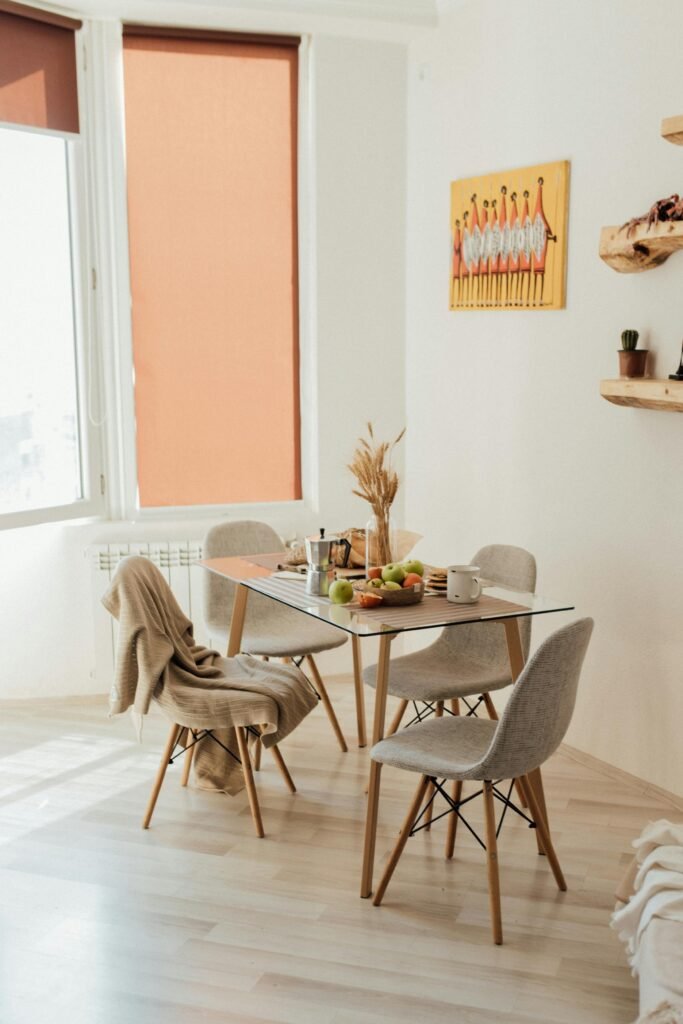
There’s a version of dining room decor that feels untouchable — like a showroom nobody actually eats in. And then there’s this. A glass-top table with warm wood legs. Soft grey upholstered chairs with a knit throw casually draped over one. A little vase of dried pampas grass. A bowl of green apples that’s also just fruit. A colorful painting on the wall because someone loved it, not because it matched perfectly.
This is the look I’d call lived-in on purpose — and it’s the most welcoming version of any dining room. The trick is letting different textures coexist without overthinking it. Wood legs, glass surface, linen-y fabric, natural dried stems. None of it matches exactly, and that’s exactly why it works.
If your dining room feels too stiff, start by adding one organic texture — a throw over a chair, a small vase of dried grasses, a wooden tray. It immediately softens everything.
2. Use Candles Like You Actually Mean It
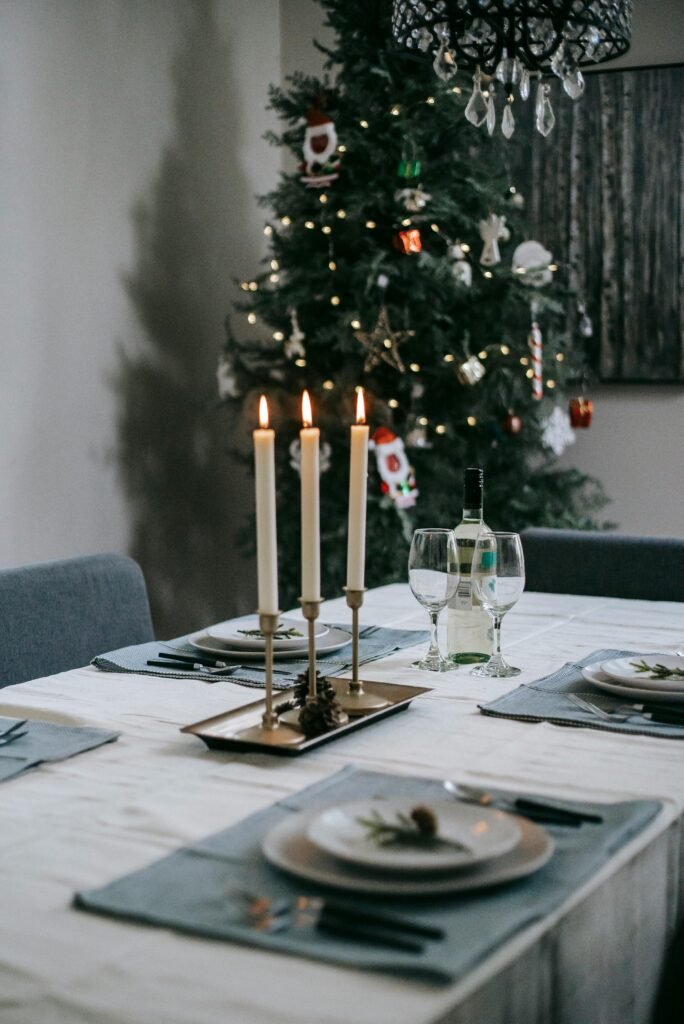
Candles are the most underused dining room tool there is. Not tea lights scattered around — actual taper candles in proper holders. Three of them, clustered at different heights on a small tray, with a couple of pine cones tucked at the base. That’s it. That’s the whole centerpiece.
What you’re seeing in this photo is a table that could have been ordinary — a white tablecloth, some placemats, wine glasses — but the candles completely change the emotional temperature of the space. The glow is warm, the height adds drama, and the whole thing looks like someone put real thought into it.
I keep a set of brass taper holders on my dining table almost year-round. Honestly, the difference between a lit candle dinner and an overhead-light-only dinner is not subtle. Trust me on this one — light the candles, even on a Tuesday.
3. Go Big With Plants
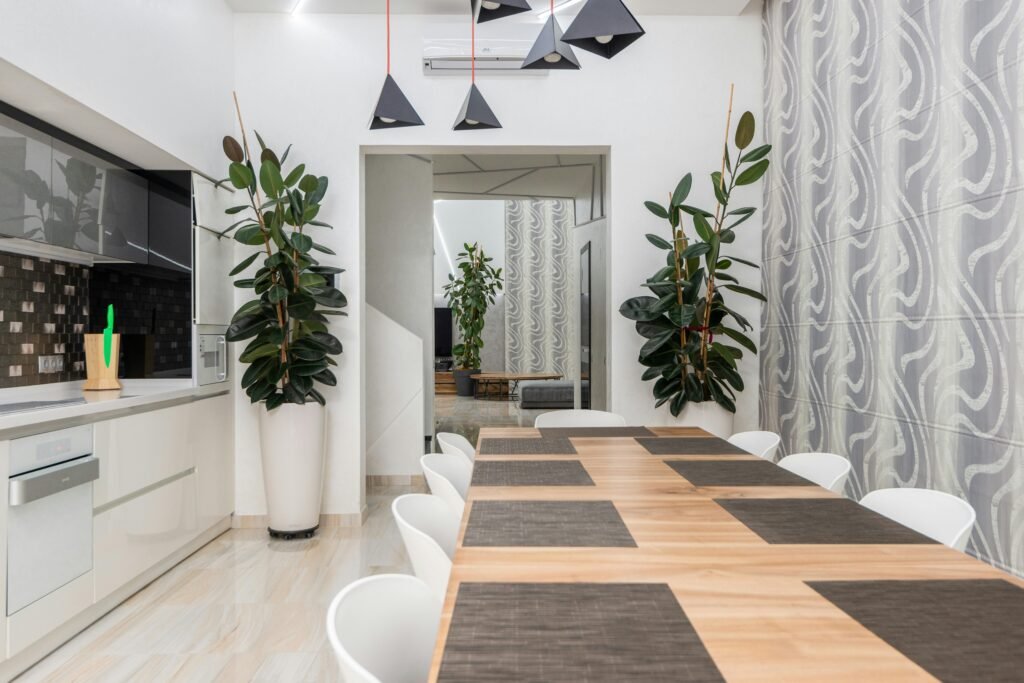
Here’s the part most people skip: plants in the dining room. Not a small succulent on the table — tall plants. Floor plants. The kind that actually change the scale of the room.
This photo is proof that a pair of large rubber plants in matching white pots can completely anchor a space. They add life on both sides of the room, draw the eye upward toward those striking geometric pendant lights, and give the whole room a sense of depth that furniture alone just can’t create.
You don’t need two matching trees to pull this off. One large fiddle leaf fig or rubber plant in a simple white or terracotta pot in the corner of your dining room will do more for the space than most decorative objects you’d spend the same money on. Big plants = big impact. Start there.
4. Let Your Curtains Do the Heavy Lifting
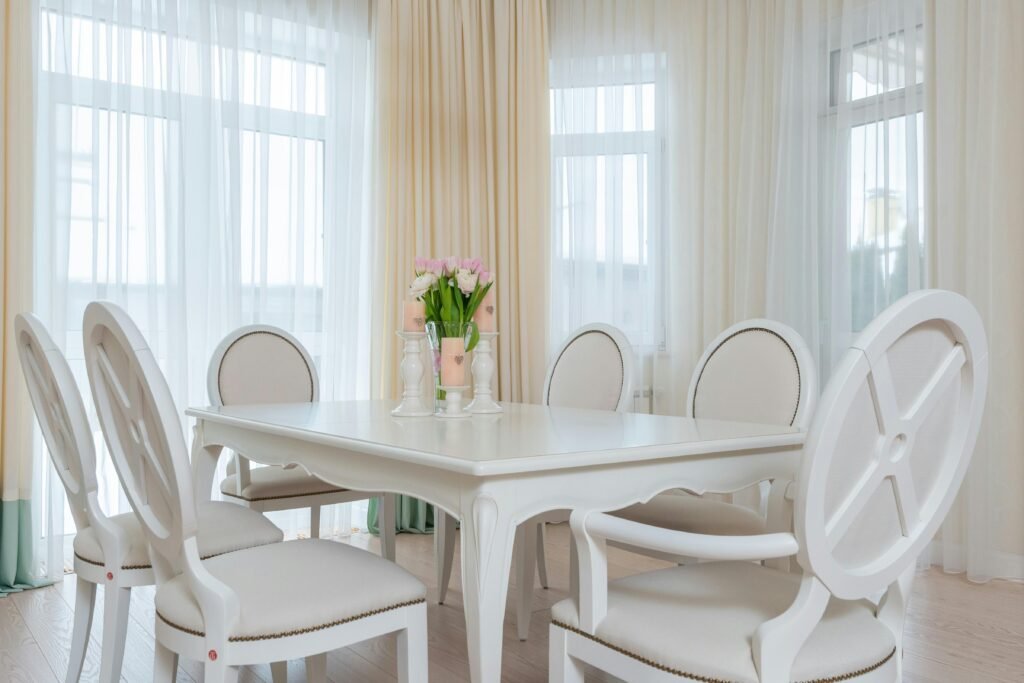
Curtains are one of those decor decisions that people underestimate until they see a room like this one — and then they immediately understand. Floor-to-ceiling sheers layered with cream drapes, hung high and wide, make this white dining room feel genuinely grand. The natural light filters through softly, the room feels taller than it is, and everything inside — the carved white table, the elegant chairs, the simple tulips — looks elevated just by being surrounded by that much beautiful fabric.
You don’t have to go white-on-white to apply this lesson. The principle is the same in any dining room: hang your curtains high, let them pool or just graze the floor, and use sheer and opaque layers together. It’s one of the highest-impact, lower-cost changes you can make. A $30 set of IKEA sheers hung at ceiling height will look like you spent ten times that.
5. Build a Gallery Wall Your Table Deserves
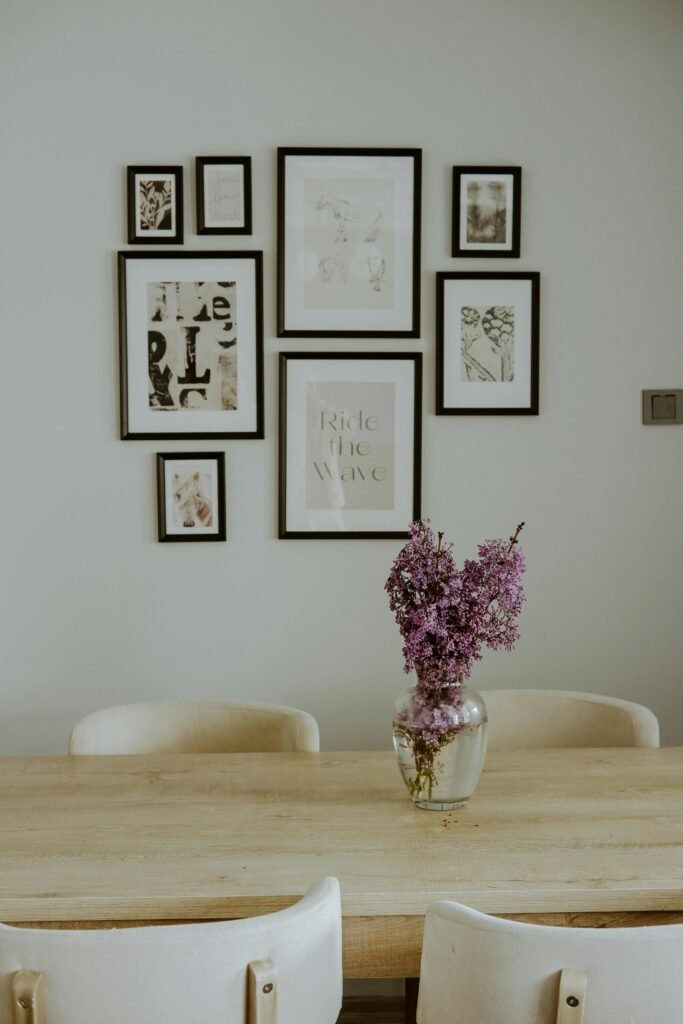
A gallery wall in the dining room is one of my favorite things to recommend because it does two jobs at once: it gives the wall something interesting to say, and it makes the table below feel like the center of something. You’re not just sitting at a table — you’re sitting inside a composed space.
The key to making it work, like in this photo, is committing to a consistent frame — all black here — while mixing up the sizes and the art itself. There are botanical prints, typographic pieces, abstract sketches, photography. Nothing matches exactly, but the uniform frames hold it all together. And that glass vase of purple lilac on the table? It connects the room to the wall without being matchy-matchy.
If a full gallery wall feels overwhelming, start with three frames in a rough triangle arrangement. Live with it for a week, then add one more. You’ll know when it feels right.
6. Anchor the Room With a Rug
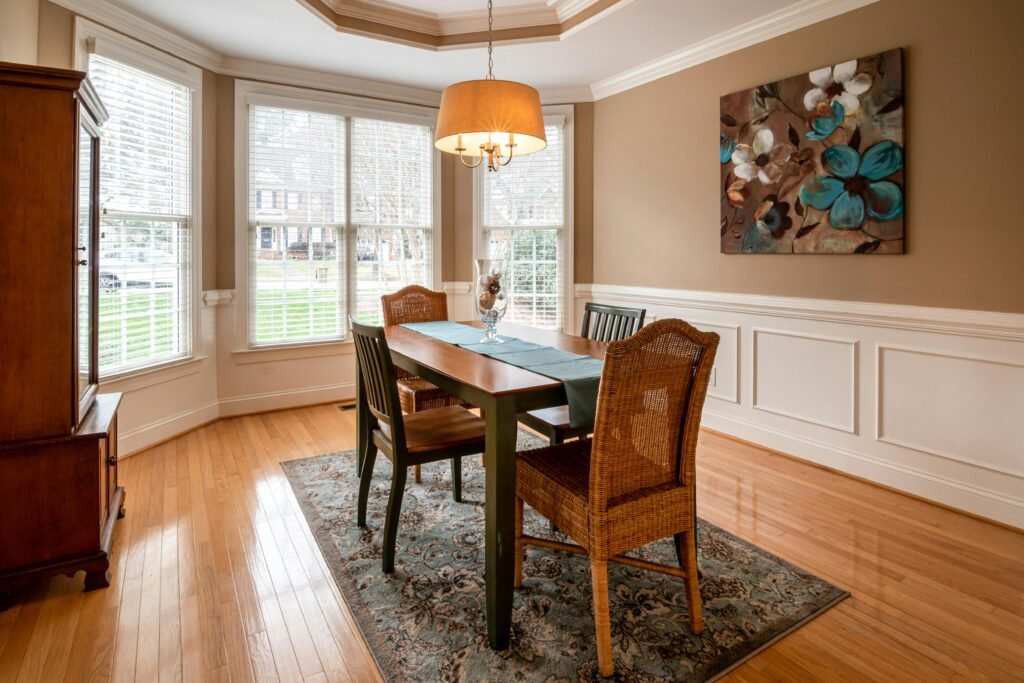
A dining room without a rug can feel a little unfinished — like all the furniture is just floating. A rug grounds the whole arrangement, defines the space, and adds a layer of warmth that hardwood floors alone can’t provide.
This room is a great example of how a rug pulls a traditional dining room together. The wainscoting, the warm taupe walls, the wood floors, the mix of rattan and painted wood chairs — it’s a lot of elements, and the floral rug underneath is what makes them feel like one cohesive room rather than a collection of furniture.
The most important thing to get right: size. Your rug needs to be large enough that all four chair legs sit on it even when the chairs are pulled out. The most common mistake is going too small. When in doubt, size up.
7. Make Your Pendant Light a Statement
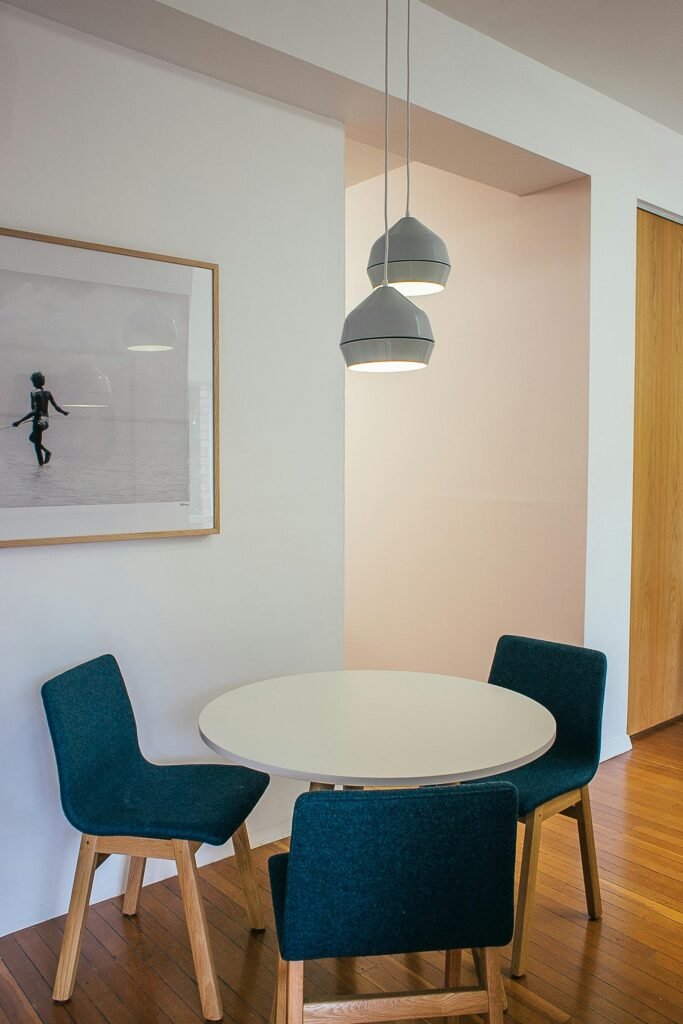
The overhead light in most dining rooms is the most overlooked design opportunity in the entire house. People pick something inoffensive and move on. But your pendant — or pendants — hanging above the table is genuinely the focal point of the room. It’s at eye level. It’s the first thing guests notice. It sets the entire mood.
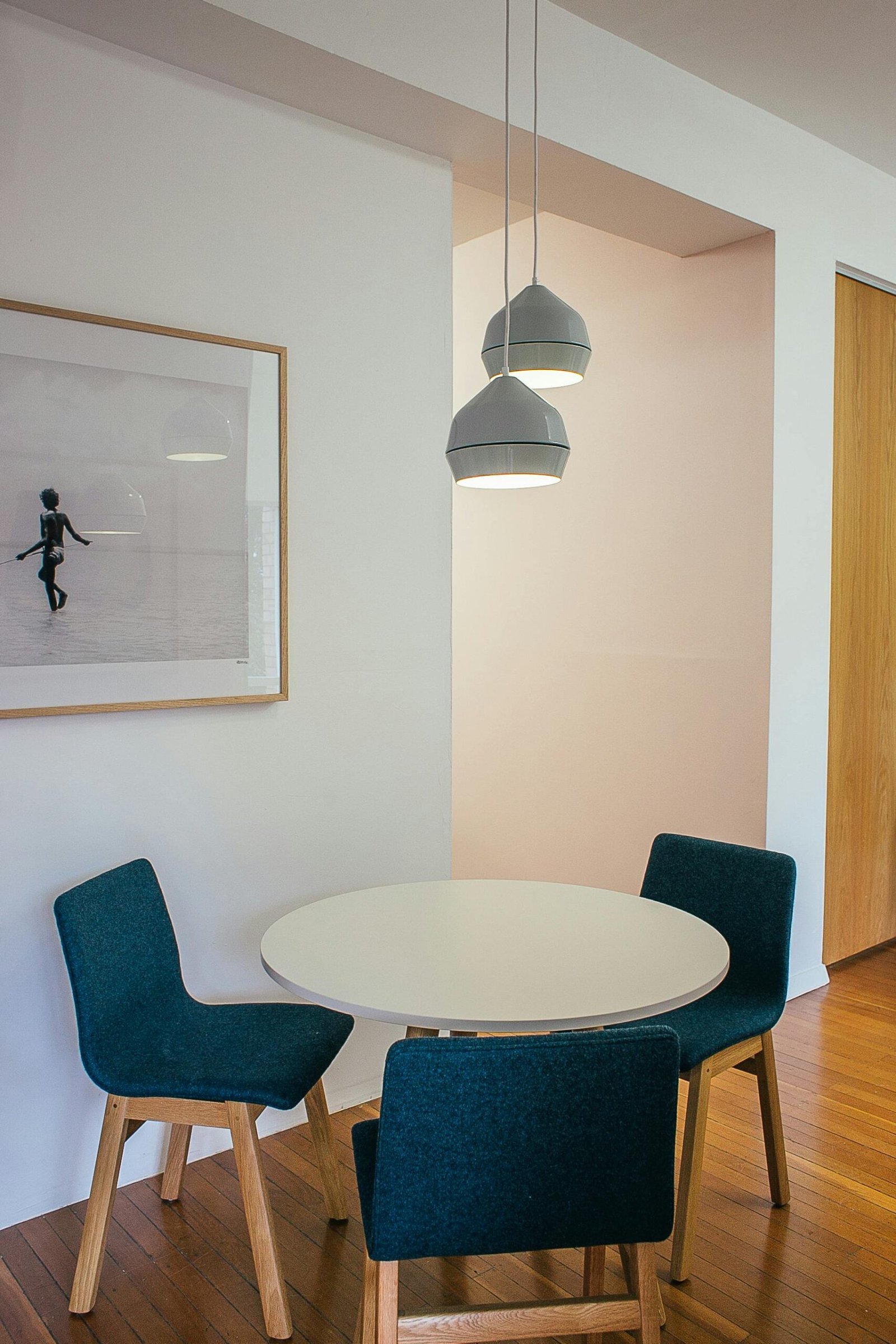
This small dining nook shows exactly how a bold pendant choice transforms a simple space. A round white table, three teal chairs, warm wood floors — all lovely, all neutral. But those two stacked grey dome pendants? They’re the whole personality of the room. Sculptural, modern, unexpected. The room would be forgettable without them.
If you’re renting and can’t change your fixture, a plug-in pendant is a genuine option — it doesn’t require any electrical work and can completely change the look of your dining space for under $100.
8. Create a Centerpiece With Actual Personality
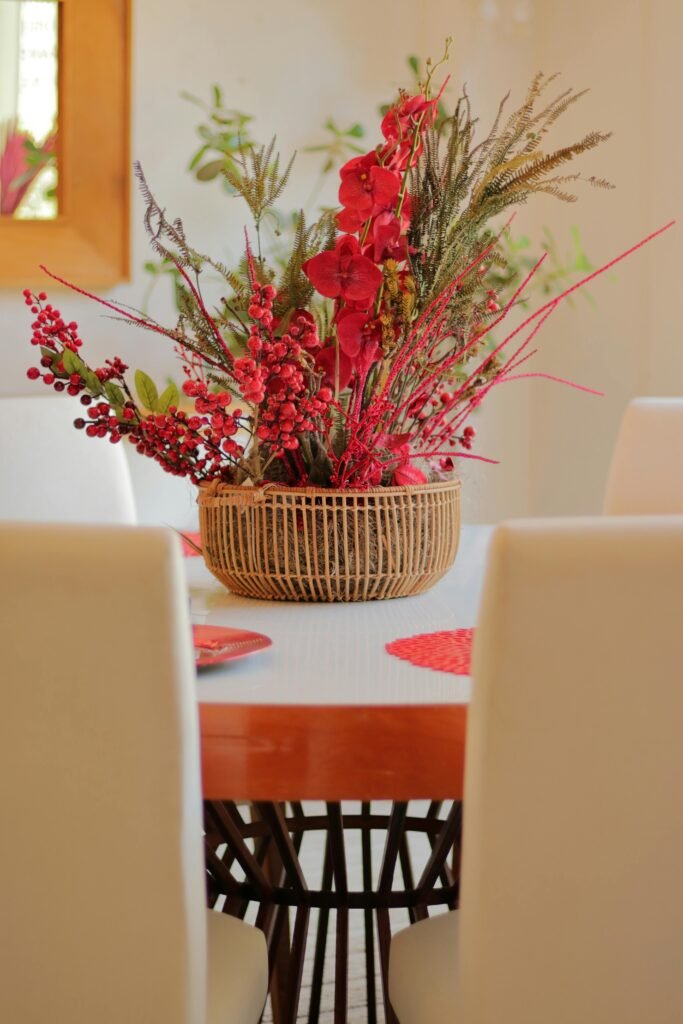
Most dining table centerpieces are forgettable — a candle, maybe some faux greenery, a fruit bowl that nobody touches. And then there’s this. A woven rattan basket absolutely filled with red amaryllis, winter berries, dried ferns, and dramatic crimson branches. It’s bold. It’s unexpected. It makes the whole table feel like it was styled for a reason.
Your centerpiece doesn’t have to be this dramatic to be good — but it should have character. Something with texture, something with height, something that makes someone walk in and immediately notice the table. A ceramic bowl filled with seasonal fruit. A cluster of varying-height candle holders. A single large vase with architectural stems.
The container matters as much as what’s in it. That rattan basket is what makes this arrangement feel warm and grounded rather than overly formal. The vessel tells half the story.
Your Dining Room Deserves More Than “Fine”
Small changes compound quickly in a dining room. One great rug, one statement pendant, a gallery wall you actually love — and suddenly the space feels completely different. Not like a staged room, but like a place someone genuinely lives in and cares about.
Start with one idea from this list. Just one. The room you want is closer than you think.
— Emily