15 Spring Tablescape Ideas That Actually Look As Good As They Did in Your Head
The first tablescape I ever styled on purpose was for Easter at my aunt’s house. I was 24, newly obsessed with home decor, and I had ideas. I drove to three different stores, bought more than I needed, and spent two hours arranging. My aunt walked in, looked at the table, and said “oh, you’ve been busy.” That’s the version of tablescape styling that doesn’t work — too much, too forced, no single thing doing its job.
I’ve gotten considerably better at this since. What I’ve learned is that a good spring table doesn’t require a lot — it requires the right things chosen deliberately. Seasonal flowers from the grocery store. A tablecloth that actually fits. Two or three thoughtful details that make the table feel considered without looking like a craft project.
These fifteen ideas cover the full range from casual Sunday lunch to proper dinner party. Pick the one that matches what you’re actually doing.
A Garden-Inspired Table — Fresh Flowers, Simple Base
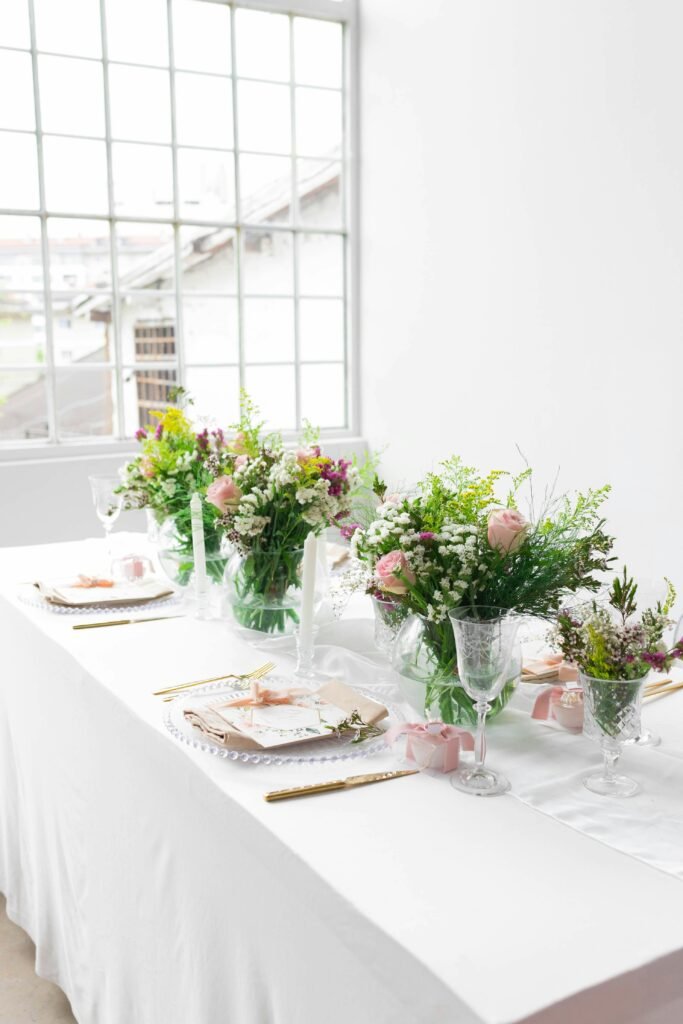
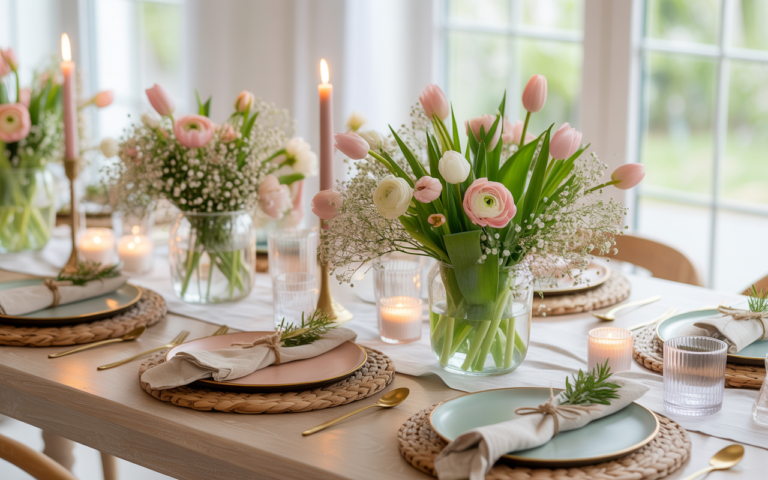
The garden tablescape is the one most people attempt first and overcomplicate fastest. The version that actually works is simpler than you think: a white or cream tablecloth as the base, three to five mismatched glass vessels (mason jars, bud vases, an old jam jar) at varying heights down the center, filled with whatever seasonal flowers are at your grocery store that week, and plates in a soft color that doesn’t compete with the flowers.
The flowers are everything here. In spring, you’re looking for ranunculus, sweet peas, tulips, or garden roses — grocery store bunches run $6–12 and cut across several stems and split between containers look like you spent much more. One type of flower in a bunch of vessels reads more intentional than three types of flowers crammed into one vase.
I’d skip the succulents as table centerpieces — they look great on shelves but they read oddly formal on a dining table. Greenery that works at a spring table: eucalyptus branches ($4–6 a bunch, long lasting), sprigs of fresh herbs like rosemary or lavender from your own pot, or simple fern fronds.
The Rustic Farmhouse Setting — Warmth Without the Cliché
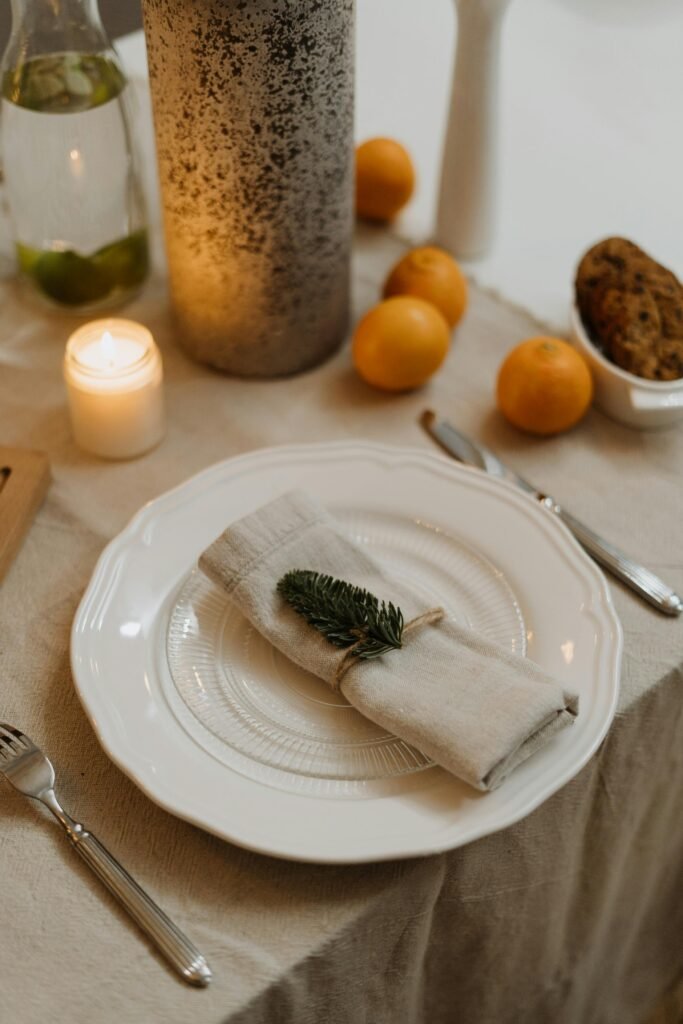
The rustic farmhouse tablescape has been done to death in a very specific way — burlap everywhere, mason jars, chalk signs, shiplap implied. That version is over. What’s not over is the genuine warmth that a simple, natural table setting creates, stripped of the theme-park version.
A linen table runner (not burlap — linen drapes better and looks more considered, $15–25 at most home goods stores) on a bare wood table. Mismatched vintage plates sourced from a thrift store for $1–3 each — the mismatching only works when every piece is interesting, so be selective when you shop. Small potted herbs instead of cut flowers: a rosemary plant, a thyme plant, a mint plant — they go on the table for the meal and then back to the windowsill afterward, and they smell incredible.
For candlelight: small beeswax taper candles ($8–12 for a box of twelve) in simple brass or white candlestick holders rather than candles in mason jars. The mason jar candle trend has been running for about a decade and it’s time to let it rest.
Elegant Pastel Palette — How to Make Soft Colors Look Sophisticated
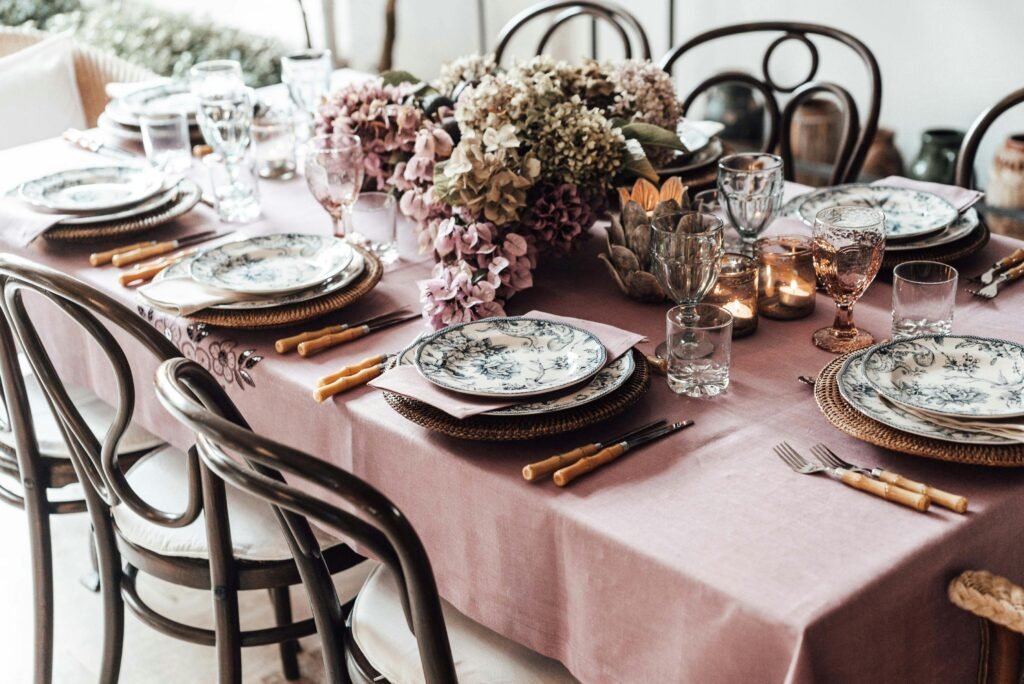
Pastel tablescapes are genuinely beautiful and genuinely easy to get wrong. The mistake is going too sweet — too much blush on top of more blush on top of mint, until the table looks like the inside of a cupcake shop. The version that reads elegant rather than precious is one pastel color as the lead, everything else kept neutral.
Blush pink linen napkins against white plates and a cream tablecloth. Or sage green glasses alongside white china and a warm white runner. One pastel element against a neutral ground — that’s the formula. Crystal or glass elements on a pastel table catch the light and add sparkle without adding color, which is exactly what keeps it from going precious.
For a centerpiece that works with a pastel palette: a low arrangement of white garden roses with a few pale pink ranunculus, in a simple ceramic or glass vessel. The flowers should be mostly white with one pastel color — not a full rainbow of pastels fighting each other for attention.
Bright and Bold — When You Want the Table to Do the Talking
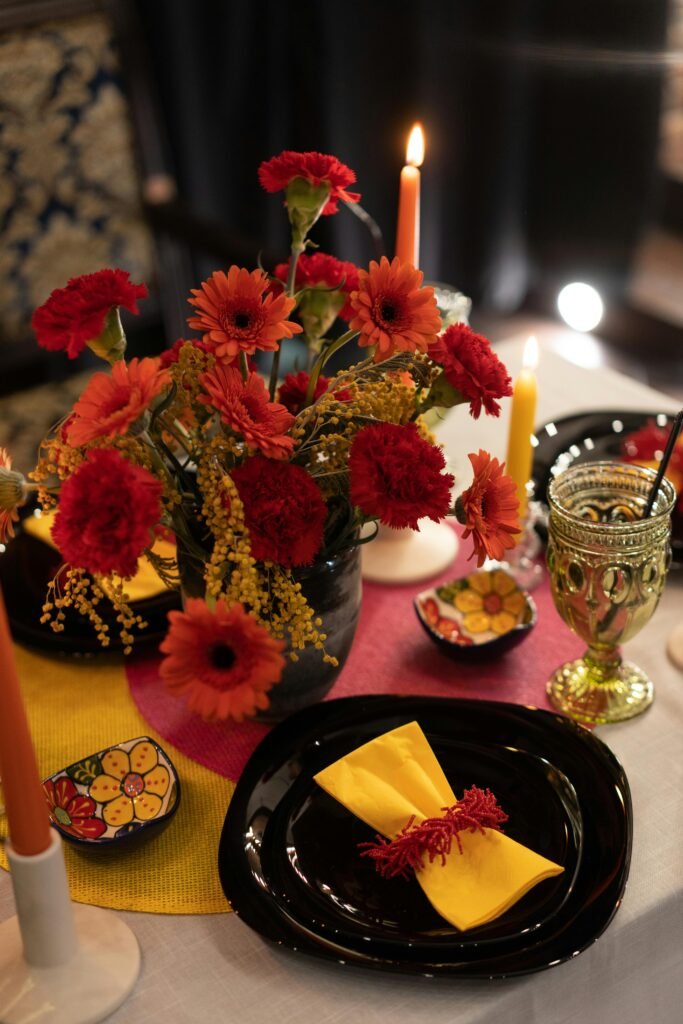
Some tables are meant to be an event in themselves. A spring brunch with friends, a birthday lunch, a gathering where the energy is celebratory rather than quiet — these call for color that does the work the moment someone walks in the room.
The bold table requires the same discipline as any other, just with more intensity: one dominant color, one secondary color, everything else kept simple. Bright yellow plates against a white tablecloth, with orange flowers as the centerpiece — two colors, maximum impact. Add turquoise napkins to that mix and you’ve got three colors competing and the whole thing starts to vibrate in a way that’s exhausting rather than festive.
For inexpensive bold tableware: IKEA’s FARGKLAR collection does bright, graphic dishes at $3–5 per piece. Target’s seasonal tabletop section reliably has bold spring options at similar prices. Neither needs to be an investment — bold color tableware gets used seasonally and stored the rest of the year.
Minimalist Chic — The Table That Lets One Thing Speak
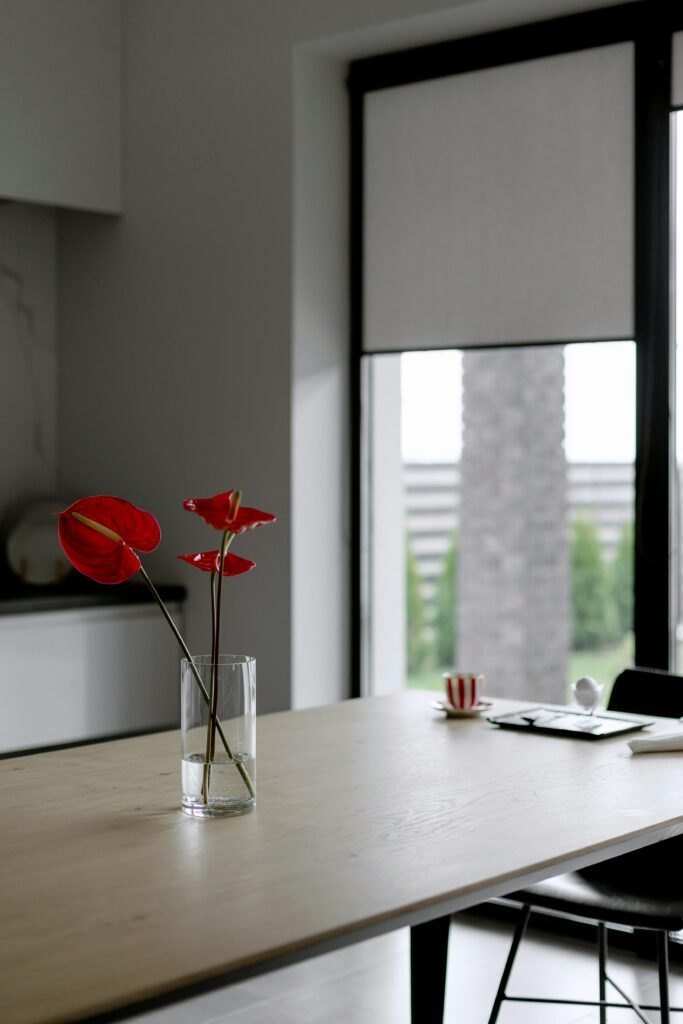
A minimalist table is harder to style than a full one because every element is visible with no surrounding context to buffer it. There’s nowhere to hide a bad choice. The single vase that’s the centerpiece of a minimalist table needs to actually be beautiful — not the backup option, not a random vessel pressed into service.
This is the one tablescape style where I’d recommend investing in one genuinely good piece. A proper ceramic vase from a small maker or a pottery market ($25–60) looks completely different from the same shape in a mass-produced version. On a minimalist table, that difference reads clearly.
White plates, simple linen napkins folded neatly rather than arranged elaborately, glassware that’s clear and clean. One vase with a single type of flower — three stems of white tulips, or a bunch of lily of the valley, or five stems of white ranunculus. The white-on-white spring table with one punch of living green or a soft bloom is genuinely sophisticated and takes five minutes to put together if you have the right pieces.
Vintage Tea Party — Charm Without Costume
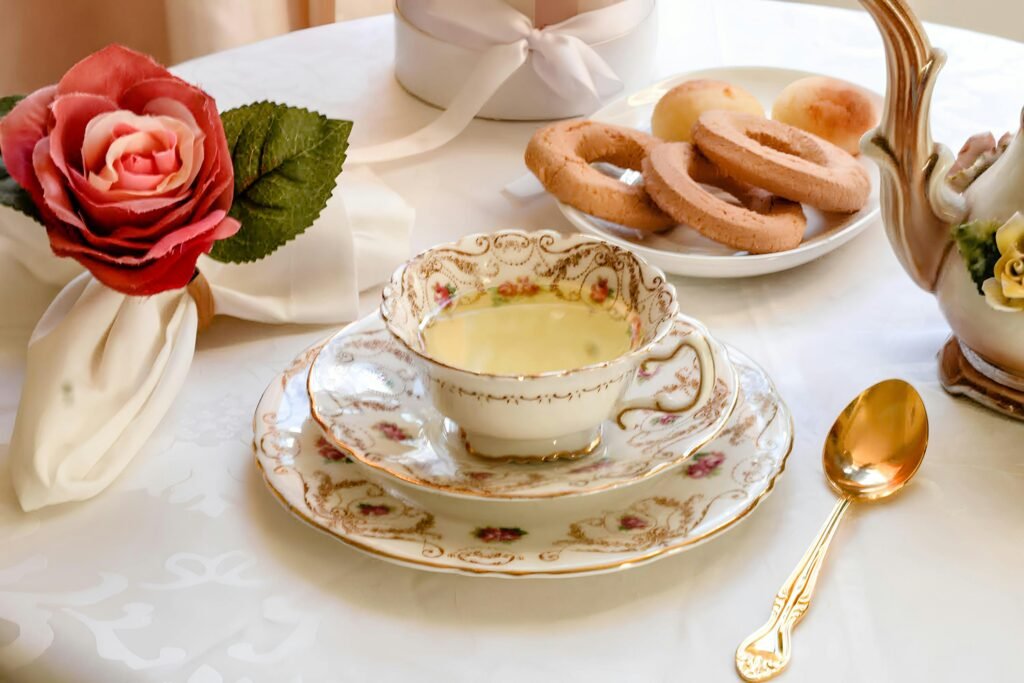
The vintage tea party tablescape is the one most likely to tip into costume-party territory — all lace doilies and pink everything until it feels like a theme rather than a table. The restrained version is considerably more beautiful.
Mismatched vintage china is the foundation and the most important element — the patterns don’t need to coordinate, but they should share a color story. Three different floral china patterns that all contain blue or all contain gold read as curated. Three patterns in completely different color families read as random. Source these from thrift stores, estate sales, or your own family’s cabinets — a mix of genuinely old pieces feels completely different from a reproduction “vintage” set.
A tiered tray loaded with small pastries or sandwiches is both beautiful and functional for a tea party table — it gets the food off individual plates and creates height in the center of the table. A basic two-tier cake stand costs $15–25 and works harder than almost any other single piece on this style of table.
Tropical Vibes — More Plant, Less Theme Park
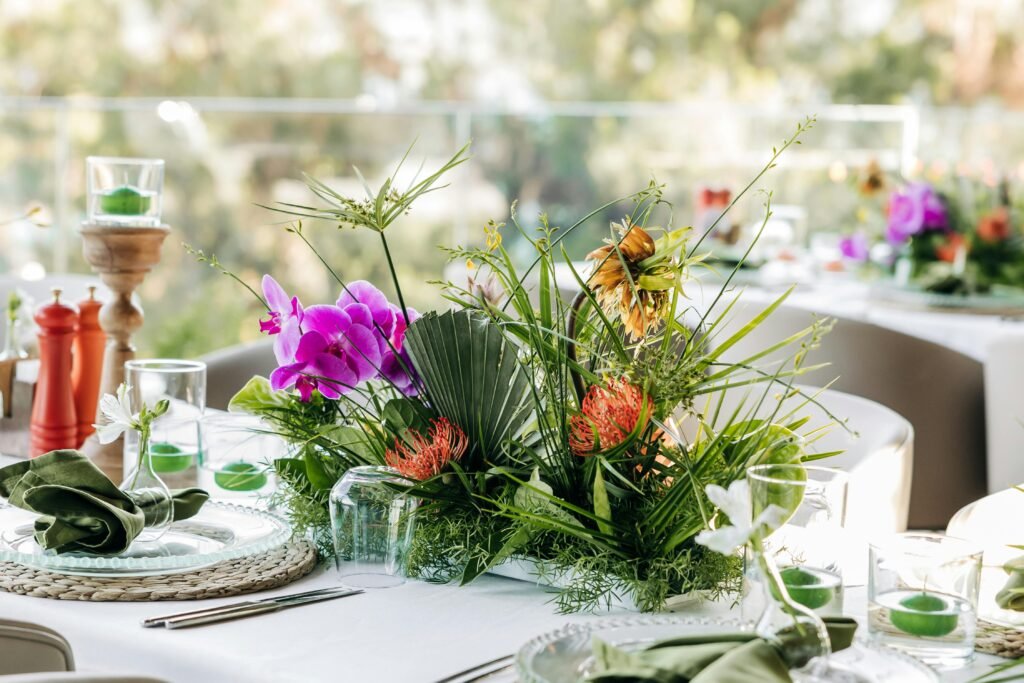
Every tropical tablescape I’ve seen go wrong has made the same mistake: too many novelty items that read as costume rather than style. Tiny plastic flamingos. Coconut shell cups. Maracas as place card holders. This is fun for a themed party and immediately exhausting as an aesthetic.
The tropical table that actually looks beautiful is built on plants and color, not accessories. Large tropical leaves — bird of paradise, monstera, palm — cut from a plant you own or bought at a florist ($4–8 per stem) laid flat down the center of the table, overlapping slightly. Bright flowers in bold colors in simple vessels: hot pink ginger flowers, orange bird of paradise, bold yellow heliconia. Plates in clean white or a single bold solid color against all that botanical richness.
The tropical table works best outdoors or in a room with good natural light where the colors won’t look strange. In a dark dining room, tropical styling loses all its energy.
Whimsical and Soft — For When Dinner Needs to Feel Like an Escape
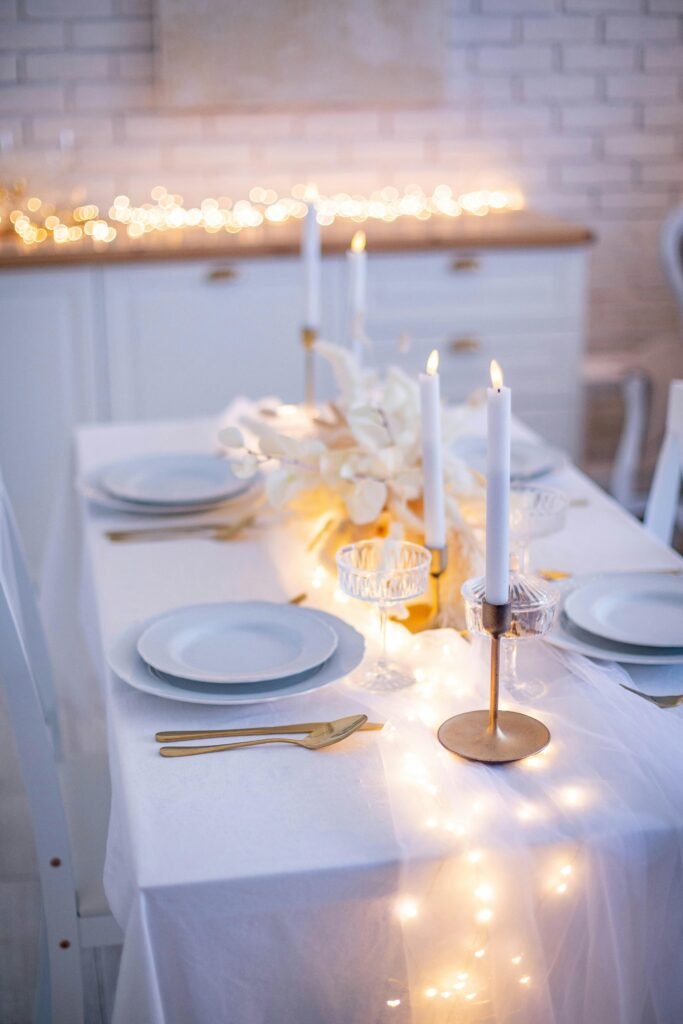
The whimsical tablescape is harder to define than the others because it’s more about atmosphere than specific elements. It’s the table that makes people slow down when they sit at it. It involves soft light, something unexpected, and the feeling that someone put real thought into making this moment feel special.
String lights draped low across the table (battery-operated, $8–15 for a strand) or tea lights in small glass holders scattered between place settings rather than in a central candelabra. Flowers that feel spontaneous rather than arranged — wildflower bunches from a farmers’ market ($5–8), loose and slightly unruly rather than perfectly composed. Something unexpected on each plate: a small smooth stone with a word on it, a sprig of fresh lavender, a single bloom from the centerpiece.
The whimsical table is the one where the details have been thought about individually rather than bought as a set. That’s the difference between whimsical and theatrical.
Bohemian Table — Layered, Not Chaotic
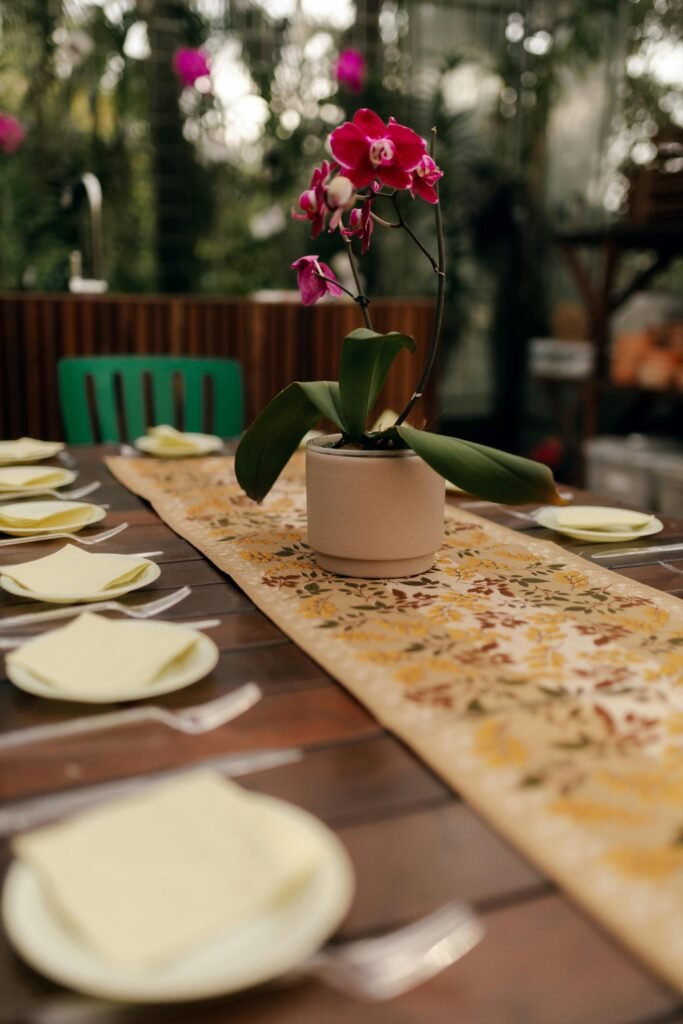
The bohemian tablescape lives and dies on the difference between layered and chaotic. Layered means each element was chosen and placed with intention. Chaotic means things were added until the table was full.
Start with a neutral base tablecloth and layer a printed or woven table runner across it — the runner should be narrower than the tablecloth so both are visible. Mismatched plates work here as in the farmhouse setting, but bolder — the boho table can handle more color and more pattern than most. Brass or copper candlestick holders. Flowers in unconventional containers: a old tin can, a ceramic mug, a glass bottle.
The detail I come back to for bohemian tables specifically: macramé napkin rings ($8–15 for a set of four at most craft stores or Etsy). They add texture and a handmade quality that no bought napkin ring replicates, and they cost almost nothing. Small details like this are what tip a table from styled to genuinely considered.
Classic White and Green — The One That Always Works
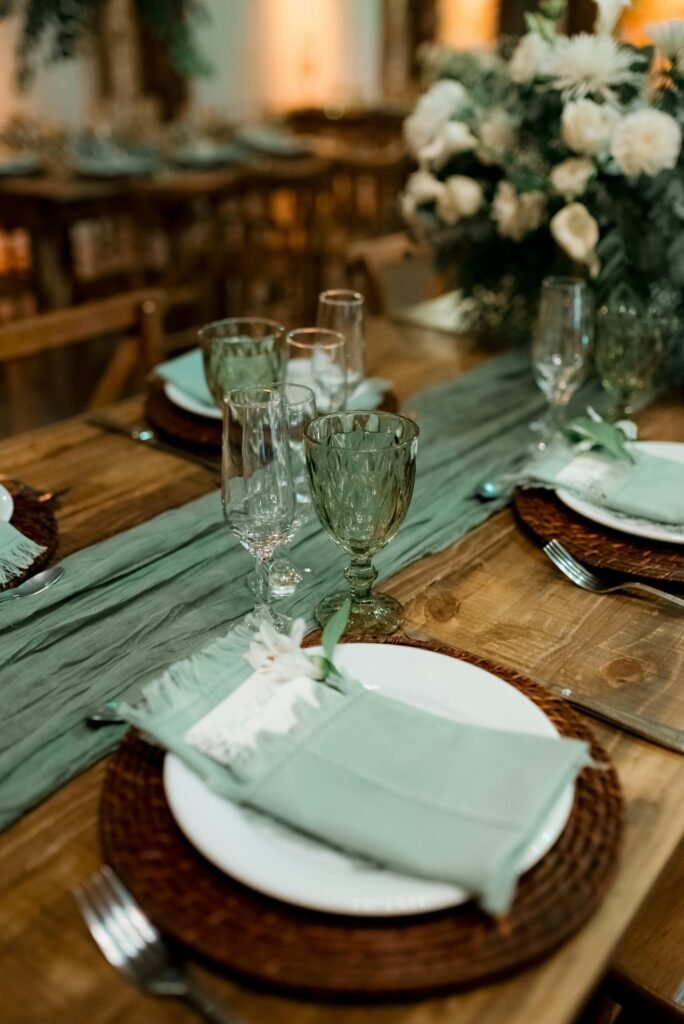
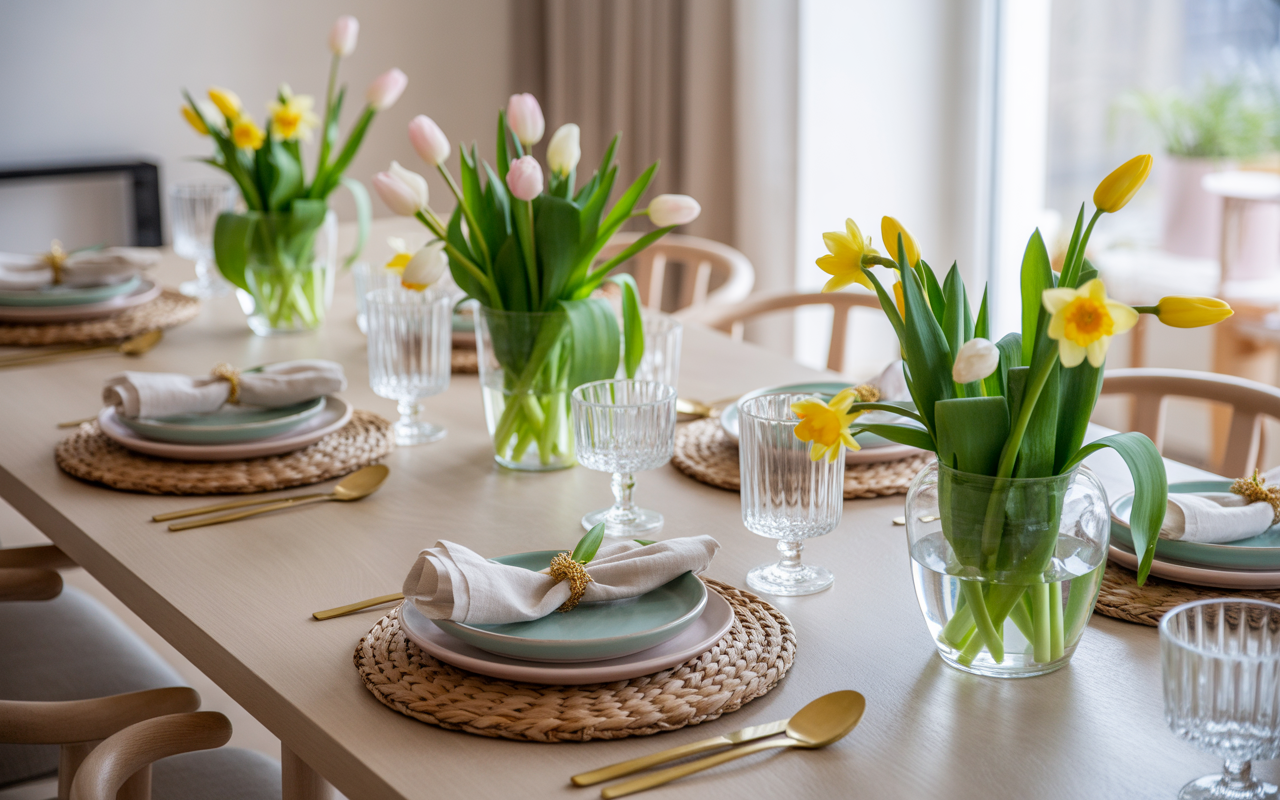
If I had to pick one spring tablescape to recommend to anyone regardless of their style or budget, this is it. White and green is foolproof, endlessly adaptable, and genuinely beautiful across every scale from a casual weekday dinner to a proper spring party.
The greenery does the heavy lifting here. Eucalyptus laid down the center of the table ($6–8 a bunch at grocery stores or Trader Joe’s, where it’s often $3–4 and lasts well over a week), interspersed with white flowers if budget allows or beautiful on its own if not. White dishes on a white or cream tablecloth with green linen napkins ($12–20 for a set of four). Clear glassware. Simple white candles.
I’ve styled this combination probably thirty times across different homes and different occasions and it has never not worked. It’s the equivalent of a white shirt in fashion — not exciting, but reliably, permanently right.
Colorful Fiesta Table — Commitment to Joy
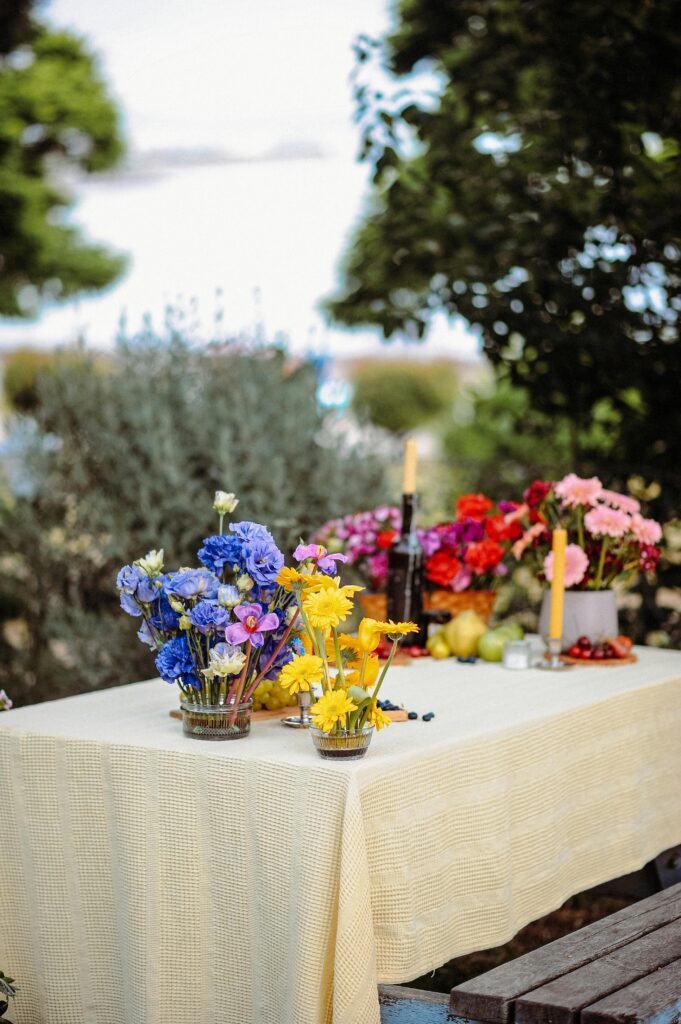
The fiesta table is the one where restraint is actually the wrong approach. This style asks for commitment — if you’re doing it, do it. Half-hearted bright colors look like a mistake. Fully committed bright colors look like a party.
Bright mixed flowers in bold colors: marigolds, zinnias, dahlias — whatever’s seasonal and available. A tablecloth in a warm, saturated color rather than a neutral. Plates in complementary bold colors — the combination that always works is warm colors together (orange, yellow, red, hot pink) rather than a mix of warm and cool. Colored glassware if you have it, clear if you don’t.
The food is part of the décor on a fiesta table in a way it isn’t on more restrained settings. A bowl of bright citrus in the center, colorful drinks in a pitcher, dishes that are vibrant in themselves. This is the table that photographs well and feels genuinely festive to sit at, which is the whole point.
Nature-Inspired Minimalism — Stones, Twigs, and Restraint
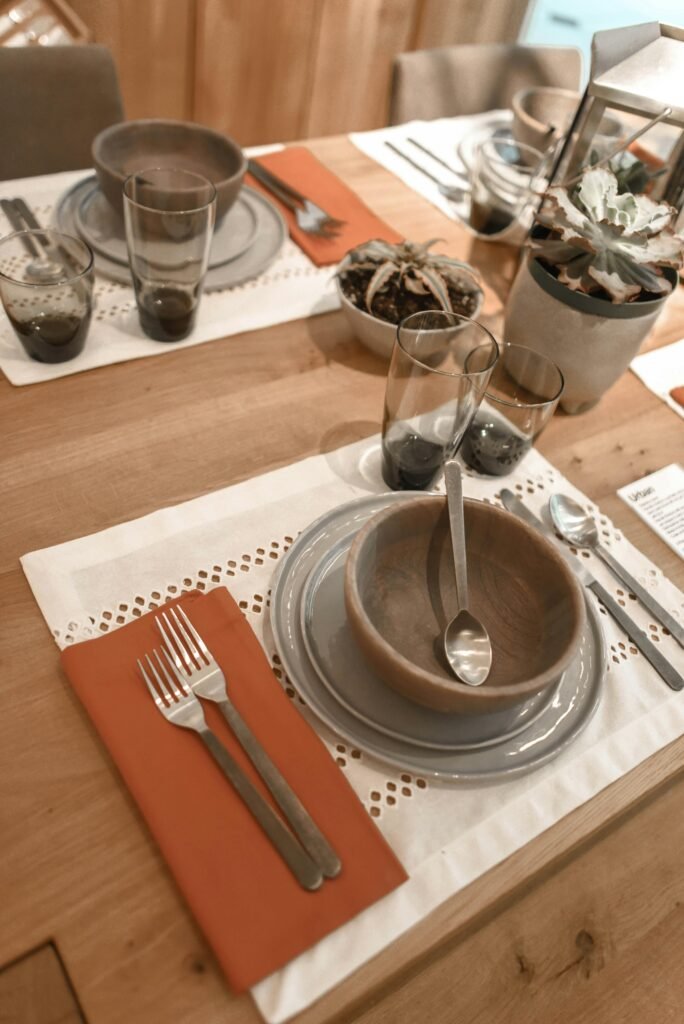
The nature-minimalist table is the earthy cousin of the clean minimalist setting — it uses natural objects as the design elements rather than purchased decorative pieces. Smooth stones, a piece of driftwood, small terracotta pots with moss or a single succulent, sprigs of rosemary or thyme. Things gathered rather than bought.
This works beautifully for a quiet family dinner where you want the table to feel grounded and calm rather than festive. Earth-toned dishes — anything in warm terracotta, warm beige, or muted sage — are widely available now at every price point. IKEA’s FÄRGKLAR stoneware mugs and the VARDAGEN range both read as earthy and natural without being expensive.
The nature table is the easiest one to pull together with no preparation: a walk in the garden or a local park for a few interesting stones, a branch, a handful of wildflowers. The table itself becomes the evidence that spring is actually happening outside, not just implied through store-bought décor.
Romantic Candlelit Dinner — Fewer Candles, More Intention
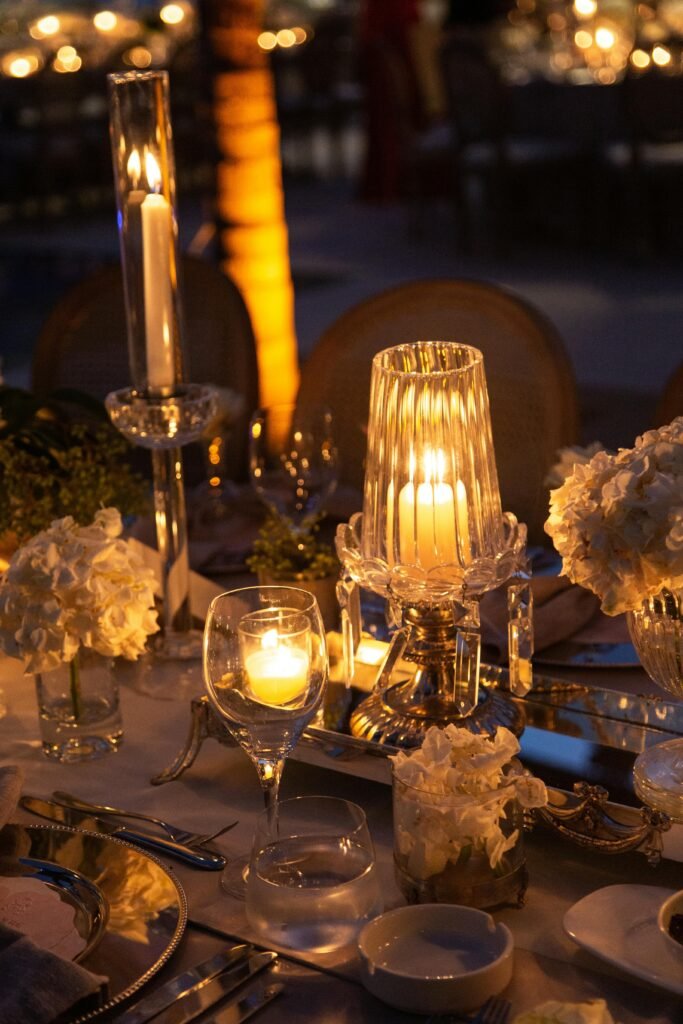
I have set a romantic candlelit table that went wrong exactly once. The problem was that I used too many candles — fifteen tea lights plus two pillar candles — and the table looked like a vigil rather than a dinner. Romantic candlelight requires fewer candles than you think, placed with more intention than you expect.
For a table for two: three taper candles in varying heights at one side of the center, a small low arrangement of flowers (three stems of roses, or a few garden flowers in a small vase), and that’s it. The candles do everything. They cast moving light across the table and across the people sitting at it and the effect is immediately beautiful in a way that overhead lighting never is.
Scented candles on a dining table are a polarizing choice — the fragrance competes with food, which not everyone enjoys. Unscented beeswax or white paraffin tapers ($6–12 for a box) are the safer option. The flickering light is the point, not the scent.
Family-Style Table — Generous and Unfussy
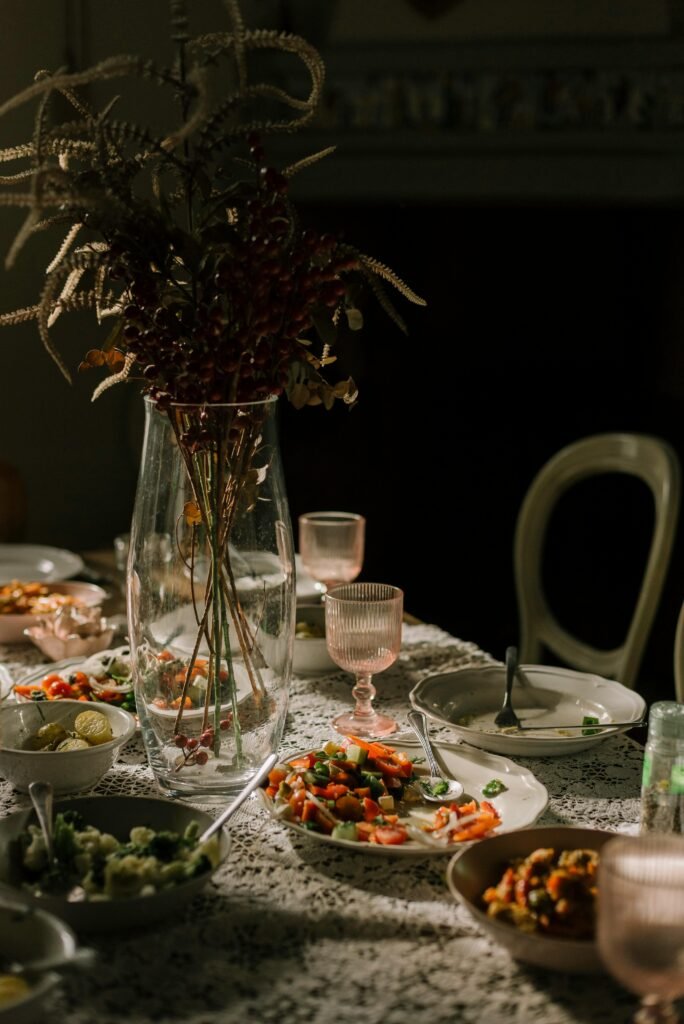
The family-style table is the one designed for actual, real family dinners where the goal is people eating together comfortably rather than admiring the tablescape. It’s generous, unfussy, and built around the food rather than around itself.
Large serving platters in the center — the food is the centerpiece. Simple, matching-enough dishware (it doesn’t all have to be identical, but it should feel like it belongs together). Good cloth napkins rather than paper — cloth napkins at a casual family dinner elevate the experience significantly for a cost of nothing once you own them. A bunch of grocery store flowers in a simple vessel somewhere on the table.
The details that matter on a family-style table are practical ones: room for the platters to be passed, chairs that are actually comfortable, lighting that’s warm rather than bright. The styling should support the meal, not compete with it.
Picnic-Style Table — Inside or Out
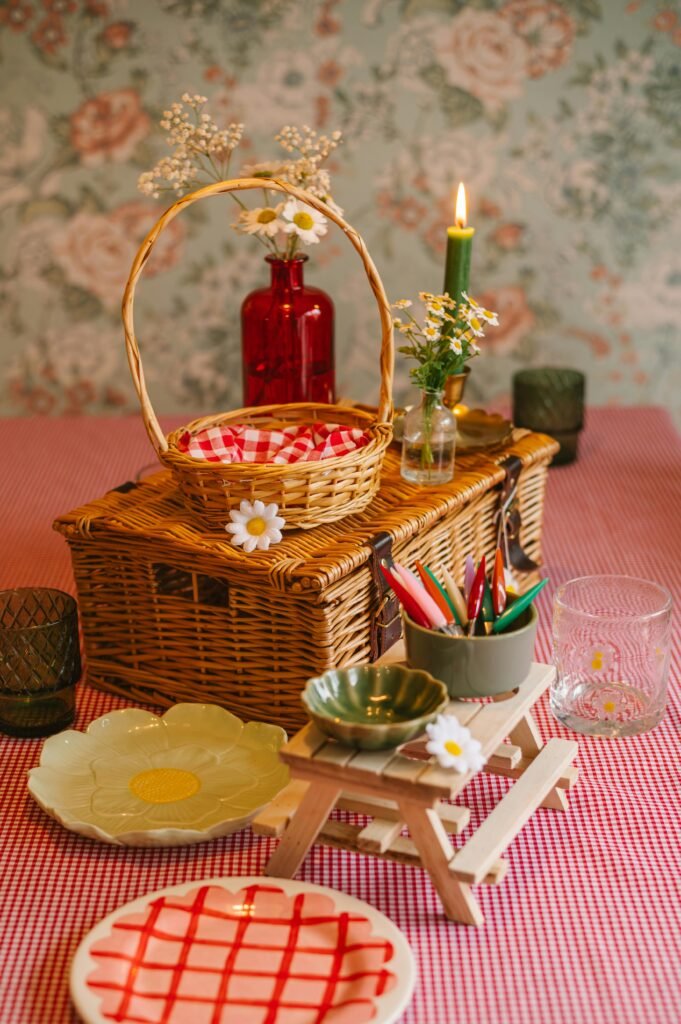
A picnic table setting brought indoors for a spring lunch is one of the most genuinely charming things you can do with a dining table, and it requires almost no special equipment. A cheerful printed tablecloth (outdoor tablecloths from garden stores are waterproof, easy to clean, and often more interesting than indoor ones — $15–30), wicker or rattan serving pieces, simple food served in casual containers.
The casual quality is the whole point here. Food in individual portions that’s easy to eat without ceremony: sandwiches, grain salads, fruit, cheese and crackers. Drinks in mason jars or simple glasses. Flowers in whatever vessel makes sense — a small watering can, a vintage pitcher, a jam jar with a few tulips.
I tried this for a spring lunch with friends a few years ago — moved everything from the dining table to a blanket on the living room floor when the weather turned too cold to eat outside. Everyone sat on cushions on the floor. It was the most relaxed meal I’ve hosted and the table (technically the floor) took five minutes to set up. Sometimes the least styled thing is the best one.
Questions I Get Asked a Lot About Spring Tablescapes
How do I make a tablescape look polished without spending a lot? Fresh flowers from the grocery store and a proper tablecloth do 80% of the work. A tablecloth that fits the table — not too short, not pooling dramatically on the floor — immediately makes any table look more intentional. Add a $6 bunch of tulips in a simple glass vase and the table is done. The other 20% is editing: less is almost always more on a table, and removing one thing usually improves it.
What’s the biggest tablescape mistake people make? Centerpieces that are too tall. Anything above about 10–12 inches blocks sight lines and makes conversation across the table difficult. Beautiful arrangements at low height — a cluster of bud vases, flowers in a shallow bowl, greenery laid flat — keep the table looking full without interrupting the reason people are sitting at it, which is to talk to each other.
How far in advance can I set a tablescape with fresh flowers? The day before is usually fine if you keep the flowers in water overnight and add them to the table the morning of the event. Cut flowers in a sealed room will last well for 24 hours. If you’re doing the full setting a day ahead, add the flowers last — set everything else the night before and arrange the flowers a few hours before guests arrive.
What’s the easiest spring tablescape for someone who’s never done this before? The white and green combination — eucalyptus down the center, white plates, clear glasses, simple white candles. It requires almost no styling instinct because the eucalyptus does all the visual work. Buy one bunch from Trader Joe’s or a grocery store ($3–6), lay it loosely down the center of your table, put a few white tapers at each end, and you have a genuinely beautiful spring table in under ten minutes. For more on bringing natural elements into your home styling, the 2026 home decor trends guide covers biophilic design in more depth.
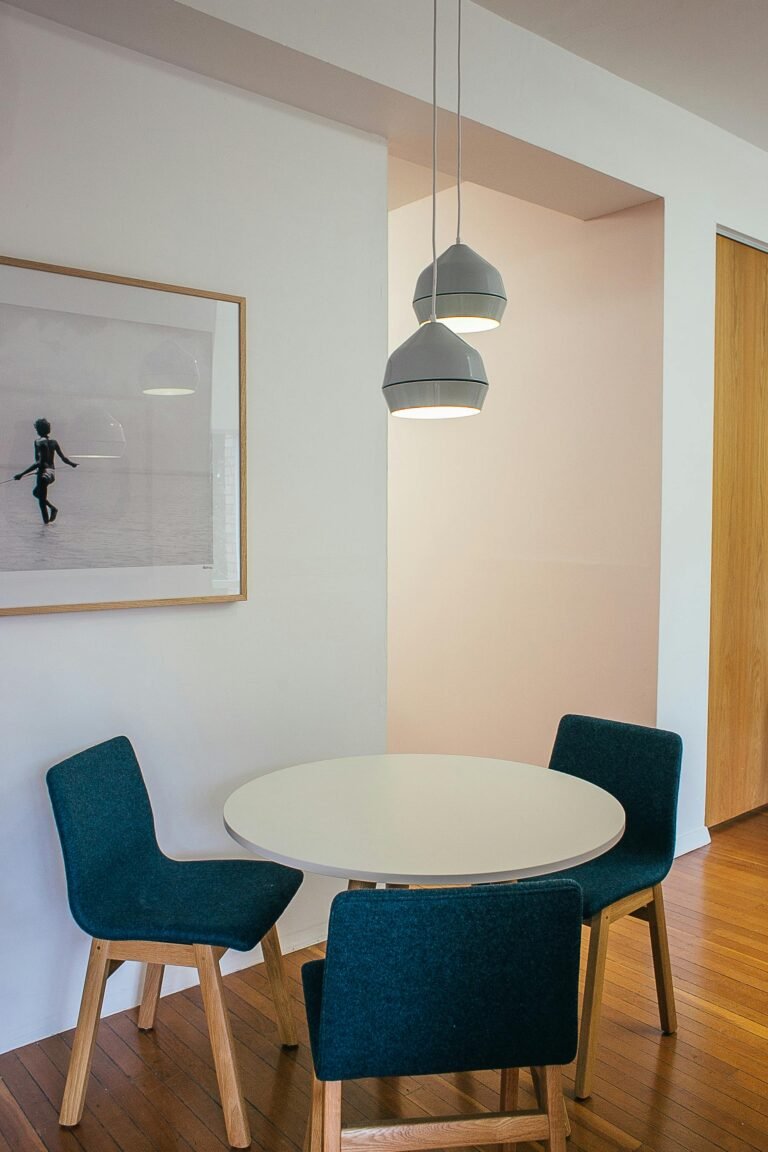
How do I style a small dining table without it looking overcrowded? Keep the centerpiece low and narrow — a single bud vase or two small vessels rather than a wide arrangement. Place settings that are minimal (one plate, one glass, napkin folded flat rather than architecturally arranged) leave room for the actual meal. The table should be fully set before you add the centerpiece, not the other way around — start with place settings and fill the remaining center space with flowers, not the reverse.
A Beautiful Table Doesn’t Have to Be Complicated
The best spring table I’ve ever sat at was set by my grandmother with a cotton tablecloth, a jam jar of lilacs from her garden, and mismatched plates she’d collected over forty years. There was nothing styled about it. It was just beautiful because it was genuine — things she loved, used with intention, on a table where people she loved were about to eat together.
That’s the goal. Not the Instagram-perfect tablescape with every element sourced and coordinated. The table that makes the people sitting at it feel like someone cared about making the meal special.
Pick one idea, do it simply, and see how it feels.
I’m setting a table for six next weekend for the first time in my new apartment. I’m going with white and green because I trust it. I’ll share how it actually looks when there are people and food on it.
— Emily
What’s the table you’ve set that you were most happy with — or most surprised by? Tell me in the comments.