11 Bathroom Decor Ideas That Actually Work (For Every Budget and Every Style)
The bathroom in my first Nashville apartment was beige. Not a nice warm beige — a tired, resigned beige. Builder-grade everything. The kind of room you used and left quickly because there was nothing to linger over. I spent exactly $94 fixing it, and the before-and-after genuinely looked like two different apartments.
That experience taught me something I keep coming back to: bathrooms are the most underestimated room in the house. Small, yes. Overlooked, absolutely. But they’re also the easiest room to make feel intentional — because the square footage is small, even one good decision reads loudly.
These 11 ideas come from that $94 bathroom, five more apartments after it, and a lot of trial and error along the way.
Upgrade the Mirror — It Does More Work Than Any Other Single Change
If your bathroom has a builder-grade rectangular frameless mirror, swapping it for a round mirror with a frame — black, brass, rattan, or wood — is the single highest-impact upgrade you can make without touching anything structural.
Here’s why: the mirror is the largest visual element on most bathroom walls. When it’s a bland rectangle, everything around it looks generic. A round mirror with a strong frame changes the whole feel of the room immediately.
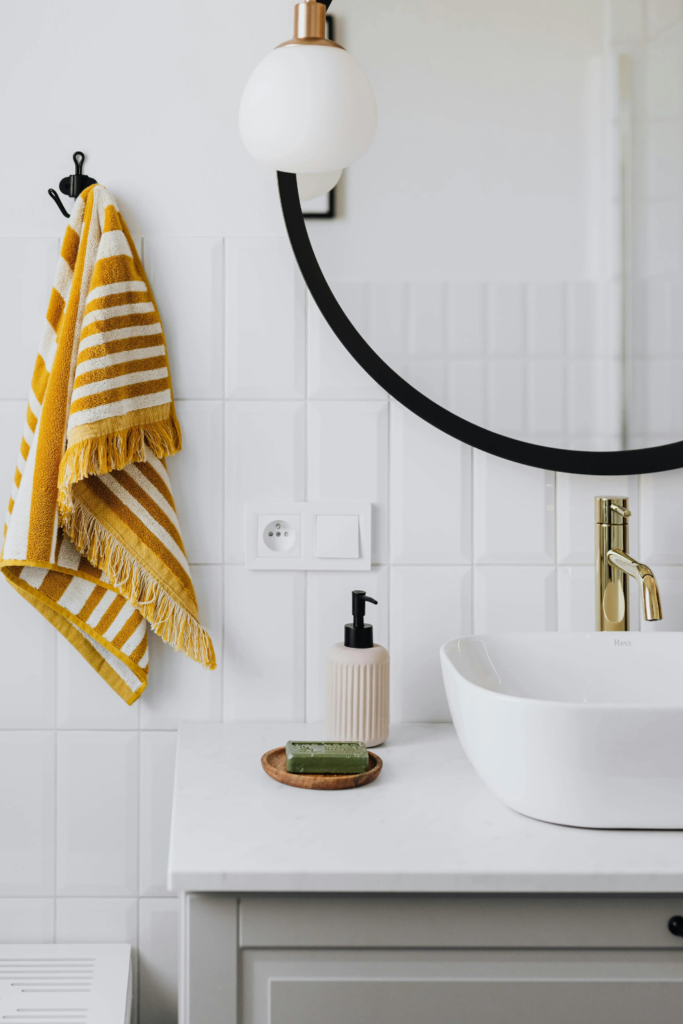
I bought a 28-inch round black metal mirror from a home goods store for $67. The bathroom that had looked like a hotel corridor suddenly looked like somewhere a person with actual taste lived. The brass faucet I already had looked intentional next to it. The mustard striped towel I hung on a simple black hook felt like a design choice, not an accident.
The one thing I tried that didn’t work: I put up a large ornate mirror — the kind with a dramatic carved frame — in a bathroom that had very busy tile. It was too much. Too many competing elements fighting for attention. The round black mirror is clean enough to work with almost anything.
Pair the mirror upgrade with one matching hardware detail — a towel hook, a soap dispenser, a faucet — and you get a cohesive look without a renovation. The globe pendant light in warm brass above the mirror is another detail worth noting: it costs less than $40 at most lighting stores and gives the vanity area a warmth that overhead recessed lighting never manages.
Add a Plant — Even One Small One on the Sink
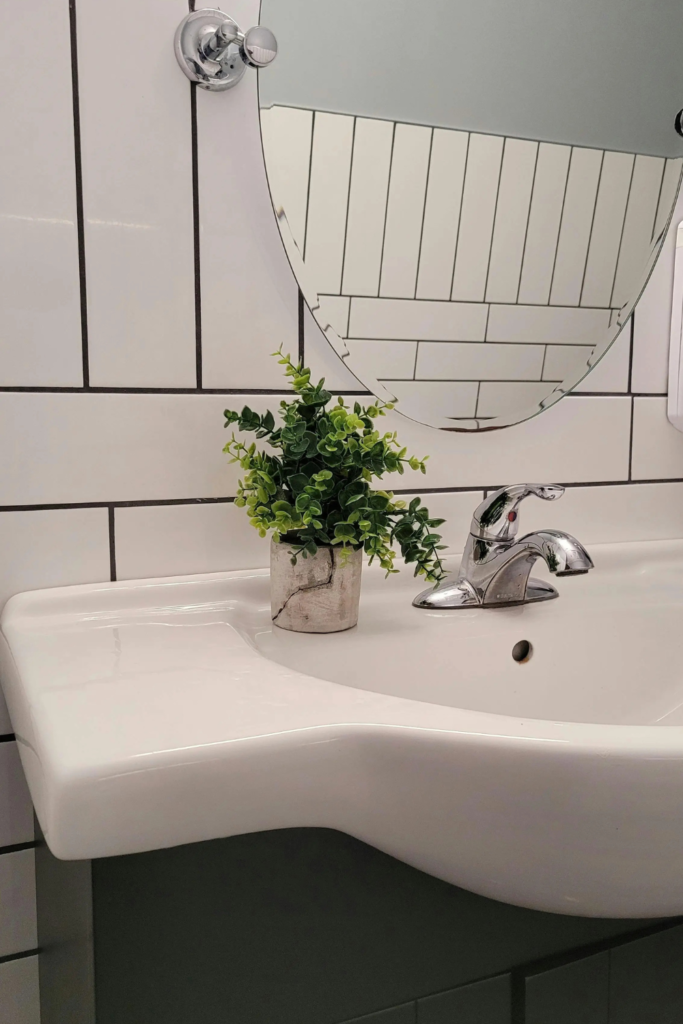
A bathroom without a plant is a bathroom that’s trying to be purely functional. And functional is fine — but it’s not nice. A single small plant on the sink edge, the back of the toilet, or a floating shelf adds something that no amount of matching towels can: life.
The best bathroom plants tolerate low light and humidity. A pothos is the obvious choice — trailing, forgiving, grows in almost any condition. A small eucalyptus in a simple pot works beautifully near a sink. Peace lilies thrive in humidity. You don’t need anything exotic or finicky.
I have a 4-inch pothos cutting in a small white ceramic pot sitting on my bathroom shelf. It cost $4 at the nursery eighteen months ago. It has asked nothing of me and given the bathroom a reason to exist beyond utility.
The white vertical subway tile in this bathroom is a classic backdrop that works with any plant and any decor style — the vertical orientation makes the ceiling feel higher than it is, which matters in a small bathroom. If you’re considering new tile, vertical subway at 3×12 inches reads more modern than the traditional horizontal 3×6 layout, and costs the same.
Make Your Vanity a Color Statement
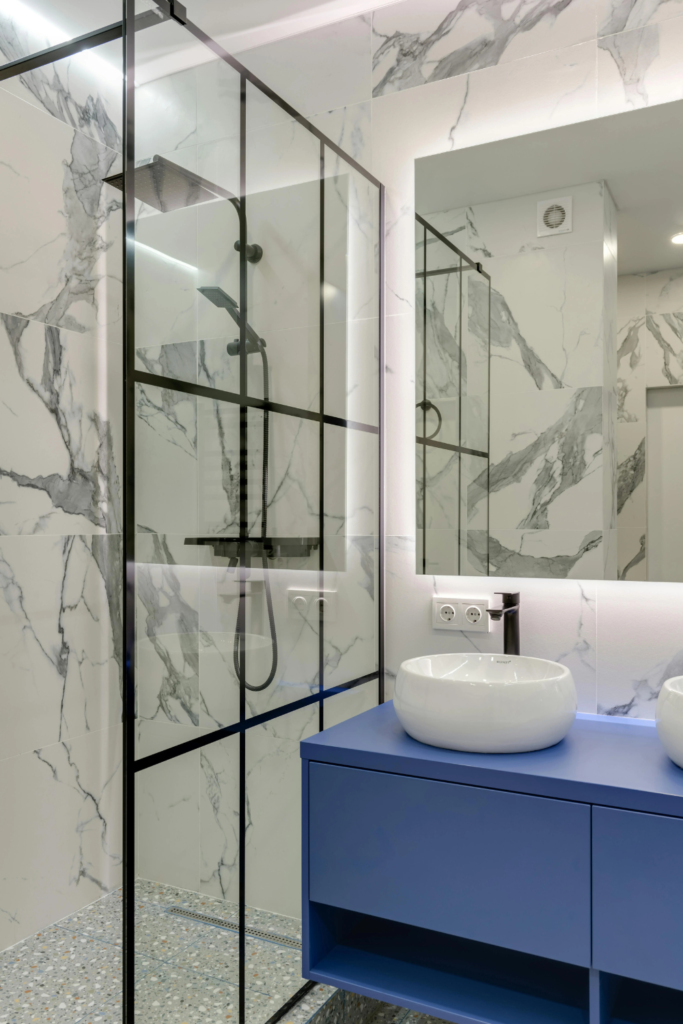
Most bathrooms have a white or beige vanity. That’s fine. It’s also forgettable. A vanity in a bold color — cobalt blue, forest green, terracotta, even a deep charcoal — makes the bathroom feel designed rather than default.
You don’t have to buy a new vanity to do this. Painting an existing vanity cabinet in a saturated color is a weekend project that costs $30–50 in paint and produces a dramatic result. Use a furniture-specific paint like Rust-Oleum Cabinet Transformations or a chalk paint with a water-based topcoat — these adhere well without heavy sanding.
The pairing matters. A cobalt blue vanity against white marble-look tile reads modern and intentional. That same blue against busy patterned tile would be chaos. Keep the rest of the surfaces simple if your vanity is the star. The black-framed glass shower enclosure here reinforces the color story — black and cobalt together feel deliberate and bold without being heavy.
I tried a mint green vanity in one apartment that I thought would feel fresh. It looked like a hospital room. Color temperature matters more than I expected — warm tones (terracotta, olive, cognac) feel cozy, cool tones (cobalt, sage, teal) feel modern. Know which mood you’re going for before you open the paint.
Create Recessed Wall Niches for a Spa Feel
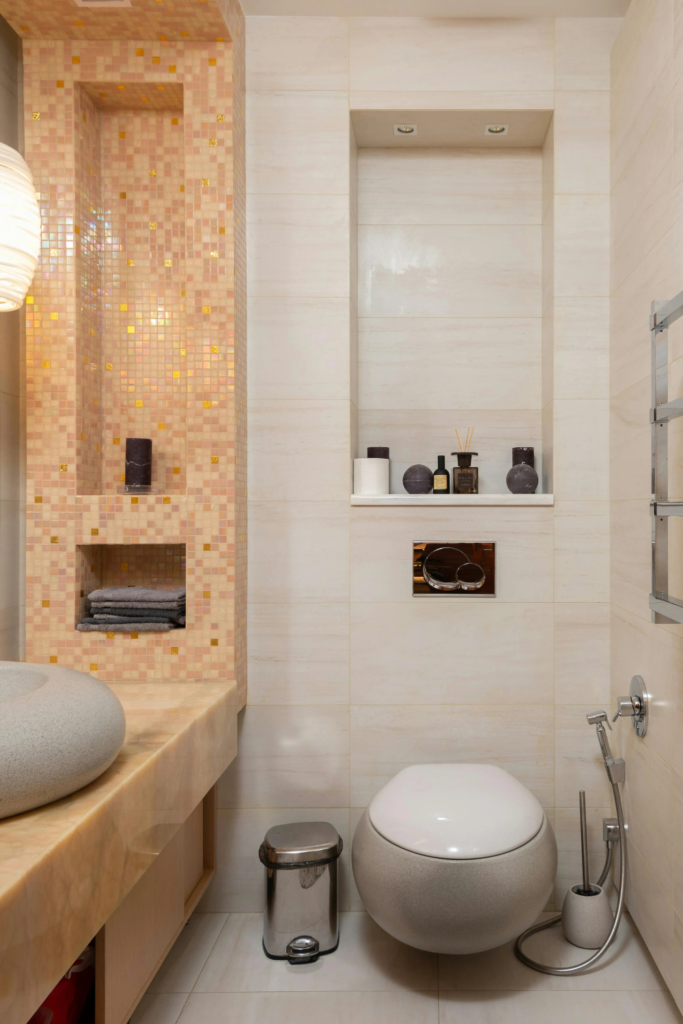
A recessed niche — a small shelf built into the wall — is the detail that makes a bathroom look genuinely designed rather than assembled. They’re perfect for small bottles, rolled towels, a candle, a few decorative objects. And they free up countertop space, which in a small bathroom is everything.
Here’s the honest part: adding a niche after the fact is a real construction project. You’re cutting into drywall and dealing with whatever is behind it — insulation, studs, sometimes pipes. That’s not a weekend DIY for most people and it’s not something I’d attempt without a contractor.
But you can fake it convincingly. Deep shadow box frames — 8 to 10 inches deep, available at craft stores for $20–35 — painted to match the wall and mounted flush give you 80% of the visual effect with none of the demolition. Style them with 3–4 items maximum: a small candle, a folded washcloth, a tiny vase. They read as intentional rather than improvised.
The gold mosaic tile accent wall here adds warmth that plain white tile simply can’t replicate. If you’re retiling, small square mosaic tiles in gold, terracotta, or sage green on one accent wall cost considerably less than tiling the whole room — and create significantly more visual interest. The pendant lights above the mirror instead of sconces is another detail worth stealing: two pendants read more architectural and feel more like a jewelry decision than standard lighting.
Hang Art in the Bathroom — Yes, Really
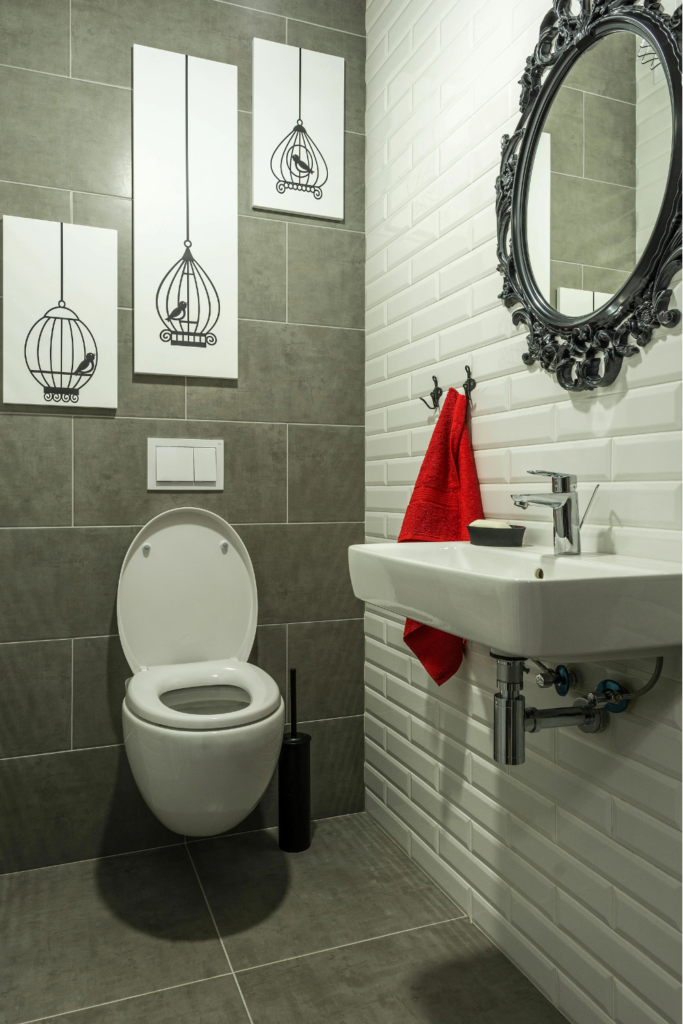
People are still resistant to this one and I don’t fully understand why. Art in a bathroom — a small framed print, a simple canvas, even a decorative mirror with real framing — transforms the room from functional to finished.
The rules are simple. Keep frames away from direct spray. A print above the toilet or on the wall beside the sink is fine. Nothing directly in the shower. Use prints sealed behind glass, or choose digital prints on waterproof paper if you’re worried about humidity.
The birdcage prints in this bathroom are a perfect example of how character works in a small space. They’re graphic, simple, slightly unexpected. Two white-framed prints above the toilet cost maybe $20–30 total — printed at a copy shop and put in basic frames from a discount store. The ornate baroque mirror beside the sink adds drama in the opposite direction. The red towel ties it together with one bold pop of color that neither the grey tile nor the white subway tile can provide on their own.
This room has a lot going on — the patterned grey tile, the bold mirror, the artwork — and it works because the color palette is tight: grey, white, black, and one hit of red. When you’re mixing patterns and statement pieces, a controlled color range keeps it from feeling chaotic.
Go Dark and Actually Commit to It
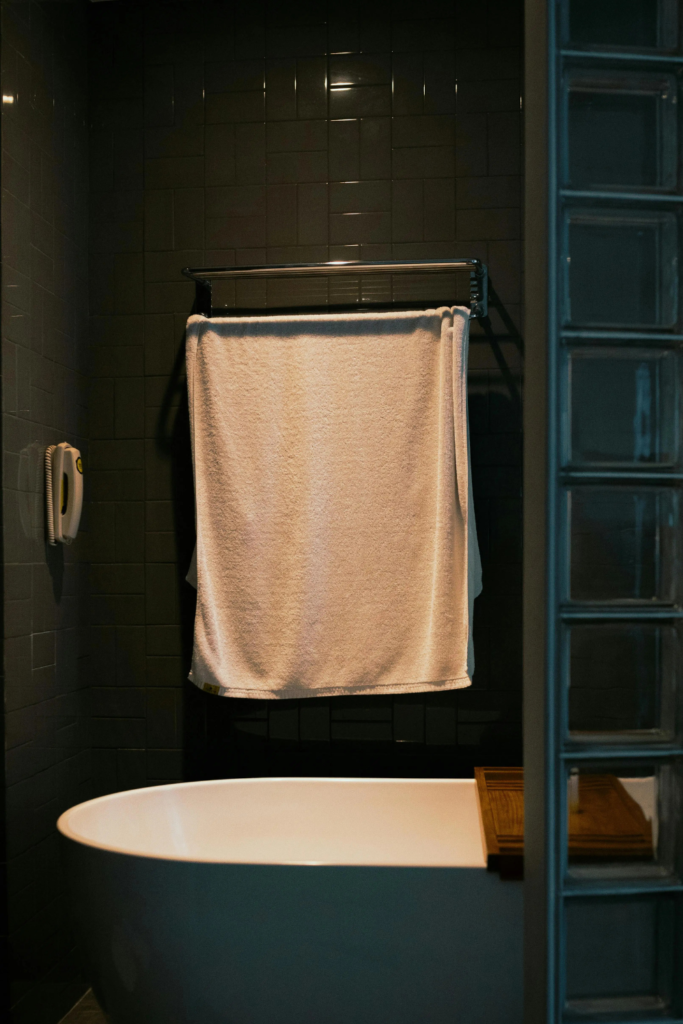
The dark bathroom is having its moment and for good reason — it looks genuinely dramatic, it hides grime better than white, and the contrast of white fixtures against dark walls is one of the cleanest looks in home decor right now.
The key word is commit. I tried doing one dark wall in a bathroom once — a deep charcoal behind the vanity — and it looked like an accident rather than a decision. The room was too small for a half measure. Dark bathrooms work when the color is consistent: all four walls, or at least three, and ideally the ceiling too if you have the nerve.
Black glossy tile like this reads very differently from matte black paint — more dramatic, more reflective, more spa-like. The gloss bounces light around the room in a way that keeps it from feeling oppressive. If tile isn’t in the budget, Benjamin Moore’s Black Beauty or Sherwin-Williams Tricorn Black in an eggshell finish costs around $65–70 a gallon and gives you the same moody effect at a fraction of the price.
The freestanding bathtub against the dark wall is the hero of this room. A freestanding tub starts at around $400 for a basic acrylic model — expensive, but not renovation-level expensive. Against dark tile it looks like a luxury hotel. Against a white wall it looks like a placeholder.
Use a Glass Shower Enclosure to Open the Space
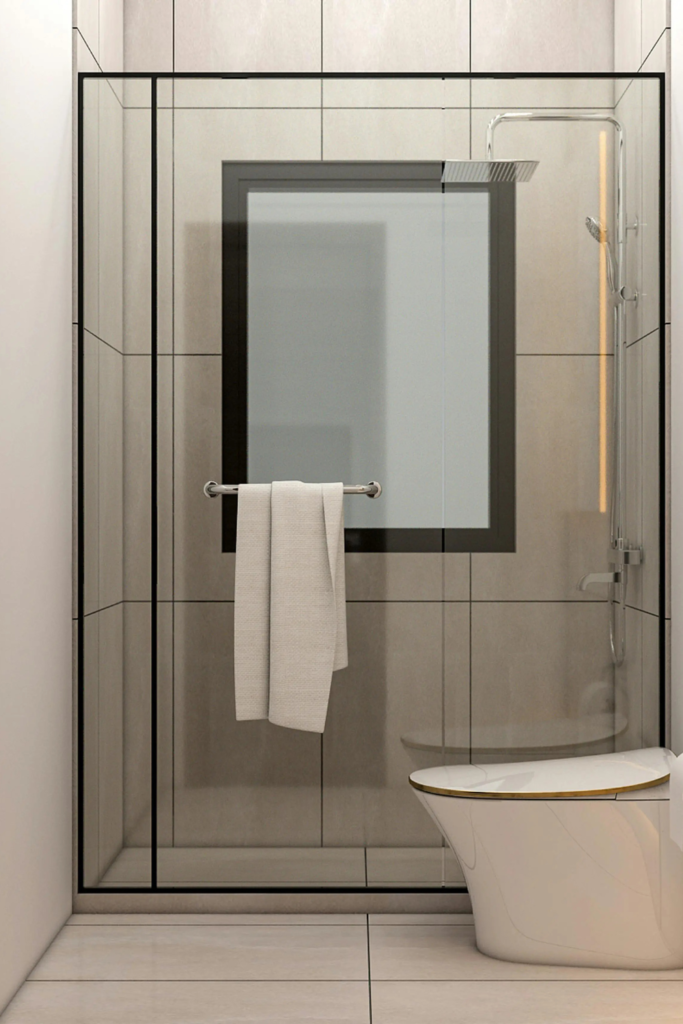
A shower curtain closes the room visually. A glass panel opens it. This is especially significant in bathrooms under 60 square feet — the transparency of glass makes the eye travel through the space rather than stopping at a curtain.
A basic semi-frameless glass shower panel starts around $200–350 installed from a tile and bath supplier. That’s less expensive than most people assume, and the effect is significant enough that it consistently tops the list of upgrades that add perceived value to a home.
This particular bathroom is a good example of how warm neutrals — cream tile, warm lighting, beige tones — make a space feel calmer than stark white. Everything here reads soft rather than clinical, which is a difficult balance in a room that’s all hard surfaces. The frosted window panel inside the shower enclosure adds privacy while still letting light through — a detail worth specifying if you’re having any shower work done.
If a full glass enclosure isn’t in the budget right now, swapping a fabric shower curtain for a clear plastic liner is a near-free version of the same idea — not as elegant, but the visual principle is identical.
Mix Black Fixtures With Natural Materials for an Effortless Boho Look
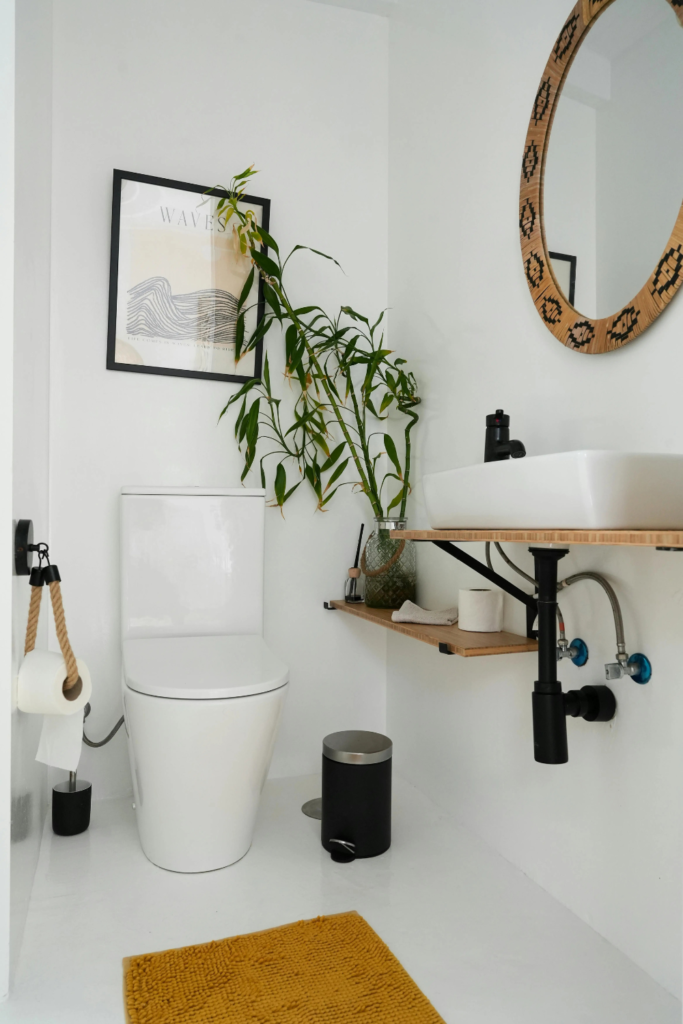
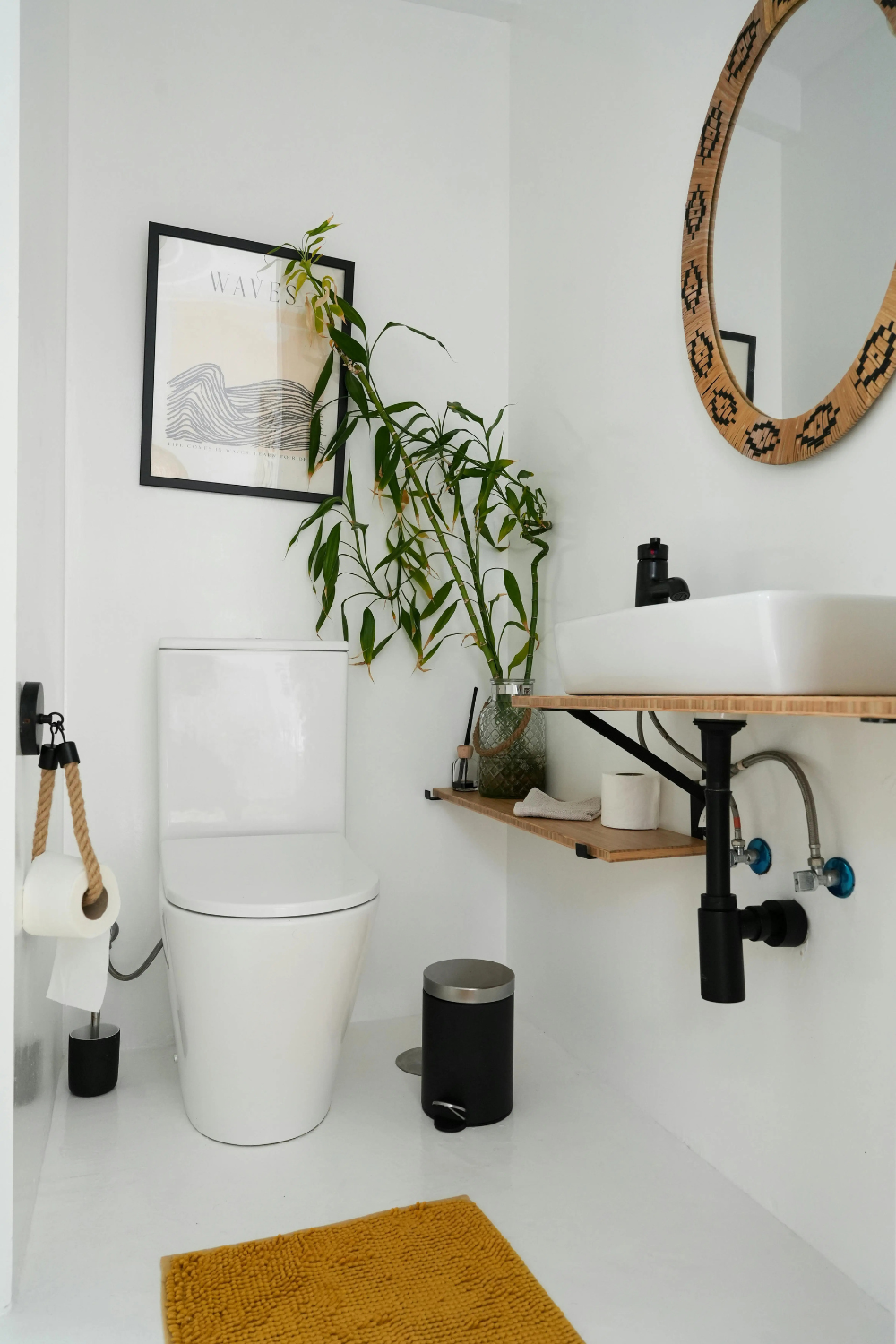
There’s a combination that’s been working in bathrooms for the last few years and shows no sign of stopping: matte black fixtures paired with natural materials like rattan, raw wood, and rope. It reads effortlessly collected rather than matchy-matchy, and it works in almost any size bathroom.
The formula is simple. Start with a white or very light base — walls, floor, sink. Then add black in your fixtures: faucet, drain pipe, waste bin, towel hooks. Then bring in natural texture: a rattan-framed mirror (around $35–60 at most home goods stores), a wooden floating shelf, a rope toilet paper holder. Finish with one warm color — a mustard bath mat, a terracotta pot, a warm-toned print on the wall.
I tried doing this same look with chrome fixtures instead of matte black. It looked fine, but “fine” is the problem — chrome is too neutral to anchor the natural materials. The matte black is what makes the rattan and wood feel intentional rather than random. It’s a small distinction with a big visual payoff.
The bamboo plant in a clear glass jar is doing exactly the right job here — tall, graphic, zero maintenance. Lucky bamboo in water needs no soil, no pot, just a glass container and indirect light. It’ll grow for months and cost you $5 at a grocery store floral section. If you enjoy styling shelves with plants, the same principles work beautifully in a living room bookshelf styling setup too.
Use a Wooden Ladder as Your Towel Holder
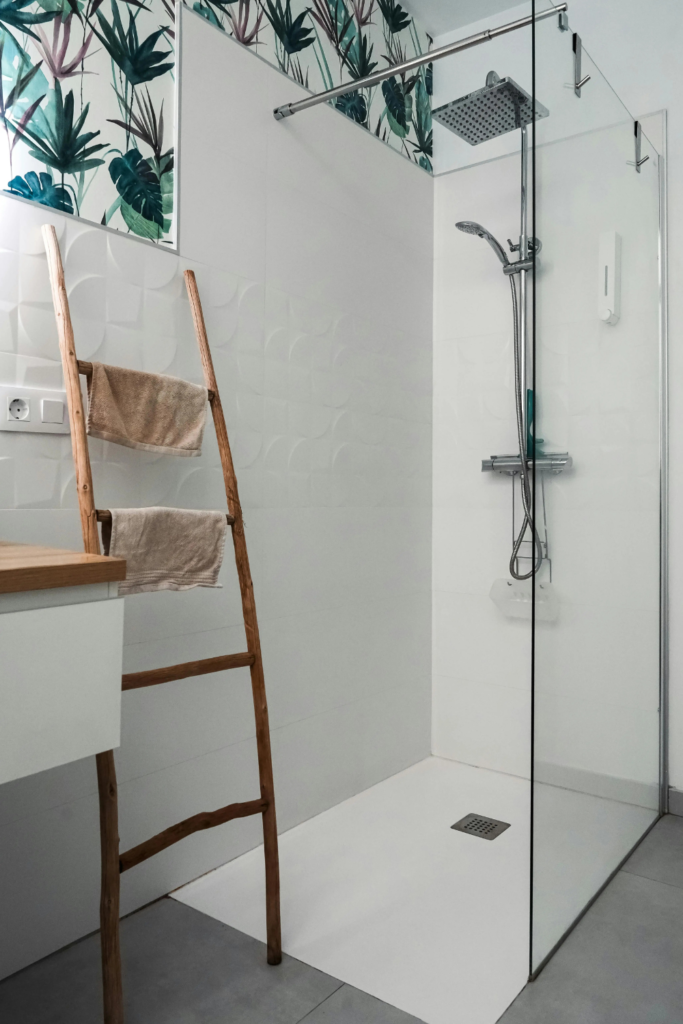
This is one of those ideas that looks like it costs a lot and costs almost nothing. A wooden ladder leaned against the bathroom wall — either a rustic found piece or a simple craft store ladder for around $25–40 — holds towels beautifully, adds warmth and texture, and takes up zero wall space.
I put one in my bathroom two years ago and it’s been my most-commented-on decor decision, which continues to baffle me given how simple it was. It leans against the wall. You hang towels on it. That’s the whole thing.
Pair it with linen towels in natural tones — they drape better than terry cloth and look more styled even when slightly wrinkled. A set of four linen hand towels runs about $22–30 from most home goods stores and lasts for years.
The tropical leaf wallpaper strip along the upper wall here is another idea worth stealing: a 12-inch band of bold wallpaper at ceiling height makes a statement without overwhelming the room, and costs a fraction of wallpapering a full wall. Most peel-and-stick wallpaper options work well in bathrooms that aren’t directly steamy — one roll at $30–45 is usually enough for this treatment. The 3D textured white tile on the lower half adds dimension that flat tile doesn’t have, without introducing any color.
A Soft Wall Color Does What White Can’t
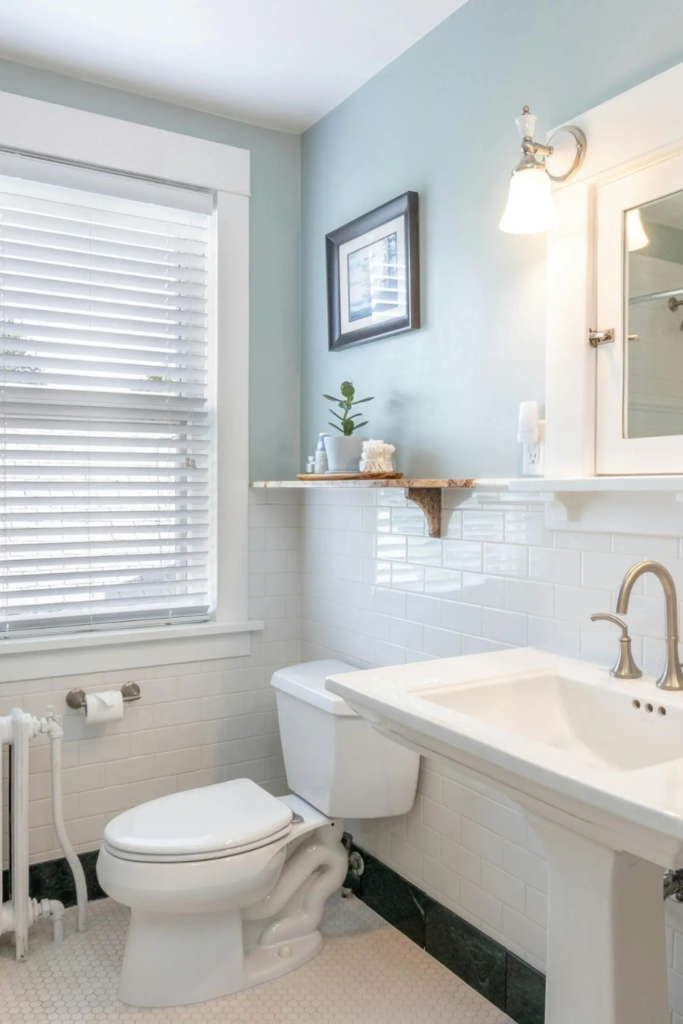
White bathrooms are clean. They’re also cold. A soft wall color — a dusty blue, a warm sage, a greyed lavender — adds a warmth that white can’t replicate, especially when paired with white fixtures and trim.
This bathroom does it exactly right: light blue walls above, white subway tile as wainscoting on the lower half, and white fixtures throughout. The color stays soft and airy — it never feels heavy because the tile below keeps the room visually grounded in white. The striped shower curtain adds movement. The penny tile floor is classic, timeless, and works with almost any palette.
The color I’d recommend for this specific effect: Benjamin Moore’s Boothbay Harbor or Sherwin-Williams Sea Salt. Both read as soft blue-green depending on your light source, and both sit beautifully against white subway tile. A single gallon is $60–70 and will cover a bathroom twice over.
The small wooden shelf beside the window — styled with a single small plant and a couple of bottles — is the detail that makes the room feel lived-in rather than staged. It’s about 8 inches deep and 18 inches wide. That’s it. One shelf, two or three objects, and the room has a human quality that an empty wall never would.
Add a Backlit Mirror and Floating Shelves for the Biggest Transformation
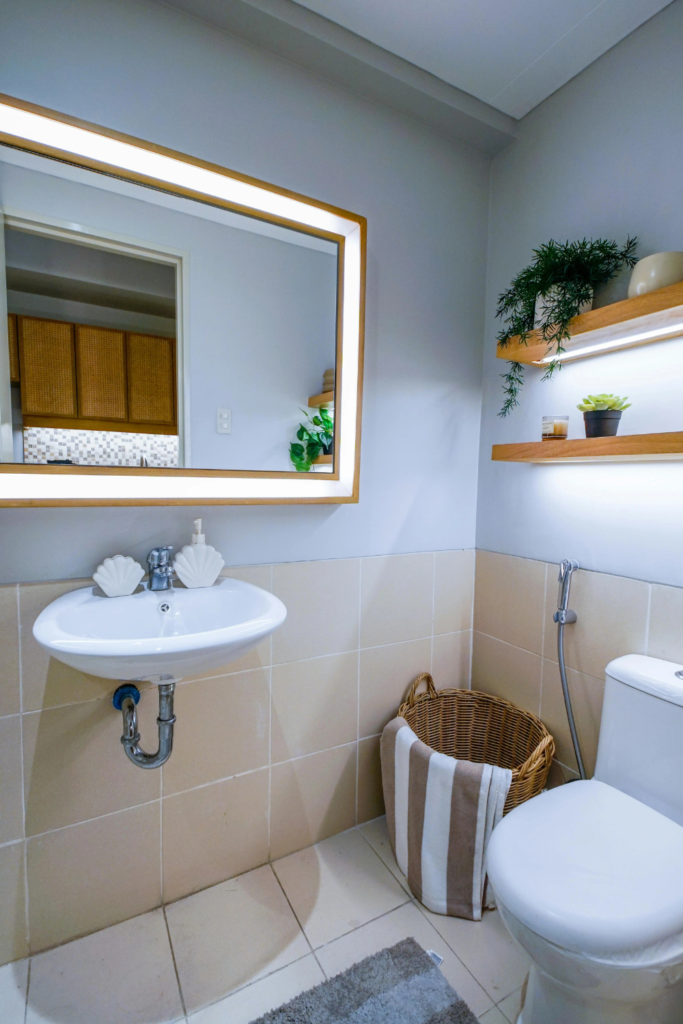
The last upgrade — and possibly the most transformative for a bathroom that already has decent bones — is combining a backlit or LED mirror with floating wood shelves.
The backlit mirror solves two problems at once. First, it gives you significantly better lighting for getting ready: side or front lighting is more flattering than overhead, and the soft glow of a backlit mirror is the closest thing to a ring light that a bathroom can offer. Second, it becomes a focal point that makes the whole vanity area feel intentional and finished. LED mirrors start around $80–120 for a 24×32 inch size and can be installed by connecting to an existing light switch.
Floating wood shelves beside or above the toilet — 8 to 10 inches deep, 24 to 36 inches wide — give you vertical storage without using any floor space. Style them the way I style any shelf: one trailing plant, one or two small objects, and breathing room between things. The instinct is to fill the shelf. Resist it. Half-full always looks more intentional than packed.
The wicker basket on the floor beside the toilet in this bathroom holds extra towels or toilet paper without looking like storage — it looks like a choice. A wicker basket in a 10-inch diameter runs about $12–18 and is one of the most versatile items you can put in a bathroom. It hides clutter, adds texture, and reads as styled in every context.
Questions I Get Asked a Lot About Bathroom Decor
Can I really paint over bathroom tile? Yes — with the right primer. A bonding primer like Zinsser Bulls Eye 1-2-3 applied before a tile-specific paint will adhere to ceramic tile. It’s not a permanent renovation-level finish, but it holds well for 3–5 years with light traffic. I’d use this approach on a feature wall or backsplash area, not a shower floor.
What’s the best plant for a windowless bathroom? ZZ plants are the answer. They tolerate low light better than almost any other houseplant, need water only every 2–3 weeks, and look substantial enough to actually read in a small space. A 6-inch pot runs about $12–18 at most garden centers. Lucky bamboo in a glass of water is another good option — no soil, no fuss, and it looks intentional in almost any bathroom style.
How do I hide ugly pipes under a floating sink? A simple wicker basket or small wooden crate placed in front of them is the easiest fix. If you want something cleaner, fabric pipe covers or PVC pipe wrap are available at most hardware stores for $15–25 and give the look of a concealed installation without any plumbing work.
Is it worth replacing a shower curtain with a glass door? For most people, yes — especially in bathrooms under 80 square feet. The visual difference is significant and the cost is lower than most expect. A semi-frameless swinging glass door starts at around $200–350 installed. If you’re renting and can’t make permanent changes, a clear plastic liner instead of a fabric curtain is a good free alternative that gives you the same visual openness.
How do I make a small bathroom feel bigger without renovation? Three things consistently make the biggest difference: a large mirror (at least 24×36 inches), consistent flooring that runs wall to wall without visual interruption, and removing anything stored on the countertop that doesn’t need to be there. The less visual clutter, the larger the space reads. Vertical tile orientation helps too — it draws the eye upward and makes ceilings feel taller.
The Bathroom Is Worth Your Attention
It’s the room you start and end every single day in. Even a few deliberate choices — a mirror that actually fits the space, a plant that cost $6, a coat of paint in a color you actually love — change how the room feels to live in every day.
You don’t need all eleven of these ideas. Pick the one that fits your budget and your space right now, and start there. The ladder, the mirror, the plant. Any of them will shift the room in a way you’ll notice every morning.
I’m currently looking at backlit mirrors for my own bathroom — I’ve had overhead lighting my whole life and I’m convinced it’s making my mornings harder than they need to be. Updates coming soon.
— Emily
Which of these are you trying first? Drop it in the comments — I read every single one.
