8 Living Room TV Wall Ideas That Actually Look Designed (Not Just “TV on a Wall”)
There’s a version of a living room where the TV is just… mounted on a blank white wall, cords dangling, a single floating shelf below holding a cable box and a remote. Functional. Totally fine. And somehow deeply unsatisfying every time you walk in.
The TV wall is usually the visual anchor of the living room — it’s where everyone’s eyes go first, whether the TV is on or not. Making it feel intentional doesn’t require a renovation or a built-in unit that costs as much as a used car. It just requires thinking about the wall as a whole, not just the screen.
These eight ideas are the ones I keep coming back to, styled around everything from small apartments to open-plan living rooms.
Build a Gallery Wall Around the TV
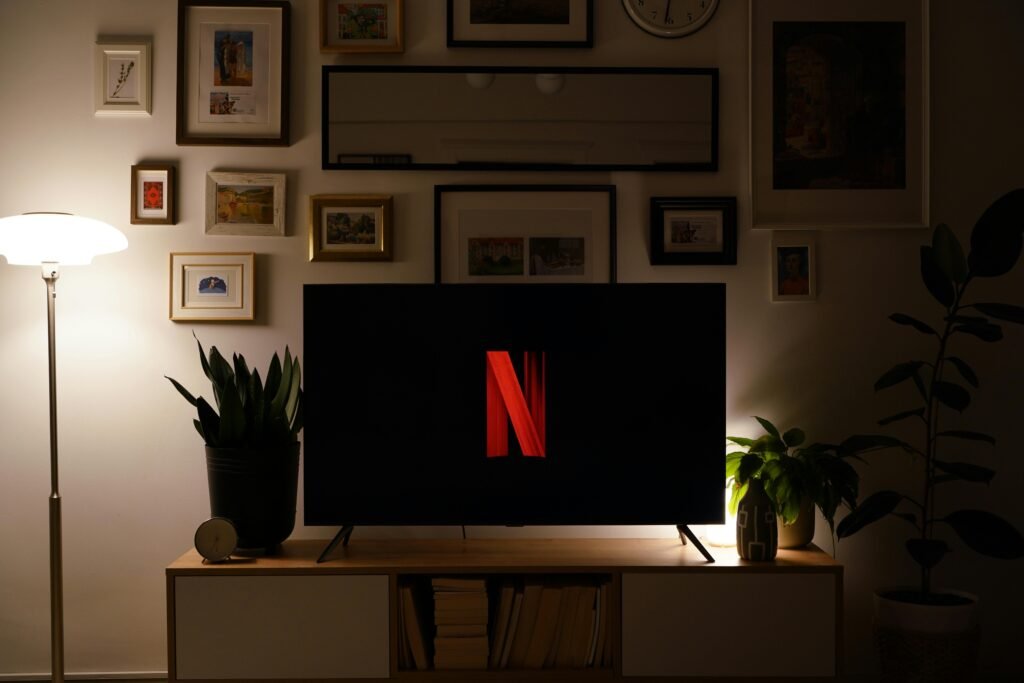
This is the one that surprises people most — the idea that you can hang art around a TV, not instead of it. The trick is treating the TV as one element in a larger composition, not the centerpiece everything else has to accommodate.
Start by choosing frames in one or two finishes — black, natural wood, or brass all work well. Arrange them asymmetrically around the TV, leaving a natural margin (about 4–6 inches) between the screen and the nearest frame. Mix sizes, but keep the gallery roughly symmetrical in overall weight. A large print on the left might balance two smaller ones stacked on the right.
The result is a wall that looks curated rather than dominated by a screen. When the TV is off, the whole arrangement reads as a gallery wall. When it’s on, the TV feels like part of the room — not a necessary eyesore.
Add Floating Shelves on Either Side
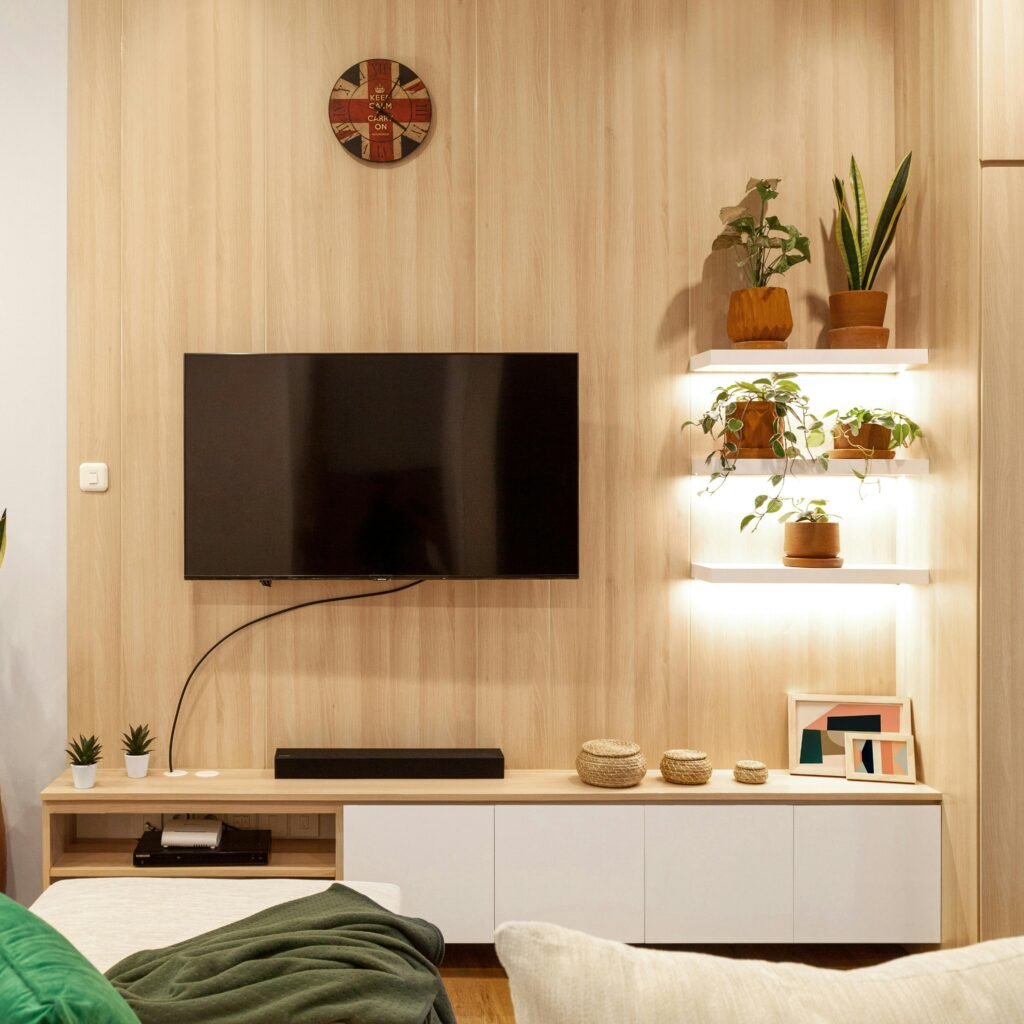
Flanking a TV with floating shelves is one of the most practical TV wall upgrades you can do — it adds storage, adds styling opportunity, and makes the TV feel like it belongs to a larger structure rather than floating alone.
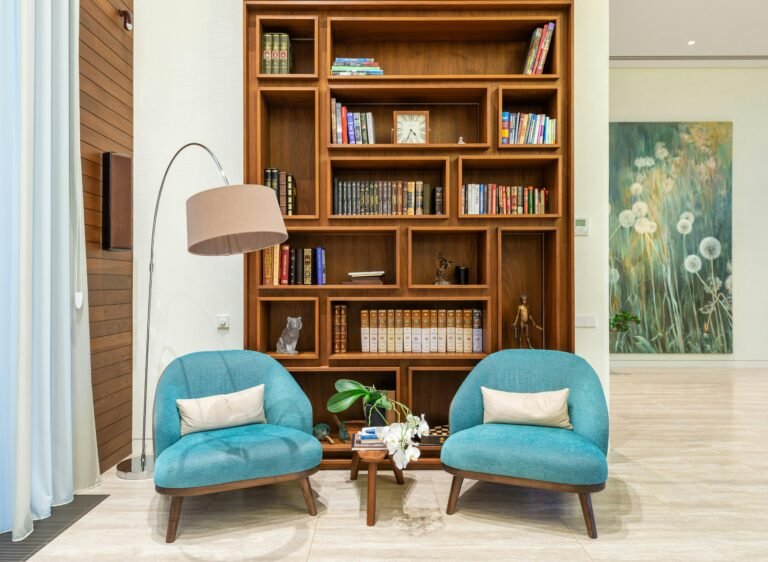
Keep the shelves at the same height on both sides for a balanced look, or stagger them slightly for something more relaxed. Style them with a mix of books (spines facing out for some, turned inward for a cleaner look), a trailing plant, a small candle, a framed photo. The goal is a mix of functional and decorative — not a shelf full of decorative objects with no breathing room, and not a shelf full of cable boxes and remote controls.
Paint the TV Wall a Dark, Moody Color
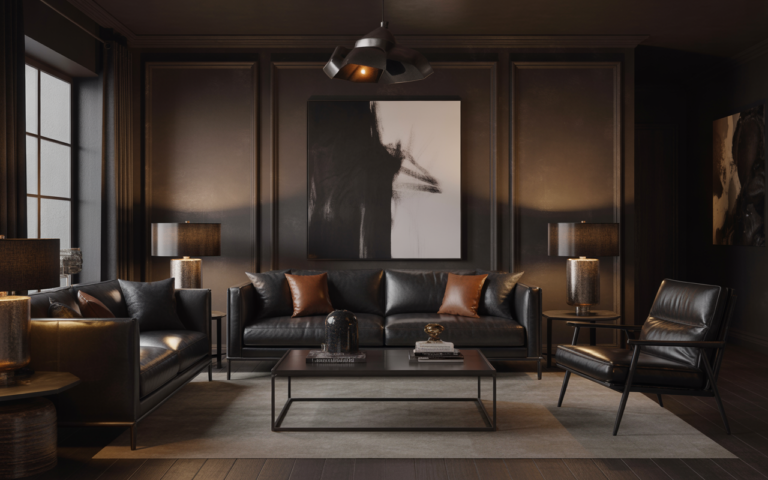
A dark accent wall behind the TV does something almost magical: it makes the TV disappear. A black screen against a white wall screams “blank TV.” The same screen against a deep charcoal, navy, or forest green reads as intentional design.
You don’t need to repaint the entire room. Just the wall where the TV lives. One gallon of paint is usually enough, and the transformation is dramatic. The dark wall also makes everything mounted or placed on it — a brass sconce, a framed print, a floating shelf — pop significantly more than it would against white.
I painted my living room TV wall in a deep warm charcoal and it was the single most impactful afternoon I’ve ever spent with a paintbrush.
Use Shiplap or Wood Panels for Texture
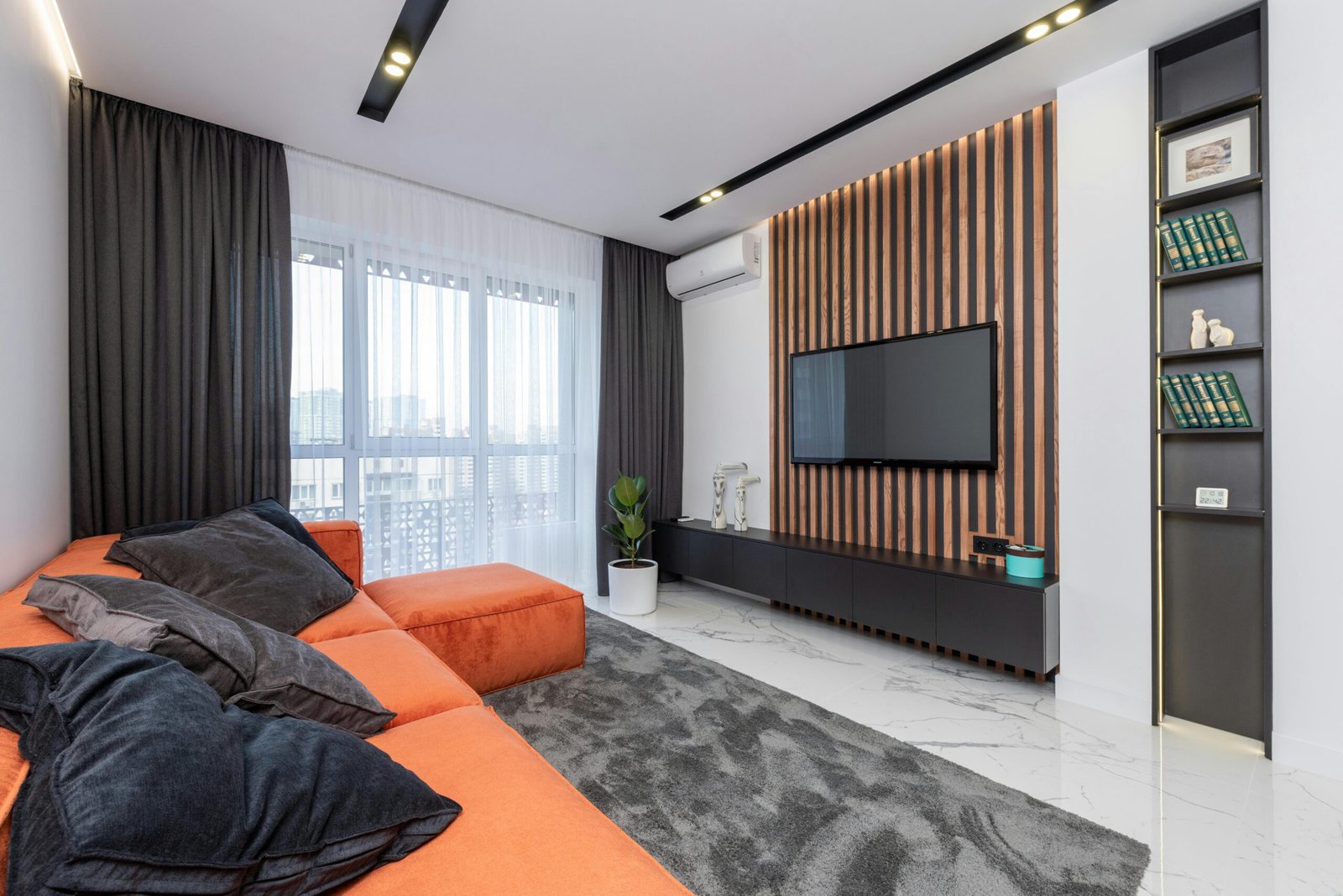
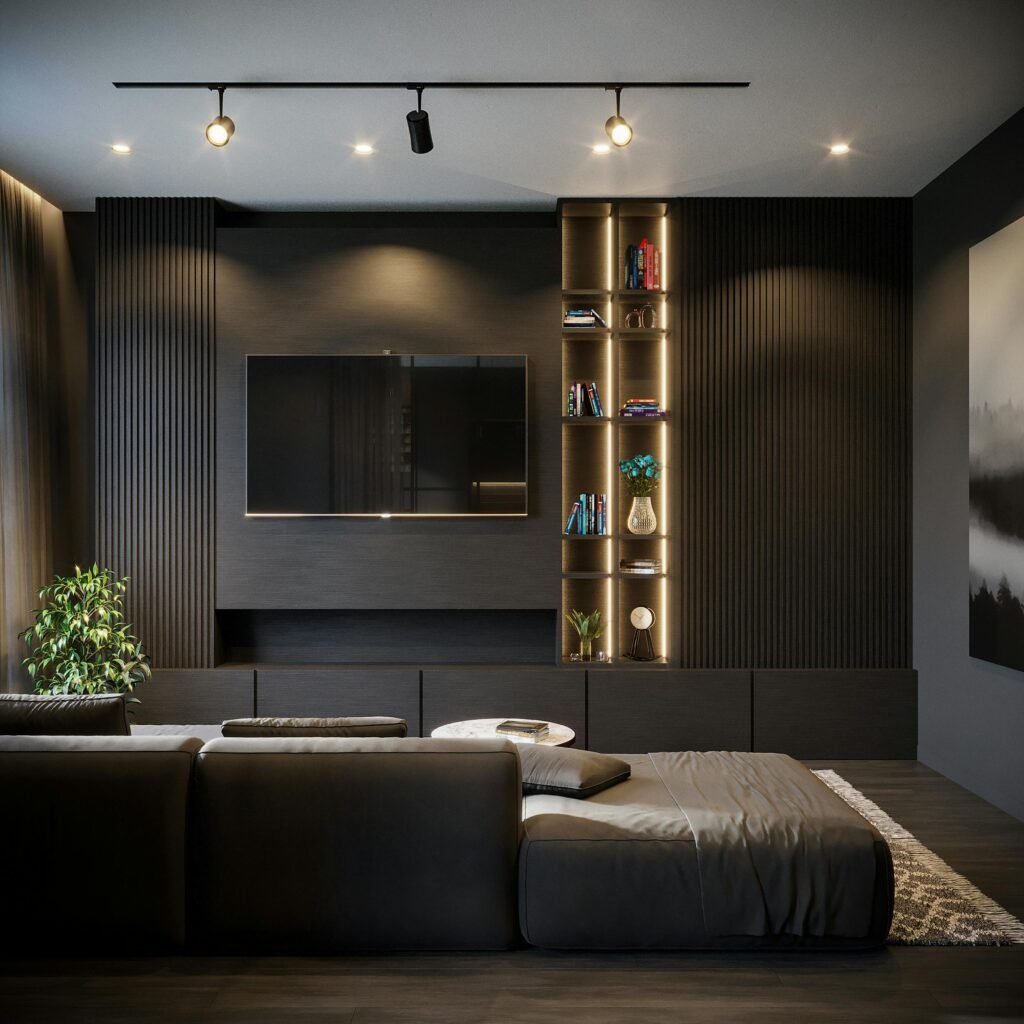
If you want the TV wall to feel architectural without a full renovation, wood paneling is your answer. Shiplap (horizontal wood slats), vertical slats, or even a herringbone pattern creates texture and warmth that a flat painted wall simply can’t replicate.
The panels don’t have to be real wood — there are peel-and-stick options and MDF panel sheets that work well and cost significantly less. Paint the panels in a soft white, warm greige, or a muted sage to keep the look fresh rather than rustic.
This is the part most people skip — adding the wall treatment — because it sounds harder than it is. Basic shiplap installation with pre-cut boards and a nail gun takes a weekend. Peel-and-stick panels take an afternoon.
Create a Minimalist TV Wall With Concealed Cords
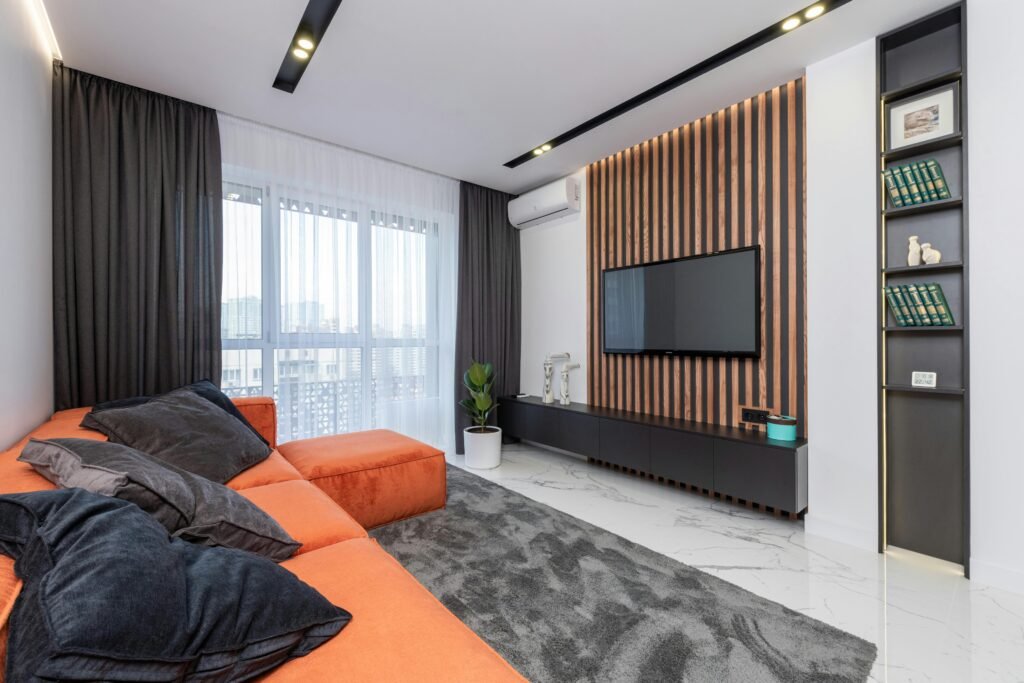
Sometimes the most effective TV wall is the one that does the least — a single well-mounted TV, no visible cords, no clutter below. The minimalist version works when the TV is large enough to be a statement on its own, and when everything else in the room is doing enough visual work.
The key detail that makes or breaks this look is the cords. A cord concealer raceway (about $15–20 at any hardware store) painted to match the wall makes a dramatic difference. The cords disappear, the TV looks like it grew there, and the wall becomes clean enough that nothing else is needed.
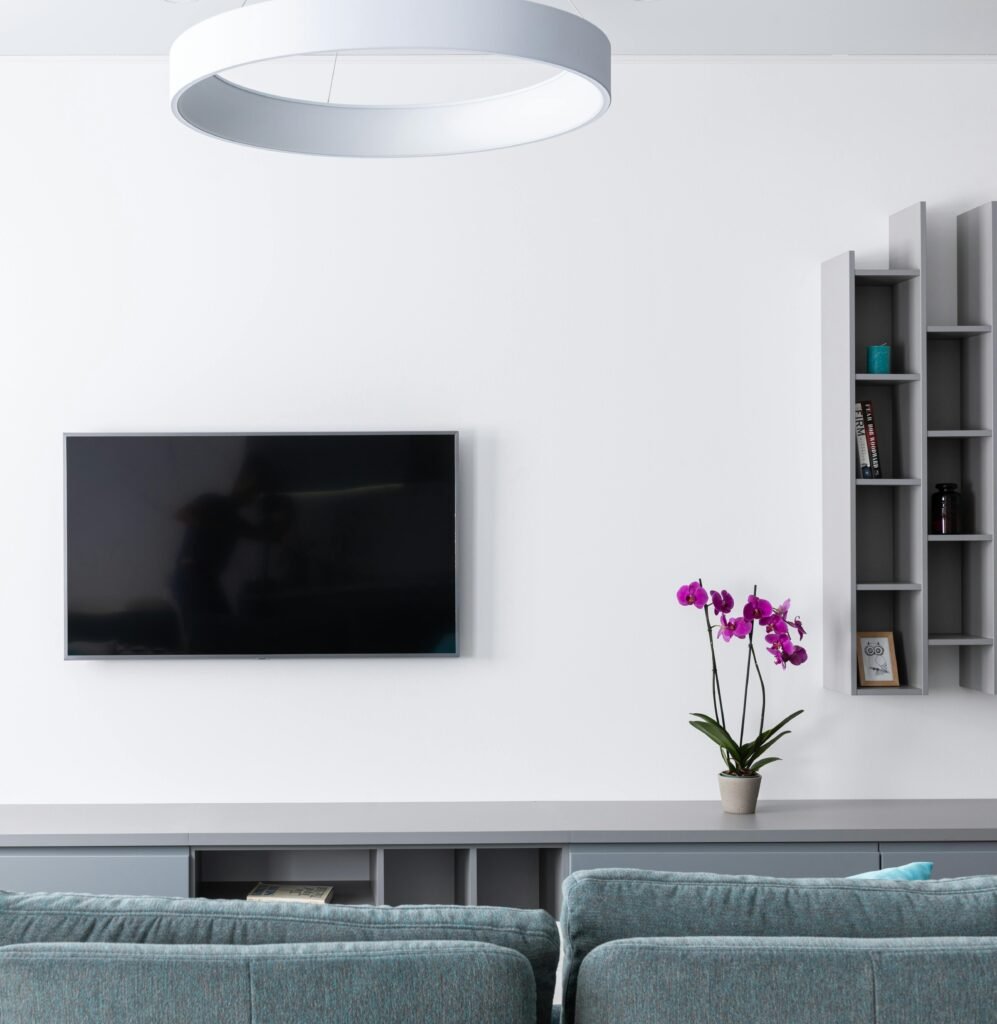
If you want to add one element below — a minimal floating console, a single long shelf — keep it narrow and low. The point is restraint.
Build a Faux Built-In With IKEA Units
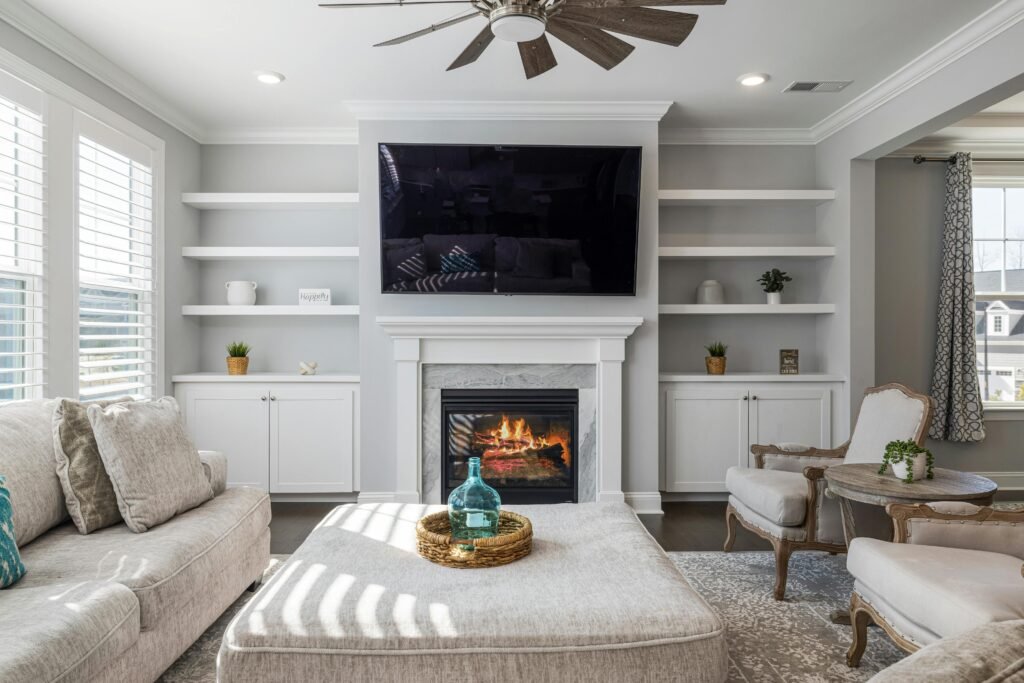
Built-in shelving around a TV is one of those things that looks incredibly expensive and custom but can be replicated convincingly with IKEA BILLY bookcases and a little trim work. The method — known in home decor circles as the “BILLY hack” — involves flanking the TV with bookcases, adding crown molding at the top to meet the ceiling, and painting everything the same color as the wall.
From five feet away, it’s indistinguishable from a real built-in. For a fraction of the price.
And honestly, this is one of my favorite examples of how decor doesn’t have to be expensive to be effective. A pair of BILLY bookcases runs about $160–200 total. Add trim, paint, and a weekend of work, and you have something that adds real perceived value to the room.
Mount a Large Mirror or Artwork Beside the TV
If building a full gallery wall feels like too much, a single large-format move works just as well: one oversized mirror or one large piece of artwork positioned beside (not above, not below) the TV.
The scale is what matters here. A small mirror next to a 65-inch TV looks like an afterthought. A mirror that’s at least 24 x 36 inches — or a canvas print at similar scale — creates a visual counterweight that makes the entire wall feel balanced and intentional.
I did this in my current living room with a thrifted gold-frame mirror, approximately 30 x 40 inches. Total cost: $22. It makes the TV wall look like I spent money on it.
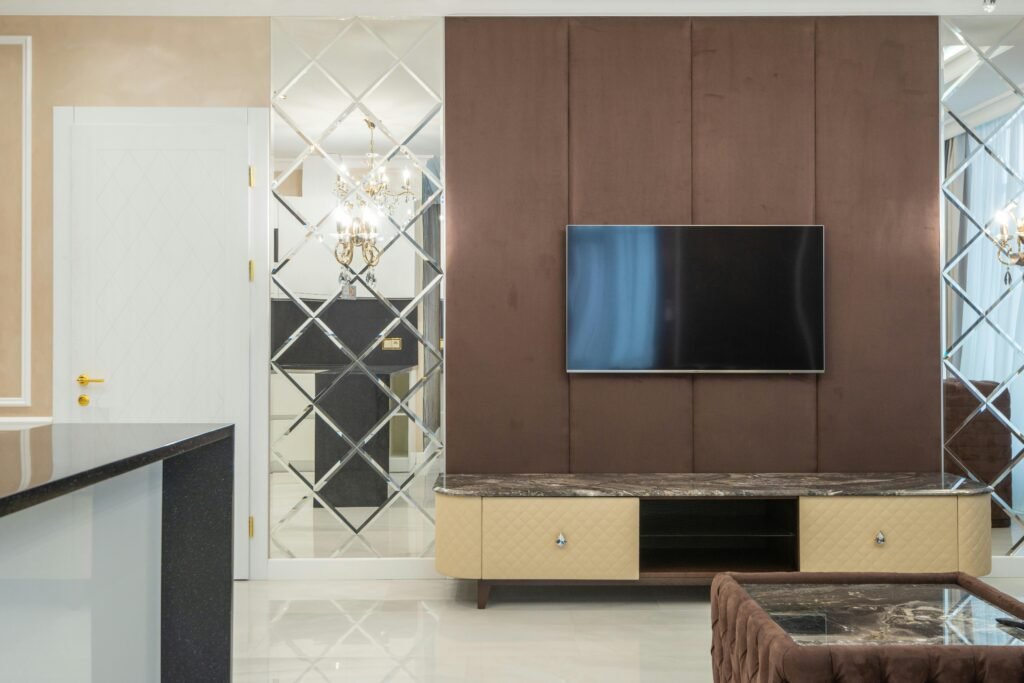
Use a Media Console That Doubles as Decor
The furniture below the TV gets ignored more than it should. A generic black TV stand does the job, but it doesn’t add anything to the room. Swapping it for a piece that has actual design presence — a sideboard in warm wood, a mid-century credenza, a rattan console — changes how the entire wall reads.
Style the top of the console the way you would a shelf: one or two small plants, a table lamp if the scale allows, a small tray holding remotes (so they’re not just scattered). Keep it edited — three to five objects maximum. The console becomes part of the room’s decor rather than just the thing the cable box sits on.
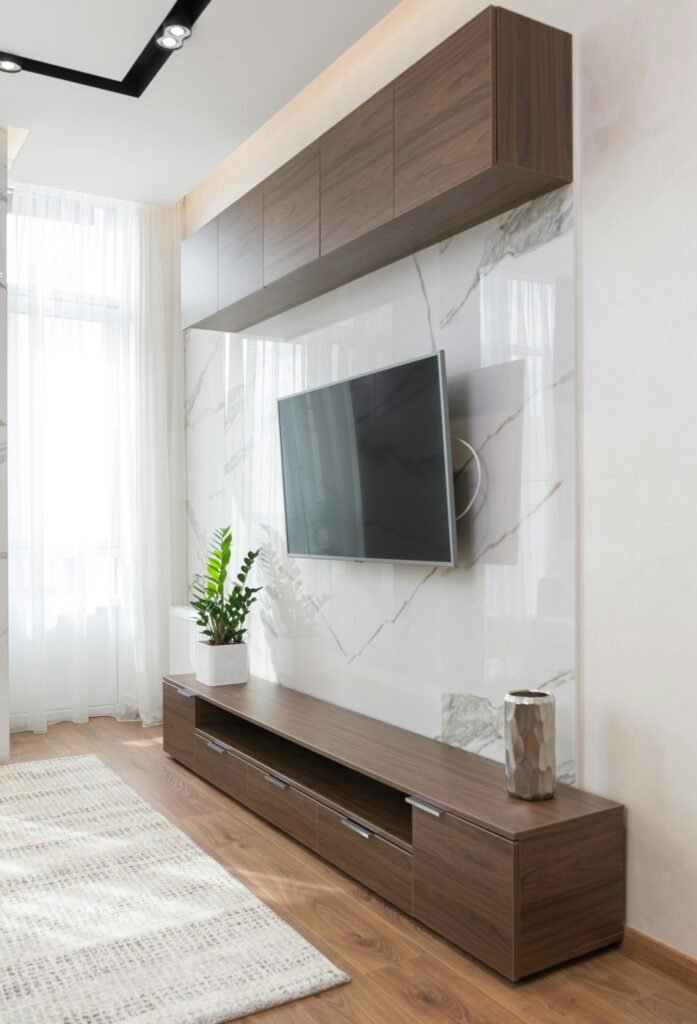
The TV Wall Doesn’t Have to Be an Afterthought
Most living rooms treat the TV wall as something to work around. But it’s usually the first thing you see when you walk in, and the thing your eyes return to dozens of times a day. Giving it intention — even just one of these eight ideas — changes how the whole room feels.
You don’t have to do all of it. Pick the one idea that fits your space and your budget and start there. The gallery wall if you have art you love. The dark paint if you want drama. The faux built-in if you want something that looks expensive without being expensive.
I’m currently working on the dark paint idea in my own living room — a deep warm charcoal I’ve been thinking about for six months. I’ll share the before and after when it’s done.
— Emily